Kirjojen hintavertailu. Mukana 12 595 353 kirjaa ja 12 kauppaa.

Kirjailija

Gillian Pascall

Kirjat ja teokset yhdessä paikassa: 7 kirjaa, julkaisuja vuosilta 1996-2014, suosituimpien joukossa Gender regimes in transition in Central and Eastern Europe. Vertaile teosten hintoja ja tarkista saatavuus suomalaisista kirjakaupoista.

7 kirjaa

Kirjojen julkaisuhaarukka 1996-2014.

Gender and Welfare States in East Asia

Gender and Welfare States in East Asia

Sirin Sung; Gillian Pascall

Palgrave Macmillan
2014
sidottu
Contributors address questions about gender equality in a Confucian context across a wide and varied social policy landscape, from Korea and Taiwan, where Confucian culture is deeply embedded, through China, with its transformations from Confucianism to communism and back, to the mixed cultural environments of Hong Kong and Japan.
Gender and Welfare States in East Asia

Gender and Welfare States in East Asia

Sirin Sung; Gillian Pascall

Palgrave Macmillan
2014
nidottu
Contributors address questions about gender equality in a Confucian context across a wide and varied social policy landscape, from Korea and Taiwan, where Confucian culture is deeply embedded, through China, with its transformations from Confucianism to communism and back, to the mixed cultural environments of Hong Kong and Japan.
Gender Equality in the Welfare State?

Gender Equality in the Welfare State?

Gillian Pascall

Policy Press
2012
sidottu
The relationship between gender and welfare states is of key importance in understanding welfare states and gender equality and inequality. Western welfare states of the post-war era were built on assumptions about gender difference: they treated men as breadwinners and women as carers. Now governments are committed in principle to gender equality. But how far have they come from male breadwinner assumptions to gender equality assumptions? How much do gender differences continue in UK social policy and social practice? The book analyses the male breadwinner model in terms of care, work, time, income and power, providing a framework for chapters which ask about policies and practices for gender equality in each of these. This new approach to analysis of gender equality in social welfare contextualises national policies and debates within comparative theoretical analysis and data, making the volume interesting to a wide audience.
Gender Equality in the Welfare State?

Gender Equality in the Welfare State?

Gillian Pascall

Policy Press
2012
nidottu
The relationship between gender and welfare states is of key importance in understanding welfare states and gender equality and inequality. Western welfare states of the post-war era were built on assumptions about gender difference: they treated men as breadwinners and women as carers. Now governments are committed in principle to gender equality. But how far have they come from male breadwinner assumptions to gender equality assumptions? How much do gender differences continue in UK social policy and social practice? The book analyses the male breadwinner model in terms of power, employment, care, time and income, providing a framework for chapters which ask about policies and practices for gender equality in each of these. This new approach to analysis of gender equality in social welfare contextualises national policies and debates within comparative theoretical analysis and data, making the volume interesting to a wide audience.
Gender regimes in transition in Central and Eastern Europe

Gender regimes in transition in Central and Eastern Europe

Gillian Pascall; Anna Kwak

Policy Press
2009
nidottu
Understanding of welfare states has been much enriched by comparative work on welfare regimes and gender. This book uses these debates to illuminate the changing gender regimes in countries of Central and Eastern Europe. It has particular significance as countries in the region make the transition from communism and into a European Union that has issues of women's employment, work-life balance, and gender equality at the heart of its social policy. The analysis draws on quantitative comparative data, and on rich qualitative data from a new study of mothers in Polish households, illuminating the effects of changing welfare and gender relations from the perspective of those most directly affected - mothers of young children. This book is an important addition to the literature and is recommended to academics and students interested in the study of gender relations, welfare states, and international and comparative European social policy. The insights gained will also be of value to those engaged in welfare policy and practice.
Social Policy

Social Policy

Gillian Pascall

Routledge
1996
nidottu
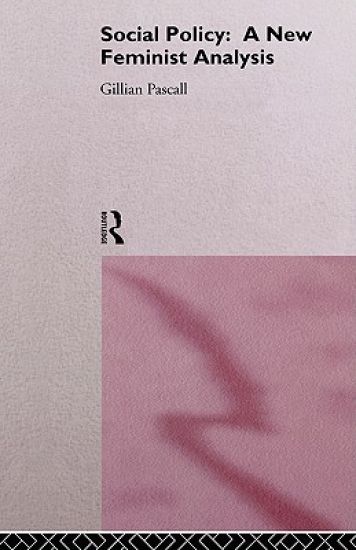
No-one can hope to understand the workings of the welfare state without first appreciating women's part in it. In the past decade the significance of the gendering of welfare states has become widely accepted, extensively charted in research, and more systematically theorized. Building on her earlier work, in Social Policy: A New Feminist Analysis Gillian Pascall confronts the challenges and outlines the developments that have taken place during the eleven years since its first publication. This new edition also reflects extensive social changes in women's participation at work, educational achievement, security in marriage; and policy changes aimed at producing a mixed economy of welfare, increasing family responsibility in health, community care, housing, education and income security. It examines the changing pattern of welfare provision, with increasing reliance on women's unpaid work, the gendered nature of UK welfare structures, the continuing dependence of women on men's incomes and on welfare benefits, the public/private divide, women's non-citizenship as carers for young and old; and the changing political climate of the 1980's and 1990's. Social Policy: A New Feminist Analysis covers traditional policy areas, which makes it ideal reading for students of health, housing, social security and education as well as courses about women.
Social Policy

Social Policy

Gillian Pascall

Routledge
1996
sidottu
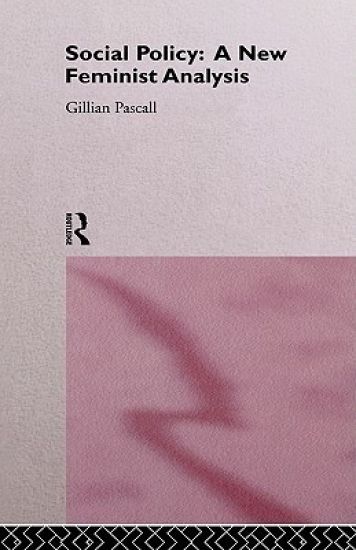
No-one can hope to understand the workings of the welfare state without first appreciating women's part in it. In the past decade the significance of the gendering of welfare states has become widely accepted, extensively charted in research, and more systematically theorized. Building on her earlier work, in Social Policy: A New Feminist Analysis Gillian Pascall confronts the challenges and outlines the developments that have taken place during the eleven years since its first publication. This new edition also reflects extensive social changes in women's participation at work, educational achievement, security in marriage; and policy changes aimed at producing a mixed economy of welfare, increasing family responsibility in health, community care, housing, education and income security. It examines the changing pattern of welfare provision, with increasing reliance on women's unpaid work, the gendered nature of UK welfare structures, the continuing dependence of women on men's incomes and on welfare benefits, the public/private divide, women's non-citizenship as carers for young and old; and the changing political climate of the 1980's and 1990's. Social Policy: A New Feminist Analysis covers traditional policy areas, which makes it ideal reading for students of health, housing, social security and education as well as courses about women.