Kirjojen hintavertailu. Mukana 12 459 402 kirjaa ja 12 kauppaa.

Kirjailija

Gina Ann Garcia

Kirjat ja teokset yhdessä paikassa: 3 kirjaa, julkaisuja vuosilta 2019-2026, suosituimpien joukossa Transforming Hispanic-Serving Institutions for Equity and Justice. Vertaile teosten hintoja ja tarkista saatavuus suomalaisista kirjakaupoista.

3 kirjaa

Kirjojen julkaisuhaarukka 2019-2026.

Transforming Hispanic-Serving Institutions for Equity and Justice

Transforming Hispanic-Serving Institutions for Equity and Justice

Gina Ann Garcia

Johns Hopkins University Press
2023
pokkari
The framework to help Hispanic-Serving Institutions transform into spaces of liberation that promote racial equity and social justice.Beyond having over a quarter of their undergraduate students be Hispanic, what makes Hispanic-Serving Institutions (HSIs) uniquely Latinx? And how can university leaders, faculty, and staff transform these institutions into spaces that promote racial equity, social justice, and collective liberation?In Transforming Hispanic-Serving Institutions for Equity and Justice, Gina Ann Garcia argues that in order to serve Latinx students and other students of color, these institutions must acknowledge how whiteness operates across the organization, from the ways that it is governed and how decisions are made to how education and knowledge are delivered. Diversity alone is insufficient for achieving a dynamic learning environment within higher education institutions. Garcia's framework for transforming HSIs into truly Latinx institutions is grounded in critical theories, yet it advances new ways of thinking about how to organize colleges and universities that are actively serving students of color, low-income students, and students from other minoritized backgrounds. This framework connects multiple important dimensions, including mission, identity, strategic purpose, membership, curriculum, student services, physical infrastructure, governance, leadership, external partnerships, and external influences. Drawing on over 25 years of HSI research, Garcia offers unique solutions for colleges and universities that want to better serve their students. With over 550 colleges and universities already eligible for the HSI designation, this book is a must-read for everyone in higher education.
Becoming Hispanic-Serving Institutions

Becoming Hispanic-Serving Institutions

Gina Ann Garcia

Johns Hopkins University Press
2019
pokkari
How can striving Hispanic-Serving Institutions serve their students while countering the dominant preconceptions of colleges and universities?Winner of the AAHHE Book of the Year Award by the American Association of Hispanics in Higher EducationHispanic-Serving Institutions (HSIs)—not-for-profit, degree-granting colleges and universities that enroll at least 25% or more Latinx students—are among the fastest-growing higher education segments in the United States. As of fall 2016, they represented 15% of all postsecondary institutions in the United States and enrolled 65% of all Latinx college students. As they increase in number, these questions bear consideration: What does it mean to serve Latinx students? What special needs does this student demographic have? And what opportunities and challenges develop when a college or university becomes an HSI? In Becoming Hispanic-Serving Institutions, Gina Ann Garcia explores how institutions are serving Latinx students, both through traditional and innovative approaches. Drawing on empirical data collected over two years at three HSIs, Garcia adopts a counternarrative approach to highlight the ways that HSIs are reframing what it means to serve Latinx college students. She questions the extent to which they have been successful in doing this while exploring how those institutions grapple with the tensions that emerge from confronting traditional standards and measures of success for postsecondary institutions. Laying out what it means for these three extremely different HSIs, Garcia also highlights the differences in the way each approaches its role in serving Latinxs. Incorporating the voices of faculty, staff, and students, Becoming Hispanic-Serving Institutions asserts that HSIs are undervalued, yet reveals that they serve an important role in the larger landscape of postsecondary institutions.
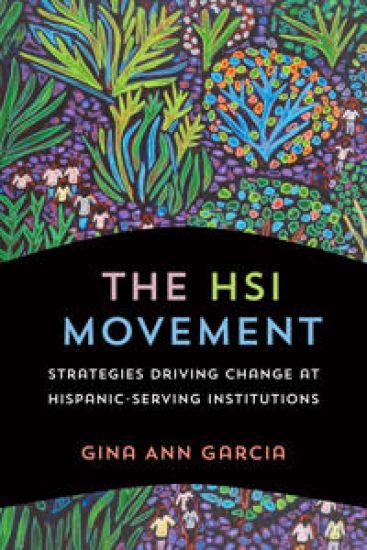
The HSI Movement

The HSI Movement

Gina Ann Garcia

Johns Hopkins University Press
2026
pokkari
What it means to intentionally serve Latine students in higher education. Hispanic-Serving Institutions now make up 20% of US colleges and universities, yet enrollment, eligibility, and grant-seeking alone do not guarantee meaningful change for Latine students. The HSI Movement examines what happens when change agents commit to intentionally transforming the institution to truly serve these students as an organizing and foundational principle. Completing a trilogy on HSIs that includes Becoming Hispanic-Serving Institutions and Transforming Hispanic-Serving Institutions for Equity and Justice, Gina Ann Garcia centers the voices of practitioners who are actively reshaping their campuses. Through detailed accounts of institutional change, the book shows how leaders and staff interpret HSI identity in practice by embedding it in strategic planning, staffing decisions, student services, mental health support, and relationships with families and communities. These efforts reveal the labor, resistance, and persistence required to move institutions beyond symbolic recognition alone. The book also confronts the structural obstacles facing HSIs, including administrative pushback, governing board resistance, and broader political attacks on equity-focused initiatives. Recent federal challenges to HSI funding underscore the urgency of this work, as institutions continue to enroll growing numbers of Latine students regardless of anti-DEI state and federal legislation. The HSI Movement offers concrete strategies for campuses seeking transformation. It speaks directly to students, faculty, staff, administrators, and policymakers at HSIs, emerging HSIs, and institutions nearing eligibility. At a moment of political uncertainty and institutional strain, the book insists that justice-oriented change is possible—and already underway.