Kirjailija
Giorgio Agamben
Kirjat ja teokset yhdessä paikassa: 139 kirjaa, julkaisuja vuosilta 1993-2027, suosituimpien joukossa The Body of Europe. Vertaile teosten hintoja ja tarkista saatavuus suomalaisista kirjakaupoista.
139 kirjaa
Kirjojen julkaisuhaarukka 1993-2027.
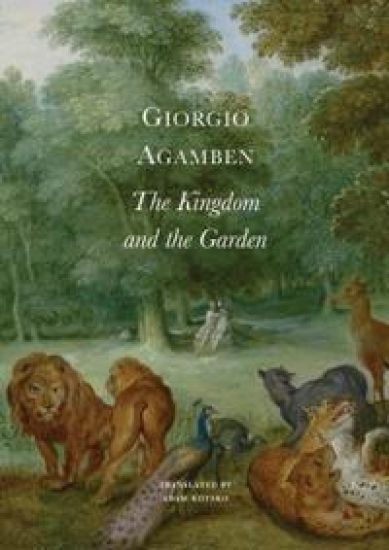
In a tour-de-force reinterpretation of the Christian tradition, Agamben shows that the Garden of Eden has always served as a symbol for humanity’s true nature. What happened to paradise after Adam and Eve were expelled? The question may sound like a theological quibble, or even a joke, but in The Kingdom and the Garden, Giorgio Agamben uses it as a starting point for an investigation of human nature and the prospects for political transformation. In a tour-de-force reinterpretation of the Christian tradition, Agamben shows that the Garden of Eden has always served as a symbol of humanity’s true nature. Where earlier theologians viewed the expulsion as temporary, Augustine’s doctrine of original sin makes it permanent, reimagining humanity as the paradoxical creature that has been completely alienated from its own nature. From this perspective, there can be no return to paradise, only the hope for the messianic kingdom. Yet there have always been thinkers who rebelled against this idea, and Agamben highlights two major examples. The first is the early medieval philosopher John Scotus Eriugena, who argued for a radical unity of humanity with all living things. The second is Dante, whose vision of the earthly paradise points towards the possibility of genuine human happiness in this world. In place of the messianic kingdom, which has provided the model for modern revolutionary movements, Agamben contends that we should place our hopes for political change in a return to our origins, by reclaiming the earthly paradise.
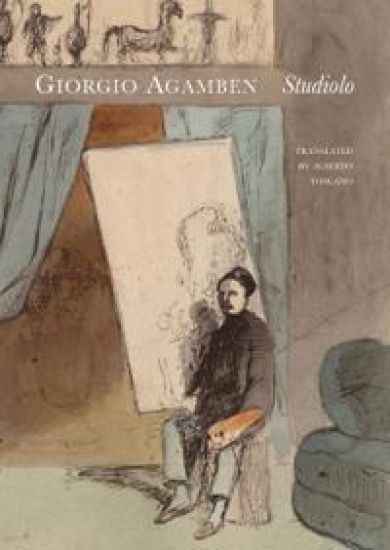
A brief study of select Western art from Italy’s foremost philosopher. In Renaissance palaces, the studiolo was a small room to which the prince withdrew to meditate or read, surrounded by paintings he particularly loved. This book is a kind of studiolo for its author, Giorgio Agamben, as he turns his philosophical lens on the world of Western art. Studiolo is a fascinating take on a selection of artworks created over millennia; some are easily identifiable, others rarer. Though they were produced over an arc of time stretching from 5000 BCE to the present, only now have they achieved their true legibility. Agamben contends that we must understand that the images bequeathed by the past are really addressed to us, here and now; otherwise, our historical awareness is broken. Notwithstanding the attention to detail and the critical precautions that characterize the author’s method—they provoke us with a force, even a violence, that we cannot escape. When we understand why Dostoevsky feared losing his faith before Holbein’s Body of the Dead Christ, when Chardin’s Still Life with Hare is suddenly revealed to our gaze as a crucifixion or Twombly’s sculpture shows that beauty must ultimately fall, the artwork is torn from its museological context and restored to its almost prehistoric emergence. These artworks are beautifully reproduced in color throughout Agamben’s short but significant addition to his scholarly oeuvre in English translation.
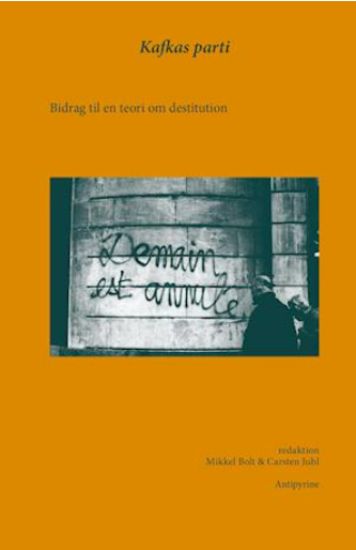
Kafkas parti
Nogle fransk-italienske smuglere; Giorgio Agamben; Marcello Tarì; Serge Quadruppani; Carsten Juhl; Mikkel Bolt
Antipyrine, Forlaget
2024
nidottu
Det spørgsmål, som den destituerende opstand stiller, går givetvis på, hvordan man skal afmontere og forlade lovenes system, men endnu mere på, hvordan det kan være muligt at gøre det, uden at man umiddelbart efter indgår i det igen.— Marcello TarìDenne bog indeholder bidrag af forfattere tilhørende kredsen om den usynlige komité, der ikke findes længere, men som igangsatte drøftelsen af begrebet destitution for ti år siden. Destitutionens begreb og historie kan forklare spændingen mellem teori og praksis og analysere overgangen fra opstand til revolution: Radikaliserede anarkismen den borgerlige revolutions satsning på frihed, lighed og broderskab, og begrundede den videnskabelige socialisme arbejderbevægelsens bestræbelse på at ophæve formerne løn, pris og profit i kapitalismen, så samler destitutionen erfaringer og vidnesbyrd fra de seneste 14 års statsundergravende kampe.
What I Saw, Heard, Learned . . .
Giorgio Agamben; Alta L. Price
SEAGULL BOOKS LONDON LTD
2023
sidottu
An engaging collection of late-life reflections and quick thoughts, a book unlike any other Agamben book. What can the senses of an attentive philosopher see, hear, and learn that can, in turn, teach us about living better lives? Perhaps it’s less a matter of asking what and more a matter of asking how. These latest reflections from Italy’s foremost philosopher form a sort of travelogue that chronicles Giorgio Agamben’s profound interior journey. Here, with unprecedented immediacy, Agamben shares his final remarks, late-life observations, and reflections about his life that flashed before his eyes. What did he see in that brief flash? What did he stay faithful to? What remains of all those places, friends, and teachers?
Subaltern 3-4(2022) Politik och metafysik - Levinas, flykt och längtan efter fred
Mårten Björk; Aron Ericson; Giorgio Agamben; Emmanuel Levinas
h:ström - Text Kultur AB
2023
nidottu
Sedan 2016 har tidskriften Subaltern kallat sig en tidskrift för politik och metafysik. Det kan framstå som en sammansättning av två oförenliga företeelser: Handlar inte politik om den konkreta, påtagliga verkligheten? Vad har politik då med metafysik att göra? Med föreliggande sista och avslutande nummer av tidskriften Subaltern, som presenterar två tidigare oöversatta texter av filosofen Emmanuel Levinas, ger vi ett möjligt svar på frågan. Det rör sig om två tidiga texter, Några reflexioner om hitlerismens filosofi (1934) och Om flykt (1935), som båda bearbetar Martin Heideggers tänkande och - inte minst - Levinas bestörtning över Heideggers val att alliera sig med den tyska nationalsocialistiska regimen. Medverkande: Giorgio Agamben, Mårten Björk, Aron Ericson, Emmanuel Levinas
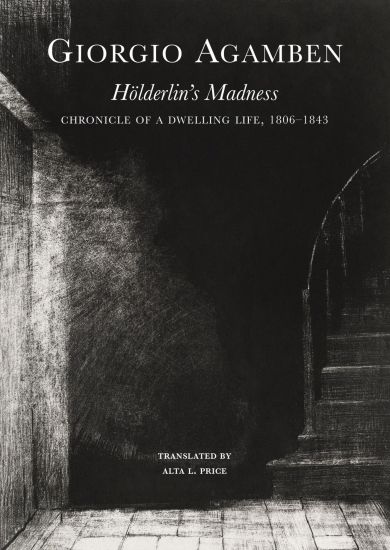
Hölderlin's Madness – Chronicle of a Dwelling Life, 1806–1843
Giorgio Agamben; Alta L. Price
SEAGULL BOOKS LONDON LTD
2023
sidottu
One of Europe’s greatest living philosophers, Giorgio Agamben, analyzes the life and work of one of Europe’s greatest poets, Friedrich Hölderlin. What does it mean to inhabit a place or a self? What is a habit? And, for human beings, doesn’t living mean—first and foremost—inhabiting? Pairing a detailed chronology of German poet Friedrich Hölderlin’s years of purported madness with a new examination of texts often considered unreadable, Giorgio Agamben's new book aims to describe and comprehend a life that the poet himself called habitual and inhabited. Hölderlin’s life was split neatly in two: his first 36 years, from 1770 to 1806; and the 36 years from 1807 to 1843, which he spent as a madman holed up in the home of Ernst Zimmer, a carpenter. The poet lived the first half of his existence out and about in the broader world, relatively engaged with current events, only to then spend the second half entirely cut off from the outside world. Despite occasional visitors, it was as if a wall separated him from all external events and relationships. For reasons that may well eventually become clear, Hölderlin chose to expunge all character—historical, social, or otherwise—from the actions and gestures of his daily life. According to his earliest biographer, he often stubbornly repeated, “nothing happens to me.” Such a life can only be the subject of a chronology—not a biography, much less a clinical or psychological analysis. Nevertheless, this book suggests that this is precisely how Hölderlin offers humanity an entirely other notion of what it means to live. Although we have yet to grasp the political significance of his unprecedented way of life, it now clearly speaks directly to our own.
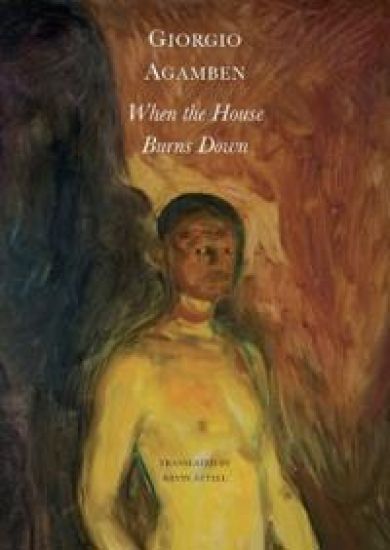
When the House Burns Down – From the Dialect of Thought
Giorgio Agamben; Kevin Attell
SEAGULL BOOKS LONDON LTD
2023
nidottu
Giorgio Agamben tackles our crisis-ridden world in a series of powerful philosophical essays. “Which house is burning?” asks Giorgio Agamben. “The country where you live, or Europe, or the whole world? Perhaps the houses, the cities have already burnt down—who knows how long ago?—in a single immense blaze that we pretended not to see.” In this collection of four luminous, lyrical essays, Agamben brings his characteristic combination of philosophical acuity and poetic intensity to bear on a world in crisis. Whether surveying the burning house of our culture in the title essay, the architecture of pure exteriority in “Door and Threshold,” the language of prophecy in “Lessons in the Darkness,” or the word of the witness in “Testimony and Truth,” Agamben’s insights throw a revealing light on questions both timeless and topical. Written in dark times over the past year, and rich with the urgency of our moment, the essays in this volume also seek to show how what appears to be an impasse can, with care and attention, become the door leading to a way out.
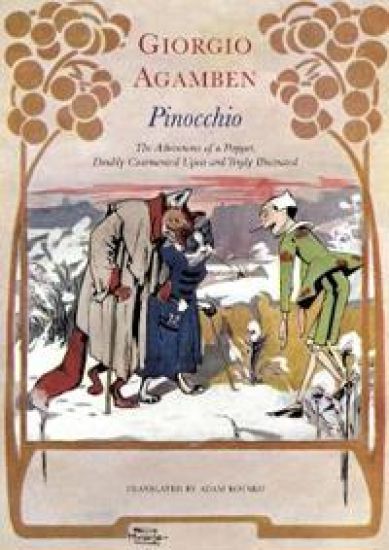
Pinocchio – The Adventures of a Puppet, Doubly Commented Upon and Triply Illustrated
Giorgio Agamben; Adam Kotsko
SEAGULL BOOKS LONDON LTD
2023
sidottu
A richly illustrated analysis from one of Europe’s greatest living philosophers. In Pinocchio, Giorgio Agamben turns his keen philosopher’s eye to the famous nineteenth-century novel by Carlo Collodi. To Agamben, Pinocchio’s adventures are a kind of initiation into life itself. Like us, the mischievous puppet is caught between two worlds. He is faced with the alternatives of submitting to authority or of carrying on, stubbornly indulging his way of being. From Agamben’s virtuoso interpretation of this classic story, we learn that we can harbor the mystery of existence only if we are not aware of it, only if we manage to cohabit with an area of non-knowledge, immemorial and very near. Richly illustrated with images from three early editions of Collodi’s novel, this new volume will delight enthusiasts of both literature and philosophy.
I forsøget på at besvare det spørgsmål, som bogens titel stiller, tager Giorgio Agamben ikke fat på idéen om filosofi i sig selv. Snarere vender han sig mod dens tilsyneladende mest ubetydelige komponenter: fonemer, bogstaver, stavelser og ord, der samles for at udgøre sætningerne og idéerne i den filosofiske diskurs. Som en slags opsummering af Agambens tænkning består bogen af ??fem essays om fem emblematiske emner: Stemmen, Det Sigelige, Fordringen, Proømiet og Musen. Hvert essay væver med Agambens vanlige fremgangsmåde arkæologiske og teoretiske undersøgelser sammen: til en tålmodig rekonstruktion af, hvordan sprogbegrebet blev opfundet, svarer et forsøg på at genskabe tænkningens plads i stemmen; til en usædvanlig fortolkning af den platoniske idé svarer en klar analyse af forholdet mellem filosofi og videnskab, samt den krise, som begge gennemgår i dag. I sidste ende er der ikke noget universelt svar på, hvad der er et umuligt eller uudtømmeligt spørgsmål, og det filosofiske skrift antager form af en optakt til et værk, der skal forblive uskrevet.
»Der findes i dag både en »polemologi«, en teori om krigen, og en »irenologi«, en teori om freden, men der findes ingen »stasiologi«, en teori om borgerkrigen«. Stasis – Borgerkrigen som politisk paradigme er Giorgio Agambens første skridt hen imod en sådan teori. Bogen undersøger borgerkrigen ud fra to nedslag i den vestlige idehistorie: det antikke Athen (hvorfra begrebet om stasis udspringer) og den berømte frontispice til Thomas Hobbes’ Leviathan. For Agamben antager borgerkrigen forskellige former i løbet af den vestlige historie og er i dette perspektiv et afgørende paradigme for vestlig politik. Borgerkrigen er for Agamben et grænsefænomen, der udgør en tærskel mellem flere nøglebegreber i hele Homo Sacer-projektet.
Det kommende fællesskab er en af Agambens tætteste og vigtigste tekster, og man ville endog kunne sige, at den udgør en elegant opsummering af hans tanker i det hele taget. I Det kommende fællesskab undersøger Giorgio Agamben den vestlige idehistorie med henblik på at bryde med forestillingen om, at fællesskab må basere sig på bestemte identiteter eller egenskaber, det universelle eller partikulære. Agamben søger i stedet mod andre ideer og forestillinger om fællesskab, Det kommende fællesskab. Agambens udforskning er til dels et moderne svar på Heidegger, Wittgenstein, Blanchot, Nancy og, mere historisk, Platon, Spinoza og middelalderens lærde fortolkere af den jødisk-kristne tradition.
I Vilken punkt har vi nått? analyserar den italienske filosofen Giorgio Agamben de sociala och politiska effekterna av covidkrisen. I tjugofem pregnanta kapitel skärskådar han regeringarnas åtgärder och våra reaktioner på dem. Aldrig tidigare i historien, inte ens under fascismen och de två världskrigen, har inskränkningarna av vår frihet gått så långt som de gjort idag. Samtidigt förefaller vi vara mer benägna än tidigare att godta sådana inskränkningar. För ett virus vars dödlighet inte skiljer sig från andra vi upplevt tycks vi vara beredda att offra allt: våra arbeten, vårt sociala liv, våra normala livsvillkor, vår religiösa tro, våra politiska övertygelser, vår nästa.Giorgio Agamben, född 1942 i Rom, är filosof och författare. Han är en vår tids mest inflytelserika och kommenterade tänkare. Sedan debuten 1970 har han utgivit närmare ett femtiotal böcker som har översatts till många språk. Hans författarskap spänner över ett stort antal ämnen, från språkfilosofi och teologi till konsthistoria och vittneslitteratur. På svenska har tidigare utgivits: Undantagstillståndet (2005), Homo sacer (2010), Vad innebär det att vara demokrat? (2010), Vad är det samtida? (2014), Kyrkan och Riket (2014), Vad är ett dispositiv? (2014), Barndom och historia (2018), Människan utan innehåll (2019), Smak (2020). "Epidemin gör det klart och tydligt att undantagstillståndet, vid vilket regeringarna har vant oss sedan en tid tillbaka, verkligen har blivit till ett normaltillstånd. I det förflutna har det funnits allvarligare epidemier men ingen kom på tanken att för den skull utlysa ett undantagstillstånd som det rådande. Människor har blivit så vana att leva i tillstånd av permanent kris och undantagstillstånd att de inte tycks inse att deras liv har reducerats till ett rent biologiskt tillstånd och att det har förlorat inte bara varje social och politisk, utan till och med varje mänsklig och affektiv dimension. Ett samhälle som befinner sig i ett permanent undantagstillstånd kan inte vara ett fritt samhälle. Vi lever i själva verket i ett samhälle som har offrat friheten för så kallade 'säkerhetsskäl' och därför har dömt sig självt till ett evigt tillstånd av rädsla och osäkerhet. Det som oroar är inte så mycket eller inte bara nuet, utan det som kommer efteråt. Det är troligt att man även efter det sanitära nödläget kommer att sträva efter att fortsätta de experiment som regeringarna tidigare inte lyckats förverkliga: de digitala dispositiven kommer således att på skolor, universitet och alla offentliga platser ersätta den fysiska närvaron, som kommer att förbli instängd i den privata sfären.Det som står på spel är med andra ord inget mindre än ett rent och skärt avskaffande av varje offentligt rum." Giorgio Agamben
The first English translation of the book that established Paolo Virno as one of the most influential Italian thinkers of his generation. With the 1986 publication of this book in Italy, Paolo Virno established himself as one of the most influential Italian thinkers of his generation. Astonishingly, this crucial work has never before been published in an English translation. This MIT Press edition, translated by Italian philosopher and Insubordinations series editor Lorenzo Chiesa, is its first English-language version. Virno here engages, in an innovative and iconoclastic way, with some classical issues of philosophy involving experience, singularity, and the relation between ethics and language, while also offering a profoundly transformative political perspective that revolves around the Marxian notion of the general intellect. Virno reconsiders Walter Benjamin's idea of a loss of the aura (brought on, Benjamin argued, by technical reproducibility), and postulates instead the existence of a new experience of uniqueness that, although deprived of every metaphysical aura, resides in the very process of late-capitalist serial reproduction. Writing after the defeat of contemporary leftist revolutionary movements in the West, Virno argues for the possibility of a good life originating immanently from existential and political crises. With speculative detours through the thought of philosophers ranging from Aquinas and Berkeley to Heidegger and Wittgenstein, with a specific focus on Kant and Hegel, Virno shows how a renewed reflection on basic theoretical problems helps us to better grasp what is happening now. This edition features a preface written by Virno in 2011.
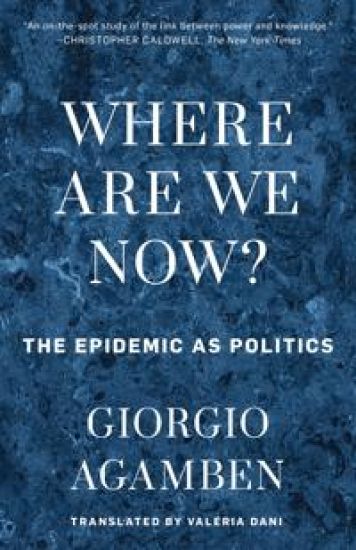
Where Are We Now?: The Epidemic as Politics
Giorgio Agamben
Rowman Littlefield Publishers
2021
sidottu
Italian philosopher Giorgio Agamben presents an account of the political upheavals that ensued as the COVID-19 pandemic brought his country--and with it his countrymen's personal liberties--to a crashing halt. While controversial, Agamben's reflections on the transformation of Western democracies hold implications far beyond any present crisis.
Where Are We Now?: The Epidemic as Politics
Giorgio Agamben
Rowman Littlefield Publishers
2021
nidottu
Italian philosopher Giorgio Agamben presents an account of the political upheavals that ensued as the COVID-19 pandemic brought his country--and with it his countrymen's personal liberties--to a crashing halt. While controversial, Agamben's reflections on the transformation of Western democracies hold implications far beyond any present crisis.
In this volume, the renowned Italian philosopher Giorgio Agamben has collected all of his fierce, passionate, and deeply personal interventions regarding the current health emergency. Alongside and beyond accusations, these texts variously reflect upon the great transformation affecting Western democracies. In the name of biosecurity and health, the model of bourgeois democracy—together with its rights, parliaments, and constitutions—is everywhere surrendering to a new despotism where citizens seem to accept unprecedented limitations to their freedoms. This leads to the urgency of the volume’s title: Where Are We Now? For how long will we accept living in a constantly extended state of exception, the end of which remains impossible to see?
Was ist Wirklichkeit? Das Verschwinden des Ettore Majorana
Giorgio Agamben
Matthes Seitz Verlag
2020
nidottu