Kirjojen hintavertailu. Mukana 12 595 353 kirjaa ja 12 kauppaa.

Kirjailija

Giorgio Biancorosso

Kirjat ja teokset yhdessä paikassa: 3 kirjaa, julkaisuja vuosilta 2016-2025, suosituimpien joukossa Situated Listening. Vertaile teosten hintoja ja tarkista saatavuus suomalaisista kirjakaupoista.

3 kirjaa

Kirjojen julkaisuhaarukka 2016-2025.

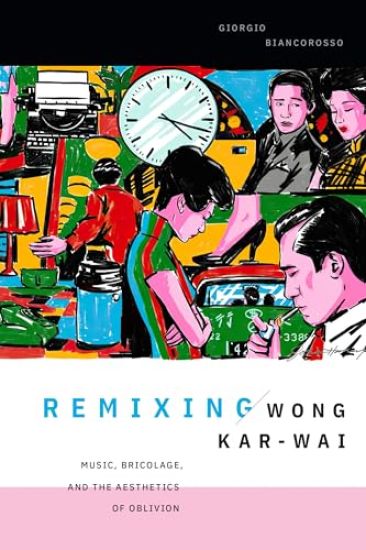
Remixing Wong Kar-wai

Remixing Wong Kar-wai

Giorgio Biancorosso

DUKE UNIVERSITY PRESS
2025
pokkari
Like his fellow filmmakers Stanley Kubrick, Quentin Tarantino, and Sofia Coppola, Wong Kar-wai crafts the soundtracks of his films by jettisoning original scores in favor of commercial recordings. In Remixing Wong Kar-wai, Giorgio Biancorosso examines the combinatorial practice at the heart of Wong’s cinema to retheorize musical borrowing, appropriation, and repurposing. Wong’s irrepressible penchant for poaching music from other films-whether old Chinese melodramas, Hollywood blockbusters, or European art films-subsumes familiar music under his own brand of cinema. As Wong combs through musical and cinematic archives and splices disparate music together, exceedingly well-known music loses its previous associations and acquires an infinite new constellation of meanings in his films. Drawing on Claude LÉvi-Strauss’s concept of bricolage, Biancorosso contends that Wong’s borrowing is akin to a practice of creative destruction in which Wong becomes a bricoleur who remixes music at hand to create new and complete, self-sustaining statements. By outlining Wong’s modus operandi of indiscriminate borrowing and remixing, Biancorosso prompts readers to reconsider the significance of transforming preexisting music into new compositions for film and beyond.
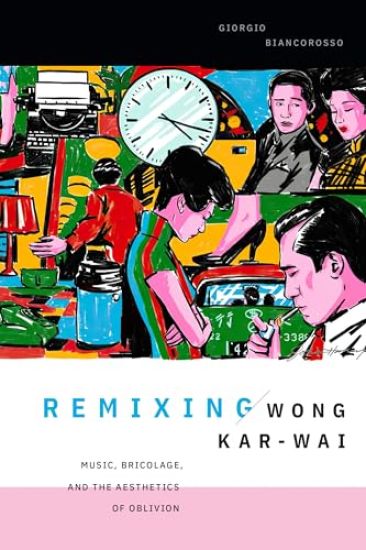
Remixing Wong Kar-wai

Remixing Wong Kar-wai

Giorgio Biancorosso

DUKE UNIVERSITY PRESS
2025
sidottu
Like his fellow filmmakers Stanley Kubrick, Quentin Tarantino, and Sofia Coppola, Wong Kar-wai crafts the soundtracks of his films by jettisoning original scores in favor of commercial recordings. In Remixing Wong Kar-wai, Giorgio Biancorosso examines the combinatorial practice at the heart of Wong’s cinema to retheorize musical borrowing, appropriation, and repurposing. Wong’s irrepressible penchant for poaching music from other films-whether old Chinese melodramas, Hollywood blockbusters, or European art films-subsumes familiar music under his own brand of cinema. As Wong combs through musical and cinematic archives and splices disparate music together, exceedingly well-known music loses its previous associations and acquires an infinite new constellation of meanings in his films. Drawing on Claude LÉvi-Strauss’s concept of bricolage, Biancorosso contends that Wong’s borrowing is akin to a practice of creative destruction in which Wong becomes a bricoleur who remixes music at hand to create new and complete, self-sustaining statements. By outlining Wong’s modus operandi of indiscriminate borrowing and remixing, Biancorosso prompts readers to reconsider the significance of transforming preexisting music into new compositions for film and beyond.
Situated Listening

Situated Listening

Giorgio Biancorosso

Oxford University Press Inc
2016
sidottu
Screenwriters and film directors have long been fascinated by the challenges of representing the listening experience on screen. While music has played a central role in film narrative since the conception of moving pictures, the representation of music listening has remained a special occurrence.In Situated Listening: The Sound of Absorption in Classical Cinema, author Giorgio Biancorosso argues for a redefinition of the music listener as represented in film. Rather than construct the listener as a reverential concertgoer, music analyst, or gallery dweller, this book instead shows how films offer a new way of thinking about listening as distributed experience, an activity made public and shareable across vast cultural spaces rather than an insular motion. It shows how cinemafunctions as not only a reservoir of established modes of listening, but also an agent in the development of new listening practices. As Biancorosso argues, many films have perpetuated a long-existing paradox of music as a means of silencing. Consider an aggressive score overlaying battle scenes or a romanticscene conveying unspoken intimacy. In the place of conversational exchange exists a veil of sound in the form of music, and Situated Listening explains why this function influences both the course of interpretation and empathy experienced by film spectators. By focusing on cinematic, physical, and emotional scenery surrounding a character, viewers can recognize aspects of their own lives, developing a deeper empathy for each fictional character through real and shared listeningpractices.