Kirjojen hintavertailu. Mukana 12 595 353 kirjaa ja 12 kauppaa.

Kirjailija

Giorgio Shani

Kirjat ja teokset yhdessä paikassa: 8 kirjaa, julkaisuja vuosilta 2007-2021, suosituimpien joukossa Protecting Human Security in a Post 9/11 World. Vertaile teosten hintoja ja tarkista saatavuus suomalaisista kirjakaupoista.

8 kirjaa

Kirjojen julkaisuhaarukka 2007-2021.

Sikh Nationalism

Sikh Nationalism

Gurharpal Singh; Giorgio Shani

Cambridge University Press
2021
sidottu
This important volume provides a clear, concise and comprehensive guide to the history of Sikh nationalism from the late nineteenth century to the present. Drawing on A. D. Smith's ethno-symbolic approach, Gurharpal Singh and Giorgio Shani use a new integrated methodology to understanding the historical and sociological development of modern Sikh nationalism. By emphasising the importance of studying Sikh nationalism from the perspective of the nation-building projects of India and Pakistan, the recent literature on religious nationalism and the need to integrate the study of the diaspora with the Sikhs in South Asia, they provide a fresh approach to a complex subject. Singh and Shani evaluate the current condition of Sikh nationalism in a globalised world and consider the lessons the Sikh case offers for the comparative study of ethnicity, nations and nationalism.

Sikh Nationalism

Sikh Nationalism

Gurharpal Singh; Giorgio Shani

Cambridge University Press
2021
pokkari
This important volume provides a clear, concise and comprehensive guide to the history of Sikh nationalism from the late nineteenth century to the present. Drawing on A. D. Smith's ethno-symbolic approach, Gurharpal Singh and Giorgio Shani use a new integrated methodology to understanding the historical and sociological development of modern Sikh nationalism. By emphasising the importance of studying Sikh nationalism from the perspective of the nation-building projects of India and Pakistan, the recent literature on religious nationalism and the need to integrate the study of the diaspora with the Sikhs in South Asia, they provide a fresh approach to a complex subject. Singh and Shani evaluate the current condition of Sikh nationalism in a globalised world and consider the lessons the Sikh case offers for the comparative study of ethnicity, nations and nationalism.

Religion, Identity and Human Security
This work seeks to provide a fresh examination of the relationship between religion, identity and security in a globalizing world, arguing that in order to address human security issues we must seek a reconceptualization of human security along post-secular lines.Religion, Identity and Human Security seeks to demonstrate that a major source of human insecurity comes from the failure of states around the world to recognize the increasing cultural diversity of their populations which has resulted from globalization. Shani begins by setting out the theoretical foundations, dealing with the transformative effects of globalization on identity, violence and security. The second part of the volume then draws on different cases of sites of human insecurity around the globe to develop these ideas, examining themes such as: securitization of religious symbols retreat from multiculturalism rise of exclusivist ethno-religious identities post- 9/11 state religion, colonization and the ‘racialization’ of migration Highlighting that religion can be a source of both human security and insecurity in a globalizing world, Shani offers a ‘critical’ human security paradigm that seeks to de-secularize the individual by recognizing the culturally contested and embedded nature of human identities. The work argues that religion serves an important role in re-embedding individuals deracinated from their communities by neo-liberal globalization.
Religion, Identity and Human Security
Religion, Identity and Human Security seeks to demonstrate that a major source of human insecurity comes from the failure of states around the world to recognize the increasing cultural diversity of their populations which has resulted from globalization. Shani begins by setting out the theoretical foundations, dealing with the transformative effects of globalization on identity, violence and security. The second part of the volume then draws on different cases of sites of human insecurity around the globe to develop these ideas, examining themes such as: securitization of religious symbols retreat from multiculturalism rise of exclusivist ethno-religious identities post- 9/11 state religion, colonization and the ‘racialization’ of migration Highlighting that religion can be a source of both human security and insecurity in a globalizing world, Shani offers a ‘critical’ human security paradigm that seeks to de-secularize the individual by recognizing the culturally contested and embedded nature of human identities. The work argues that religion serves an important role in re-embedding individuals deracinated from their communities by neo-liberal globalization and will be of interest to students of International Relations, Security Studies and Religion and Politics.
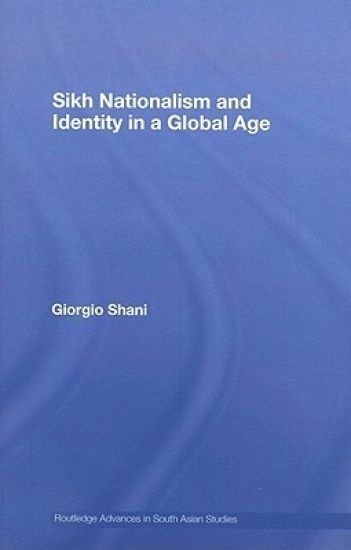
Sikh Nationalism and Identity in a Global Age
Sikh Nationalism and Identity in a Global Age examines the construction of a Sikh national identity in post-colonial India and the diaspora and explores the reasons for the failure of the movement for an independent Sikh state: Khalistan. Based on a decade of research, it is argued that the failure of the movement to bring about a sovereign, Sikh state should not be interpreted as resulting from the weakness of the ‘communal’ ties which bind members of the Sikh ‘nation’ together, but points to the transformation of national identity under conditions of globalization. Globalization is perceived to have severed the link between nation and state and, through the proliferation and development of Information and Communications Technologies (ICTs), has facilitated the articulation of a transnational ‘diasporic’ Sikh identity. It is argued that this ‘diasporic’ identity potentially challenges the conventional narratives of international relations and makes the imagination of a post-Westphalian community possible. Theoretically innovative and interdisciplinary in approach, it will be primarily of interest to students of South Asian studies, political science and international relations, as well as to many others trying to come to terms with the continued importance of religious and cultural identities in times of rapid political, economic, social and cultural change.
Sikh Nationalism and Identity in a Global Age
Sikh Nationalism and Identity in a Global Age examines the construction of a Sikh national identity in post-colonial India and the diaspora and explores the reasons for the failure of the movement for an independent Sikh state: Khalistan. Based on a decade of research, it is argued that the failure of the movement to bring about a sovereign, Sikh state should not be interpreted as resulting from the weakness of the ‘communal’ ties which bind members of the Sikh ‘nation’ together, but points to the transformation of national identity under conditions of globalization. Globalization is perceived to have severed the link between nation and state and, through the proliferation and development of Information and Communications Technologies (ICTs), has facilitated the articulation of a transnational ‘diasporic’ Sikh identity. It is argued that this ‘diasporic’ identity potentially challenges the conventional narratives of international relations and makes the imagination of a post-Westphalian community possible. Theoretically innovative and interdisciplinary in approach, it will be primarily of interest to students of South Asian studies, political science and international relations, as well as to many others trying to come to terms with the continued importance of religious and cultural identities in times of rapid political, economic, social and cultural change.
Protecting Human Security in a Post 9/11 World

Protecting Human Security in a Post 9/11 World

Giorgio Shani; Makoto Sato

Palgrave Macmillan
2007
sidottu
Written by leading authorities from Asia, Africa, Europe, and North and South America, this groundbreaking volume offers the first truly global and critical perspective on human security in the post 9/11 world. The collection offers unique interpretations on mainstream discourses on human security.
Protecting Human Security in a Post 9/11 World

Protecting Human Security in a Post 9/11 World

Giorgio Shani; Makoto Sato

Palgrave Macmillan
2007
nidottu
Written by leading authorities from Asia, Africa, Europe, and North and South America, this groundbreaking volume offers the first truly global and critical perspective on human security in the post 9/11 world. The collection offers unique interpretations on mainstream discourses on human security.