Kirjojen hintavertailu. Mukana 12 390 323 kirjaa ja 12 kauppaa.

Kirjailija

Giovanbattista Tusa

Kirjat ja teokset yhdessä paikassa: 3 kirjaa, julkaisuja vuosilta 2019-2024, suosituimpien joukossa Contemporanea. Vertaile teosten hintoja ja tarkista saatavuus suomalaisista kirjakaupoista.

3 kirjaa

Kirjojen julkaisuhaarukka 2019-2024.

Contemporanea

Contemporanea

Michael Marder; Giovanbattista Tusa

MIT PRESS LTD
2024
nidottu
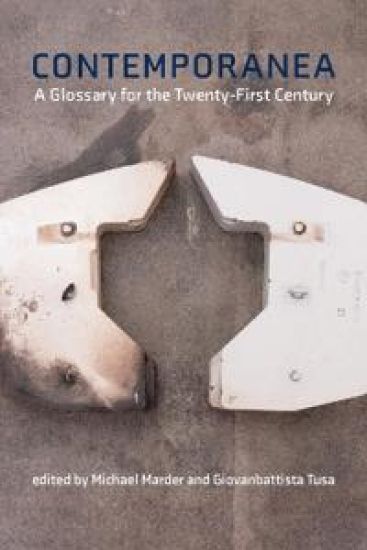
A groundbreaking, multidisciplinary collection that rethinks our present moment and anticipates the key concepts that will shape and direct the twenty-first century.Contemporanea is a nascent lexicon for the twenty-first century edited by seasoned philosophers and authors Michael Marder and Giovanbattista Tusa. The collection showcases perspectives from a range of noteworthy thinkers in philosophy, ecology, and cultural studies, as well as artists, from across the globe, including Slavoj Zizek, Timothy Morton, Denise Ferreira Da Silva, and Vandana Shiva, who each describe what they anticipate will be the concepts shaping the trajectory of this century—everything from the world state to the nuclear taboo, automation to Teslaism, plant sexuality to arachnomancy, and ecotrauma to resonances, to name a few.This century, as the editors explain, has to date grounded itself in the debris of the preceding century, whose revolutions and struggles failed to transform our time: post-colonialism, post-fascism, and post-liberalism have morphed into neocolonialism, neoliberalism, and neofascism, often combined in a previously unimaginable mix. And, just as the political developments at the beginning of the twenty-first century revived and reshuffled those of the preceding epoch, so too have philosophical trends sought to breathe fresh life into the stillborn -isms of the past—realism, vitalism, logicism, materialism, empiricism, criticism—adding the adjective “new” and sometimes “radical” before them. To articulate a different future, another language is needed. And, to develop another language, one needs to develop fresh concepts, including the concepts proposed in this collection.ContributorsMieke Bal, Claudia Baracchi, Amanda Boetzkes, Erik Bordeleau, Anita Chari, Emanuele Coccia, Valentina Desideri, Roberto Esposito, Filipe Ferreira, Denise Ferreira da Silva, Claire Fontaine, Graham Harman, Yogi Hale Hendlin, Ranjit Hoskote, Cymene Howe, Daniel Innerarity, Joela Jacobs, Ken Kawashima, Sabu Kohso, Bogna Konior, Brandon LaBelle, Anna Longo, Artemy Magun, Michael Marder, Michael Marder, Jason Bahbak Mohaghegh, Timothy Morton, Mycelium, Jean-Luc Nancy, Bahar Noorizadeh, Kelly Oliver, Uriel Orlow, Richard Polt, Marcia Sá Cavalcante Schuback, Tomás Saraceno, Vandana Shiva, Anton Tarasyuk, Anaïs Tondeur, Giovanbattista Tusa, Sjoerd van Tuinen, Santiago Zabala, Zahi Zalloua, Slavoj Žižek
The End

The End

Alain Badiou; Giovanbattista Tusa

Polity Press
2019
sidottu
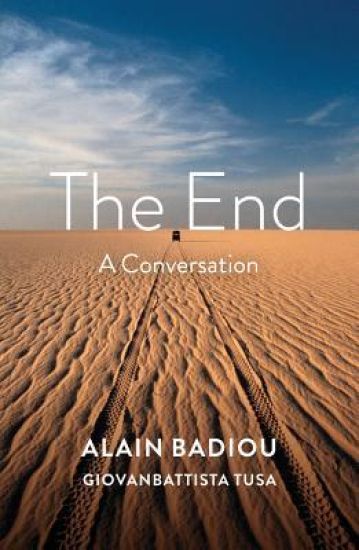
The notion of ‘the end’ has long occupied philosophical thought. In light of the horrors of the twentieth century, some writers have gone so far as to declare the end of philosophy itself, emphasizing the impossibility of thinking after Auschwitz. In this book the distinguished philosopher Alain Badiou, in dialogue with Giovanbattista Tusa, argues that we must renounce ‘the pathos of completion’ and continue to think philosophically. To accept the atrocities of the twentieth century as marking the end of philosophy is intolerable precisely because it buys into the totalizing doctrines of the perpetrators. Badiou contends that philosophical thinking is needed now more than ever to counter the totalizing effects of globalized capitalism, which prescribes no objective for human life other than integration into its system, giving rise to a widespread sense of hopelessness and nihilism. This book will appeal to the many followers of Badiou’s work and to anyone interested in contemporary philosophy and radical political theory.
The End

The End

Alain Badiou; Giovanbattista Tusa

Polity Press
2019
nidottu
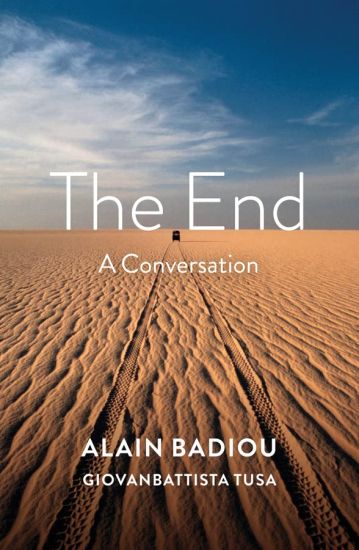
The notion of ‘the end’ has long occupied philosophical thought. In light of the horrors of the twentieth century, some writers have gone so far as to declare the end of philosophy itself, emphasizing the impossibility of thinking after Auschwitz. In this book the distinguished philosopher Alain Badiou, in dialogue with Giovanbattista Tusa, argues that we must renounce ‘the pathos of completion’ and continue to think philosophically. To accept the atrocities of the twentieth century as marking the end of philosophy is intolerable precisely because it buys into the totalizing doctrines of the perpetrators. Badiou contends that philosophical thinking is needed now more than ever to counter the totalizing effects of globalized capitalism, which prescribes no objective for human life other than integration into its system, giving rise to a widespread sense of hopelessness and nihilism. This book will appeal to the many followers of Badiou’s work and to anyone interested in contemporary philosophy and radical political theory.