Kirjailija
Giovanni Pascoli
Kirjat ja teokset yhdessä paikassa: 48 kirjaa, julkaisuja vuosilta 2009-2026, suosituimpien joukossa Songs of Castelvecchio. Vertaile teosten hintoja ja tarkista saatavuus suomalaisista kirjakaupoista.
48 kirjaa
Kirjojen julkaisuhaarukka 2009-2026.

Centurio is a Latin poem by Giovanni Pascoli, awarded the Gold Prize in the Hoeufftianum Poetic Competition. This work exemplifies Pascoli's mastery of classical Latin and his engagement with themes of Roman history and culture. The poem, originating from Pascoli's time in Castelvecchio, showcases his profound understanding of classical forms and his ability to imbue them with personal and evocative expression. This edition allows readers to experience Pascoli's celebrated Latin verse, reflecting his deep connection to the classical world and his significant contribution to neo-Latin literature. 'Centurio' remains a testament to Pascoli's skill and the enduring appeal of Latin poetry. This work has been selected by scholars as being culturally important, and is part of the knowledge base of civilization as we know it. This work was reproduced from the original artifact, and remains as true to the original work as possible. Therefore, you will see the original copyright references, library stamps (as most of these works have been housed in our most important libraries around the world), and other notations in the work. This work is in the public domain in the United States of America, and possibly other nations. Within the United States, you may freely copy and distribute this work, as no entity (individual or corporate) has a copyright on the body of the work. As a reproduction of a historical artifact, this work may contain missing or blurred pages, poor pictures, errant marks, etc. Scholars believe, and we concur, that this work is important enough to be preserved, reproduced, and made generally available to the public. We appreciate your support of the preservation process, and thank you for being an important part of keeping this knowledge alive and relevant.


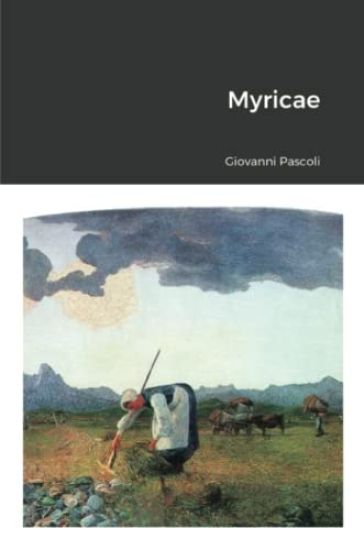
Myricae la prima raccolta di poesia di Pascoli e rappresenta in modo esauriente e completo tutta la poetica pascoliana, che attraverso le varie edizioni, dalle 22 iniziali, giunge al numero finale di156 componimenti. In questa raccolta il poeta cantatemi familiari e campestri, le piccole cose di tutti i giorni, gli affetti pi intimi, riprendendo l'atmosfera delle Bucoliche diVirgiliodove il mondo campestre cantato e idealizzato.
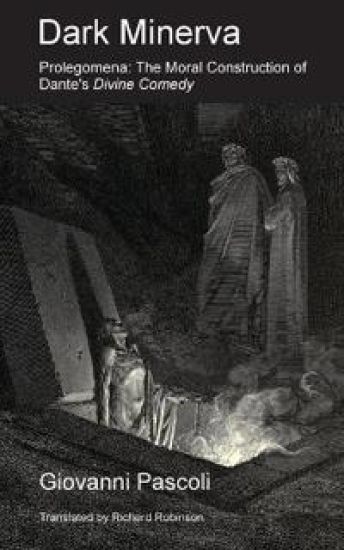
Dark Minerva by Giovanni Pascoli was first published in 1898. (The original title in Italian is Minerva Oscura.) It is an impassioned, often poetic, but also scholarly and critical investigation into Dante Alighieriʼs Divine Comedy. As Pascoli says in the Prolegomena, "To know and to describe Danteʼs thought, will it ever be possible? He eclipses in the profundity of his thought: he intentionally eclipses. I have already set my heart on following him in one of those disappearances in which, after having said ʻLook,ʼ he immediately leaves us in the dark. This time I said to myself, if I see, I will always see; if I understand him in this place, I will understand him everywhere else."Giovanni Pascoli (AD 1855-1912) was a poet and Italian classical scholar, fluent in Greek, Latin, Italian and also English. He was a student of Giosu Carducci, the Italian classicist poet and Nobel prize winner.
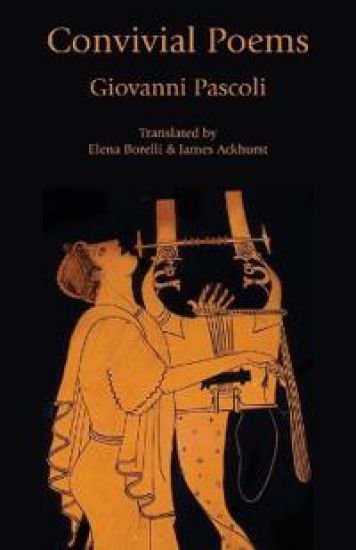
Giovanni Pascoli (1855-1912) is renowned as one of the founders of modern Italian poetry. Embodying the Zeitgeist of fin-de-si cle Italy, his works are inspired by French Symbolism and Decadentism. They also draw on the classical tradition so alive in Italian culture. His unique poetic voice is filled with traditional metrical forms, an uncanny use of onomatopoeic language, and a multilingual vocabulary. He fills his depiction of nature with haunting images and a disquieting sensitivity. Convivial Poems (Poemi Conviviali) is named for Il Convito, the literary journal where these poems first appeared. The collection represents one of Pascoli's highest achievements. Like T.S. Eliot's The Waste Land, James Joyce's Ulysses, and contemporary post-modernist works, it revisits the classical world to draw new symbols for the modern condition. Convivial Poems consists of twenty poems, with facing Italian and English, each devoted to a classical figure, fictional or historical. Ulysses, Helen of Troy, and Alexander the Great, among others, are the protagonists of these stories, but they are also signifiers for themes such as desire and the quest for identity in a modern universe deprived of God. Exquisitely written in a language that at times replicates the forms of Latin and Greek, these poems encode the past into the present and blend the old and the new in a vibrant modernist style.
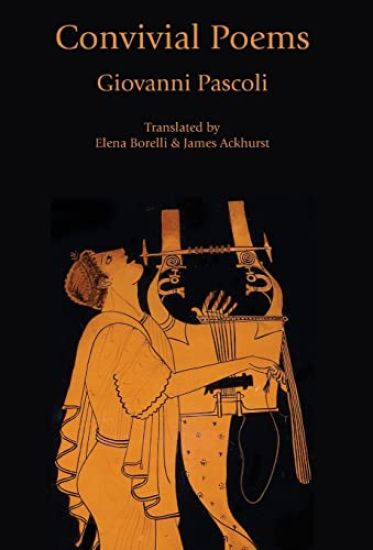
Giovanni Pascoli (1855-1912) is renowned as one of the founders of modern Italian poetry. Embodying the Zeitgeist of fin-de-si cle Italy, his works are inspired by French Symbolism and Decadentism. They also draw on the classical tradition so alive in Italian culture. His unique poetic voice is filled with traditional metrical forms, an uncanny use of onomatopoeic language, and a multilingual vocabulary. He fills his depiction of nature with haunting images and a disquieting sensitivity. Convivial Poems (Poemi Conviviali) is named for Il Convito, the literary journal where these poems first appeared. The collection represents one of Pascoli's highest achievements. Like T.S. Eliot's The Waste Land, James Joyce's Ulysses, and contemporary post-modernist works, it revisits the classical world to draw new symbols for the modern condition. Convivial Poems consists of twenty poems, with facing Italian and English, each devoted to a classical figure, fictional or historical. Ulysses, Helen of Troy, and Alexander the Great, among others, are the protagonists of these stories, but they are also signifiers for themes such as desire and the quest for identity in a modern universe deprived of God. Exquisitely written in a language that at times replicates the forms of Latin and Greek, these poems encode the past into the present and blend the old and the new in a vibrant modernist style.
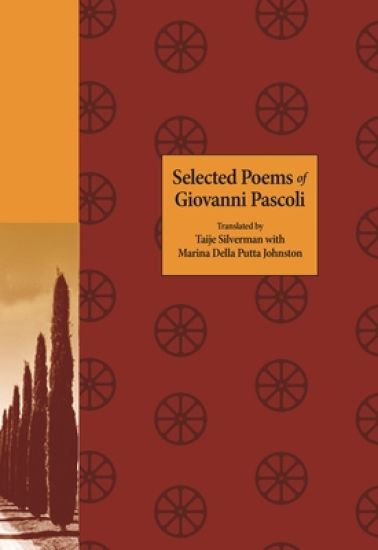
The most comprehensive collection in English of the founder of modern Italian poetryGiovanni Pascoli (1855–1912)—the founder of modern Italian poetry and one of Italy's most beloved poets—has been compared to Robert Frost for his evocation of natural speech, his bucolic settings, and the way he bridges poetic tradition and the beginnings of modernism. Featuring verse from throughout his career, and with the original Italian on facing pages, Selected Poems of Giovanni Pascoli is a comprehensive and authoritative collection of a fascinating and major literary figure.Reading this poet of nature, grief, and small-town life is like traveling through Italy's landscapes in his footsteps—from Romagna and Bologna to Rome, Sicily, and Tuscany—as the country transformed from an agrarian society into an industrial one. Mixing the elevated diction of Virgil with local slang and the sounds of the natural world, these poems capture sense-laden moments: a train's departure, a wren's winter foraging, and the lit windows of a town at dusk. Incorporating revolutionary language into classical scenes, Pascoli's poems describe ancient rural dramas—both large and small—that remain contemporary.Framed by an introduction, annotations, and a substantial chronology, Taije Silverman and Marina Della Putta Johnston's translations render the variety, precision, and beauty of Pascoli's poetry with a profoundly current vision.
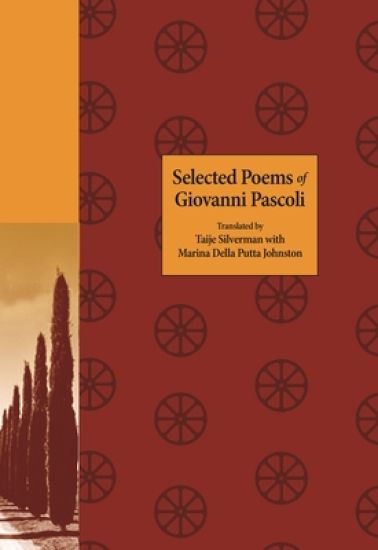
The most comprehensive collection in English of the founder of modern Italian poetryGiovanni Pascoli (1855–1912)—the founder of modern Italian poetry and one of Italy's most beloved poets—has been compared to Robert Frost for his evocation of natural speech, his bucolic settings, and the way he bridges poetic tradition and the beginnings of modernism. Featuring verse from throughout his career, and with the original Italian on facing pages, Selected Poems of Giovanni Pascoli is a comprehensive and authoritative collection of a fascinating and major literary figure.Reading this poet of nature, grief, and small-town life is like traveling through Italy's landscapes in his footsteps—from Romagna and Bologna to Rome, Sicily, and Tuscany—as the country transformed from an agrarian society into an industrial one. Mixing the elevated diction of Virgil with local slang and the sounds of the natural world, these poems capture sense-laden moments: a train's departure, a wren's winter foraging, and the lit windows of a town at dusk. Incorporating revolutionary language into classical scenes, Pascoli's poems describe ancient rural dramas—both large and small—that remain contemporary.Framed by an introduction, annotations, and a substantial chronology, Taije Silverman and Marina Della Putta Johnston's translations render the variety, precision, and beauty of Pascoli's poetry with a profoundly current vision.
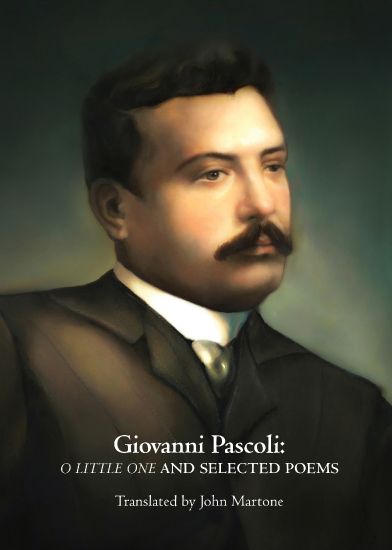
Pascoli stands in the doorway. He is both a last romantic and Italys first modern poet. Beloved for his poems of family and the nest, he is also one of the first voices of modern depth psychology. Steeped in the Italian landscape and drawn into the spell of little creatures, he catches the natural world with scientific accuracy, becoming one of our earliest ecological poets. A revolutionary who writes with emotion about the rural poor, he also reports on the first wave of Italian immigrants to the new world. This collection assembles Giovanni Pascolis central and prophetic study of the imagination, O Little One, an extensive selection of poems delineating his long career, and a late and previously untranslated essay on the poetry of dead languages. The translators introduction examines Pascolis place as a liminal figure, situated at the conjunction of multiple worlds, casting a visionary light on whatever he beholds.
Io sono una lampada ch'arda soave la lampada, forse, che guarda, .
Miei Pensieri di varia Umanità
Giovanni Pascoli
Createspace Independent Publishing Platform
2016
nidottu
This is a reproduction of a book published before 1923. This book may have occasional imperfections such as missing or blurred pages, poor pictures, errant marks, etc. that were either part of the original artifact, or were introduced by the scanning process. We believe this work is culturally important, and despite the imperfections, have elected to bring it back into print as part of our continuing commitment to the preservation of printed works worldwide. We appreciate your understanding of the imperfections in the preservation process, and hope you enjoy this valuable book.