

Kirjailija
Giovanni Verga
Kirjat ja teokset yhdessä paikassa: 153 kirjaa, julkaisuja vuosilta 1984-2026, suosituimpien joukossa Di là del mare. Vertaile teosten hintoja ja tarkista saatavuus suomalaisista kirjakaupoista.
153 kirjaa
Kirjojen julkaisuhaarukka 1984-2026.
Little Novels of Sicily (Novelle Rusticane)
Giovanni Verga; D H Lawrence
Bibliotech Press
2020
pokkari
Giovanni Carmelo Verga (2 September 1840 - 27 January 1922) was a Sicilian realist (verista) writer, best known for his depictions of life in his native Sicily, especially the short story (and later play) Cavalleria rusticana it] and the novel I Malavoglia (The House by the Medlar Tree).The first son of Giovanni Battista Catalano Verga and Caterina Di Mauro, Verga was born into a prosperous family of Catania in Sicily. He began writing in his teens, producing the largely unpublished, but currently quite famous, historical novel Amore e Patria (Love and Country); then, although nominally studying law at the University of Catania, he used money his father had given him to publish his I carbonari della montagna (The Carbonari of the Mountain) in 1861 and 1862. This was followed by Sulle lagune (On the Lagoons) in 1863.He moved to Milan in 1872, where he developed his new approach, characterized by the use of dialogue to develop character, which resulted in his most significant works. In 1880 his story collection Vita dei campi (Life in the Fields), including "Fantasticheria" ("Daydreaming"), "La lupa" ("The She-wolf"), "Jeli il pastore" ("Jeli the Shepherd"), "Pentolaccia" ("The Plaything"), and Rosso Malpelo, most of which were about rural Sicily, came out. It also included "Cavalleria rusticana" ("Rustic Chivalry"), which he adapted for the theatre and later formed the basis for several opera librettos including Mascagni's Cavalleria rusticana and Gastaldon's Mala Pasqua . Verga's short story, "Malaria", was one of the first literary depictions of the disease malaria.He then embarked on a projected series of five novels, but only completed two, I Malavoglia and Mastro-don Gesualdo (1889), the second of which was the last major work of his literary career. Both are widely recognized as masterpieces.In 1894 Verga moved back to Catania, to the house in which he had lived as a child. In 1920 he was appointed Senator of the Kingdom (Senatore del Regno) for life (ad vitam). He died of a cerebral thrombosis in 1922. (wikipedia.org)
Little Novels of Sicily (Novelle Rusticane)
Giovanni Verga; D H Lawrence
Bibliotech Press
2020
sidottu
Giovanni Carmelo Verga (2 September 1840 - 27 January 1922) was a Sicilian realist (verista) writer, best known for his depictions of life in his native Sicily, especially the short story (and later play) Cavalleria rusticana it] and the novel I Malavoglia (The House by the Medlar Tree).The first son of Giovanni Battista Catalano Verga and Caterina Di Mauro, Verga was born into a prosperous family of Catania in Sicily. He began writing in his teens, producing the largely unpublished, but currently quite famous, historical novel Amore e Patria (Love and Country); then, although nominally studying law at the University of Catania, he used money his father had given him to publish his I carbonari della montagna (The Carbonari of the Mountain) in 1861 and 1862. This was followed by Sulle lagune (On the Lagoons) in 1863.He moved to Milan in 1872, where he developed his new approach, characterized by the use of dialogue to develop character, which resulted in his most significant works. In 1880 his story collection Vita dei campi (Life in the Fields), including "Fantasticheria" ("Daydreaming"), "La lupa" ("The She-wolf"), "Jeli il pastore" ("Jeli the Shepherd"), "Pentolaccia" ("The Plaything"), and Rosso Malpelo, most of which were about rural Sicily, came out. It also included "Cavalleria rusticana" ("Rustic Chivalry"), which he adapted for the theatre and later formed the basis for several opera librettos including Mascagni's Cavalleria rusticana and Gastaldon's Mala Pasqua . Verga's short story, "Malaria", was one of the first literary depictions of the disease malaria.He then embarked on a projected series of five novels, but only completed two, I Malavoglia and Mastro-don Gesualdo (1889), the second of which was the last major work of his literary career. Both are widely recognized as masterpieces.In 1894 Verga moved back to Catania, to the house in which he had lived as a child. In 1920 he was appointed Senator of the Kingdom (Senatore del Regno) for life (ad vitam). He died of a cerebral thrombosis in 1922. (wikipedia.org)
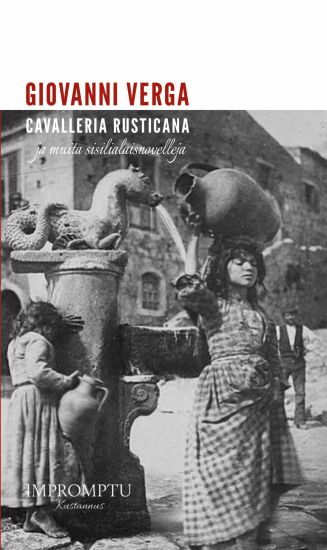
Giovanni Verga (1840-1922) on italialainen, ranskalaisesta naturalismista ja erityisesti Émile Zolan teoksista innoituksensa saaneen, verisminä tunnetun kirjallisen suuntauksen tärkein edustaja. Nyt suomennettu, alkujaan vuonna 1880 julkaistu novellikokoelma oli verismin ensimmäinen mestariteos. Siinä Verga kuvasi omien kotiseutujensa vaatimattoman väen elämää Sisiliassa. Todellisuuden luonnonmukaisen kuvaamisen hengessä Vergan novellien kertoja jättäytyy suosiolla taka-alalle ja antaa henkilöhahmojensa puhua omalla äänellään, niin ettei teoksen elävässä muodossa ole merkkiäkään mielestä jossa se versoi, varjoakaan silmästä joka sen aavisti. Sisilian maaseudulla ihmisten elämää ohjailevat näkymättömät lait ja kirjoittamattomat säännöt, ja tarinat kulkevat useimmiten traagista loppua kohti kuin vääjäämättömän loogisia uria seuraillen. Nimikkonovelli Cavalleria rusticana on tullut tunnetuksi myös Pietro Mascagnin oopperasovituksena. Giovanni Vergan tuotantoa on suomennettu yllättävän vähän. Romaani Malavoglian suku, jota pidetään Vergan pääteoksena, on suomennettu vuonna 1953, ja sen lisäksi vain muutama novelli joihinkin kokoomateoksiin.

Il capolavoro di Verga narra le vicende della famiglia Toscano, nel piccolo paese di Aci Trezza, ed indaga, attraverso l'analisi di diverse generazioni di pescatori, la purezza dei sentimenti umani. Nonostante la sorte avversa, che affligge i personaggi della storia, a partire dalla distruzione della "Provvidenza," la barca di famiglia, fino alla perdita della "Casa del Nespolo," Verga, che pure si prefigge l'obiettivo di dimostrare la sconfitta dell'umanit
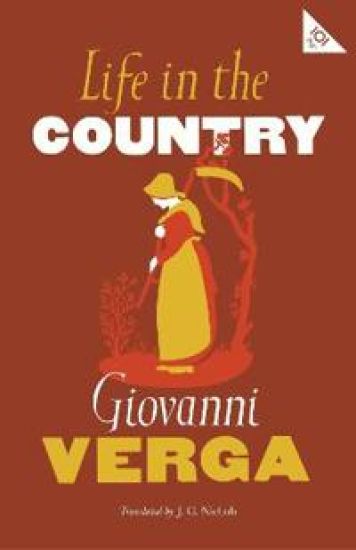
Published in 1880, one year before Verga’s influential novel The Malavoglias, Life in the Country first marked his stylistic shift towards the verismo school of Italian realism. The collection’s centrepiece, ‘Rustic Honour’ (‘Cavalleria rusticana’) – which was famously adapted into a play by the author before becoming an opera by Mascagni – tells the tale of Turiddu, a poor young man who returns from military service and finds himself embroiled in adultery and a feud with a rival.Also including the well-known stories ‘She-Wolf’ and ‘Foxfur’, Life in the Country captures, in an objective, non-judgemental prose, the difficult conditions and personal struggles of the peasant class in his native Sicily at the turn of the twentieth century.

Verga pubblicata per la prima volta nel 1880 e riedita in nuova versione definitiva nel 1897.La raccolta si compone di otto racconti scritti fra il 1878, anno in cui fu pubblicato Rosso Malpelo e il 1881, anno il cui fu pubblicata la seconda edizione contenente il racconto Il come, il quando ed il perch . Protagonisti dei racconti sono per lo pi appartenenti alle classi sociali pi umili della societ siciliana.

Il romanzo in parte autobiografico: prende spunto, infatti, da una vicenda vissuta in prima persona da Giovanni Verga in et giovanile. L'episodio risale all'estate 1854-1855 quando, in seguito all'epidemia di colera che si era scatenata su Catania, la famiglia Verga si rifugia a Tebidi, una localit tra Vizzini e Licodia. Verga, all'epoca quindicenne, si innamora di Rosalia, giovane educanda del monastero di San Sebastiano (Vizzini), dove monaca anche sua zia.

Il romanzo narra la storia di una famiglia di pescatori che vive e lavora ad Aci Trezza, un piccolo paese siciliano nei pressi di Catania; i personaggi sono tutti uniti dalla stessa cultura ma divisi dalle loro diverse scelte di vita, soverchiate comunque da un destino ineluttabile.

Pietro Brusio, un giovane di Catania, studente di legge e con passioni letterarie, si innamora perdutamente di una donna incontrata casualmente durante una passeggiata ai giardini pubblici della citt . La donna si chiama Narcisa Valderi ed la moglie del conte di Prato. Lei, per , non sembra accettare la corte assidua del giovane che, desideroso di riscattarsi, compone in breve tempo un dramma, il Gilberto, che lo rende subito celebre. Grazie alla notoriet ottenuta riesce a conquistare la donna, ora innamorata persa di lui...

Gesualdo Motta un muratore che riuscito a diventare ricco grazie alla forza del suo lavoro. Questo lo porta "naturalmente" ad accettare la logica economica che lo porta in una nuova classe sociale: per fare questo, abbandona la sua umile moglie che lo amava e gli diede figli per sposare Bianca Trao, una nobile ma povera giovane donna che si disonorata con suo cugino, dal quale ha una figlia, Isabella, e che la disprezza per le sue origini. Se i rapporti tra Gesualdo e sua moglie sono in conflitto, prova un grande amore per sua nuora. Tuttavia, quando la spinge a sposare un vecchio nobile senza un soldo, non ottiene altro da Isabella che il disprezzo, soprattutto perch l'uomo dissipa in breve tempo tutta la ricchezza accumulata con difficolt da Gesualdo durante il suo vita. Quest'ultimo si ritrova allora solo, privo di affetto, accettato solo per la sua ricchezza ma rifiutato in realt a causa della sua scarsa estrazione sociale. Muore da solo nel palazzo della figlia, deriso anche dai servi che sono irritati dalla visione delle sue umili origini sulle sue mani. Gesualdo scompare come "Mastro-don": dono ricco e potente, ma sempre mastro, nome dato dai siciliani a chi si dedicava al lavoro manuale, il segno per Gesualdo della sua appartenenza irrevocabile al mondo sottostante.

Il romanzo narra la storia di una famiglia di pescatori che vive e lavora ad Aci Trezza, un piccolo paese siciliano nei pressi di Catania; i personaggi sono tutti uniti dalla stessa cultura ma divisi dalle loro diverse scelte di vita, soverchiate comunque da un destino ineluttabile.

Pietro Brusio, un giovane di Catania, studente di legge e con passioni letterarie, si innamora perdutamente di una donna incontrata casualmente durante una passeggiata ai giardini pubblici della citt . La donna si chiama Narcisa Valderi ed la moglie del conte di Prato. Lei, per , non sembra accettare la corte assidua del giovane che, desideroso di riscattarsi, compone in breve tempo un dramma, il Gilberto, che lo rende subito celebre.

The most famous Sicilian short-stories by Giovanni Verga translated into English. "The charm of the six short stories bound up under the inclusive title of Under the Shadow of Etna lies in their reflection of Sicilian scenery, life, and character, with which all of them deal. They are translations from the Italian of Giovanni Verga by the practiced hand of Nathan Haskell Dole, and smoking Etna overhangs them all as does Fujiyama the romances of Japan. One of the six, "Cavalleria Rusticana," has already been made widely familiar by the musical setting of it in Mascagni's opera. All are tales of human passion, love, sin, and sorrow, grimly real sometimes, slight in touch, dramatic, artistic, now and then sunshiny, and full of realism." -The Literary World: A Monthly Review of Current Literature, Vol. 2 "The Sicilian tales are selected as but representing the varied work of Verga, a "realist" in literature. The stories are strong and brilliant, and Mr. Dole's translation pellucid as it should be." -The Book Buyer, Volume 13

House by The-Medlar-Tree by Giovanni Verga. An English edition, The House by the Medlar-Tree (1890) translated by Mary A. Craig was published in the Continental Classics series. This work belongs to the Ciclo dei vinti, together with Mastro-don Gesualdo, La Duchessa di Leyra, L'Onorevole Scipioni and L'uomo di lusso, works which deal with the problem of social and economical advancement. La Duchessa de Leyra remained only a draft, while the last two novels planned for the Ciclo, L'Onorevole Scipioni and L'Uomo di Lusso, were not even started. I Malavoglia deals with a family of fishermen who work and live in Aci Trezza, a small Sicilian village near Catania. The novel possesses a choral aspect, and depicts characters united by the same culture, but divided by ancient rivalries. Any one who loves simplicity or respects sincerity, any one who feels the tie binding us all together in the helplessness of our common human life, and running from the lowliest as well as the highest to the Mystery immeasurably above the whole earth, must find a rare and tender pleasure in this simple story of an Italian fishing village. I cannot promise that it will interest any other sort of readers, but I do not believe that any other sort are worth interesting; and so I can praise Signor Verga

Dir come mi sia pervenuta questa storia, che convenienze particolari mi obbligano a velare sotto la forma del romanzo.

Avevo visto una capinera chiusa in gabbia: era timida, triste, malaticcia ci guardava con occhio spaventato; si rifuggiava in un angolo della sua gabbia, e allorch udiva il canto allegro degli altri uccelletti che .

Suonava la messa dell'alba a San Giovanni; ma il paesetto dormiva ancora della grossa, perch era piovuto da tre giorni, e nei seminati ci si affondava fino a mezza gamba.