Kirjojen hintavertailu. Mukana 12 595 353 kirjaa ja 12 kauppaa.
Kirjailija
Giulio E. Lancioni
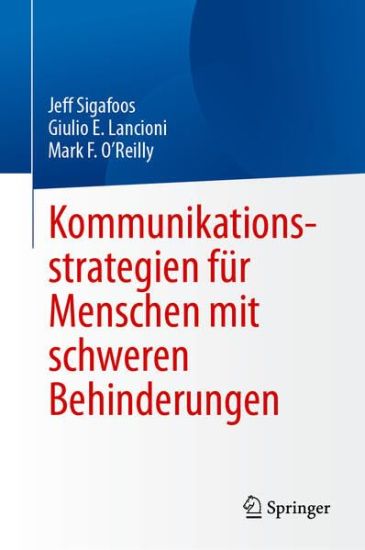
Kirjat ja teokset yhdessä paikassa: 4 kirjaa, julkaisuja vuosilta 2012-2025, suosituimpien joukossa Kommunikationsstrategien für Menschen mit schweren Behinderungen. Vertaile teosten hintoja ja tarkista saatavuus suomalaisista kirjakaupoista.
For people with severe/profound and multiple disabilities, managing the basic necessities of daily life often poses myriad challenges. Despite great odds, advances in assistive technology are making a difference in these individuals’ lives. Advances in microswitches, voice outcome communication aids, and computer-based systems are creating new opportunities for living independently, improving basic life skills, and reducing problem behaviors among individuals with combined motor, sensory, and intellectual disabilities.This unique volume examines how education and rehabilitation can improve the lives of even those individuals most affected by severe/profound and multiple disabilities. Interventions currently in use and in experimental stages are surveyed in terms of how they work and their applicability to clients with various needs. In addition, it examines the characteristics of developmentally disabled populations and offers guidelines for choosing suitable technologies. It presents empirical evidence on the advances in improving interaction with caregivers, control of the home environment, handling self-care tasks, and other core skills. Assistive Technology examines interventions that are innovative, respectful of the dignity of clients, and practical for ongoing use, including:• Microswitches in habilitation programs.• Speech-generating devices for communication and social development.• Instructional technology for promoting academic, work, and leisure skills.• Assistive technology for promoting ambulation.• Orientation systems for promoting movement indoors.• Assistive technology for reducing problem behaviors.A state-of-the-art guide to a growing field, Assistive Technology is an invaluable resource for researchers, clinicians, graduate students as well as clinicians and allied professionals in developmental psychology, rehabilitation and rehabilitative medicine,learning and instruction, occupational therapy, speech-language pathology, and educational technology.
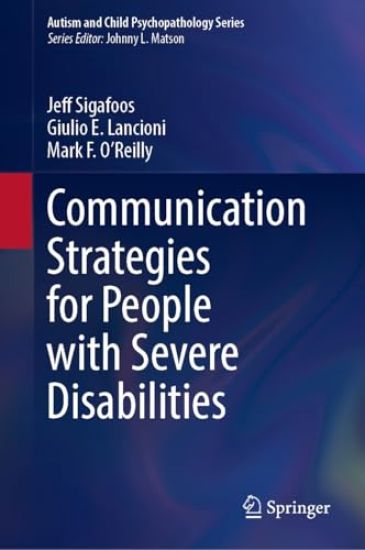
This book describes communication strategies for people with severe disabilities who are nonverbal or minimally verbal. It examines the major assessment and intervention strategies that have been developed to enable expressive and receptive communication. In addition, the book explores contemporary research focused on teaching nonverbal and minimally verbal persons to use a range of communication strategies for expressive and receptive communication. It addresses the advantages and disadvantages of each communication strategy, selecting curriculum for communication intervention programs, and assessing the communication needs of individuals with severe disabilities who are nonverbal or minimally verbal. Key areas of coverage include: Assessing communication strengths and areas of intervention need.Developing communication intervention curricula.Prelinguistic intervention.Natural gestures and manual signing strategies.Aided augmentative and alternative communication strategies, including tangible symbols, picture-based systems, speech-generating devices, and assistive technology solutions for individuals with sensory-motor impairment.Visual strategies to enhance receptive communication. Communication Strategies for People with Severe Disabilities is an invaluable resource for clinicians, therapists, and other professionals as well as researchers, professors, and graduate students in the interrelated fields of clinical child and school psychology, developmental psychology, child and adolescent psychiatry, clinical social work, applied behavior analysis, augmentative and alternative communication, special education, and speech-language pathology.
For people with severe/profound and multiple disabilities, managing the basic necessities of daily life often poses myriad challenges. Despite great odds, advances in assistive technology are making a difference in these individuals’ lives. Advances in microswitches, voice outcome communication aids, and computer-based systems are creating new opportunities for living independently, improving basic life skills, and reducing problem behaviors among individuals with combined motor, sensory, and intellectual disabilities.This unique volume examines how education and rehabilitation can improve the lives of even those individuals most affected by severe/profound and multiple disabilities. Interventions currently in use and in experimental stages are surveyed in terms of how they work and their applicability to clients with various needs. In addition, it examines the characteristics of developmentally disabled populations and offers guidelines for choosing suitable technologies. It presents empirical evidence on the advances in improving interaction with caregivers, control of the home environment, handling self-care tasks, and other core skills. Assistive Technology examines interventions that are innovative, respectful of the dignity of clients, and practical for ongoing use, including:• Microswitches in habilitation programs.• Speech-generating devices for communication and social development.• Instructional technology for promoting academic, work, and leisure skills.• Assistive technology for promoting ambulation.• Orientation systems for promoting movement indoors.• Assistive technology for reducing problem behaviors.A state-of-the-art guide to a growing field, Assistive Technology is an invaluable resource for researchers, clinicians, graduate students as well as clinicians and allied professionals in developmental psychology, rehabilitation and rehabilitative medicine,learning and instruction, occupational therapy, speech-language pathology, and educational technology.