Kirjojen hintavertailu. Mukana 12 595 353 kirjaa ja 12 kauppaa.

Kirjailija

Giunia Gatta

Kirjat ja teokset yhdessä paikassa: 4 kirjaa, julkaisuja vuosilta 2018-2026, suosituimpien joukossa Four Philosophers and the Bomb. Vertaile teosten hintoja ja tarkista saatavuus suomalaisista kirjakaupoista.

4 kirjaa

Kirjojen julkaisuhaarukka 2018-2026.

Four Philosophers and the Bomb

Four Philosophers and the Bomb

Alberto Castelli; Giunia Gatta; Micaela Latini; Francesco Raschi

TAYLOR FRANCIS LTD
2026
nidottu
In this book, Alberto Castelli, Giunia Gatta, Micaela Latini, and Francesco Raschi examine how four prominent intellectuals of the 20th century (Bertrand Russell, Karl Jaspers, Raymond Aron, and Günther Anders) understood atomic warfare. With a chapter devoted to the philosophical ideas of each thinker and how they understood and interpreted war, the authors analyze the historic-political context in which these ideas emerged and what they proposed to avoid a nuclear disaster. Four Philosophers and the Bomb will be of interest to students and researchers of peace studies, international relations, political philosophy, and moral philosophy.
Four Philosophers and the Bomb

Four Philosophers and the Bomb

Alberto Castelli; Giunia Gatta; Micaela Latini; Francesco Raschi

TAYLOR FRANCIS LTD
2025
sidottu
In this book, Alberto Castelli, Giunia Gatta, Micaela Latini, and Francesco Raschi examine how four prominent intellectuals of the 20th century (Bertrand Russell, Karl Jaspers, Raymond Aron, and Günther Anders) understood atomic warfare. With a chapter devoted to the philosophical ideas of each thinker and how they understood and interpreted war, the authors analyze the historic-political context in which these ideas emerged and what they proposed to avoid a nuclear disaster.Four Philosophers and the Bomb will be of interest to students and researchers of peace studies, international relations, political philosophy, and moral philosophy.
Rethinking Liberalism for the 21st Century
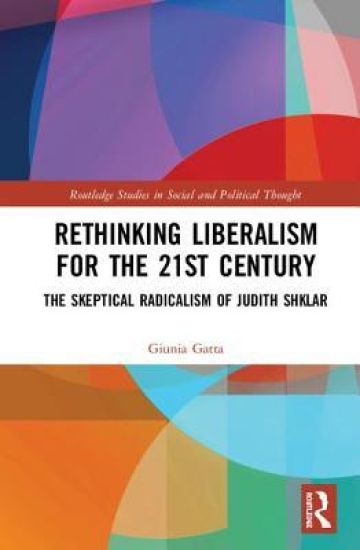
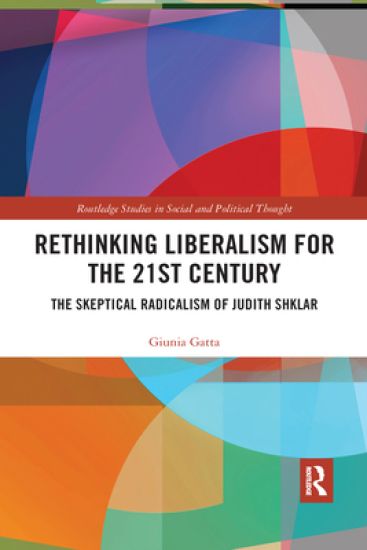
Rethinking Liberalism for the 21st Century offers an indispensable reexamination of the life, work, and interventions of a prominent liberal political theorist of the 20th century: Judith Shklar.Drawing on published and unpublished sources including Shklar’s correspondence, lecture notes, and other manuscripts, Giunia Gatta presents a fresh theoretical interpretation of Shklar’s liberalism as philosophically and politically radical. Beginning with a thorough reconstruction of Shklar’s life and her interest in political theory, Gatta turns her attention to examining the tension between Shklar’s critique of the term "modernity" and her passion for Enlightenment thinkers, including Rousseau and Hegel. In the second part of the book, Gatta roots Shklar’s liberalism of permanent minorities in her work in the history of political thought, and highlights this contribution as a fundamental recasting of liberalism as the political philosophy of outsiders. She makes a compelling argument for a liberalism of permanent minorities that refuses to stand on the ground of firm foundations and, instead, is oriented by complex understandings of cruelty and fear. Rethinking Liberalism for the 21st Century is a much-needed reorientation of traditional liberal policies, allowing for a more meaningful intervention in many contemporary debates. As such, it will be of interest to scholars of political theory, the history of political thought and ideas, philosophy, international relations, and political science in general.
Rethinking Liberalism for the 21st Century
Rethinking Liberalism for the 21st Century offers an indispensable reexamination of the life, work, and interventions of a prominent liberal political theorist of the 20th century: Judith Shklar.Drawing on published and unpublished sources including Shklar’s correspondence, lecture notes, and other manuscripts, Giunia Gatta presents a fresh theoretical interpretation of Shklar’s liberalism as philosophically and politically radical. Beginning with a thorough reconstruction of Shklar’s life and her interest in political theory, Gatta turns her attention to examining the tension between Shklar’s critique of the term "modernity" and her passion for Enlightenment thinkers, including Rousseau and Hegel. In the second part of the book, Gatta roots Shklar’s liberalism of permanent minorities in her work in the history of political thought, and highlights this contribution as a fundamental recasting of liberalism as the political philosophy of outsiders. She makes a compelling argument for a liberalism of permanent minorities that refuses to stand on the ground of firm foundations and, instead, is oriented by complex understandings of cruelty and fear. Rethinking Liberalism for the 21st Century is a much-needed reorientation of traditional liberal policies, allowing for a more meaningful intervention in many contemporary debates. As such, it will be of interest to scholars of political theory, the history of political thought and ideas, philosophy, international relations, and political science in general.