Kirjojen hintavertailu. Mukana 12 595 353 kirjaa ja 12 kauppaa.
Kirjailija
Giuseppe Morandi
Kirjat ja teokset yhdessä paikassa: 7 kirjaa, julkaisuja vuosilta 1990-2016, suosituimpien joukossa Hubbard Model And Anyon Superconductivity, The. Vertaile teosten hintoja ja tarkista saatavuus suomalaisista kirjakaupoista.
Several different models have recently been proposed to explain High Temperature Superconductivity. This book gives an authoritative and up-to-date review of two such proposals, namely the Hubbard and Anyon Models. This invaluable reference is a must for all physicists interested in the fast-paced revolutionary field of High Temperature Superconductivity.
Several different models have recently been proposed to explain High Temperature Superconductivity. This book gives an authoritative and up-to-date review of two such proposals, namely the Hubbard and Anyon Models. This invaluable reference is a must for all physicists interested in the fast-paced revolutionary field of High Temperature Superconductivity.
This book describes, by using elementary techniques, how some geometrical structures widely used today in many areas of physics, like symplectic, Poisson, Lagrangian, Hermitian, etc., emerge from dynamics. It is assumed that what can be accessed in actual experiences when studying a given system is just its dynamical behavior that is described by using a family of variables ("observables" of the system). The book departs from the principle that ''dynamics is first'' and then tries to answer in what sense the sole dynamics determines the geometrical structures that have proved so useful to describe the dynamics in so many important instances. In this vein it is shown that most of the geometrical structures that are used in the standard presentations of classical dynamics (Jacobi, Poisson, symplectic, Hamiltonian, Lagrangian) are determined, though in general not uniquely, by the dynamics alone. The same program is accomplished for the geometrical structures relevant to describe quantum dynamics. Finally, it is shown that further properties that allow the explicit description of the dynamics of certain dynamical systems, like integrability and super integrability, are deeply related to the previous development and will be covered in the last part of the book. The mathematical framework used to present the previous program is kept to an elementary level throughout the text, indicating where more advanced notions will be needed to proceed further. A family of relevant examples is discussed at length and the necessary ideas from geometry are elaborated along the text. However no effort is made to present an ''all-inclusive'' introduction to differential geometry as many other books already exist on the market doing exactly that. However, the development of the previous program, considered as the posing and solution of a generalized inverse problem for geometry, leads to new ways of thinking and relating some of the most conspicuous geometrical structures appearing in Mathematical and Theoretical Physics.
This book describes, by using elementary techniques, how some geometrical structures widely used today in many areas of physics, like symplectic, Poisson, Lagrangian, Hermitian, etc., emerge from dynamics. It is assumed that what can be accessed in actual experiences when studying a given system is just its dynamical behavior that is described by using a family of variables ("observables" of the system). The book departs from the principle that ''dynamics is first'' and then tries to answer in what sense the sole dynamics determines the geometrical structures that have proved so useful to describe the dynamics in so many important instances. In this vein it is shown that most of the geometrical structures that are used in the standard presentations of classical dynamics (Jacobi, Poisson, symplectic, Hamiltonian, Lagrangian) are determined, though in general not uniquely, by the dynamics alone. The same program is accomplished for the geometrical structures relevant to describe quantum dynamics. Finally, it is shown that further properties that allow the explicit description of the dynamics of certain dynamical systems, like integrability and super integrability, are deeply related to the previous development and will be covered in the last part of the book. The mathematical framework used to present the previous program is kept to an elementary level throughout the text, indicating where more advanced notions will be needed to proceed further. A family of relevant examples is discussed at length and the necessary ideas from geometry are elaborated along the text. However no effort is made to present an ''all-inclusive'' introduction to differential geometry as many other books already exist on the market doing exactly that. However, the development of the previous program, considered as the posing and solution of a generalized inverse problem for geometry, leads to new ways of thinking and relating some of the most conspicuous geometrical structures appearing in Mathematical and Theoretical Physics.
In solid-state physics especially topological techniques have turned out to be extremely useful for modelling and explaining physical properties of matter. This book illustrates various applications of algebraic topology in classical field theory (non-linear sigma-models) and in quantizationsin multiply connected spaces (anyons). It treats Chern-Simon Lagrangians, Berry's phase, the polarization of light and the fractional quantum Hall effect.
This book covers the foundations of classical thermodynamics, with emphasis on the use of differential forms of classical and quantum statistical mechanics, and also on the foundational aspects. In both contexts, a number of applications are considered in detail, such as the general theory of response, correlations and fluctuations, and classical and quantum spin systems. In the quantum case, a self-contained introduction to path integral methods is given. In addition, the book discusses phase transitions and critical phenomena, with applications to the Landau theory and to the Ginzburg-Landau theory of superconductivity, and also to the phenomenon of Bose condensation and of superfluidity. Finally, there is a careful discussion on the use of the renormalization group in the study of critical phenomena.
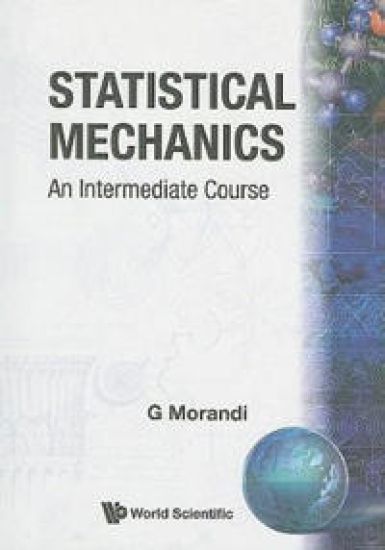
The book aims to bridge the gap between standard textbooks on the subject and more advanced books, discussing in a more thorough way the foundations of both classical and quantum statistical mechanics. It is devised for a one-semester graduate course on statistical mechanics. Its prerequisite is therefore a more elementary course on the same subject. Emphasis is laid on the geometrical aspects of classical thermodynamics, on the foundational problems, and on selected applications (mainly to spin systems), the meaning of quantum statistics, phase transitions, critical phenomena, and the renormalization group.