Kirjojen hintavertailu. Mukana 12 595 353 kirjaa ja 12 kauppaa.

Kirjailija

Glenn Waller

Kirjat ja teokset yhdessä paikassa: 7 kirjaa, julkaisuja vuosilta 2007-2025, suosituimpien joukossa Cognitive-Behavioural Therapy for Anorexia Nervosa. Vertaile teosten hintoja ja tarkista saatavuus suomalaisista kirjakaupoista.

7 kirjaa

Kirjojen julkaisuhaarukka 2007-2025.

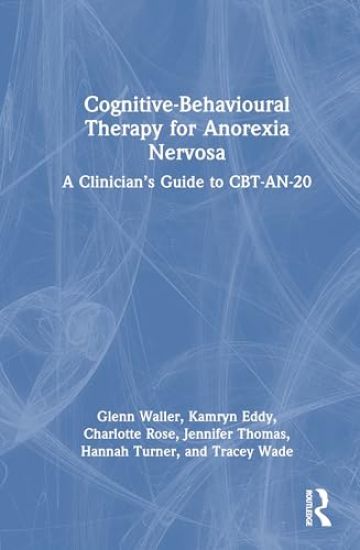
Cognitive-Behavioural Therapy for Anorexia Nervosa

Cognitive-Behavioural Therapy for Anorexia Nervosa

Glenn Waller; Kamryn T. Eddy; Charlotte L. Rose; Jennifer J. Thomas; Hannah M. Turner; Tracey D. Wade

TAYLOR FRANCIS LTD
2025
sidottu
This book presents CBT-AN-20, a newly developed briefer form of cognitive-behavioural therapy (CBT) for anorexia nervosa, designed to treat individuals in 20 sessions, helping clinicians to offer effective therapy to more patients and enabling patients to move more quickly towards recovery. This manual addresses the key CBT skills needed to deliver effective CBT-AN-20. It uses a combination of psychoeducation, nutrition, exposure therapy, and behavioural experiments to overcome starvation and to support essential weight gain/stability. It then details the skills needed to work with emotional factors and with body image issues. Importantly, it also stresses the meta-competences needed to work with anorexia nervosa – such as early change, motivational work, engaging with the "anorexic voice", and maintaining a working alliance that stresses change. Accompanying the text is a range of useful web-based materials to support the clinician reading the manual. These include checklists, psychoeducation materials, measures, and videos of skills in action. CBT-AN-20’s pragmatic structure supports its delivery by both experienced therapists and those newer to the field who are practising under expert supervision. This book is a "must read" for all levels of practitioners from all disciplines who work with eating disorders.
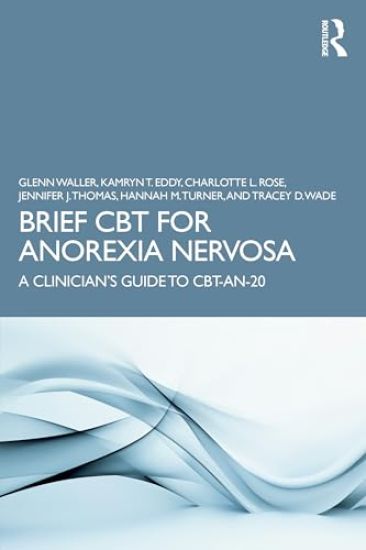
Cognitive-Behavioural Therapy for Anorexia Nervosa

Cognitive-Behavioural Therapy for Anorexia Nervosa

Glenn Waller; Kamryn T. Eddy; Charlotte L. Rose; Jennifer J. Thomas; Hannah M. Turner; Tracey D. Wade

TAYLOR FRANCIS LTD
2025
nidottu
This book presents CBT-AN-20, a newly developed briefer form of cognitive-behavioural therapy (CBT) for anorexia nervosa, designed to treat individuals in 20 sessions, helping clinicians to offer effective therapy to more patients and enabling patients to move more quickly towards recovery. This manual addresses the key CBT skills needed to deliver effective CBT-AN-20. It uses a combination of psychoeducation, nutrition, exposure therapy, and behavioural experiments to overcome starvation and to support essential weight gain/stability. It then details the skills needed to work with emotional factors and with body image issues. Importantly, it also stresses the meta-competences needed to work with anorexia nervosa – such as early change, motivational work, engaging with the "anorexic voice", and maintaining a working alliance that stresses change. Accompanying the text is a range of useful web-based materials to support the clinician reading the manual. These include checklists, psychoeducation materials, measures, and videos of skills in action. CBT-AN-20’s pragmatic structure supports its delivery by both experienced therapists and those newer to the field who are practising under expert supervision. This book is a "must read" for all levels of practitioners from all disciplines who work with eating disorders.
Cognitive Behavioral Therapy for Eating Disorders

Cognitive Behavioral Therapy for Eating Disorders

Glenn Waller; Helen Cordery; Emma Corstorphine; Hendrik Hinrichsen; Rachel Lawson; Victoria Mountford; Katie Russell

Cambridge University Press
2007
pokkari
This book describes the application of cognitive behavioural principles to patients with a wide range of eating disorders - it covers those with straightforward problems and those with more complex conditions or co-morbid states. The book takes a highly pragmatic view. It is based on the published evidence, but stresses the importance of individualized, principle-based clinical work. It describes the techniques within the widest clinical context, for use across the age range and from referral to discharge. Throughout the text, the links between theory and practice are highlighted in order to stress the importance of the flexible application of skills to each new situation. Case studies and sample dialogs are employed to demonstrate the principles in action and the book concludes with a set of useful handouts for patients and other tools. This book will be essential reading for all those working with eating-disordered patients including psychologists, psychiatrists, nurses, counsellors, dieticians, and occupational therapists.
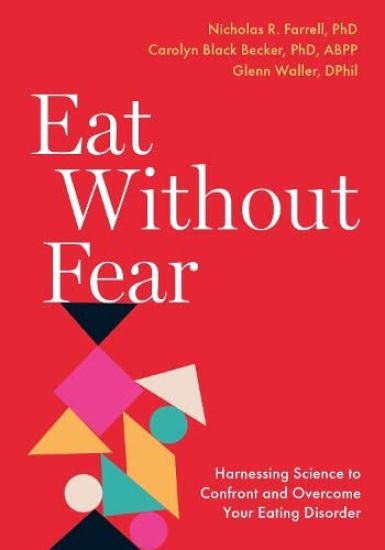
Eat Without Fear

Eat Without Fear

Nicholas R. Farrell; Carolyn Black Becker; Glenn Waller

OXFORD UNIVERSITY PRESS INC
2024
nidottu
Eating disorders are serious conditions that can be hard to treat; however, the chances of overcoming an eating disorder increase when exposure therapy is used as part of the overall treatment strategy. Exposure therapy involves confronting (rather than avoiding) challenging scenarios that evoke distress, and though this technique has typically been used mainly by psychotherapists, people struggling with eating disorders can use it on their own to reduce troubling eating behaviors. Eat Without Fear provides practical, reader-friendly information about this innovative, scientifically-supported approach, as well as guidance on how to apply it effectively to beat an eating disorder using a "team approach" that involves family members, friends, and other loved ones. Readers will benefit from the use of easy-to-understand language describing the key concepts of eating disorders and how exposure therapy can help treat them. Additionally, the book guides readers through therapeutic activities that enable them to effectively practice exposure therapy techniques on their own. Given the value of involving family members and other supportive people in the eating disorder recovery process, this book encourages collaboration between readers and their loved ones and offers practical suggestions for how they can work together to achieve their desired goals.
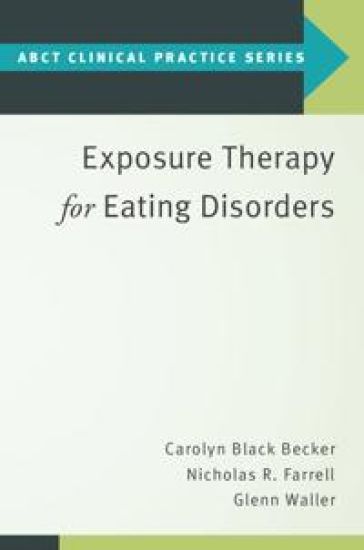
Exposure Therapy for Eating Disorders

Exposure Therapy for Eating Disorders

Carolyn Black Becker; Nicholas R. Farrell; Glenn Waller

Oxford University Press Inc
2020
nidottu
Exposure Therapy for Eating Disorders is designed to augment existing eating disorder treatment manuals by providing clinicians with practical advice for maximizing the effectiveness of exposure, regardless of clinical background or evidence-based treatment used. Suitable for use with a range of diagnoses, this easy-to-use guide describes the most up to date empirical research on exposure for eating disorders, extrapolating clinical advice from the anxiety disorders literature in order to help busy clinicians become more effective in treating these challenging illnesses. Readers will gain solid understanding of the theoretical underpinnings of exposure therapy, as well as how to utilize this information to explain the rationale for exposure to patients. Specific types of eating disorder exposure are covered in detail, including exposure to food and eating, cue exposure for binge eating, weighing and weight exposure, novel forms of exposure for eating disorders, and more. The book also provides strategies for overcoming obstacles, including institutional resistance to implementation of exposure therapy.
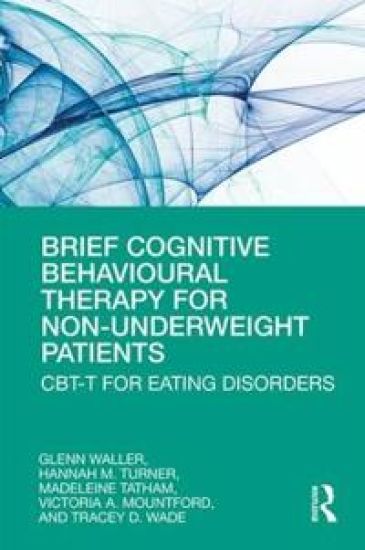
Brief Cognitive Behavioural Therapy for Non-Underweight Patients

Brief Cognitive Behavioural Therapy for Non-Underweight Patients

Glenn Waller; Hannah Turner; Madeleine Tatham; Victoria Mountford; Tracey Wade

Routledge
2019
sidottu
Most people with eating disorders struggle to find an effective therapy that they can access quickly. Brief Cognitive Behavioural Therapy for Non-Underweight Patients: CBT-T for Eating Disorders presents a new form of cognitive behavioural therapy (CBT) that is brief and effective, allowing more patients to get the help that they need.CBT is a strongly supported therapy for all adults and many adolescents with eating disorders. This 10-session approach to CBT (CBT-T) is suitable for all eating disorder patients who are not severely underweight, helping adults and young adults to overcome their eating disorder. Using CBT-T with patients will allow clinicians to treat people in less time, shorten waiting lists, and see patients more quickly when they need help. It is a flexible protocol, which fits to the patient rather than making the patient fit to the therapy.Brief Cognitive Behavioural Therapy for Non-Underweight Patients provides an evidence-based protocol that can be delivered by junior or senior clinicians, helping patients to recover and go on to live a healthy life. This book will appeal to clinical psychologists, psychiatrists, psychotherapists, dietitians, nurses, and other professionals working with eating disorders.
Brief Cognitive Behavioural Therapy for Non-Underweight Patients

Brief Cognitive Behavioural Therapy for Non-Underweight Patients

Glenn Waller; Hannah Turner; Madeleine Tatham; Victoria Mountford; Tracey Wade

Routledge
2019
nidottu
Most people with eating disorders struggle to find an effective therapy that they can access quickly. Brief Cognitive Behavioural Therapy for Non-Underweight Patients: CBT-T for Eating Disorders presents a new form of cognitive behavioural therapy (CBT) that is brief and effective, allowing more patients to get the help that they need.CBT is a strongly supported therapy for all adults and many adolescents with eating disorders. This 10-session approach to CBT (CBT-T) is suitable for all eating disorder patients who are not severely underweight, helping adults and young adults to overcome their eating disorder. Using CBT-T with patients will allow clinicians to treat people in less time, shorten waiting lists, and see patients more quickly when they need help. It is a flexible protocol, which fits to the patient rather than making the patient fit to the therapy.Brief Cognitive Behavioural Therapy for Non-Underweight Patients provides an evidence-based protocol that can be delivered by junior or senior clinicians, helping patients to recover and go on to live a healthy life. This book will appeal to clinical psychologists, psychiatrists, psychotherapists, dietitians, nurses, and other professionals working with eating disorders.