Kirjojen hintavertailu. Mukana 12 390 323 kirjaa ja 12 kauppaa.

Kirjailija

Glenn Willmott

Kirjat ja teokset yhdessä paikassa: 8 kirjaa, julkaisuja vuosilta 1996-2022, suosituimpien joukossa Reading for Wonder. Vertaile teosten hintoja ja tarkista saatavuus suomalaisista kirjakaupoista.

8 kirjaa

Kirjojen julkaisuhaarukka 1996-2022.

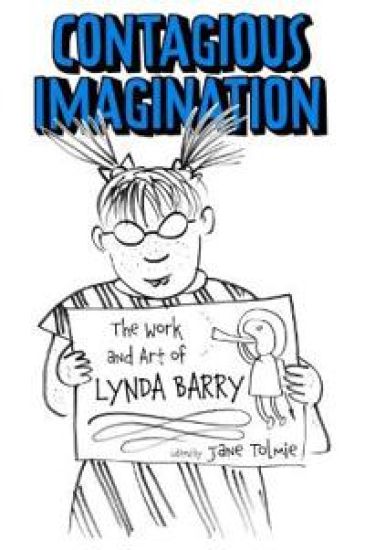
Contagious Imagination

Contagious Imagination

Frederick Luis Aldama; Glenn Willmott

UNIVERSITY PRESS OF MISSISSIPPI
2022
pokkari
Contributions by Frederick Luis Aldama, Melissa Burgess, Susan Kirtley, Rachel Luria, Ursula Murray Husted, Mark O’Connor, Allan Pero, Davida Pines, Tara Prescott-Johnson, Jane Tolmie, Rachel Trousdale, Elaine Claire Villacorta, and Glenn WillmottLynda Barry (b. 1956) is best known for her distinctive style and unique voice, first popularized in her underground weekly comic Ernie Pook’s Comeek. Since then, she has published prolifically, including numerous comics, illustrated novels, and nonfiction books exploring the creative process. Barry’s work is genre- and form-bending, often using collage to create what she calls "word with drawing" vignettes. Her art, imaginative and self-reflective, allows her to discuss gender, race, relationships, memory, and her personal, everyday lived experience. It is through this experience that Barry examines the creative process and offers to readers ways to record and examine their own lives. The essays in Contagious Imagination: The Work and Art of Lynda Barry, edited by Jane Tolmie, study the pedagogy of Barry’s work and its application academically and practically. Examining Barry’s career and work from the point of view of research-creation, Contagious Imagination applies Barry’s unique mixture of teaching, art, learning, and creativity to the very form of the volume, exploring Barry’s imaginative praxis and offering readers their own. With a foreword by Frederick Luis Aldama and an afterword by Glenn Willmott, this volume explores the impact of Barry’s work in and out of the classroom. Divided into four sections—Teaching and Learning, which focuses on critical pedagogy; Comics and Autobiography, which targets various practices of rememorying; Cruddy, a self-explanatory category that offers two extraordinary critical interventions into Barry criticism around a challenging text; and Research-Creation, which offers two creative, synthetic artistic pieces that embody and enact Barry’s own mixed academic and creative investments—this book offers numerous inroads into Barry’s idiosyncratic imagination and what it can teach us about ourselves.
Contagious Imagination

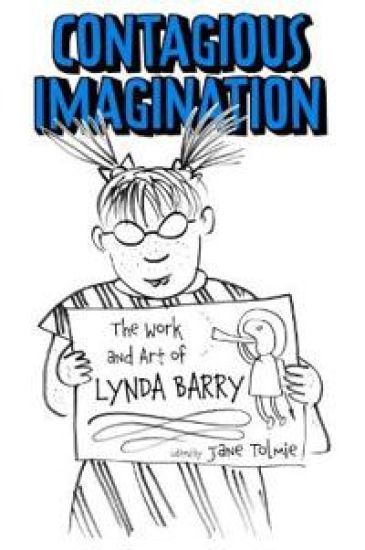
Contagious Imagination

Frederick Luis Aldama; Glenn Willmott

UNIVERSITY PRESS OF MISSISSIPPI
2022
sidottu
Contributions by Frederick Luis Aldama, Melissa Burgess, Susan Kirtley, Rachel Luria, Ursula Murray Husted, Mark O’Connor, Allan Pero, Davida Pines, Tara Prescott-Johnson, Jane Tolmie, Rachel Trousdale, Elaine Claire Villacorta, and Glenn WillmottLynda Barry (b. 1956) is best known for her distinctive style and unique voice, first popularized in her underground weekly comic Ernie Pook’s Comeek. Since then, she has published prolifically, including numerous comics, illustrated novels, and nonfiction books exploring the creative process. Barry’s work is genre- and form-bending, often using collage to create what she calls "word with drawing" vignettes. Her art, imaginative and self-reflective, allows her to discuss gender, race, relationships, memory, and her personal, everyday lived experience. It is through this experience that Barry examines the creative process and offers to readers ways to record and examine their own lives. The essays in Contagious Imagination: The Work and Art of Lynda Barry, edited by Jane Tolmie, study the pedagogy of Barry’s work and its application academically and practically. Examining Barry’s career and work from the point of view of research-creation, Contagious Imagination applies Barry’s unique mixture of teaching, art, learning, and creativity to the very form of the volume, exploring Barry’s imaginative praxis and offering readers their own. With a foreword by Frederick Luis Aldama and an afterword by Glenn Willmott, this volume explores the impact of Barry’s work in and out of the classroom. Divided into four sections—Teaching and Learning, which focuses on critical pedagogy; Comics and Autobiography, which targets various practices of rememorying; Cruddy, a self-explanatory category that offers two extraordinary critical interventions into Barry criticism around a challenging text; and Research-Creation, which offers two creative, synthetic artistic pieces that embody and enact Barry’s own mixed academic and creative investments—this book offers numerous inroads into Barry’s idiosyncratic imagination and what it can teach us about ourselves.
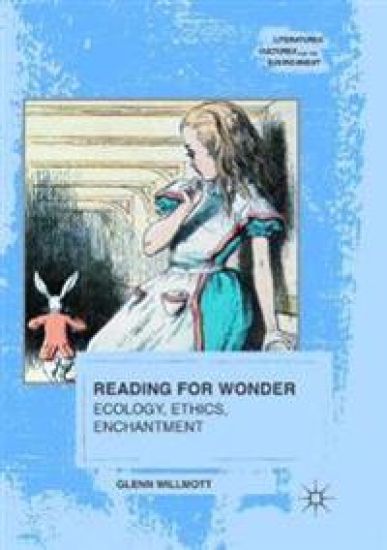
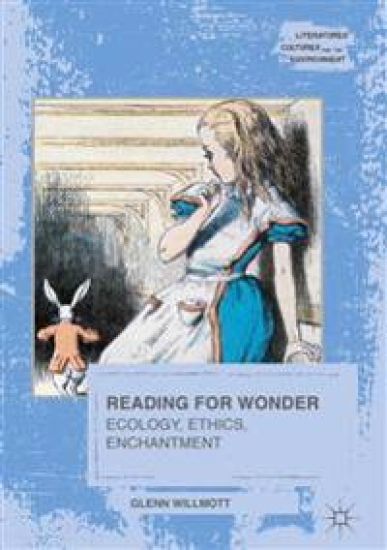
Reading for Wonder

Reading for Wonder

Glenn Willmott

Springer International Publishing AG
2019
nidottu
In a world awash in awesome, sensual technological experiences, wonder has diverse powers, including awakening us to unexpected ecological intimacies and entanglements. Yet this deeply felt experience—at once cognitive, aesthetic, and ethical—has been dangerously neglected in our cultural education. In order to cultivate the imaginative empathy and caution this feeling evokes, we need to teach ourselves and others to read for wonder. This book begins by unfolding the nature and artifice of wonder as a human capacity and as a fabricated experience. Ranging across poetry, foodstuffs, movies, tropical islands, wonder cabinets, apes, abstract painting, penguins and more, Reading for Wonder offers an anatomy of wonder in transmedia poetics, then explores its ethical power and political risks from early modern times to the present day. To save ourselves and the teeming life of our planet, indeed to flourish, we must liberate wonder from ideologies of enchantment and disenchantment, understand its workings and their ethical ambivalence, and give it a clear language and voice.
Reading for Wonder

Reading for Wonder

Glenn Willmott

Springer International Publishing AG
2018
sidottu
In a world awash in awesome, sensual technological experiences, wonder has diverse powers, including awakening us to unexpected ecological intimacies and entanglements. Yet this deeply felt experience—at once cognitive, aesthetic, and ethical—has been dangerously neglected in our cultural education. In order to cultivate the imaginative empathy and caution this feeling evokes, we need to teach ourselves and others to read for wonder. This book begins by unfolding the nature and artifice of wonder as a human capacity and as a fabricated experience. Ranging across poetry, foodstuffs, movies, tropical islands, wonder cabinets, apes, abstract painting, penguins and more, Reading for Wonder offers an anatomy of wonder in transmedia poetics, then explores its ethical power and political risks from early modern times to the present day. To save ourselves and the teeming life of our planet, indeed to flourish, we must liberate wonder from ideologies of enchantment and disenchantment, understand its workings and their ethical ambivalence, and give it a clear language and voice.
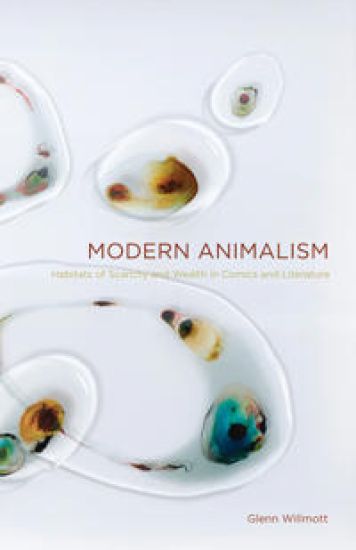
Modern Animalism

Modern Animalism

Glenn Willmott

University of Toronto Press
2012
sidottu
From T. S. Eliot’s Sweeney to C. S. Lewis’s Aslan, modern writing has been filled with strange new hybrid human-animal creatures. Feeding on consumer society, these ‘modern primitive’ figures often challenge mainstream ideals by discovering wealth in habitats and resources rather than in economic exchange. What compels our post-human identification with these characters? Modern Animalism explores representations of the human-animal ‘problem creature’ in a broad assortment of literature and comics from the late nineteenth century to the present — including authors such as Woolf, Joyce, Lawrence, Moore, Murakami, Pullman, Coetzee, and Atwood, and comics creators such as McCay, Herriman, Miyazaki, and Morrison. Drawing on a wide range of scholarship, from environmental economics to psychology, Glenn Willmott examines modern and post-modern allegories of the environment, the animal, and economics, highlighting the enduring and seductive appeal of the modern primitive in an age when living with less remains a powerful cultural wish.
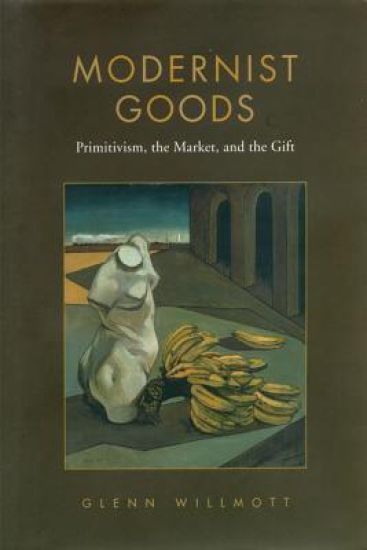
Modernist Goods

Modernist Goods

Glenn Willmott

University of Toronto Press
2008
sidottu
The politicised interpretation of literature has relied on models of economic and social structures that oscillate between idealized subversion and market fatalism. Current anthropological discussions of mixed gift and commodity economies and the segmented politics of house societies offer solutions to this problem and suggest invaluable new directions for literary studies. Modernist Goods uses recent discussions of gift and house practices to counter an influential revisionist trend in modernist studies, a trend that sees the capitalist marketplace and its public sphere as the uniquely determining institutional structures in modern arts and culture. Glenn Willmott argues that a political unconscious forged by the widespread marginalisation of pre-capitalist institutions comes to the fore in modernist primitivism. Such primitivism, he insists, is not superficially exoticist or simply appropriative of the cultural heritage of others. Rather, it is at once parodic and authentic, and often, in the language of Julia Kristeva, abject. Modernist Goods examines such writers as Yeats, Conrad, Eliot, Woolf, Beckett, H.D., and Joyce to uncover what the author views as their displaced aboriginality and to investigate the relationship between literary modernism and aboriginal modernity. By bringing current anthropological developments to literary studies, it aims to rethink the economic commitments of modernist literature and their political significance.
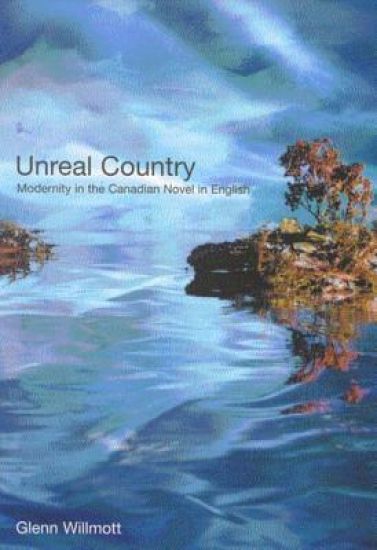
Unreal Country

Unreal Country

Glenn Willmott

McGill-Queen's University Press
2002
sidottu
Modernism is one of the great manifold movements in literature and the arts. Responding with magnificent independence to inherited values and tastes, and with radical novelty to the future, varieties of modernism anxiously express both the ends of the Enlightenment and the beginnings of Postmodernism, and thus the feeling of a crisis that continues to haunt contemporary life. Modernity in Canada, stretching from the turn of the century to the 1950s, is a period marked by unprecedented urban and industrial growth, by urban and rural immigration from around the world, and by unique changes in power between regions, classes, races, and sexes. At the same time it is a period profoundly aware of the colonial past and its persistence, for good or ill, in the fragile economy and volatile culture of a new nation.
McLuhan, or Modernism in Reverse

McLuhan, or Modernism in Reverse

Glenn Willmott

University of Toronto Press
1996
pokkari
Our lives are increasingly dominated by new forms of image, sound, data, and language media. Marshall McLuhan called this new order of things the Global Village, and he strove to be true to it as the media-popular `McLuhan.' Having little use for traditional critical forms or values, and courting instead the discourses of popular culture and big business, McLuhan displayed the authentic, ambivalent place of critical self-reflection in our media-centred world. McLuhan, according to Willmott, must be understood as a vital link in a generation of modern and postmodern critics, one who extracted modernist forms and values from the deconstructions of postmodern culture, and one who forced into public view the emergence of the critical intellectual as `being-in-media.' Willmott's book fills the need for a first critical, historical, and theoretical re-reading of McLuhan's literary and cultural projects. He re-evaluates McLuhan as a thinker and writer who moved along the borders of academic and popular culture, and locates him as an integral presence in the history of modern critical thought. The book is divided into two parts, representing modern and postmodern periods. Willmott examines McLuhan's relationship to critical and aesthetic modernism, and political and historical sense of modernity in North America, from the early 1930s to the 1950s. This relationship led McLuhan to articulate and practise what Willmott calls a `modernism in reverse.' Willmott examines the postmodern practice of this critical aesthetic, from the 1950s to the 1970s, which entailed McLuhan's self-commodification in art, business, and popular culture. McLuhan, or Modernism in Reverse thus aims to retrace and synthesize McLuhan's work in order to illuminate his unexpected meaning and value for critical practice today.