Kirjojen hintavertailu. Mukana 12 119 250 kirjaa ja 12 kauppaa.

Kirjailija

Glyn Williams

Kirjat ja teokset yhdessä paikassa: 29 kirjaa, julkaisuja vuosilta 1975-2026, suosituimpien joukossa Moscow To and Fro. Vertaile teosten hintoja ja tarkista saatavuus suomalaisista kirjakaupoista.

29 kirjaa

Kirjojen julkaisuhaarukka 1975-2026.

The Knowledge Economy, Language and Culture

The Knowledge Economy, Language and Culture

Glyn Williams

Multilingual Matters
2010
nidottu
Together with changes in the nature of modernity, globalisation is restructuring society. The sovereignty of the nation-state is undermined, the structuring of identity is realigned and a sense of individualism (which involves a freedom of choice re institutional alignments) prevails. English emerges as the global lingua franca. At the heart of these developments is the knowledge economy within which work is organised according to principles quite different from those of the Taylorism that prevailed in the industrial economy. Language and culture play a crucial role in the elaboration of the shared meaning that is crucial for learning within team working. The book argues that creativity is enhanced by the use of multilingualism within working practices. It concludes with an overview of how our understanding of language is also changing.
Seeing the State

Seeing the State

Stuart Corbridge; Glyn Williams; Manoj Srivastava; René Véron

Cambridge University Press
2005
sidottu
Poor people confront the state on an everyday basis all over the world. But how do they see the state, and how are these engagements conducted? This book considers the Indian case where people's accounts, in particular in the countryside, are shaped by a series of encounters that are staged at the local level, and which are also informed by ideas that are circulated by the government and the broader development community. Drawing extensively on fieldwork conducted in eastern India and their broad range of expertise, the authors review a series of key debates in development studies on participation, good governance, and the structuring of political society. They do so with particular reference to the Employment Assurance Scheme and primary education provision. Seeing the State engages with the work of James Scott, James Ferguson and Partha Chatterjee, and offers a new interpretation of the formation of citizenship in South Asia.
Seeing the State

Seeing the State

Stuart Corbridge; Glyn Williams; Manoj Srivastava; René Véron

Cambridge University Press
2005
pokkari
Poor people confront the state on an everyday basis all over the world. But how do they see the state, and how are these engagements conducted? This book considers the Indian case where people's accounts, in particular in the countryside, are shaped by a series of encounters that are staged at the local level, and which are also informed by ideas that are circulated by the government and the broader development community. Drawing extensively on fieldwork conducted in eastern India and their broad range of expertise, the authors review a series of key debates in development studies on participation, good governance, and the structuring of political society. They do so with particular reference to the Employment Assurance Scheme and primary education provision. Seeing the State engages with the work of James Scott, James Ferguson and Partha Chatterjee, and offers a new interpretation of the formation of citizenship in South Asia.
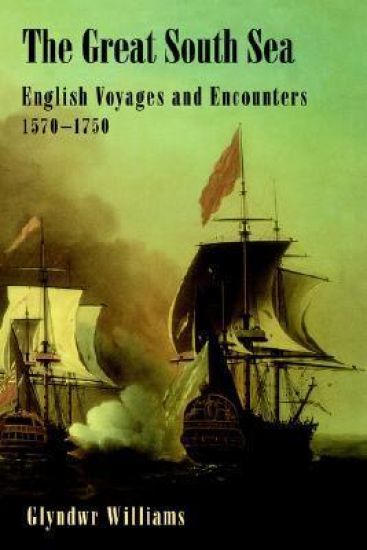
The Great South Sea

The Great South Sea

Glyn Williams

Yale University Press
2005
pokkari
From the sixteenth to the eighteenth centuries, English buccaneers, privateers, and naval expeditions sought fame and fortune in the distant reaches of the South Sea. Beginning with the voyage of Francis Drake in the 1570s and continuing through that of George Anson in the 1740s, a series of predatory English adventurers pursued Spanish treasure, and for a few the dream of riches came true. For most, the voyages ended in disappointment, and sometimes death. This engrossing book investigates these maritime adventures and how they were described in popular accounts of the time—accounts that affected English consciousness and perceptions of the wider world and that influenced the planning and nature of the later great voyages of James Cook and others. Glyndwr Williams, a leading expert on the exploration of the Pacific Ocean, draws on printed accounts of South Sea voyages as well as unpublished records—buccaneer journals, expedition papers, and government documents from public and private archives. For English seamen preying on Spanish trade and treasure, the South Sea was limited to the waters lapping the shores of Chile, Peru, and Mexico. But the vision was wider for others, Williams reveals. Cartographers at home in England, untrammeled by the constraints and dangers of actual voyaging, produced speculative maps with a vast Terra Australis Incognita, with fabulous Islands of Solomon, and with a promised short passage from Atlantic to Pacific. Satirical and utopian writers from Joseph Hall to Jonathan Swift found ample space in the wide ocean for their fictional travelers. And contemporary published voyage accounts—marvelous, though not necessarily reliable—further blurred the line between real and imaginary, contributing to the alluring, exotic image of the South Sea that took root in English folk memory and long outlasted the age of the buccaneers.
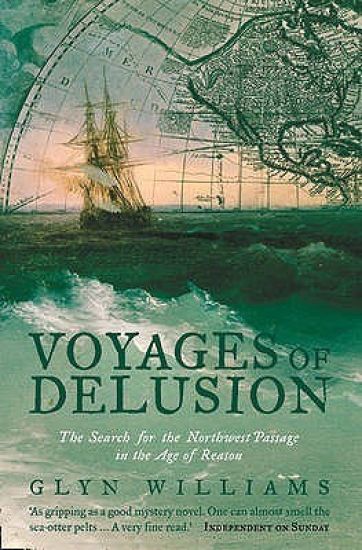
Voyages of Delusion

Voyages of Delusion

Glyn Williams

HARPERCOLLINS PUBLISHERS
2003
nidottu
Voyages of Delusion in the Age of Reason: Williams’s book charts the 18th-century’s perilous and often fatal attempts to discover a passage through the Arctic to the Pacific. An astounding work of the history of arctic exploration. Glyn Williams’s Prize of All the Oceans was reviewed by Patrick O’Brian: ‘A remarkably erudite and deeply informed book’. And by Andrew Roberts as ‘Staggeringly good… the best book I’ve read in ages.’ The Quest for the North-West Passage should be as big a best-seller as Fergus Fleming’s Barrow’s Boys—which was about the quest for the north-west passage in the 19th century. Williams’s book is set in the heat of 18th century exploration fever and charts the many perilous expeditions undertaken to find the ‘maritime philosopher’s stone’ from amongst the ice and eskimos of Hudson Bay. Fuelled by the promise of fame and riches from revitalised British trade and dominance of the North American continent, the search for this illusory passage even captivated Cook—the most pragmatic of explorers. Williams examines successive expeditions from James Knight to George Vancouver. The secretive Hudson’s Bay Company plays a supporting role throughout, as does Sir Arthur Dobbs whose political ambition—and obsessive pursuit of the illusory passage—relied heavily on exploitative cunning, personal greed and putting other’s lives at risk. The book is based on extensive archival research and archaeological excavations which fuel the content of the book, rich in political and personal intrigue. Written with the narrative brilliance and the mastery of form which characterises The Prize of all the Oceans, this book promises to be both a work of historical excellence and a compelling story of daring adventure, survival and endurance at sea.