Kirjojen hintavertailu. Mukana 12 390 323 kirjaa ja 12 kauppaa.

Kirjailija

Gordon A. A. Wilson

Kirjat ja teokset yhdessä paikassa: 9 kirjaa, julkaisuja vuosilta 2011-2026, suosituimpien joukossa The Lancaster. Vertaile teosten hintoja ja tarkista saatavuus suomalaisista kirjakaupoista.

9 kirjaa

Kirjojen julkaisuhaarukka 2011-2026.

The Hercules

The Hercules

Gordon A. A. Wilson

AMBERLEY PUBLISHING
2026
pokkari
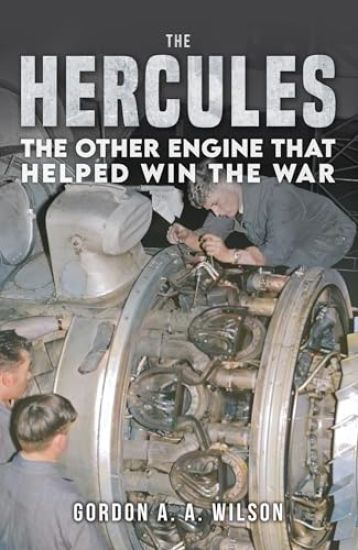
The Bristol Hercules was a 14-cylinder sleeve valve radial engine designed by Sir Roy Fedden and produced from 1939 by BAC. It powered Bristol’s own Beaufighter but was more commonly used on bombers. From the 1375 hp Hercules I to the 1735 hp Hercules XVII produced late in the war, the variants powered the Avro Lancaster B.II, the Handley Page Halifax, the Short Stirling, the Vickers Wellesley and the Vickers Wellington, among others. The sleeve valve engine was an efficient configuration that allowed the use of lower-octane fuels for the same compression ratio. It was clever, and it worked. Gordon Wilson provides a biography of this ingenious workhorse, designed and modified under the pressure of wartime. He has had exclusive access to the restoration of a Handley Page Halifax, which has provided picture details unavailable elsewhere.
The Hercules

The Hercules

Gordon A. A. Wilson

AMBERLEY PUBLISHING
2024
sidottu
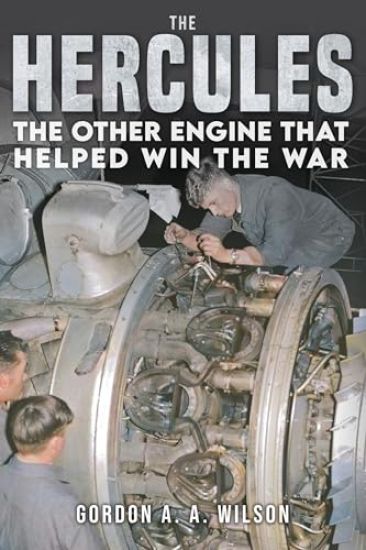
The Bristol Hercules was a 14-cylinder sleeve valve radial engine designed by Sir Roy Fedden and produced from 1939 by BAC. It powered Bristol’s own Beaufighter but was more commonly used on bombers. From the 1375 hp Hercules I to the 1735 hp Hercules XVII produced late in the war, the variants powered the Avro Lancaster B.II, the Handley Page Halifax, the Short Stirling, the Vickers Wellesley and the Vickers Wellington, among others. The sleeve valve engine was an efficient configuration that allowed the use of lower-octane fuels for the same compression ratio. It was clever, and it worked. Gordon Wilson provides a biography of this ingenious workhorse, designed and modified under the pressure of wartime. He has had exclusive access to the restoration of a Handley Page Halifax, which has provided picture details unavailable elsewhere.
Bomber Command

Bomber Command

Gordon A. A. Wilson

AMBERLEY PUBLISHING
2021
sidottu
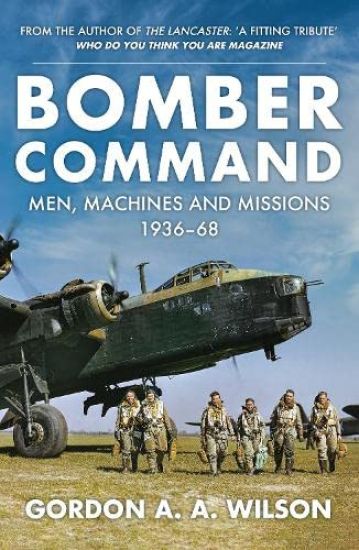
Bomber Command is a richly illustrated account of the Royal Air Force organisation from its inception prior to the Second World War in 1936 to its final years during the Cold War. The book covers the reasons for Bomber Command and the personnel that guided its formation and the philosophy and politics of the change from strategic bombing to area bombing, and the ensuing controversy. The Bomber Command organisation and how it functioned is traced, from Headquarters down to the various Groups and the many Squadrons. Famous and specialised Squadrons and the honours awarded to them are explored. Gordon Wilson does not neglect the social impact of this huge organisation: a bomber base had a large impact on the local economy and many lasting war-time bonds were established. The operational aircraft that spearheaded the might of Bomber Command and brought the bombs to the enemy’s shores included famous machines such as the Avro Lancaster, Handley Page Halifax and the unique fighter-bomber, the de Havilland Mosquito. The author analyses their construction and performance. Major target raids and the aircraft and Squadrons taking part are described. Some raids were ill conceived, others were brilliant in their execution. The transition to the Cold War and nuclear deterrence naturally confronted Bomber Command with an entirely rewritten role and saw the introduction of a new generation of V-Force jet bombers. Complemented with a range of images of memorials, famous personnel, stations, aircraft, aircraft engines, and manufacturer’s factories, Bomber Command is a fitting tribute to ‘The Many’.
The Merlin

The Merlin

Gordon A. A. Wilson; Steve Hinton JR

Amberley Publishing
2020
pokkari
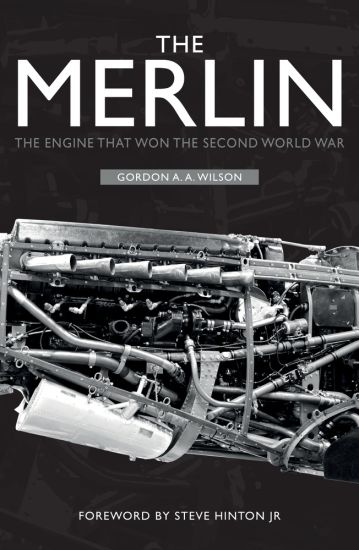
The Rolls-Royce Merlin is the most recognisable aero engine in the world. It powered the Battle of Britain aircraft, the Spitfire and Hurricane, as they defended the shores of Britain against the Luftwaffe, foiling Hitler's plans to invade in summer 1940. It also powered the Lancasters and Halifaxes of Bomber Command as they went on their missions of destruction to the German heartland. And the ‘wooden wonder’, the Mosquito, was powered by the Merlin, its pinpoint bombing accuracy and reconnaissance work proving vital to the war effort. For the Americans, the Merlin was the power plant of the Mustang escort fighter that protected the US Air Force B-17 Flying Fortress and B-29 Super Fortress bombers on their daylight raids to the enemy. The P-51 was also used in the North African, Mediterranean and Pacific theatres. So the Merlin worked day and night to secure the eventual Allied victory. It has rightfully been described as the most significant aircraft piston engine in history and in the twenty-first century its distinctive ‘drone’ can still be heard over England as the Battle of Britain Memorial Flight take to the air on special occasions – most recently on the centenary of the RAF – with its Lancaster leading the Merlin-powered Spitfires and Hurricanes in formation. Retired military and commercial pilot Gordon Wilson tells the human story of the development of the engine and its operational use during the war, featuring the voices of air crew who relied on this technological tour de force.
The Lancaster

The Lancaster

Gordon A. A. Wilson

Amberley Publishing
2017
nidottu
The Avro Lancaster took the RAF’s bombing campaign right to the heart of Nazi Germany, night after night, despite suffering appalling losses. The unique airframe, with one continuous bomb bay and four powerful Rolls-Royce Merlin engines, allowed the Lancaster to carry a variety of bomb loads. Without the Lancaster, RAF Bomber Command’s offensive against Germany would not have had the devastating and controversial impact that it achieved. The speed, agility and bomb-carrying capacity of this bomber allowed it to destroy targets ranging from hardened-concrete submarine pens and reservoir dams to railway marshalling yards and factories producing vital military hardware. This book is both the story of the Lancaster and that of its seven-man crews: pilot, bomb aimer/nose gunner, wireless operator, flight engineer, navigator and mid-upper and rear gunners. Illustrated with over 250 photographs, including several wartime images as well and many in full colour, it is also the history of the four most complete surviving airframes: the only two flying Lancasters in the world (PA474 and FM213) and the two ground-running aircraft (NX611 and FM159). Lancaster NX611 has been extensively photographed inside and out by Martin Keen, to give a real sense of what it was like to fly in this aircraft.
The Lancaster

The Lancaster

Gordon A. A. Wilson

Amberley Publishing
2015
sidottu
The Avro Lancaster took the RAF’s bombing campaign right to the heart of Nazi Germany, night after night, despite sometimes suffering appalling losses. The unique airframe, with one continuous long bomb bay and four powerful Rolls-Royce Merlin engines, allowed the Lancaster to carry a variety of bomb loads suited to the target being attacked. There is no doubt that without the Lancaster, RAF Bomber Command’s offensive against Germany would not have had the devastating and controversial impact that it achieved. The speed, agility and bomb-carrying capacity of this bomber allowed it to destroy targets ranging from hardened-concrete submarine pens and reservoir dams, to railway marshalling yards and factories producing vital military hardware. This book is both the story of the Lancaster and that of its seven-man crews: pilot, bomb aimer/nose gunner, wireless operator, flight engineer, navigator and mid-upper and rear gunners. Illustrated with over 250 photographs, including several wartime images as well and many in full colour, it is also the history of the four most complete surviving airframes: the only two flying Lancasters in the world (PA474 and FM213) and the two ground-running aircraft (NX611 and FM159). Lancaster NX611 has been extensively photographed inside and out by Martin Keen, to give a real sense of what it was like to fly in this aircraft.
Norad and the Soviet Nuclear Threat

Norad and the Soviet Nuclear Threat

Gordon A. A. Wilson

Dundurn Group Ltd
2012
pokkari
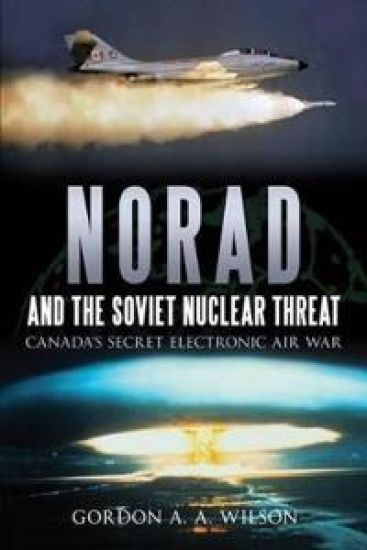
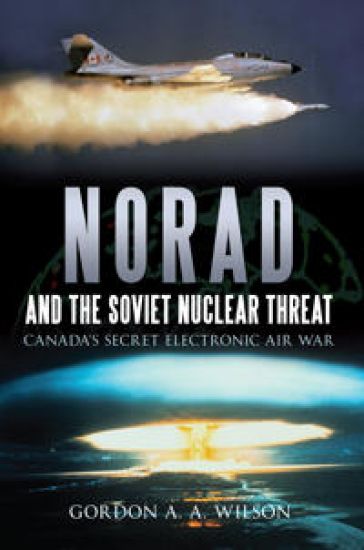
NORAD and the Soviet Nuclear Threat is the history of the air defence of Canada during the Cold War era. The reader is taken into the Top Secret world of NORAD, the joint Canadian-American North American Air Defence network. Ride along with the aircrew in their cockpit as they fight an electronic joust in the skies. Go deep underground to the Command Centre as the Air Weapons controllers plot the air war on their radar screens. Visit the radar sites deep in the Canadian bush as they struggle to provide the radar data for an electronic air battle happening overhead. An actual NORAD exercise on 10 May 1973, called Amalgam Mute, is used as an example. This exercise tested that NORAD was honouring its motto: Deter, Detect, Destroy, and was protecting North America from aerial threat. There is an extensive explanation of the aircraft, squadrons, weapons, radar, and radar sites involved. Included are two personal accounts of the first interception of a Soviet "Bear" bomber off the coast of Canada, and the first Canadian fighter interceptor pilot to win the coveted United States Air Force "Top Gun" award.
Norad and the Soviet Nuclear Threat

Norad and the Soviet Nuclear Threat

Gordon A. A. Wilson

Amberley Publishing
2011
nidottu
NORAD and the Soviet Nuclear Threat is the history of the air defence of Canada during the Cold War era. The reader is taken into the Top Secret world of NORAD, the joint Canadian-American North American Air Defence network. Ride along with the aircrew in their cockpit as they fight an electronic joust in the skies. Go deep underground to the Command Centre as the Air Weapons controllers plot the air war on their radar screens. Visit the radar sites deep in the Canadian bush as they struggle to provide the radar data for an electronic air battle happening overhead. An actual NORAD exercise on 10 May 1973, called Amalgam Mute, is used as an example. This exercise tested that NORAD was honouring its motto: Deter, Detect, Destroy, and was protecting North America from aerial threat. There is an extensive explanation of the aircraft, squadrons, weapons, radar and radar sites involved. Included are two exclusive personal accounts of the first interception of a Soviet 'Bear' bomber off the coast of Canada, and the first Canadian fighter interceptor pilot to win the coveted United States Air Force 'Top Gun' award.