Kirjojen hintavertailu. Mukana 12 390 323 kirjaa ja 12 kauppaa.

Kirjailija

Gordon E. Legge

Kirjat ja teokset yhdessä paikassa: 3 kirjaa, julkaisuja vuosilta 2006-2026, suosituimpien joukossa Low Vision. Vertaile teosten hintoja ja tarkista saatavuus suomalaisista kirjakaupoista.

3 kirjaa

Kirjojen julkaisuhaarukka 2006-2026.

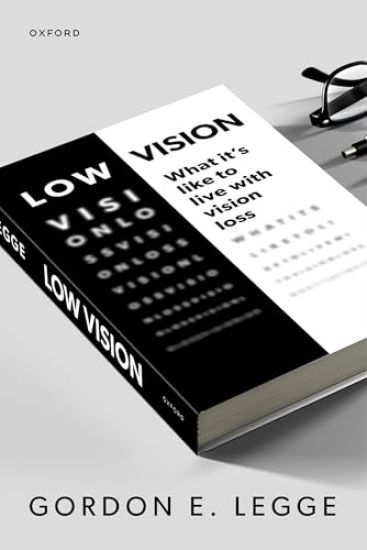
Low Vision

Low Vision

Gordon E. Legge

Oxford University Press
2026
sidottu
Do you have low vision? Do you know someone with low vision? One out of every five people who live into their eighties will encounter vision loss. Some may grow up with healthy vision and then experience vision loss from macular degeneration, glaucoma, or some other eye disease later in life. Others may be born with an inherited or congenital condition that results in low vision such as albinism or retinopathy of prematurity. Most people with vision loss have useful remaining vision; we call it low vision. But what can they see? What is the impact of low vision on their daily lives? Put it simply, what's it like to live with low vision? Low vision is any form of vision impairment, not correctable by glasses or contacts, resulting from eye disease or injury. Low vision is a broad spectrum lying between total blindness and normal vision. The number of people with low vision is rising rapidly as our population ages, with conservative estimates ranging upward from seven million in the United States to hundreds of millions worldwide. Despite its high prevalence, there is little understanding of low vision among the general public and even in the medical community. Gordon Legge is a leading vision scientist who has devoted more than forty years to research on low vision. He has low vision himself, providing him with a unique perspective on the science and its implications. In the book, he describes the diverse nature of low vision, how it is measured and characterized, and its impact on daily experience. By understanding the science behind these experiences, we will all better understand the challenges and possibilities of life with low vision.
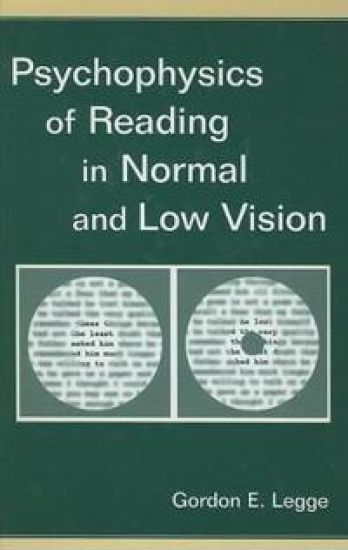
Psychophysics of Reading in Normal and Low Vision
Written by a leader in the field of low vision research, this book discusses the role of vision in reading, focusing on the reading performance of people with normal, healthy vision and people with impaired vision. The author describes the influence of physical properties of text on reading performance and the implications for information processing in the visual pathways. Providing an overview of seminal research, this book explores: different forms of low vision that affect reading, text characteristics that optimize reading for those with low vision, and principles underlying the legibility of text and guidelines for displaying text. Special topics include the role of the magnocellular pathway in reading and dyslexia, Braille reading, and fonts for highway signs. An accompanying CD contains reprints of the seminal series of articles by Gordon E. Legge and colleagues on the psychophysics of reading in normal and low vision, published between 1985 and 2001. This volume will be of interest to researchers and professionals in the area of low vision, including graphics engineers, HCI scientists, human factors specialists, low-vision rehabilitation specialists, opthamologists, occupational therapists, special education teachers, as well as cognitive scientists and perceptual psychologists. It is also suitable for advanced students with a background in the topic.
Psychophysics of Reading in Normal and Low Vision
Written by a leader in the field of low vision research, this book discusses the role of vision in reading, focusing on the reading performance of people with normal, healthy vision and people with impaired vision. The author describes the influence of physical properties of text on reading performance and the implications for information processing in the visual pathways. Providing an overview of seminal research, this book explores: different forms of low vision that affect reading, text characteristics that optimize reading for those with low vision, and principles underlying the legibility of text and guidelines for displaying text. Special topics include the role of the magnocellular pathway in reading and dyslexia, Braille reading, and fonts for highway signs. An accompanying CD contains reprints of the seminal series of articles by Gordon E. Legge and colleagues on the psychophysics of reading in normal and low vision, published between 1985 and 2001. This volume will be of interest to researchers and professionals in the area of low vision, including graphics engineers, HCI scientists, human factors specialists, low-vision rehabilitation specialists, opthamologists, occupational therapists, special education teachers, as well as cognitive scientists and perceptual psychologists. It is also suitable for advanced students with a background in the topic.