Kirjailija
Gordon L. Rottman
Kirjat ja teokset yhdessä paikassa: 101 kirjaa, julkaisuja vuosilta 1985-2024, suosituimpien joukossa Peleliu 1944. Vertaile teosten hintoja ja tarkista saatavuus suomalaisista kirjakaupoista.
Mukana myös kirjoitusasut: Gordon L Rottman
101 kirjaa
Kirjojen julkaisuhaarukka 1985-2024.
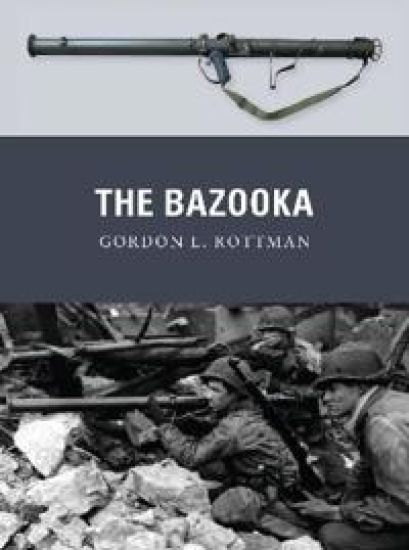
Most belligerents entering World War II armed their infantry with bulky and ineffectual anti-tank rifles as their primary means of combating tanks. US planners realized that what infantrymen needed was a relatively lightweight, man-portable anti-tank weapon that was simple to operate, accurate, and capable of knocking out the average tank at a reasonable range, while also being effective against fortified buildings, pillboxes, and personnel in the open. The bazooka combined a revolutionary new anti-tank rifle-grenade warhead, a much-modified British anti-aircraft rocket motor, and a cobbled-together launcher tube and electrical firing system; its first test-firing astounded observers, and it was immediately adopted by the US armed forces. Featuring specially drawn colour artwork, this engaging study tells the story of the bazooka, which set the standard for future light anti-tank weapons and their ammunition, and was a key influence on anti-tank tactics and techniques in the post-war era.
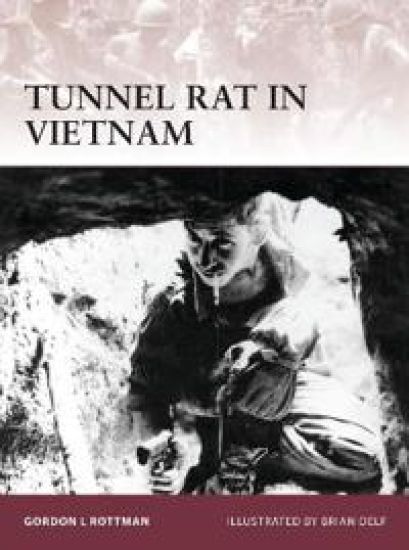
In 1965, soon after the first US combat troops had arrived in Vietnam, it was realized that in some areas the Viet Cong had developed vast tunnel complexes in which to hide from the enemy. It was long known that such complexes existed, but it was not realized just how extensive they were in some areas, how important they were to the Viet Cong, and how difficult it was to detect and neutralize them. At first infantrymen volunteered to enter the tunnels armed with only pistols and flashlights – the 'tunnel runners' were born, known to the Australians as 'tunnel ferrets'. Starting as an ad hoc force of infantrymen, combat engineers and chemical troops, it was not long before units were 'formalized' as 'tunnel exploration personnel' and 4–6-man 'tunnel exploitation and denial teams' were created. They came to be known simply as 'tunnel rats' with the unofficial motto Non Gratum Anus Rodentum – 'Not Worth a Rat's Ass'. This title will be based on the personal accounts of those who served in this unique role and will describe the specialist training and equipment, not to mention the tactics and combat experiences, of those who fought an underground war against the Viet Cong in Vietnam.
The M16 was first introduced in 1958 and was revolutionary for its time as it was made of lightweight materials including special aluminum and plastics. It was first adopted by US Special Forces and airborne troops in 1962 before it was issued to Army and Marine units serving in Vietnam. Its use spread throughout the following decades and a number of variants including submachine and carbine versions were also fielded. As a result it is now amongst the three most used combat cartridges in the world while over 10 million M16s and variants have been produced making it one of the most successful American handheld weapons in history .But despite its undeniable success the M16 is not without its detractors. Indeed, the “black rifle”, as it is known, is one of the most controversial rifles ever introduced with a long history of design defects, ruggedness issues, cleaning difficulties and reliability problems leading to endless technical refinements. This volume provides a technical history of the M16 and the struggle to perfect it together with an assessment of its impact on the battlefield drawing on over a decade's combat experience with the rifle.
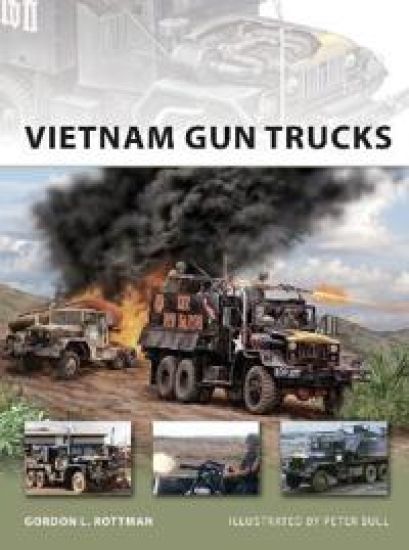
While Vietnam is usually perceived as an infantry war, with US forces deploying by helicopter, the long supply lines that led to their inland bases had to be traveled by ground vehicles. The 8th and 48th Transportation Groups were responsible for hauling supplies through the long, dangerous roads of Vietnam, and they often found themselves the target of ambushes, attacks, and sniping. In response to this, vehicle crews began to arm trucks with machine guns and armour them with sandbags. While these proved less than ideal, the concept was considered valid, and more and more “gun trucks” appeared, sporting heavier weapons and armor. Written by a Vietnam veteran, this book traces the development of these gun trucks from the jury-rigged originals to the powerful armoured vehicles that appeared later in the war.
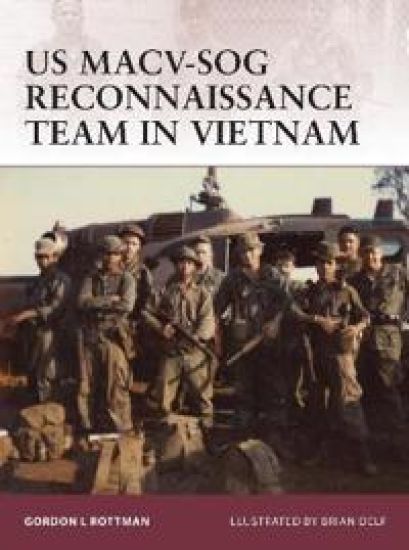
In 1964 Military Assistance Command, Vietnam, activated a joint unconventional task force known as the Studies and Observation Group—MACV-SOG. As a cover its mission was to conduct analysis of lessons learned in combat by all branches of service. SOG's real mission was to conduct covert strategic reconnaissance missions into Laos, Cambodia and South Vietnam as well as sabotage and 'Black' psychological operations. Ground, air and naval assets were employed to insert, collect, extract, and otherwise support these operations. This book tells the complete story of these covert agents, from their recruitment and training, through to their deadly black-ops in the jungles of Vietnam.
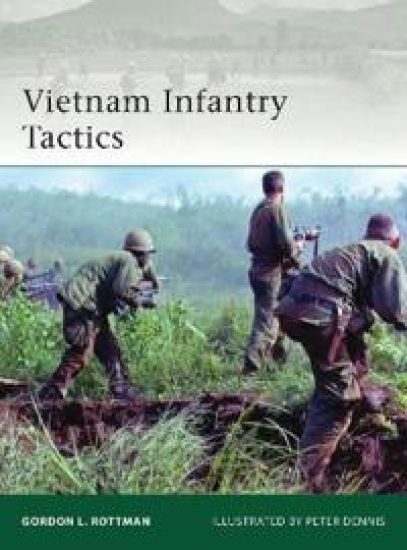
This book reveals the evolving US, Viet Cong and NVA tactics at battalion level and below throughout the Vietnam War.Beginning with a description of the terrain, climate and the unique nature of operations in this theatre of war, the author, a Vietnam veteran himself, goes on to explain how unit organisation was broken down by combatant forces and the impact this had on the kind of tactics they employed. In particular, the author highlights how units were organised in reality on the battlefield as opposed to their theoretical tables of organisation.US tactics included the standard US tactical doctrine as prescribed by several field manuals and in which leaders and troops were rigorously trained. But it also reveals how many American units developed innovative small unit tactics specifically tailored to the terrain and enemy practices.In contrast, this book also reveals the tactics employed by Viet Cong and NVA units including their own Offensive Operations, Reconnaissance, Movement Formations and Security, and Ambushes.
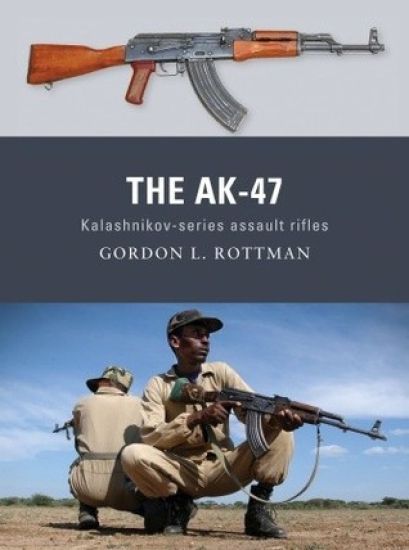
A detailed, fully illustrated study of the most recognizable assault rifle ever produced.The Kalashnikov AK-47 is the most ubiquitous assault rifle in the world, with more AK-47s and its variants in use than any other individual small arm. Created by Senior Sergeant Mikhail Kalashnikov, and first adopted by the USSR soon after World War II, its production continues to this day, with an estimated 75 million produced worldwide. Supported by photographs and original artwork, this book takes a look at the complete history of the weapon, discussing its design, development, and usage, taking its story from the great armies of the Soviet Union to the insurgents and criminal gangs that often employ the weapon today.
World War II Allied Sabotage Devices and Booby Traps
Gordon L. Rottman
Osprey Publishing
2010
nidottu
Following Churchill's directive to 'set occupied Europe ablaze', the SOE and later its American sister organization, the OSS, were deployed across the continent. Outnumbered, surrounded and in great peril, these brave agents were armed with a wide variety of devices to help them achieve their objectives, including numerous pieces of sabotage equipment and cunning booby traps. This book examines these different pieces of equipment and the technicalities involved in deploying them effectively, as well as discussing the specialist equipment developed by Special Forces units, including the SAS Lewes Bomb. Touching on some of the stranger developments, such as explosives disguised as lumps of coal, the author goes on to describe the German clearance techniques that were developed to avoid these dangers. Complete with specially commissioned artwork and period diagrams together with detailed descriptions of the dangerous missions of Allied agents, this book is a fascinating insight into the secret war behind enemy lines.
The Browning 50-cal has become the longest serving weapon in the US inventory. The fifty has been employed in every imaginable role for a machine gun. It is considered such an effective and reliable weapon that few countries ever attempted to develop an equivalent weapon. Even the Japanese created a copy of it during World War II when the US was producing literally thousands every month to use in every theater. This is a history of the development of this famous weapon, its most critical operational use and the variants that have been produced to keep it at the forefront of the action.
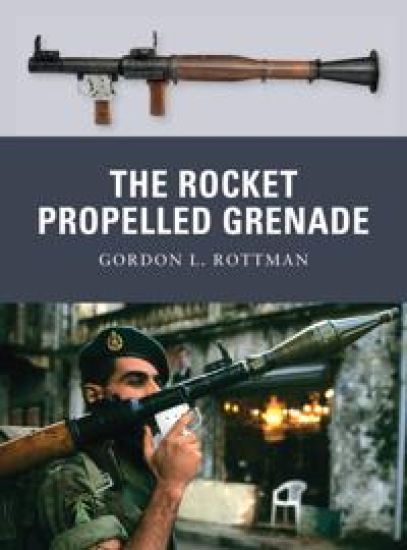
A comprehensive illustrated study of the RPG The RPG-series of weapons is the most widely used family of lightweight antitank weapons in the world today. RPGs have been used not only against their intended targets, but against personnel, fortifications, buildings, soft-skin vehicles, watercraft, and aircraft. Lightweight, relatively compact, easy to operate and maintain, they meet most of the requirements of any armed group. Like any weapon system, RPGs and their ammunition have their limitations. While these limitations are much touted by proponents of more advanced weapons, they lose sight of many armed groups' requirement for lightweight, compact, inexpensive, easy to operate and maintain weapons. Most sophisticated weapons tend to be just the opposite – heavy, cumbersome, excessively expensive, and requiring extensive training and an advanced support infrastructure. They are also more difficult to obtain due to export controls and restrictions. To be effective, an army actually needs a mix of both sophisticated and uncomplicated weapons. Gordon Rottman provides a detailed analysis, accompanied by photographs and full colour artwork, of perhaps one of the most important weapons to be developed in the 20th century.
On the southwest shore of Laguna de Bay in the Philippines stood the Los Banos Internment Camp. Held within were 2,147 starving POWs, surrounded by thousands of Japanese troops. As the desperate battle for Manila raged, only 130 Paratroopers could be spared for the rescue operation. Supported by Alamo Scouts, local guerrillas, and amphibious tractors, they seized the element of surprise, and rescued the POWs. It was a stunning triumph of courage and perfect timing in the face of overwhelming odds.
At its peak in World War II, the United States Army contained over 700 engineer battalions, along with numerous independent brigades and regiments. The specialized soldiers of the Engineers were tasked with a wide variety of crucially important tasks including river bridging, camouflage, airfield construction, and water and petroleum supply. However, despite their important support roles, the engineers were often employed on the front lines fighting beside the general infantry in the desperate battles of the European theatre. This book covers the role of these soldiers, from their recruitment and training, through their various support missions and combat experiences, forming an account of what it was truly like to be a combat engineer in World War II.
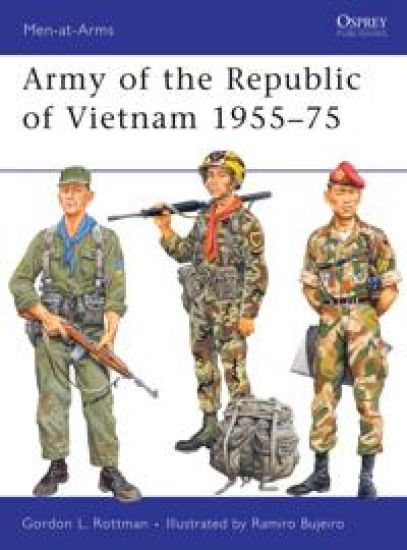
Evolved from the colonial units created by the French, this book discusses the original reorganization of these forces into the first national army. Complete with a detailed history of the command structure and orders of battle, the author also sheds light on the little known divisional histories of the army through rare, original source material. Moreover, the author examines in detail the evolution of such key units as armoured forces, ranger commands as well as combat unit organisation. This together with a detailed analysis of the experiences of the typical rank and file soldier as well as officer corps provides a concise and detailed history of an army that is too often neglected or quickly judged.
Perhaps the biggest difference in the fighting between the two World Wars lay in the invention of the man-portable radio that allowed for a greater degree of tactical coordination than ever before. Gordon L. Rottman provides an informative study of the use of small radios, field telephones, signal flares and ground-to-air signaling that revolutionized the battlefield.
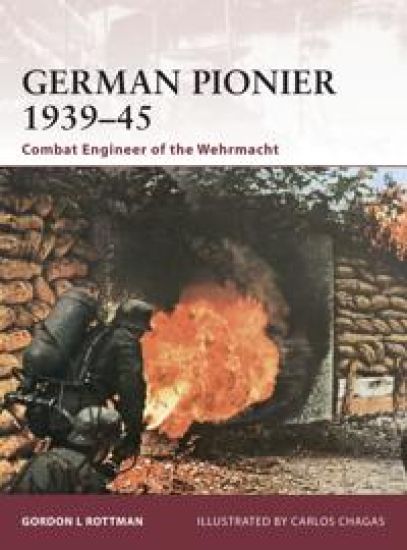
The German Army of World War II collectively referred to its various engineer units as Pioniere (Pioneers). This organization included Pioniertruppen (Pioneer Troops), Bautruppen (Construction Troops), Eisenbahntruppen (Railway Troops), and Technische Truppen (Technical Troops). They were first and foremost assault troops, and construction workers second. They were tasked with overcoming manmade and natural obstacles, and in the attack they supported the infantry as specialist assault troops, attacking fortified positions with demolitions and flamethrowers. In the defence they constructed fortifications and shelters, erected obstacles, laid minefields, planted booby traps, cleared fields of fire, erected camouflage, and maintained supply routes. This book examines the recruitment and special training of a German Pionier. It also covers life in the field while on campaign, their role in supporting infantry assaults.
In April 1862, the stage was set for one of the greatest locomotive chases in history. Union forces planned to steal a train and travel at high speed to Chattanooga, Tennessee, disabling the line as they went, in order to cut off vital rail supplies to the Confederate stronghold of Atlanta, Georgia, some 100-plus miles to the southwest. What they hadn't banked on was the dogged determination of one man - train conductor William Fuller - who, after realizing his train had been stolen, began a frantic pursuit, first by handcar, then by top-speed locomotive, dealing with derailments by running miles on foot to the next station, and single-handedly removing drag ties from the track in front of his train. The raiders were so hotly pursued that they had no time to inflict serious damage on the tracks and could not stop to gather more fuel. Just north of Ringgold, some miles south of Chattanooga, The General ran out of wood and the raiders scattered into the forested Appalachian Mountains. All were captured within days and sentenced to death. This title helps to discover the history of one of the most colourful and dramatic episodes of the Civil War.
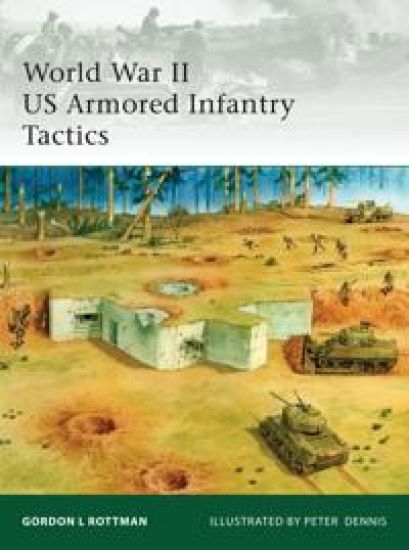
Little has been published on US armored infantry units and tactics over the years. However, their contribution to the war effort was hugely important. There were a total of 57 armored infantry battalions and two regiments that served throughout the war and in all theaters. Equipped with halftracks, they fought as part of combined arms teams and combat commands alongside tanks, tank destroyers and artillery battalions. Significantly, they were not simply standard infantry battalions provided with halftracks. Their company and platoon organization was very different from the standard infantry unit and these highly mobile, heavily armed battalions fought in an entirely different manner. Using period training manuals and combat reports this book provides an exclusive look at the unique tactics developed by US armored infantry units including movement formations and battle drills.
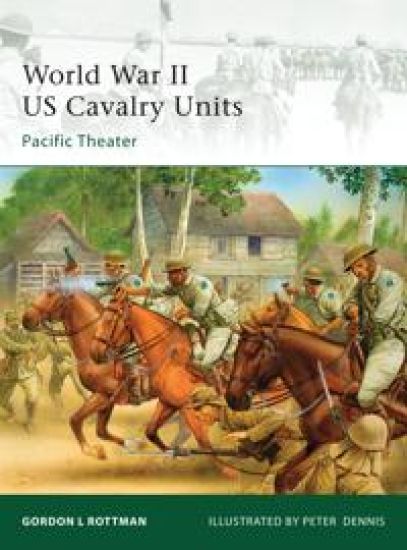
At the time of Pearl Harbor, the United States Army still had ten cavalry regiments. The 26th (Filipino Scouts) fought on horseback in the Philippines, while the rest were fought as infantry. Despite this, the cavalry units maintained their own unique traditions, and identity as they saw action in the Pacific and China-Burma-India theatre. This book covers all of the US cavalry units to see action during World War II. It includes the little-covered Texan National Guard regiments, who fought beside ex-Merrill's Marauders as a deep penetration unit. It also contains color-plates of the uniforms of the US Army's last mounted cavalry as well as tropical combat dress worn by the dismounted units.
On 27 January 1945 the 6th Ranger Battalion and the 6th Army Special Reconnaissance Unit (the Alamo Scouts) began the most dangerous and important mission of their careers to rescue 500 American, British and Dutch prisoners-of-war held at a camp near Cabanatuan. This daring plan was fraught with difficulties - the rangers had to struggle with harsh jungle terrain, 30 miles behind enemy lines against a far larger force, knowing that if their secret mission was leaked, the POWs would be massacred by their captors. Yet, with the help of a Filipino guerrilla force, they managed to liberate 513 prisoners and kill 225 Japanese in 15 minutes, while only suffering two losses themselves. Relive the dramatic rescue in this action-packed account, complete with bird's eye view and battle scene artwork. Gordon Rottman details the build-up to and execution of the operation, analyzing the difficulties faced and the contribution made by the guerrillas. This is a story not only of extraordinary military success but a compelling tale of courage in the face of overwhelming odds.
In many ways the end of the Vietnam War left the US army a spent force. Plagued by low morale, drug and race issues, and terrible public relations, the army faced an uphill climb in the effort to rebuild itself. The story of this reconstruction is mirrored in the rise of the Mechanized Infantryman. Deciding that the key to future conflict lay in highly trained and mobile warriors that could be delivered quickly to battle, the army adopted the mechanized infantryman as its frontline troops. This new, all volunteer force was given the best training and equipment. Most notably, they were to be deployed onto the battlefield from the new M2 Bradley Armoured Fighting Vehicle. This new breed of American warriors got their first test in the First Gulf War. Fighting in the deserts of Kuwait and Iraq, these soldiers proved that the US Army was once again a force with which to be reckoned. This book tells the story of the rise of the US mechanised infantryman, focusing on his recruitment, training, lifestyle and combat experiences in Iraq.