Kirjojen hintavertailu. Mukana 12 152 277 kirjaa ja 12 kauppaa.

Kirjailija

Gordon Morris Bakken

Kirjat ja teokset yhdessä paikassa: 24 kirjaa, julkaisuja vuosilta 1983-2024, suosituimpien joukossa Skullduggery, Secrets, and Murders. Vertaile teosten hintoja ja tarkista saatavuus suomalaisista kirjakaupoista.

24 kirjaa

Kirjojen julkaisuhaarukka 1983-2024.

Skullduggery, Secrets, and Murders

Skullduggery, Secrets, and Murders

Neal Bill; Gordon Morris Bakken

Texas Tech Press,U.S.
2015
sidottu
In 1894, George Isaacs, the penniless black sheep of his family, was running with the worst of the outlaws in the Oklahoma Territory. There, a get-rich-quick scheme that seemed fool proof was hatched up. The plan was for George to present money packets falsely purporting to contain $25,000 in cash to the Wells Fargo office in Kansas City. Wells Fargo was to ship the packets via the Santa Fe railroad to George at Canadian, Texas, where George’s cronies would then rob the depot office and steal the phony money packets, thus allowing George Isaacs to sue Wells Fargo for his lost fortune. The plan backfired when the sheriff was on hand when the train arrived. The bandits killed the sheriff but then panicked and raced back to the Territory without grabbing the bogus packets.Wells Fargo sent an undercover agent to investigate, but the outlaws discovered him, and the agent was assassinated. The two murders led to eight trials, but only one man, George Isaacs, was ever convicted—and even he managed to beat a life sentence. One question lingered: was George truly behind the scam?The identities of the masterminds behind the foiled plot have remained a mystery for more than a hundred years. With his usual rough-and-tumble tenacity, Bill Neal undertakes the investigation of these two cold-case murders.
Sex, Murder, and the Unwritten Law

Sex, Murder, and the Unwritten Law

Bill Neal; Gordon Morris Bakken

Texas Tech Press,U.S.
2009
sidottu
This title presents the 'honor defense' in six celebrated murder trials, 1896-1977. From the 1880s until after World War I, Texas prosecutions for adultery, fornication, rape, seduction, and sodomy were many, but formal penal code seemed insufficiently stringent to southerners, who often sought other redress. 'Unwritten law' seemed to justify the killing - or at least maiming - of almost anyone who by actual physical contact or inappropriate comment offended southern notions of female virtue, male honor, or sanctity of marriage. Illicit sex is the catalyst in all the Texas murder trials recounted in ""Sex, Murder, and the Unwritten Law"". In each account the victim, at least in the perception of the defendant, had committed some sexual misconduct. In every case, the defendant opened fire with premeditated intent to kill. And in all the resulting trials, the defense relied at least in part on unwritten law. Bill Neal explores the imaginative machinations of defense lawyers who extricated obviously guilty clients when there appeared no legal basis upon which to peg a defense. Typically defense attorneys outmaneuvered prosecutors and judges, whose efforts to rein in excesses met with little success. These courtroom triumphs and underlying strategies are remarkable to lawyers, historians, and laypersons alike.
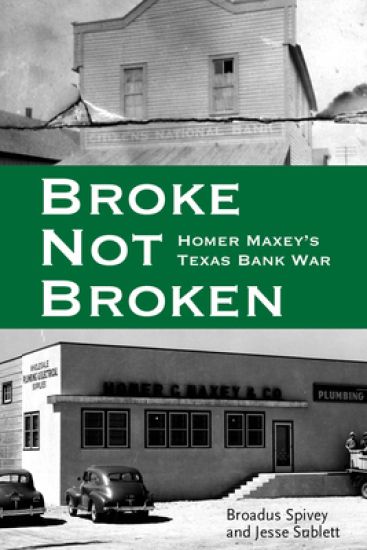
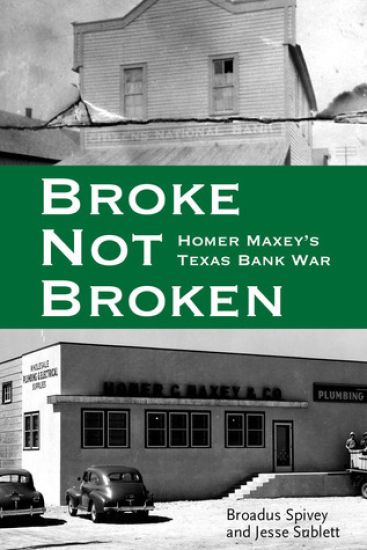
Broke, not Broken

Broke, not Broken

Broadus A Spivey; Jessee Sublett; Gordon Morris Bakken

Texas Tech Press,U.S.
2024
nidottu
Homer Maxey was a war hero, multimillionaire, and pillar of the Lubbock, Texas, community. During the post-World War II boom, he filled the West Texas horizon with new apartment complexes, government buildings, hotels, banks, shopping centers, and subdivisions. On the afternoon of February 16, 1966, executives of Citizens National Bank of Lubbock met to launch foreclosure proceedings against Maxey. In a secret sale, more than 35,000 acres of ranch land and other holdings were divided up and sold for pennies on the dollar. By closing time, Maxey was penniless. Maxey sued the bank and every member of the board of directors, including long-time friends and business partners. Almost fifteen years, two jury trials, and nine separate appeals later, the case was settled on September 22, 1980. Broke, Not Broken , the story of this record-breaking, precedent-setting legal case, illuminates a community and a self-styled go-getter who refused to back down, even when his opponents were old friends, well-heeled leaders of the community, a bank backed by powerful Odessa oil men, and the most formidable attorneys in West Texas.
Lone Star Law

Lone Star Law

Michael Ariens; Gordon Morris Bakken

Texas Tech Press,U.S.
2016
nidottu
Michael Ariens proves that no state possesses a richer or more surprising legal history than Texas. In narrative as engaging as it is accessible, he has produced an overarching consideration of Lone Star law and legal culture something notably missing in other Texas histories. After taking readers chronologically from early settlement through 1920, Ariens focuses on particular areas of Texas law, including property, family, business, criminal, and civil harms (tort), and on the history of Texas's legal profession itself. Through illuminating and utterly Texan particulars, Ariens helps us understand a place at once southern and western, Spanish and Mexican, republic and state.
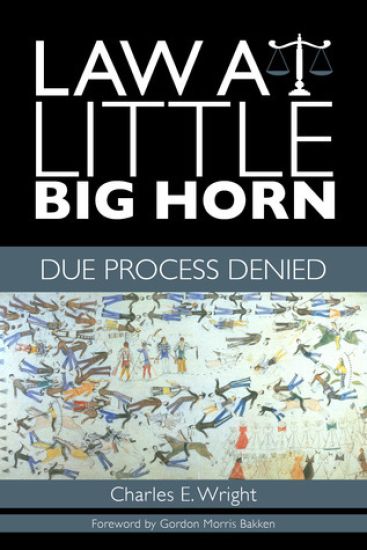
Law at Little Big Horn

Law at Little Big Horn

Charles E. Wright; Gordon Morris Bakken

Texas Tech Press,U.S.
2015
sidottu
During the nineteenth century, the rights of American Indians were frequently violated by the president and ignored or denied enforcement by federal courts. However, at times Congress treated the Indians with good faith and honoured due process, which prohibits the government from robbing any person of life, liberty, or property without a fair hearing before an impartial judge or jury. These due process requirements protect all Americans and were in effect when President Grant launched the Great Sioux War in 1876—without a formal declaration of war by Congress.Charles E. Wright analyzes the legal backdrop to the Great Sioux War, asking the hard questions of how treaties were to be honoured and how the US government failed to abide by its sovereign word. Until now, little attention has been focused on how the events leading up to and during the Battle of Little Big Horn violated American law. While other authors have analyzed George Armstrong Custer’s tactics and equipment, Wright is the first to investigate the legal and constitutional issues surrounding the United States’ campaign against the American Indians.This is not just another Custer book. Its contents will surprise even the most accomplished Little Big Horn scholar.
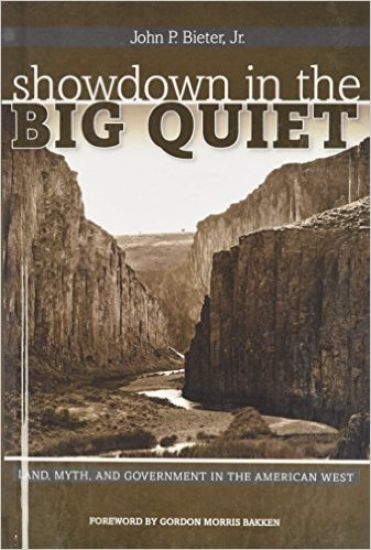
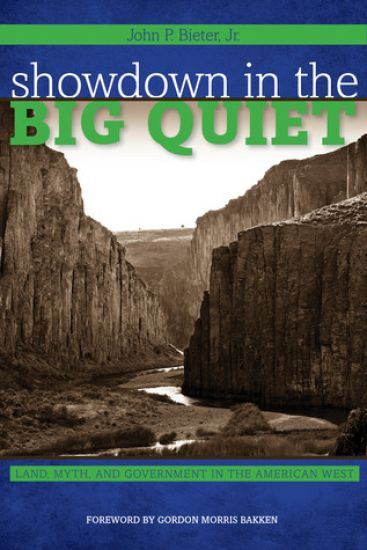
Showdown in the Big Quiet

Showdown in the Big Quiet

John P. Bieter Jr.; Gordon Morris Bakken

Texas Tech Press,U.S.
2015
sidottu
Owyhee County, Idaho, also known as the “Big Quiet,” is the largest and least inhabited area in the lower forty-eight states. Who has decided how to use it? From violent mine wars in the mid-nineteenth century to environmental conservation disputes at the end of the twentieth, people in the West have battled over the role of government and notions of American identity to answer this question. Winners ultimately controlled the perception of their battles, often shaping the contours of the next conflict.Similarly, historians debated interpretations of the West. In the early twentieth century, Frederick Jackson Turner argued that interactions on the frontier formed American characteristics of rugged individualism, democracy, aggression, and innovation. The “New” Western historians of the late 1970s attempted to debunk this theory, revealing the racial and ethnic diversity of the West, reminding us of the role of the environment, and documenting how settlers and later corporations conquered land wrested away from Native Americans. While “New” Western historians shot holes in Turner’s thesis, the myths of the Old West prevailed. People craved the identity offered in western themed novels, films, and tourism more than historical facts. Showdown in the Big Quiet demonstrates how the “Old West” speaks to the “New” and proves how the power of western mythology moved from background to central character.
Showdown in the Big Quiet

Showdown in the Big Quiet

John P. Bieter Jr.; Gordon Morris Bakken

Texas Tech Press,U.S.
2015
nidottu
Owyhee County, Idaho, also known as the “Big Quiet,” is the largest and least inhabited area in the lower forty-eight states. Who has decided how to use it? From violent mine wars in the mid-nineteenth century to environmental conservation disputes at the end of the twentieth, people in the West have battled over the role of government and notions of American identity to answer this question. Winners ultimately controlled the perception of their battles, often shaping the contours of the next conflict.Similarly, historians debated interpretations of the West. In the early twentieth century, Frederick Jackson Turner argued that interactions on the frontier formed American characteristics of rugged individualism, democracy, aggression, and innovation. The “New” Western historians of the late 1970s attempted to debunk this theory, revealing the racial and ethnic diversity of the West, reminding us of the role of the environment, and documenting how settlers and later corporations conquered land wrested away from Native Americans. While “New” Western historians shot holes in Turner’s thesis, the myths of the Old West prevailed. People craved the identity offered in western themed novels, films, and tourism more than historical facts. Showdown in the Big Quiet demonstrates how the “Old West” speaks to the “New” and proves how the power of western mythology moved from background to central character.
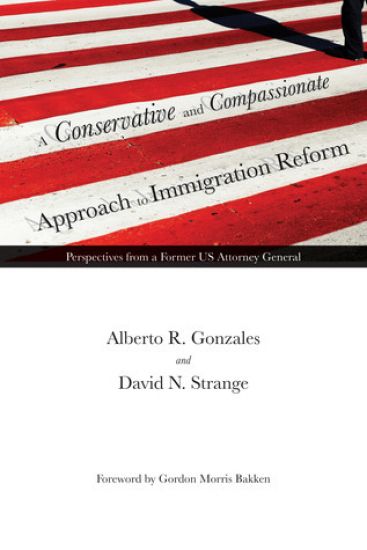
A Conservative and Compassionate Approach to Immigration Reform

A Conservative and Compassionate Approach to Immigration Reform

Alberto R. Gonzales; David N. Strange; Gordon Morris Bakken

Texas Tech Press,U.S.
2014
sidottu
Although the United States is a nation founded by immigrants, Alberto Gonzales and David Strange believe that national immigration policy and enforcement over the past thirty years has been inadequate. This failure by federal leaders has resulted in a widespread introduction of state immigration laws across the country. Gonzales and Strange assert that the solution to current immigration challenges is reform of federal immigration laws, including common sense border control, tougher workplace enforcement, minor (but significant) changes to the Immigration and Nationality Act, and a revised visa process that discourages overstaying the duration of a visa.Gonzales and Strange embrace many provisions of current pending legislation, but are sharply critical of others. Their proposals call for an expansion of the grounds of inadmissibility to foster greater respect of law and to address the problem of visa overstays, while also calling for a restriction on grounds of inadmissibility in other areas to address the large undocumented population and increasing humanitarian crisis. They explore nationality versus citizenship and introduce a pathway to nationality as an alternative to a pathway to citizenship.This immigration policy blueprint examines the political landscape in Washington and makes the argument that progress will require compromise and the discipline to act with compassion and respect. Most significantly, it illuminates how following this blueprint can enhance national security and improve the economy in the United States in ways that is consistent with the rule of law.
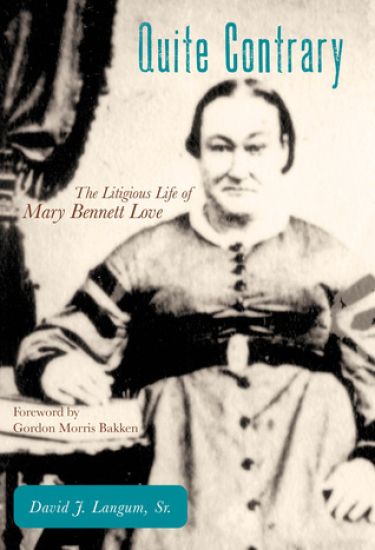
Quite Contrary

Quite Contrary

David Langum; Gordon Morris Bakken

Texas Tech Press,U.S.
2014
sidottu
Mary Bennett Love had a physicality exceeded only by her personality. Six feet tall and over 300 pounds, Love was anything but shackled by the mores of her day. In the 1840s, she moved west from Arkansas via the Oregon Trail. A few years later, she separated from her husband and took her six minor children to Santa Clara, where she acquired a Mexican land grant by forging an adult son’s signature.Though illiterate, she knew the law thoroughly and used it to her advantage. No sooner had the American military invaded California than Mary squatted on public lands and engaged in dozens of lawsuits to advance her interests. Her love life was no less tumultuous. Harry Love, her second husband and slayer of Mexican bandit Joaquin Murrieta, died at her bodyguard’s hands.Quite Contrary is the first book to focus on Mary Bennett Love. Aside from making for an entertaining story, she is representative of the relationship people had with the law in pre-Gold Rush California. Furthermore, her economic success demonstrates the often self-imposed notions of true womanhood - which Mary ignored, paving the way for future female entrepreneurs.
Broke, Not Broken

Broke, Not Broken

Broadus A Spivey; Jessee Sublett; Gordon Morris Bakken

Texas Tech Press,U.S.
2014
sidottu
Homer Maxey was a war hero, multimillionaire and pillar of the Lubbock, Texas, community. During the post-World War II boom, he filled the West Texas horizon with new apartment complexes, government buildings, hotels, banks, shopping centres and subdivisions.On the afternoon of February 16, 1966, executives of Citizens National Bank of Lubbock met to launch foreclosure proceedings against Maxey. In a secret sale, more than 35,000 acres of ranch land and other holdings were divided up and sold for pennies on the dollar. By closing time, Maxey was penniless.Maxey sued the bank and every member of the board of directors, including long-time friends and business partners. Almost fifteen years, two jury trials and nine separate appeals later, the case was settled on September 22, 1980.Broke, Not Broken, the story of this record-breaking, precedent-setting legal case, illuminates a community and a self-styled go-getter who refused to back down, even when his opponents were old friends, well-heeled leaders of the community, a bank backed by powerful Odessa oil men and the most formidable attorneys in West Texas.
Women Who Kill Men

Women Who Kill Men

Gordon Morris Bakken; Brenda Farrington

University of Nebraska Press
2013
pokkari
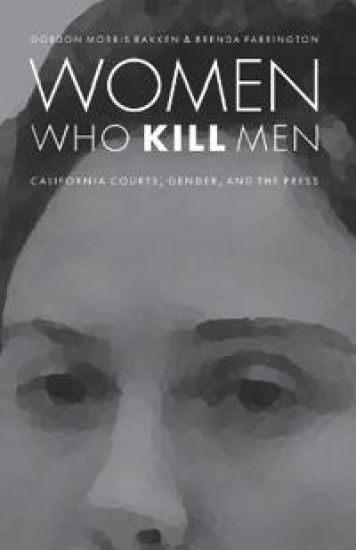
The late nineteenth and early twentieth centuries were a revolutionary period in the lives of women, and the shifting perceptions of women and their role in society were equally apparent in the courtroom. Women Who Kill Men examines eighteen sensational cases of women on trial for murder from 1870 to 1958. The fascinating details of these murder trials, documented in court records and embellished newspaper coverage, mirrored the changing public image of women. Although murder was clearly outside the norm for standard female behavior, most women and their attorneys relied on gendered stereotypes and language to create their defense and sometimes to leverage their status in a patriarchal system. Those who could successfully dress and act the part of the victim were most often able to win the sympathies of the jury. Gender mattered. And though the norms shifted over time, the press, attorneys, and juries were all informed by contemporary gender stereotypes.
World History

World History

Steven Wallech; Touraj Daryaee; Craig Hendricks; Anne Lynne Negus; Peter P. Wan; Gordon Morris Bakken

John Wiley Sons Inc
2013
nidottu
This set includes both volumes of World History: A Concise Thematic History (volume I: 978-1-1185-3266-9; volume II: 978-1-1185-3272-0). These volumes present the highly anticipated second edition of the most affordable and accessible survey of world history designed for use at the college level. An engaging narrative that contextualizes history and does not drown students in a sea of factsOffers a comparative analysis of the great civilizations of Eurasia, Africa, and the AmericasAddresses themes of population dynamics, food production challenges, disease history, warfare, and other major issues for civilizationsFeatures new interior design and organization to enhance user experienceInstructor's test bank available online at www.wiley.com/go/wallech
World History

World History

Steven Wallech; Touraj Daryaee; Craig Hendricks; Anne Lynne Negus; Peter P. Wan; Gordon Morris Bakken

John Wiley Sons Inc
2012
nidottu
World History: A Concise Thematic Analysis presents the highly anticipated second edition of the most affordable and accessible survey of world history designed for use at the college level. An engaging narrative that contextualizes history and does not drown students in a sea of factsOffers a comparative analysis of the great civilizations of Eurasia, Africa, and the AmericasAddresses themes of population dynamics, food production challenges, disease history, warfare, and other major issues for civilizationsFeatures new interior design and organization to enhance user experienceInstructor’s test bank available online at www.wiley.com/go/wallech
World History

World History

Steven Wallech; Touraj Daryaee; Craig Hendricks; Anne Lynne Negus; Peter P. Wan; Gordon Morris Bakken

John Wiley Sons Inc
2012
nidottu
World History: A Concise Thematic Analysis presents the highly anticipated second edition of the most affordable and accessible survey of world history designed for use at the college level. This text offers a comparative analysis of great civilizations of Eurasia, Africa, and the Americas in an engaging narrative that contextualizes history instead of drowning students in a sea of facts. Themes addressed include population dynamics, food production challenges, disease history, warfare, and others. Instructor resources are available online for this text. This new edition of World History: A Concise Thematic Analysis features a newly-designed interior organization to enhance navigation and comprehension of the material. An instructors' test bank is available online.
A Clamor for Equality

A Clamor for Equality

Paul Bryan Gray; Gordon Morris Bakken

Texas Tech Press,U.S.
2012
sidottu
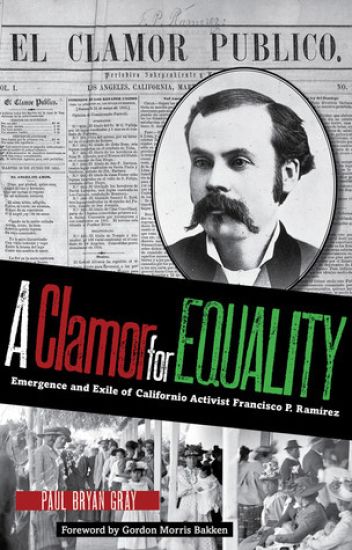
A dramatic response to American racism occurred in Los Angeles during 1855 when eighteen-year-old Francisco P. Ramírez published a Spanish-language newspaper, El Clamor Público. Ramírez called upon a Mexican American majority to seize control of their destiny by electing themselves to public office.Ramírez was a radical liberal in a town controlled by white conservative Southerners with antebellum values. Nevertheless, from 1855 to 1859, he railed against slavery and ridiculed those in Los Angeles who supported it. His demands for Mexican equality, the abolition of slavery, free elections, and education for women were well ahead of his time. He was the first civil rights activist in Los Angeles. In December 1859 El Clamor Público bankrupted for lack of popular support. For three decades afterward Ramírez was involved in every major political and social movement of his day. He continued to champion equality and civil rights as a San Francisco newspaper editor and the only Mexican American lawyer in Los Angeles.
The Mining Law of 1872

The Mining Law of 1872

Gordon Morris Bakken

University of New Mexico Press
2011
nidottu
History has left us a classic image of western mining in the grizzly forty-niner squatting by a clear stream sifting through gravel to reveal gold. What this slice of Western Americana does not reveal, however, is thousands of miners doing the same, their gravel washing downstream, causing the water to grow dark with debris while trout choke to death and wash ashore. Instead of the havoc wreaked upon the western landscape, we are told stories of American enterprise, ingenuity, and fortune.The General Mining Act of 1872, which declared all valuable mineral deposits on public lands to be free and open to exploration and purchase, has had a controversial impact on the western environment as, under the protection of federal law, various twentieth-century entrepreneurs have manipulated it in order to dump waste, cut timber, create resorts, and engage in a host of other activities damaging to the environment. In this in-depth analysis, legal historian Gordon Morris Bakken traces the roots of the mining law and details the way its unintended consequences have shaped western legal thought from Nome to Tombstone and how it has informed much of the lore of the settlement of the West.
Invitation to an Execution

Invitation to an Execution

Gordon Morris Bakken

University of New Mexico Press
2010
sidottu
Until the early twentieth century, printed invitations to executions issued by lawmen were a vital part of the ritual of death concluding a criminal proceeding in the United States. In this study, Gordon Morris Bakken invites readers to an understanding of the death penalty in America with a collection of essays that trace the history and politics of this highly charged moral, legal, and cultural issue. Bakken has solicited essays from historians, political scientists, and lawyers to ensure a broad treatment of the evolution of American cultural attitudes about crime and capital punishment.Part one of this extensive analysis focuses on politics, legal history, multicultural issues, and the international aspects of the death penalty. Part two offers a regional analysis with essays that put death penalty issues into a geographic and cultural context. Part three focuses on specific states with emphasis on the need to understand capital punishment in terms of state law development, particularly because states determine on whom the death penalty will be imposed. Part four examines the various means of death, from hanging to lethal injection, in state law case studies. And finally, part five focuses on the portrayal of capital punishment in popular culture.
Women Who Kill Men

Women Who Kill Men

Gordon Morris Bakken; Brenda Farrington

University of Nebraska Press
2009
sidottu
The late nineteenth and early twentieth centuries were a revolutionary period in the lives of women, and the shifting perceptions of women and their role in society were equally apparent in the courtroom. Women Who Kill Men examines eighteen sensational cases of women on trial for murder from 1870 to 1958. The fascinating details of these murder trials, documented in court records and embellished newspaper coverage, mirrored the changing public image of women. Although murder was clearly outside the norm for standard female behavior, most women and their attorneys relied on gendered stereotypes and language to create their defense and sometimes to leverage their status in a patriarchal system. Those who could successfully dress and act the part of the victim were most often able to win the sympathies of the jury. Gender mattered. And though the norms shifted over time, the press, attorneys, and juries were all informed by contemporary gender stereotypes.
Practicing Law in Frontier California

Practicing Law in Frontier California

Gordon Morris Bakken

University of Nebraska Press
2006
pokkari
In Practicing Law in Frontier California Gordon Morris Bakken combines collective biography with an analysis of the function of the bar in a rapidly changing socioeconomic setting. Drawing on manuscript collections, Bakken considers hundreds of men and women who came to California to practice law during the gold rush and later, their reasons for coming, their training, and their usefulness to clients during a period of rapid population growth and social turmoil. He shows how law practice changed over the decades with the establishment of large firms and bar associations, how the state's boom-and-bust economy made debt collection the lawyer's bread and butter, and how personal injury and criminal cases and questions of property rights were handled. In Bakken's book frontier lawyers become complex human beings, contributing to and protecting the social and economic fabric of society, expanding their public roles even as their professional expertise becomes more narrowly specialized.
Law in the Western United States

Law in the Western United States

Gordon Morris Bakken

University of Oklahoma Press
2001
sidottu
In this volume, Gordon Morris Bakken traces the distinctive development of western legal history. The contributors' essays provide succinct descriptions of major cases, legislation, and individual western states' constitutional provisions that are unique in the American legal system. To assist the reader, the volume is organized by subject, including natural resources, municipal authority, business regulation, American Indian sovereignty and water rights, women, and Mormons.Contributors are: Roy H. Andes, Dana Blakemore, Richard Griswold del Castillo, Susan Badger Doyle, James W. Ely, Jr., Brenda Gail Farrington, Dale D. Goble, Neil Greenwood, Vanessa Gunther, Louise A Halper, Claudia Hess, Kenneth Hough, Paul Kens, Shenandoah Grant Lynd, Thomas C. Mackey, Nicholas George Malavis, Timothy Miller, Danelle Moon, Andrew P. Morriss, Keith Pacholl, Laurie Caroline Pintar, Michael A. Powell, Ion Puschilla, Emily Rader, Peter L. Reich, John Phillip Reid, Lucy E. Salyer, Susan Sanchez, Janet Schmelzer, Howard Shorr, Paul Reed Spitzzeri, John Joseph Stanley, Donald L. Stelluto, Jr., Timothy A. Strand, Imre Sutton, Nancy J. Taniguchi, and Lonnie Wilson.