Kirjojen hintavertailu. Mukana 12 344 977 kirjaa ja 12 kauppaa.

Kirjailija

Gordon Williamson

Kirjat ja teokset yhdessä paikassa: 48 kirjaa, julkaisuja vuosilta 1989-2022, suosituimpien joukossa German E-boats 1939–45. Vertaile teosten hintoja ja tarkista saatavuus suomalaisista kirjakaupoista.

48 kirjaa

Kirjojen julkaisuhaarukka 1989-2022.

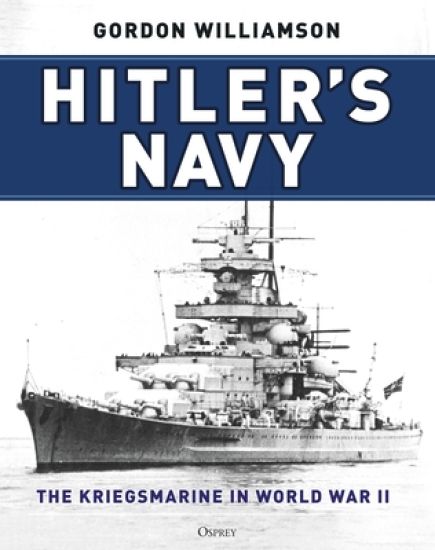
Hitler's Navy

Hitler's Navy

Gordon Williamson

Osprey Publishing
2022
sidottu
A complete illustrated study of the German Kriegsmarine throughout World War II.Hamstrung at first by the terms of the Treaty of Versailles, during the 1930s, the German Navy underwent a programme of rearmament in defiance of the restrictions, building modern warships under limitations which forced technological innovation. Submarines were strictly prohibited by the treaty, and yet, following years of covert development, they became one of the Kriegsmarine’s most deadly weapons. Blooded in the Spanish Civil War, the surface ships of the Kriegsmarine went on to play a crucial role in the opening salvoes of World War II during the invasions of Poland and Norway, although serious losses here set back plans for the invasion of Britain, and by the end of the war, only a handful of surface vessels remained to be divided up among the Allies. From the beginning of the war, but especially after the fall of France, the dreaded and extraordinarily successful U-boats stalked the Atlantic, threatening vital British shipping convoys and choking off the lifeline of munitions and supply from the US. Once Italy and Japan entered the war, German naval operations expanded to the Mediterranean and the Indian Ocean. This highly illustrated volume is a comprehensive study of the German Navy throughout the war, from pocket battleships to torpedo boats.
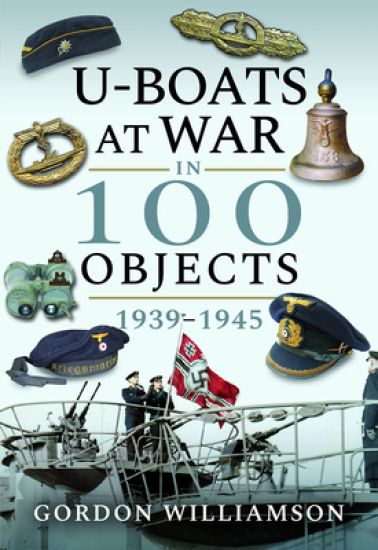
U-Boats at War in 100 Objects, 1939-1945

U-Boats at War in 100 Objects, 1939-1945

Gordon Williamson

Frontline Books
2020
sidottu
'The only thing that ever really frightened me during the war was the U-boat peril,' wrote Winston Churchill in his history of the Second World War. 'I was even more anxious about this battle than I had been about the glorious air fight called the Battle of Britain." In reality, the Kriegsmarine had been woefully unprepared for the war into which it was thrown. The Command-in-Chief of submarines, Karl Donitz, himself a verteran U-boat captain from the First World War, felt that he could bring Britain to its knees with a fleet of 300 U-Boats. But when war broke out, he had just twenty-four available for operational use. Despite this, the U-Boat arm scored some incredible successes in the early part of the war, raising the status of the submarine commanders and crews to that of national heroes in the eyes of the German people. The 'Grey Wolves' had become super-stars. Small wonder then that the U-Boat war has fascinated students of military history ever since. This book, using a carefully selected range of both wartime images and colour images of surviving U-boat memorabilia from private collections, describes 100 iconic elements of the U-Boat service and its campaigns. The array of objects include important individuals and the major U-Boat types, through to the uniforms and insignias the men wore. The weapons, equipment and technology used are explored, as are the conditions in which the U-boat crews served, from cooking facilities and general hygiene down to the crude toilet facilities. Importantly, the enemy that they faced is also covered, examining the ship-borne and airborne anti-submarine weaponry utilised against the U-boats. The U-Boats began the war, though small in number, more than a match for the Allies and created carnage amongst merchant shipping as well as sinking several major warships. The pace of technological development, however, failed to match that of Allied anti-submarine warfare weaponry and the U-Bootwaffe was ultimately doomed to defeat but not before, at one point, coming close to bringing Britain to its knees.
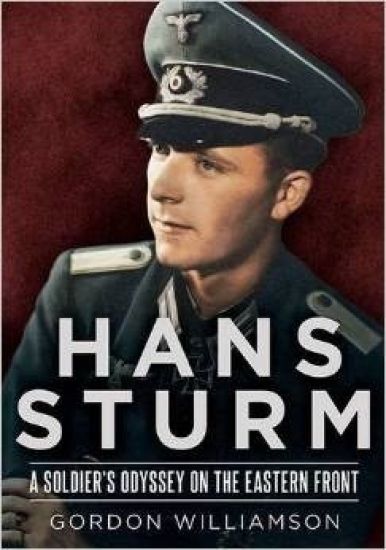
Hans Sturm

Hans Sturm

Gordon Williamson

Fonthill Media
2015
sidottu
There are many biographies of former soldiers of the German Wehrmacht, many of whom had fascinating stories to tell, and several of whom were highly decorated. Few, however, can match Hans Sturm in his astonishing rise from a mere private in an infantry regiment, thrown into the bloody maelstrom of the Eastern Front, to becoming a glorified war hero whose role brought him into direct regular contact with Prominenten of the Third Reich. This young man's fearless heroism in combat earned him some of Germany's highest military awards, and yet he was pugnaciously outspoken about bullying and injustice. From striking a member of the feared Sicherheitsdienst in defence of a Jewish woman to refusing to wear a decoration he felt was tainted by its encouragement of inhumane treatment of enemy partisans, Sturm repeatedly stuck to his moral values no matter what the risk. But even when the war was finally over, his travails did not end: he was held in a number of Soviet labour camps, before finally being released in 1953. Hans Sturm: A Soldier's Odyssey on the Eastern Front is an engaging reconstruction of events based on exchanges of correspondence and reminiscences between the author and Hans Sturm himself. It vividly portrays not only a German soldier's experience on the Eastern Front, but the intriguing trajectories that success in the battlefield yielded for him at home under the Nazi regime.
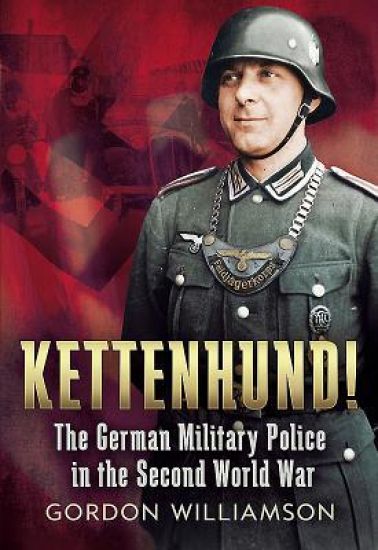
Kettenhund!

Kettenhund!

Gordon Williamson

Fonthill Media
2014
sidottu
In almost every army in the World, the Military Police rank amongst those who are least liked by other soldiers despite the essential duties that they carry out, often being amongst the first in and last out in any theatre of war. In the German armed forces, however, opinions of the military police were often those of fear as much as dislike, so great were the powers held by these troops. Germany created a plethora of different branches of what were termed 'Ordnungstruppe' - Troops for Maintaining Order. Many wore a distinctive metal gorget plate on a chain around the neck, leading to their pejorative nickname 'Kettenhund' or Chain Dogs. Despite certainly being involved in often brutal treatment of partisans and other unfortunates who fell into their grasp, their skills were sufficiently appreciated by the allies that on Germany's surrender, a number of military police units of the Wehrmacht were allowed to remain in post under allied control to assist in controlling the vast number of now disarmed German troops. Kettenhund!The German Military Police in the Second World War, using primarily previously unpublished photographic material from private sources, provides a detailed study of the organisation of these units and the distinctive uniforms and insignia they wore.
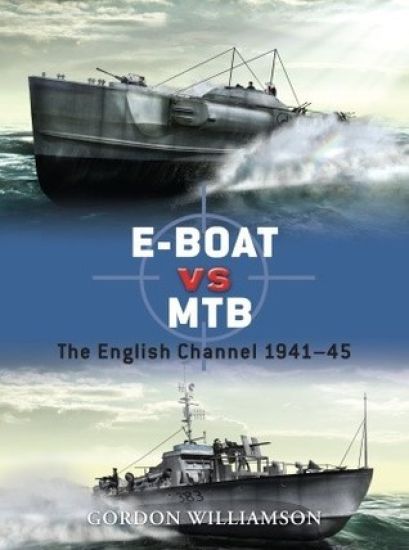
E-Boat vs MTB

E-Boat vs MTB

Gordon Williamson

Osprey Publishing
2011
nidottu
An examination of the 'small boat' war between the Germans and the British in the English Channel.During the Second World War, German E-Boats were so active in the English Channel that the narrow stretch of water became known as 'E-Boat Alley'. To counter the threat of these E-Boats, Britain brought its coastal forces to bear – flotillas of small Motor Torpedo and Gun Boats (MTBs and MGBs) and Motor Launches (MLs). As the Germans sought to maintain their supremacy in Channel waters, they continued to develop their E-Boat designs to accommodate more armor and more firepower. Rather than matching the newer E-Boats for armament, the British developed several types to fulfill the varied roles for which the Kriegsmarine were attempting to use the E-Boat. Illustrated with high-quality photographs and battlescene artworks, this book details this developing conflict, examining the evolution of the boats involved, and covering their battles from fights in the Thames Estuary to the build-up for D-Day.
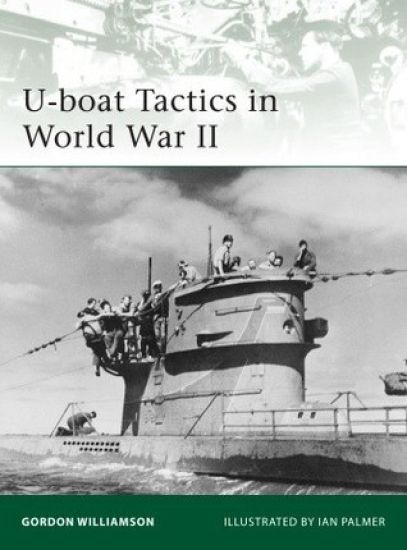
U-boat Tactics in World War II

U-boat Tactics in World War II

Gordon Williamson

Osprey Publishing
2010
nidottu
At the start of the war, German U-boat technology vastly out performed that possessed by the Allies, and under the pressure of the war continual development helped keep pace with wartime needs and improvements in anti-submarine weaponry. But it was not just the technology that had to change. German U-boat tactics evolved over time. Used in a variety of roles, from coastal patrolling through to the combined actions of convey-hunting 'wolf packs', the tactics used by U-Boats were diverse. This book analyses how the U-boats dominated the seas thanks to their innovative and daring tactical deployment, and how the cracking of the Enigma code effectively hamstrung them, greatly reducing their impact, a problem that even their advanced tactics failed to solve.
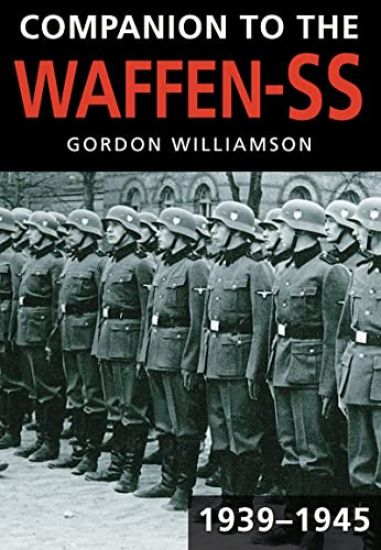
Companion to the Waffen-SS, 1939-1945

Companion to the Waffen-SS, 1939-1945

Gordon Williamson

The History Press Ltd
2010
nidottu
Originating in Hitler’s personal bodyguard, the Waffen-SS was expanded as a fourth branch of the Wermacht and became regarded as the tough elite of the German Armed Forces. Known as Hitler’s ‘Asphalt Soldiers’ they fought on all main battle-fronts, but most notably in the East against the Soviet Union. Gordon Williamson describes the organisation, equipment, tactics and personalities of the Waffen-SS in the Second World War. The author has travelled to Germany to interview numerous surviving Waffen-SS soldiers and corresponded with many others, obtaining first-hand accounts of their wartime experiences.
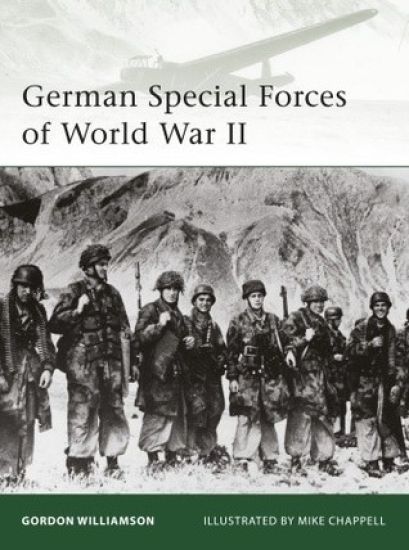
German Special Forces of World War II

German Special Forces of World War II

Gordon Williamson

Osprey Publishing
2009
nidottu
This is a fascinating and long overdue study of the troops that made up Germany's elite special forces of World War II. Such forces included the legendary Skorzeny Commandos who carried out audacious tasks such as the glider-borne rescue of Mussolini, and the kidnapping of the son of the Hungarian regent, Admiral Horthy. This book also includes details of lesser-known units such as the Brandenburgers, who operated behind enemy lines in captured uniforms, and the Kleinkampfverbande who were the forerunners of modern-day naval combat troops like the US Navy SEALs. Complete with uniform and kit detail together with action accounts of many of these daring operations, this book is a must-have for any special forces enthusiast.
Kriegsmarine Auxiliary Cruisers

Kriegsmarine Auxiliary Cruisers

Gordon Williamson

Osprey Publishing
2009
nidottu
Despite being relatively unknown compared to famous ships like Graf Spee or Bismarke, or the more famous U-boats, the Auxiliary Cruisers were immensely successful, not only in the number of enemy ships they sank, but in the resources which were tied up trying to track them down. The Royal Navy's auxiliary cruisers tended to be merchant vessels used to protect convoys from attack. The German Auxiliary Cruisers, however, heavily armed and usually carried torpedo tubes as well as guns and even sometimes their own aircraft. These ships were aggressive predators, searching the sea lanes for unsuspecting enemy merchants, and were not only capable of destroying enemy merchant ships, but also of defending themselves against well-armed enemy warships. This book looks at the specifications and designs of the 11 Auxiliary Cruisers, as well as their combat histories, their eventual fates, and the careers of some of the most famous commanders.
Kriegsmarine Coastal Forces

Kriegsmarine Coastal Forces

Gordon Williamson

Osprey Publishing
2009
nidottu
Although often overlooked in favour of the U-boats or battleships, the vast majority of the Kriegsmarine was formed of the smaller vessels of the coastal forces. These ships and boats, which included minesweepers, torpedo boats, patrol boats, and blockade breakers, gave crucial service to Germany during the war, and many continued serving for decades after the surrender in such tasks as clearing minefields. Also included in these forces was Hitler's yacht, the Ostwind. This book reveals the history of the vessels that formed the backbone of the Kriegsmarine, and combines fascinating anecdotes, detailed technical information, and full-colour artwork.
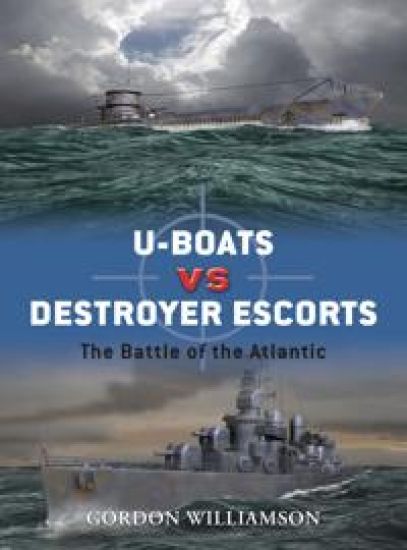
U-boats vs Destroyer Escorts

U-boats vs Destroyer Escorts

Gordon Williamson

Osprey Publishing
2007
nidottu
The U-boat was a formidable foe, developed from a small coastal vessel into a state-of-the-art killer picking off merchant convoy ships at will. It was not until the destroyer escort was introduced, alongside with dedicated anti-submarine tactics, that there was an effective means of defence and attack against the U-boat. This book describes the design and development of these two deadly opponents, analysing their strengths and weaknesses and assessing their tactics, weaponry and training. Moreover, it is an insight into the lives of the Royal Navy and Wolf Pack crews as they played their deadly games of cat and mouse on the high seas as they gambled not only with their lives but with the fate of the war.
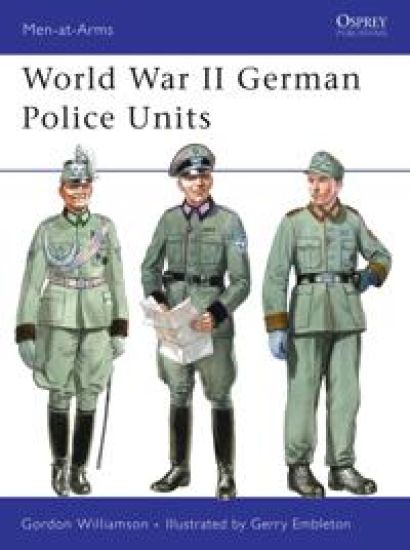
World War II German Police Units

World War II German Police Units

Gordon Williamson

Osprey Publishing
2006
nidottu
The wartime Police were headed by Himmler as chief of the SS; and throughout the occupied nations the regional SS commanders were specifically termed 'Higher SS and Police Leaders'. It was not a single service, but a vast machinery which included many special categories - from conventional criminal detectives, municipal and rural police; to many police combat battalions sent to Russia; to border and customs police, and special railway and waterway departments; to fire brigades and emergency engineer squads, and even a colonial service for North Africa. The purpose of this title is to explain the complex organization and the particular duties of the different branches which formed such a critical part of the Nazi apparatus and ensured that control was maintained inside Hitler's Fortress Europe. Painstaking research by the author has unearthed fascinating information about the Police organizations their many different uniforms and insignia, which are illustrated in the colour plates.
German Commanders of World War II (2)

German Commanders of World War II (2)

Gordon Williamson

Osprey Publishing
2006
nidottu
This is the second book in a two-part series about the "German Commanders of World War II", and covers distinguished commanders from the Waffen-SS, the Luftwaffe and the Navy. The commanders covered include such famous names as Josef Dietrich, Theodor Eicke, Kurt Meyer, Joachim Peiper and Karl Donitz and the book details their fascinating wartime experiences. The colour plates are in the uniquely meticulous style of the respected World War II illustrator Malcolm McGregor.
Knight's Cross with Diamonds Recipients

Knight's Cross with Diamonds Recipients

Gordon Williamson

Osprey Publishing
2006
nidottu
On 1 September 1939, the Knight's Cross of the Iron Cross was created by Hitler. It could be distributed to all ranks within any branch of the Wehrmacht, Waffen-SS or the auxiliary services, and it was the highest award that the Third Reich could offer. During the war, new grades of Knight's Cross were added. The Diamonds were introduced on 28 September 1941, and were the next highest grade above the Oakleaves and Swords. Only 27 awards of Diamonds were made during the war. This is the final book in a four-volume series looking at the winners of the Knight's Cross. It covers all the winners of the Knight's Cross with Oakleaves, Swords and Diamonds.
Knight's Cross, Oak-Leaves and Swords Recipients 1941–45
On 21 June 1941, as the Wehrmacht stormed forward across frontiers of the Soviet Union, Hitler instituted a new higher grade of the Knight's Cross decoration for galantry and leadership: the silver clasp of the Oak-leaves with Swords. It would be awarded to only 159 men of the approximately 15 million who served in the German armed forces during World War II. This third in a sequence of four titles describes and illustrates a selection of the recipients: from much-wounded front line infantry officers, to Hitler's 'brother-in-law'; from a sergeant pilot fighter ace, to the commanding general of the greatest tank force ever gathered on the Russian Front.
Knight's Cross and Oak-Leaves Recipients 1941–45

Knight's Cross and Oak-Leaves Recipients 1941–45

Gordon Williamson

Osprey Publishing
2005
nidottu
On 1 September 1939 the Knight's Cross of the Iron Cross was created by Hitler, the highest Third Reich award, and one which could be distributed to all ranks within any branch of the Wehrmacht, Waffen-SS or the auxiliary services. During the war, new grades of Knight's Cross were added. The Swords were introduced on 28 September 1941, and were the next highest grade above the Oakleaves. This book is the second of four volumes looking at the winners of the Knight's Cross, and covers Knight's Cross and Knight's Cross with Oakleaves and Swords winners from 1941-45 in Africa, Italy and the Mediterranean.
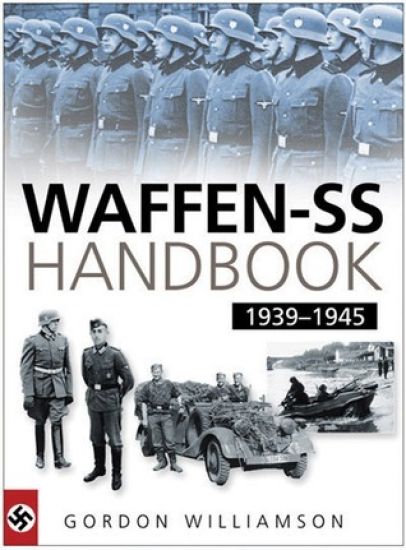
The Waffen-SS Handbook 1933-1945

The Waffen-SS Handbook 1933-1945

Gordon Williamson

Sutton Publishing Ltd
2005
nidottu
Originating in Hitler's personal bodyguard, the Waffen-SS (armed SS) was expanded as a fourth branch of the Wehrmacht and became regarded as the tough elite of the German armed forces. Known as Hitler's 'Asphalt Soldiers' they fought on all the main battle-fronts, but most notably in the East against the Soviet Union and in Normandy following 'Overlord'. By the war's end the Waffen-SS could boast almost forty field divisions manned by nearly one million troops. Gordon Williamson describes the organisation, equipment, tactics and personalities of the Waffen-SS in the Second World War. A chronology outlines the major events in the history of the Waffen-SS from the founding of its forerunner, the SS-Verfugungstruppe, until May 1945. The author has travelled to Germany to interview numerous surviving former Waffen-SS soldiers and corresponded with many others, obtaining first-hand accounts of their wartime experiences. The handbook is illustrated with a rich selection of previously unpublished photographs, predominantly from private collections, ranging from studio posed shots to previously unpublished candid snaps and from battlefield pictures to war correspondent action shots.
German Commanders of World War II (1)

German Commanders of World War II (1)

Gordon Williamson

Osprey Publishing
2005
nidottu
The is the first title in a two-book series covering German commanders of World War II. This first title covers distinguished Army commanders, ranging from the Generalfeldmarschall who commanded an entire army, through the Generals who commanded Divisions, down to the regimental and battalion commanders, providing an interesting look at the differences in various levels of responsibility. Famous leaders such as Rommel, Rundstedt, Model and von Manteuffel are all covered, and all the officers featured are holders of at least the Knight's Cross of the Iron Cross for their distinguished leadership.