Kirjojen hintavertailu. Mukana 12 115 363 kirjaa ja 12 kauppaa.

Kirjailija

Gottfried Knapp

Kirjat ja teokset yhdessä paikassa: 12 kirjaa, julkaisuja vuosilta 2000-2025, suosituimpien joukossa Hans Dieter Schaal--Stage Designs. Vertaile teosten hintoja ja tarkista saatavuus suomalaisista kirjakaupoista.

12 kirjaa

Kirjojen julkaisuhaarukka 2000-2025.

Uta Reinhardt: Surface

Uta Reinhardt: Surface

Gottfried Knapp; Ludger Schwarte

Hirmer Verlag
2019
sidottu
Uta Reinhardt’s pictorial creations invite a wide range of interpretations. Human and animal chimeras encounter each other as in an alliance and create their own unique world. The scenic compositions seduce us with their lively colours and the light rec orded with dynamic brushstrokes. Within a comparatively short space of time, Uta Reinhardt (*1966 in Bielefeld) has created a world in which real motifs are raised with astounding ease into the realms of the secret, and abstract colour worlds intensify an d begin to speak. Her pictures fascinate us in the process not only as a result of the scenic motifs but also for the complexity of the artistic compositions. On the occasion of the artist’s first solo exhibition in the United States, this monograph provid es an insight into the paintings and drawings of Uta Reinhardt and reproduces in large - format illustrations not only her first works but also the most recent pictures.
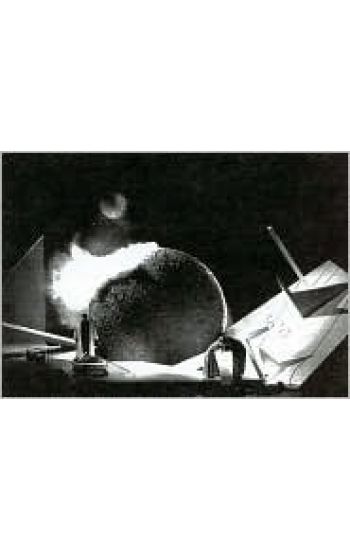
Hans Dieter Schaal--Stage Designs

Hans Dieter Schaal--Stage Designs

Gottfried Knapp

Edition Axel Menges
2002
sidottu
Text in English and German. Hans Dieter Schaal worked on opera with Ruth Berghaus for ten years, he also created unforgettable stage architecture for the operas of Heinz Werner Henze. Almost all the important European opera houses, for example those in Berlin, Brussels, Stuttgart, Paris, Vienna and Zurich, served as vehicles for his extraordinarily expressive artistic powers, which he used to captivate the public.
Leif Trenkler (Bilingual edition)

Leif Trenkler (Bilingual edition)

Gottfried Knapp

Hirmer Verlag
2021
sidottu
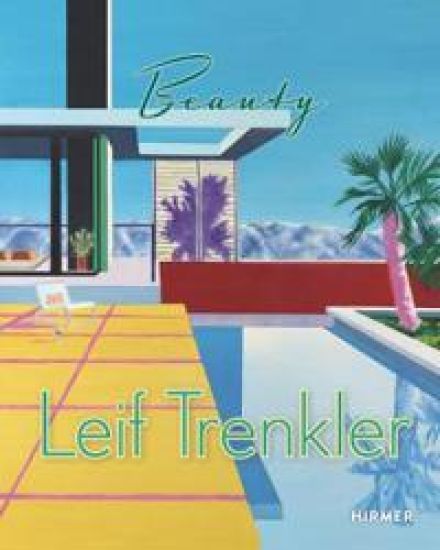
Leif Trenkler (b. 1960) is regarded as one of the most important protagonists of New Figuration in Germany. He has played an important role in this contemporary movement and has achieved international success. His fascinating painting is created by using new colour constructions, a nuanced technique and unusual compositions employing oil on wood. Trenkler’s works have a magical aura about them. Inspired by the artist’s numerous journeys, they transport us to places of longing: silent river landscapes, pool scenes that reflect photographic elements and pictures of clear starry nights. Through the artist’s interest in the development of an emotional mood and the attendant rigorously focused structure, Trenkler’s pictures correspond to his own philosophy of multiple layers. The attractively designed volume shows work from over 30 years, rounded out by a subtle essay by Gottfried Knapp. “The mountains gleam on the horizon. The long shadows wander. The vibrant ultramarine morning sky is mirrored in the still-cool water. Warm yellow stone slabs promise a hot, sunny day.” (Leif Trenkler on his picture on the cover of the book) Languages: German and English
Markus Heinsdorff: static + dynamic

Markus Heinsdorff: static + dynamic

Manfred Baur; Rasmus Kleine; Gottfried Knapp; Michael Müller-Verweyen; Christian Schittich

Hirmer Verlag
2020
nidottu
The book presents the installation artist Markus Heinsdorff’scontinuing study of the topics of space, the forces of nature and upcyclingby means of over40 works. The overview is completed by text contributions by famous authors who interpret Heinsdorff’s internationalcreative works from a variety of perspectives. Anyone wishing to understand the comprehensive work of Markus Heinsdorffwill have to embark on a voyage around the world: from the depths of the Amazonto the vast cities of India and the small villages of Africa. The projects presented here are subject to a wide range of influences which the artist approaches with imagination and engineering precision. The volume introduces an impressive oeuvre through sketchesandphotos of models and realisations which hover atthe interface between architecture and sustainable art.
Horst Thürheimer

Horst Thürheimer

Gottfried Knapp; Andreas Kühne

Hirmer Verlag
2014
sidottu
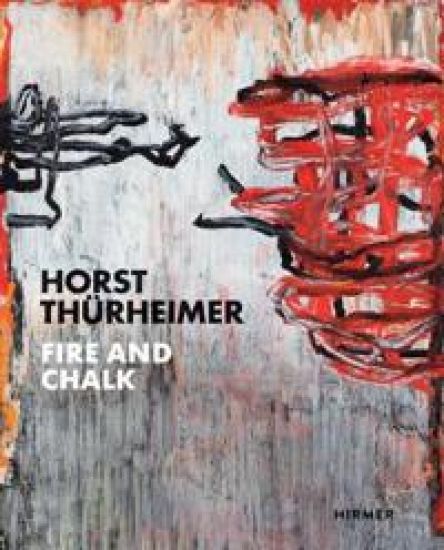
In "Fire and Chalk" Horst Thurheimer demonstrates his new way of painting, using his innovative techniques. To create his compositions Thurheimer uses not only acrylic paints and paintbrushes, but also fire, via the flame of a Bunsen burner, and various sorts of crayons. This volume provides an overview of his oeuvre, including his most recent works. The seventy colored illustrations in this book offer readers a fascinating insight into the world of a new artistic technique. Through his ability to produce unconventional works of art that go beyond traditional painting method, Thurheimer creates compositions of great elemental beauty. Particularly in his more recent works, Horst Thurheimer's Fire and Chalk show the overlapping of the themes of destruction and healing, each reinforcing the other’s evocative effect, with powerful and moving painterly results. Thurheimer works tirelessly to expand the possibilities of his art to its full potential.
Am Weg: Der Maler Und Bildhauer Wolfgang Stracke

Am Weg: Der Maler Und Bildhauer Wolfgang Stracke

Toni Faber; Hansjorg Krug; Gottfried Knapp

Vandenhoeck Ruprecht
2012
sidottu
Eine ausgewahlte Werkschau gibt Einblick in das vielseitige Schaffen und den Weg des Malers und Bildhauers Wolfgang Stracke. Bereits fruh werden seine Werke gewurdigt und finden Eingang in offentliche und private Sammlungen. Seine Virtuositat zeigt sich in der Zeichnung, der Druckgrafik, der Malerei bis hin zum Fresko. Ob lavierte Federzeichnung, Kohle, ob Aquarell und Tempera oder Ol - die Wahl der Ausfuhrung obliegt dem jeweiligen Motiv, das Stracke beim Reisen, in der Architektur und Landschaft, im Ballettsaal, im Akt, im Portrat oder in philosophisch - psychologischen Themen findet. Auch in der Neuorientierung zu einer symbolistisch farbstarken, expressiven Bildsprache ist die entschlossene Umsetzung des Steinbildhauers spurbar. Beitrage von Gottfried Knapp, Hansjorg Krug, Manfred Pawlik, Dieter Ronte und Elmar Zorn begleiten das Werk.
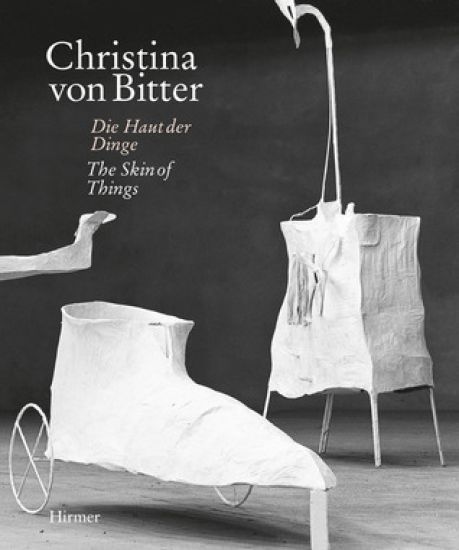
Christina von Bitter

Christina von Bitter

Gottfried Knapp

Hirmer Verlag
2011
sidottu
Through her experiments with extremely light materials, Christina von Bitter has developed an exciting series of three-dimensional translucent objects. This volume provides an insight into the multifaceted work of a sculptress who primarily resorts to paper and wire when creating sculptures which seem to defy gravity.
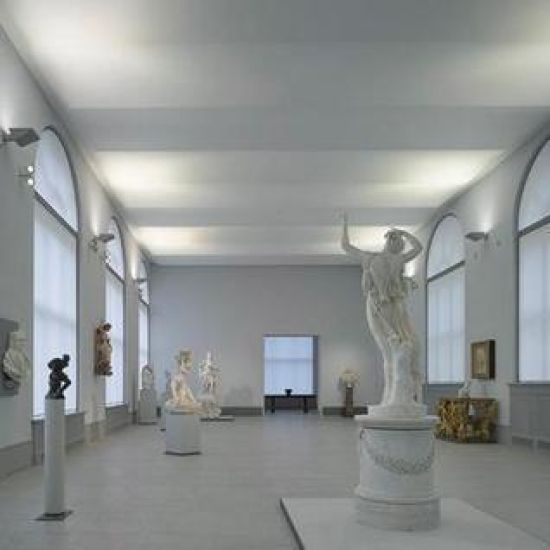
Ernst von Ihne / Heinz Tesar Bode Museum, Berlin

Ernst von Ihne / Heinz Tesar Bode Museum, Berlin

Gottfried Knapp

Edition Axel Menges
2007
sidottu
Text in English and German. Heinz Tesar has carefully preserved the existing Bode Museum building on the Museum Island in Berlin, and provided it with highly unusual additional sections for the anticipated hordes of visitors. His work proved its extraordinary qualities even at the opening. There is scarcely anywhere else in the world where the contrasting styles arising from a museum's various building periods come together to form such an individual whole, at best comparable in its density with the Italian architect Carlo Scarpa's museum designs. The essential basis for this successful symbiosis of heterogeneous stylistic elements is the variable historical architecture that museum director Wilhelm Bode invited architect Ernst Eberhard von Ihne to develop around 1900 for the collections, which were very disparate in both style and genre. When the museum opened in 1904, the magnificent architecture still had a political message to proclaim. It was called the 'Kaiser-Friedrich-Museum' at first, and there was a definite programme behind this: invoking the name of the art-minded earlier emperor and erecting ostentatious equestrian statues of figures from Prussian history was intended as a powerful pictorial display to anchor the Prussian dynasty in German history and European culture. But as Ihne eschewed any sense of regional identification, the museum could have carried his name after the abolition of the monarchy. But it was renamed Bode-Museum after its inventor Wilhelm von Bode in the GDR years, which indicates the significance of the stylistic spaces Bode created for the development of exhibition techniques. The text in the book provides a reminder of museum's first collection, a mixed one consisting of paintings, sculpture and furniture. The pictorial section then records the present content of the restored galleries, shaped by Heinz Tesar and using objects from the sculpture collection, the Byzantine museum and the numismatic collection. Tesar carried out some architectural interventions of considerable sculptural quality in the new basement under the small dome, in other words in the rotunda where the planned underground passage from the Pergamon-Museum will come in, and in the new stairwell added as a slim section in one of the courtyards.
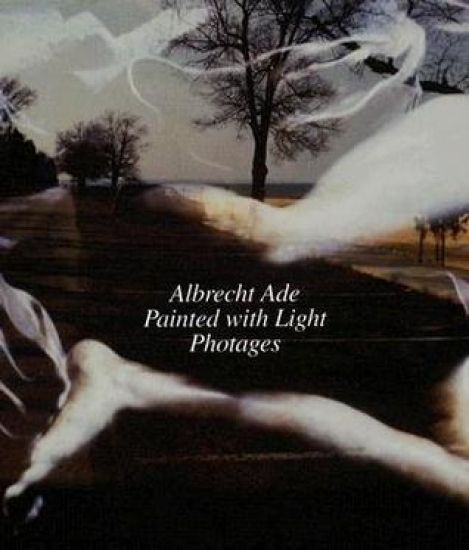
Albrecht Ade, Painted with Light, Photages

Albrecht Ade, Painted with Light, Photages

Gottfried Knapp

Edition Axel Menges
2006
sidottu
Text in English and German. Albrecht Ade's 'photages', created with special light techniques, have nothing in common with the 'photocollages' or 'photomontages' of the 20th century. When artists as different as El Lissitzky, John Heartfield, Laszlo Moholy-Nagy, Raoul Hausmann or Hannah Höch constructed futuristically bold, surreal or satirical images from photographic materials as a response to quotations from reality cut out and then stuck into Cubist 'papiers collés' by Georges Braque and Pablo Picasso, they worked mainly with someone else's material, with trouvailles. In contrast, Ade uses only his own material for his combination images, and his method for mounting images, for 'editing them into each other', does not need of scissors and paste either. He cultivates the usually involuntary effect of double exposure, a hazard from the days of analogue photography. He controls the chances of pictorial superimposition and confusion, artfully and purposefully arranging his own, deliberately positioned images among and on top of each other, using a technically elaborate matching and omission process. Ade, as well as teaching at the Stuttgart Akademie der Bildenden Künste, has intensively promoted cinematic animation techniques in his years as director of the Stuttgart Festival of Animated Film, and since 1990, as founder-director of the Filmakademie in Ludwigsburg, has allowed animated film and camera arts to develop in the greatest possible breadth, in fact has helped to win the Ludwigsburg model the highest artistic respect in the film world. This all suggests how inventively and ingeniously his creative output mingles artistically creative and elaborately echnical ideas and fascinations. Photography as a creative method for fine art -- something the pioneers of photography dreamed of in the 19th century -- becomes reality in Albrecht Ade's 'photages'.
Heinz Tesar, Sammlung Essl, Klosterneuberg, Austria

Heinz Tesar, Sammlung Essl, Klosterneuberg, Austria

Gottfried Knapp

Edition Axel Menges
2002
sidottu
Text in English and German. Heinz Tesar's buildings occupy a very particular place on the Austrian architectural scene, which is anyway populated by a lot of individualists. There is a great deal of creative imagination at work here, which always operates outside the scope of modern routine. The town of Klosterneuburg, north of Vienna, has become something like an artistic home for Tesar. The Schomerhaus, an office building whose huge oval central hall leaves convention far behind, and the Protestant church, which has a rounded floor plan like a tear-drop, were now followed by the impressive museum he has built here to house 4000 objects from the private Essl collection, which includes the most important collection of Austrian art after 1945. The floor plan is based on a triangle. Above a storage floor that runs the whole length of the building three individually shaped architectural entities are grouped around a green courtyard. The elaborately orchestrated section of the building on the short leg of the triangle accommodates the entrance foyer, staircase, library, offices and a flat.The long side of the triangle contains the hall for temporary exhibitions extending over two storeys; on the lower floor it is glazed on the courtyard side, and in the upper storey it is lit partly from the side and partly from the skylights in the slightly undulating roof. The hypotenuse is made up of a sequence of parallel galleries; they are topped by lanterns, which admit a great deal of daylight. Finally, Tesar gives the cubic building an organic touch with a curved flourish at the tip of the triangle. Following Gehry and Zumthor, who have recently made important contributions to the theme of art museums, Tesar is now offering a variant that responds very physically to its surroundings, creating individual spaces with a variety of light.
Neuschwanstein  (Opus 33)

Neuschwanstein (Opus 33)

Gottfried Knapp; Achim Bunz

Edition Axel Menges
2000
sidottu
Text in English and German. One and a half million visitors per year can't be wrong. For them the royal castle at Neuschwanstein is the pinnacle of every dreamer's architectural fairy-tale. But for the architecturally educated, for adepts of Modernism, this stylistically crude, anachronistic monument to a prince's whim is simply annoying. Admittedly, putting aside all positive or negative prejudice, it is impossible not to count this romantic recreation of a medieval castle on its breath-taking scenic site as one of the most spectacular pioneering buildings of European Historicism.