Kirjojen hintavertailu. Mukana 12 595 353 kirjaa ja 12 kauppaa.
Kirjailija
Graeme D. Ruxton
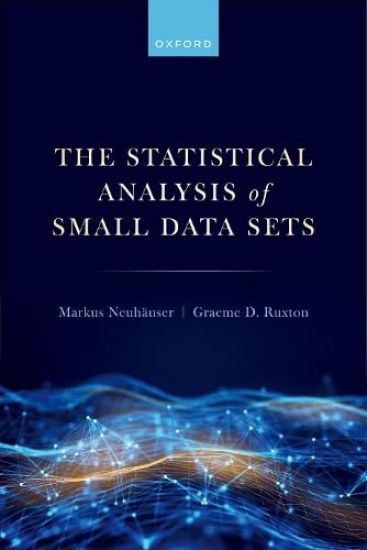
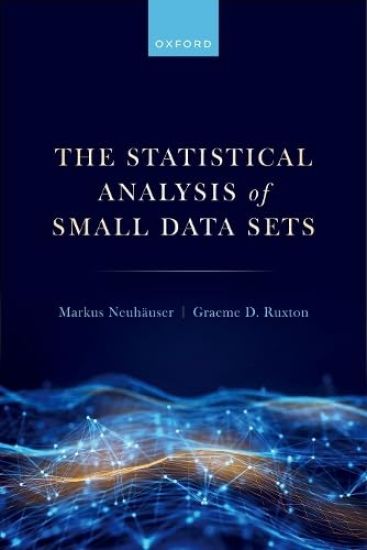
Kirjat ja teokset yhdessä paikassa: 12 kirjaa, julkaisuja vuosilta 2011-2024, suosituimpien joukossa The Statistical Analysis of Small Data Sets. Vertaile teosten hintoja ja tarkista saatavuus suomalaisista kirjakaupoista.
We live in the era of big data. However, small data sets are still common for ethical, financial, or practical reasons. Small sample sizes can cause researchers to seek out the most powerful methods to analyse their data, but they may also be wary that some methodologies and assumptions may not be appropriate when samples are small. The book offers advice on the statistical analysis of small data sets for various designs and levels of measurement, helping researchers to analyse such data sets, but also to evaluate and interpret others' analyses. The book discusses the potential challenges associated with a small sample, as well as the ways in which these challenges can be mitigated. General topics with strong relevance to small sample sizes such as meta-analysis, sequential and adaptive designs, and multiple testing are introduced. While the focus is on hypothesis tests and confidence intervals, Bayesian analyses are also covered. Code written in the statistical software R is presented to carry out the proposed methods, many of which are not limited to use on small data sets, and the book also discusses approaches to computing the power or the necessary sample size, respectively.
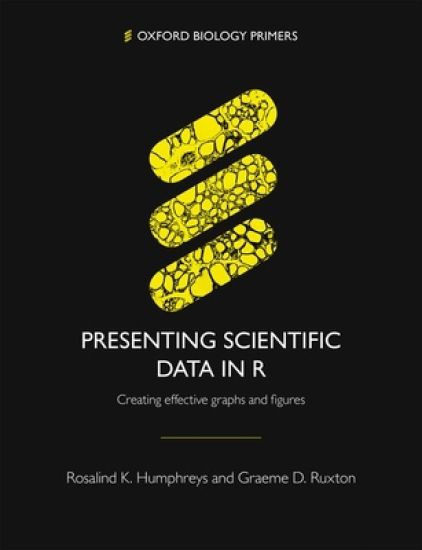
Written primarily for students embarking on an undergraduate bioscience degree, this primer provides an accessible, straightforward, and approachable guide to data presentation using R. It offers valuable and widely applicable advice on how to choose the most appropriate type of graph for different types of data, and guides readers from the basics of plotting clear figures to producing polished and effective visuals, illustrating the core concepts and features of excellent graphing. This primer uses simple and engaging biology-based example data sets to take readers from the essential aspects of basic plots to more advanced graphing techniques and details. Digital formats and resources The book is available for students and institutions to purchase in a variety of formats, and is supported by online resources: - The e-book offers a mobile experience and convenient access along with functionality tools, navigation features, and links that offer extra learning support: www.oxfordtextbooks.co.uk/ebooks - Online resources include extended supplementary resources to guide use of R, multiple choice questions for students to check their understanding, and, for registered adopters, figures and tables from the book
Written primarily for mid-to-upper level undergraduates, this compelling introduction to power analysis in a biological context offers a clear, conceptual understanding of the factors that influence statistical power, and emphasises the importance of high power in experiments. It also explains how to improve the power of an experiment and offers guidance on how to present the outcomes of power analyses to justify experimental design decisions. Digital formats and resources The book is available for students and institutions to purchase in a variety of formats, and is supported by online resources: · The e-book offers a mobile experience and convenient access along with functionality tools, navigation features, and links that offer extra learning support: www.oxfordtextbooks.co.uk/ebooks · Online resources include multiple choice questions for students to check their understanding, and, for registered adopters, figures and tables from the book
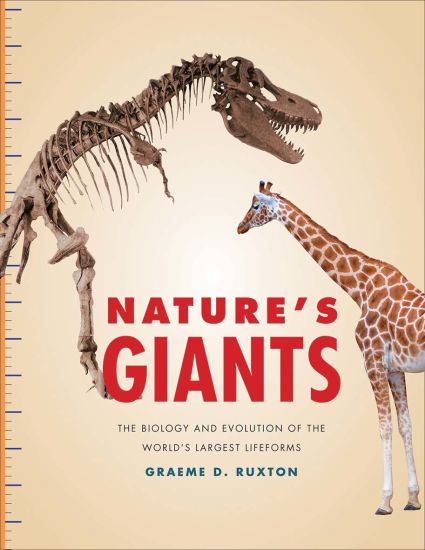
A beautifully illustrated exploration of the science behind the awe-inspiring giants of past and present The colossal plants and animals of our world—dinosaurs, whales, and even trees—are a source of unending fascination, and their sheer scale can be truly impressive. Size is integral to the way that organisms experience the world: a puddle that a human being would step over without thinking is an entire world to thousands of microscopic rotifers. But why are creatures the size that they are? Why aren’t bugs the size of elephants, or whales the size of goldfish? In this lavishly illustrated new book, biologist Graeme Ruxton explains how and why nature’s giants came to be so big—for example, how decreased oxygen levels limited the size of insects and how island isolation allowed small-bodied animals to evolve larger body sizes. Through a diverse array of examples, from huge butterflies to giant squid, Ruxton explores the physics, biology, and evolutionary drivers behind organism size, showing what it’s like to live large.
Avoiding Attack discusses the diversity of mechanisms by which prey avoid predator attacks and explores how such defensive mechanisms have evolved through natural selection. It considers how potential prey avoid detection, how they make themselves unprofitable to attack, how they communicate this status, and how other species have exploited these signals. Using carefully selected examples of camouflage, mimicry, and warning signals drawn from a wide range of species and ecosystems, the authors summarise the latest research into these fascinating adaptations, developing mathematical models where appropriate and making recommendations for future study. This second edition has been extensively rewritten, particularly in the application of modern genetic research techniques which have transformed our recent understanding of adaptations in evolutionary genomics and phylogenetics. The book also employs a more integrated and systematic approach, ensuring that each chapter has a broader focus on the evolutionary and ecological consequences of anti-predator adaptation. The field has grown and developed considerably over the last decade with an explosion of new research literature, making this new edition timely.
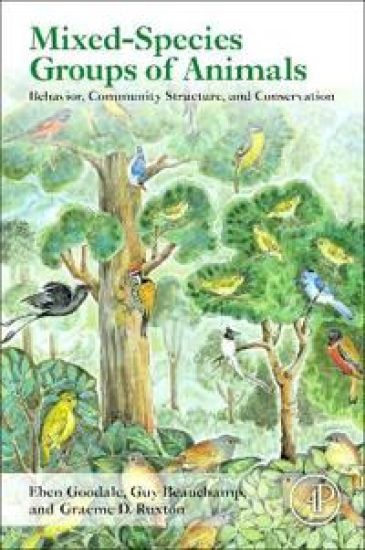
Mixed-Species Groups of Animals: Behavior, Community Structure, and Conservation presents a comprehensive discussion on the mixed-species groups of animals, a spectacular and accessible example of the complexity of species interactions. They are found in a wide range of animals, including invertebrates, fish, mammals and birds, and in different habitats, both terrestrial and aquatic, throughout the world. While there are more than 500 articles on this subject scattered in separate categories of journals, there has yet to be a general, cross-taxa book-length introduction to this subject that summarizes the behavior and community structure of these groups. The authors first survey the diversity of spatial associations among animals and then concentrate on moving groups. They review the major classes of theories that have been developed to explain their presence, particularly in how groups increase foraging efficiency and decrease predation. Finally, they explore the intricacies of species interactions, such as communication, that explain species roles in groups and discuss what implications these social systems have for conservation.
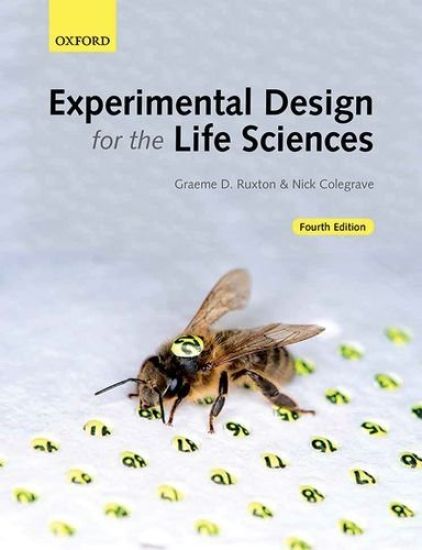
The careful design of experiments lies at the core of good research. Experimental Design for the Life Sciences equips you with the skills you need to effectively design experiments, making this essential aspect of the research process readily understandable. It demonstrates how good experimental design relies on clear thinking and biological understanding, not mathematical or statistical complexity. With a refreshingly approachable and articulate style, the book walks you through the considerations that go into designing an experiment in clear, practical terms. Using examples drawn from across the life sciences - from ecology, biochemistry, molecular biology, genetics, and health sciences - the authors illustrate how these concepts are applied within the broad context of real biological research. Online Resources The online resources to accompany Experimental Design for the Life Sciences feature: For students: · Self-test questions and answers · Additional examples · Supplementary sections discuss complex concepts and statistical issues in more depth · Links to useful websites and free software For lecturers: · Suggested course structures, complete with practical exercises · Figures from the book, available to download
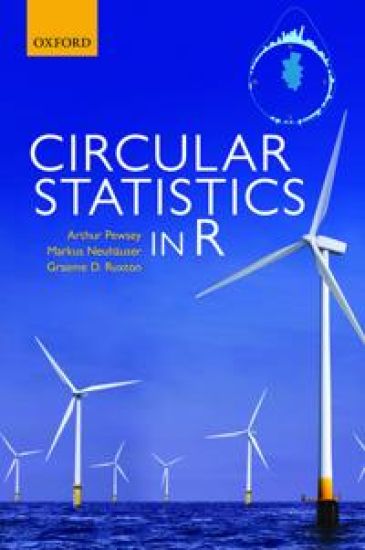
Circular Statistics in R provides the most comprehensive guide to the analysis of circular data in over a decade. Circular data arise in many scientific contexts whether it be angular directions such as: observed compass directions of departure of radio-collared migratory birds from a release point; bond angles measured in different molecules; wind directions at different times of year at a wind farm; direction of stress-fractures in concrete bridge supports; longitudes of earthquake epicentres or seasonal and daily activity patterns, for example: data on the times of day at which animals are caught in a camera trap, or in 911 calls in New York, or in internet traffic; variation throughout the year in measles incidence, global energy requirements, TV viewing figures or injuries to athletes. The natural way of representing such data graphically is as points located around the circumference of a circle, hence their name. Importantly, circular variables are periodic in nature and the origin, or zero point, such as the beginning of a new year, is defined arbitrarily rather than necessarily emerging naturally from the system. This book will be of value both to those new to circular data analysis as well as those more familiar with the field. For beginners, the authors start by considering the fundamental graphical and numerical summaries used to represent circular data before introducing distributions that might be used to model them. They go on to discuss basic forms of inference such as point and interval estimation, as well as formal significance tests for hypotheses that will often be of scientific interest. When discussing model fitting, the authors advocate reduced reliance on the classical von Mises distribution; showcasing distributions that are capable of modelling features such as asymmetry and varying levels of kurtosis that are often exhibited by circular data. The use of likelihood-based and computer-intensive approaches to inference and modelling are stressed throughout the book. The R programming language is used to implement the methodology, particularly its "circular" package. Also provided are over 150 new functions for techniques not already covered within R. This concise but authoritative guide is accessible to the diverse range of scientists who have circular data to analyse and want to do so as easily and as effectively as possible.
Communication is an essential factor underpinning the interactions between species and the structure of their communities. Plant-animal interactions are particularly diverse due to the complex nature of their mutualistic and antagonistic relationships. However the evolution of communication and the underlying mechanisms responsible remain poorly understood. Plant-Animal Communication is a timely summary of the latest research and ideas on the ecological and evolutionary foundations of communication between plants and animals, including discussions of fundamental concepts such as deception, reliability, and camouflage. It introduces how the sensory world of animals shapes the various modes of communication employed, laying out the basics of vision, scent, acoustic, and gustatory communication. Subsequent chapters discuss how plants communicate in these sensory modes to attract animals to facilitate seed dispersal, pollination, and carnivory, and how they communicate to defend themselves against herbivores. Potential avenues for productive theoretical and empirical research are clearly identified, and suggestions for novel empirical approaches to the study of communication in general are outlined.