Kirjojen hintavertailu. Mukana 12 657 676 kirjaa ja 12 kauppaa.

Kirjailija

Graeme Davison

Kirjat ja teokset yhdessä paikassa: 6 kirjaa, julkaisuja vuosilta 2004-2023, suosituimpien joukossa Lost Relations. Vertaile teosten hintoja ja tarkista saatavuus suomalaisista kirjakaupoista.

6 kirjaa

Kirjojen julkaisuhaarukka 2004-2023.

My Grandfather's Clock

My Grandfather's Clock

Graeme Davison

MELBOURNE UNIVERSITY PRESS
2023
sidottu
A great-aunt's bequest - a 200-year-old grandfather clock - sends historian Graeme Davison on a journey deep into his father's family's past. From their tribal homeland in the Scottish Borders he follows them to the garrison town of Carlisle, from industrial Birmingham to Edwardian Australia, and from the Great War to his own suburban childhood. This is the story of an ordinary family's journey from frontier warfare and dispossession through economic turmoil and emigration to modest prosperity. At each step, we are led to reflect on the puzzles of personal identity and the mystery of time. Based on a lifetime of creative scholarship, My Grandfather's Clock is a moving testament to the power of family history to illuminate the present.
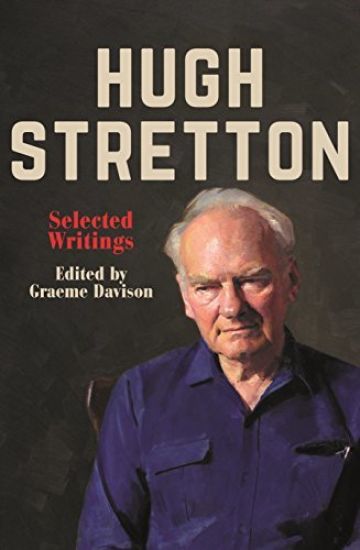
Hugh Stretton

Hugh Stretton

Graeme Davison

La Trobe University Press
2018
pokkari
A public intellectual known for his deeply humane approach to social, economic and urban issues, Hugh Stretton was an Australian original.His Political Sciences was described by The Times Literary Supplement as 'a work of near genius'. His groundbreaking Ideas for Australian Cities became the manifesto for a generation awakening to the distinctive features of our cities and suburbs.In this selection, leading historian Graeme Davison includes highlights from these and other published and unpublished works, showcasing Stretton's bravura intellectual style, grounded analysis, literary flair and the remarkable range of his thinking on history, politics, urban planning, and progressive social and economic development. Davison also provides a substantial and valuable introduction, setting the work in context.Stretton saw the dangers of the neoliberal orthodoxy that took hold in the Anglophone world from the early 1980s. With subtlety, imagination and rigour, his work offers an alternative vision of a good and fair society.'Stretton could see beyond the cliches and into the lives of ordinary Australians.' DONALD HORNE'Stretton may have been Australia's most distinguished post-war social scientist.' ROBERT MANNE
City Dreamers

City Dreamers

Graeme Davison

NewSouth Publishing
2016
nidottu
‘The city, as we imagine it … is as real, maybe more real, than the hard city one can locate in statistics … and architecture.’ City Dreamers examines the main currents in Australia’s urban culture – from the early colonial period to the present day – by looking at the ways in which artists, social scientists, poets, writers, reformers and engineers have imagined Australian cities over the last 200 years. Graeme Davison examines a range of these observers and thinkers, and argues that there’s a particular twist to the ways in which Australians think about cities. Rather than focus on disembodied ideas on cities, Davison excavates the cultural history of the Australian city by focusing on ‘dreamers’ – such as Henry Lawson, Charles Bean and Hugh Stretton.
Lost Relations

Lost Relations

Graeme Davison

Allen Unwin
2015
nidottu
In 1839, Hampshire yeoman John Hewett died prematurely and left his wife and eight children to manage on their own. Times were tough, and after their landlord put their farm up for sale, Jane Hewett emigrated to Australia with all her children in 1850. Graeme Davison traces the lives of two generations of the Hewett family, setting them in their historical context in both the UK and Australia. With scant family records, he draws on the full array of public records available in both the UK and Australia, showing as he works how a master historian weighs the evidence and pulls the story together. Throughout he reflects on the meaning of family history, but with a light touch that doesn't get in the way of the story. Through the Hewett family, he paints a picture of colonial Australia: migration of free settlers taking over from the convict period, the work available to men and to women, the gold rush, the rise of the railways, growth of farming. The rise and fall of family fortunes reflects the turbulent growth of the colonies during this period. He writes, 'I did not look for skeletons in my family's cupboard, but once the cupboard was open, they simply fell out.'
Trendyville

Trendyville

Graeme Davison; Renate Howe; David Nichols

Monash University Publishing
2014
nidottu
In the 1960s and 70s, Australia's inner cities experienced an upheaval which left them changed forever. People from all walks of life who valued their suburbs - places like Balmain, Battery Point, Carlton, Indooropilly, North Adelaide, or Subiaco - resisted large-scale development projects for freeways, 'slum clearance, ' and mass-produced high rises. Unlikely alliances - of post-war migrants, university students and staff, construction workers and their unions, long-term residents and city workers - challenged land-grabs and inappropriate development. When the dust settled, Australian cities were different. Many suburbs kept their village qualities. Shopping strips were revived and cultures celebrated. While areas like Fitzroy or Redcliff were derided as 'Trendyville' - the fate many American cities suffered - a 'hollow core' had been avoided. In the process, heritage conservation, party politics, and Australian assumptions about domestic life, education, and lifestyle had all been transformed. This book is an in-depth examination of the causes and consequences of urban protest in a democracy. It shows how this resistance changed the built environments, as well as its participants, and resonated in many of Australia's institutions, including politics, media, and multiculturalism
The Rise and Fall of Marvellous Melbourne

The Rise and Fall of Marvellous Melbourne

Graeme Davison

Melbourne University Press
2004
nidottu
A new edition of this classic work which looks at Melbourne, among the most surburbanized of nineteenth-century cities, in its pursuit of 'suburbanism as a way of life'. Looks beyond public events to discover how the experience of boom and depression touched the lives of ordinary Melburnians, at work and at home, and reshaped their society and their sense of urban identity.