Kirjojen hintavertailu. Mukana 12 595 353 kirjaa ja 12 kauppaa.

Kirjailija

Graeme Small

Kirjat ja teokset yhdessä paikassa: 6 kirjaa, julkaisuja vuosilta 2004-2014, suosituimpien joukossa George Chastelain and the Shaping of Valois Burgundy. Vertaile teosten hintoja ja tarkista saatavuus suomalaisista kirjakaupoista.

6 kirjaa

Kirjojen julkaisuhaarukka 2004-2014.

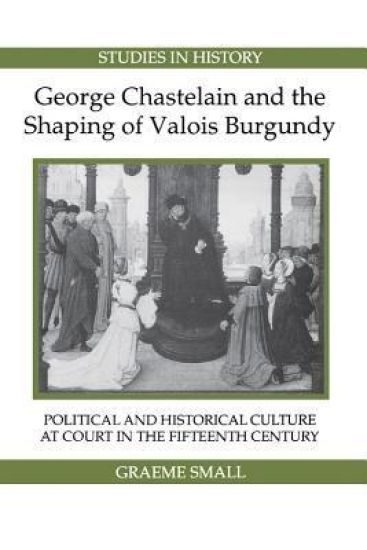
George Chastelain and the Shaping of Valois Burgundy
Chastelain's chronicle and career supply the context for a reappraisal of the political aspirations of Philip the Good and Charles the Bold, 15c dukes of Burgundy. Few texts offer as many insights into the history of Valois Burgundy as the work of George Chastelain (c.1414-1475), official chronicler to the dukes Philip the Good and Charles the Bold. Chastelain, a trusted courtier, closely observed his masters' authority in the many dominions they ruled in the Low Countries and France, and the role they played in the political life of neighbouring kingdoms and principalities and in Christendom as a whole. This is thefirst historical study of Chastelain in over half a century. An account of his life and career is followed by a study of his chronicle, Chastelain's interpretation within it of ducal actions and aspirations, and the role it playedin the historical culture of the governing classes in the Netherlands after the death of the last duke in 1477. Overall, Dr Small offers a complete reappraisal of the political ambitions of the ducal elite, particularly with regard to the supposed evolution of the ducal dominions into a "Burgundian state" quite distinct from the Kingdom of France. Dr GRAEME SMALL is lecturer in medieval history, University of Glasgow.
Late Medieval France

Late Medieval France

Graeme Small

Red Globe Press
2009
sidottu
A fresh introduction to the political history of late medieval France duing the turbulent period of the Hundred Years' War, taking into account the social, economic and religious contexts. Graeme Small considers not just the monarchy but also prelates, noble networks and the emerging municipalities in this new analysis.
Late Medieval France

Late Medieval France

Graeme Small

Red Globe Press
2009
nidottu
A fresh introduction to the political history of late medieval France duing the turbulent period of the Hundred Years' War, taking into account the social, economic and religious contexts. Graeme Small considers not just the monarchy but also prelates, noble networks and the emerging municipalities in this new analysis.
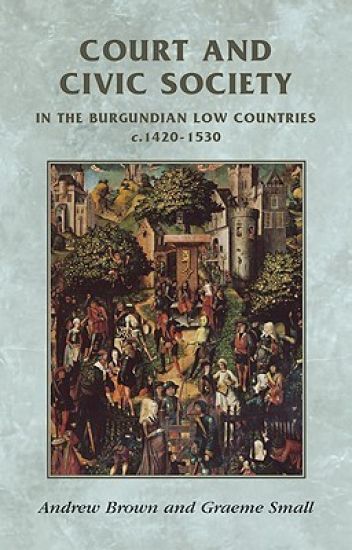
Court and Civic Society in the Burgundian Low Countries C.1420–1530

Court and Civic Society in the Burgundian Low Countries C.1420–1530

Andrew Brown; Graeme Small

Manchester University Press
2007
nidottu
This volume is the first ever attempt to unite and translate some of the key texts which informed Johan Huizinga’s famous study of the Burgundian court, The Waning of the Middle Ages, a work which has never gone out of print. It combines these texts with sources that Huizinga did not consider, those that illuminate the wider civic world that the Burgundian court inhabited and the dynamic interaction between court and city. Through these sources, and an introduction offering new perspectives on recent historiography, the book tests whether Huizinga’s controversial vision of the period still stands.Covering subjects including ceremonial events, such as the spectacles and gargantuan banquets that made the Burgundian dukes the talk of Europe, the workings of the court, and jousting, archery and rhetoric competitions, the book will appeal to students of late medieval and early modern Europe and to those with wider interests in court culture, ritual and ceremony.
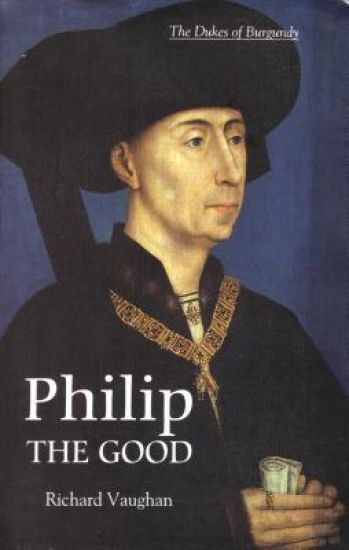
Philip the Good

Philip the Good

Richard Vaughan; Graeme Small

The Boydell Press
2004
pokkari
Philip, who ruled from 1419 to 1467, was one of the most powerful and influential rulers of the fifteenth century. Forced into an alliance with the English, he soon found that he held the balance of power between England and France - reflected in the final crucial phase of the Hundred Years War. Under Philip the Good, grandson of the founder of the duchy's power, Burgundy reached its apogee. Professor Vaughan portrays not only Philip the Good himself, perhaps the most attractive personality among the four great dukes, butthe workings of the court and of one of the most efficent - if not necessarily the most popular - administrations in fifteenth-century Europe. The complex diplomatic history of Philip the Good's long ducal reign (1419-1467) occupies much of the book, in particular Burgundy's relations with England and France. The central theme is Philip the Good's policy of territorial and personal aggrandisement, which culminated in his negotiations with the Holy Roman Emperor for a crown. And due attention is given to the great flowering of artistic life in Burgundy which made Philip's court at Dijon an important cultural centre in the period immediately preceding the Renaissance. All this is based on the close study of the considerable surviving archives of Philip's civil service, and on the chronicles and letters of the period. Philip the Good provides a definitive study of the life and times of the rulerwhose position and achievements made him the greatest magnate in Europe during what has been called "the Burgundian century".