Kirjojen hintavertailu. Mukana 12 595 353 kirjaa ja 12 kauppaa.

Kirjailija

Graham Harman

Kirjat ja teokset yhdessä paikassa: 38 kirjaa, julkaisuja vuosilta 2002-2026, suosituimpien joukossa Nesne Yönelimli Ontoloji. Vertaile teosten hintoja ja tarkista saatavuus suomalaisista kirjakaupoista.

38 kirjaa

Kirjojen julkaisuhaarukka 2002-2026.

Waves and Stones

Waves and Stones

Graham Harman

PENGUIN BOOKS LTD
2026
pokkari
A new exploration of our conception of reality, by one of the world’s most influential philosophers How do we understand the world and our place in it? Do our lives consist of a small number of dramatic turning points, or is there nothing but a series of gradual changes from infancy to old age? Are political elections genuinely transformational, or merely arbitrary points along a shifting cultural timeline? And in physics, how can the continuities of general relativity coexist with the discontinuities of quantum theory? In Waves and Stones, Graham Harman shows that this paradoxical interaction – the question of whether reality is made up of sudden jumps, or is laid out along a gentle gradient with no clear divisions between the various things in the world – permeates every area of human life. What’s more, this paradox is as old as human thought itself. In exploring how the continuous and discrete relate to each other, he takes us on a kaleidoscopic journey from the philosophers of ancient Greece, through the writings of the great Arab historian Ibn Khaldun, through architectural and evolutionary theory, the compatibility of religion with science, and the wave-particle duality of matter. To explore the relationship between the continuous and the discrete, Harman shows, is to consider the very fabric of reality. With this dazzling new book, he proposes a new way of thinking about this ancient problem, with profound implications for our understanding of ourselves and the bewilderingly complex world in which we live.
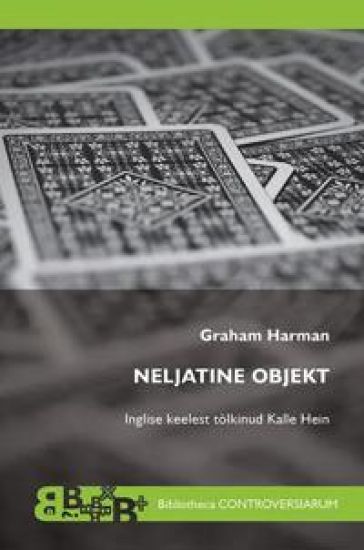
Neljatine objekt

Neljatine objekt

Graham Harman

TALLINNA ÜLIKOOL
2025
nidottu
Graham Harman on üks olulisemaid praegusel ajal inglise keeles kirjutavaid filosoofe. Tema looming ületab kodudistsipliini piirid, teda loevad lisaks ametikaaslastele väga paljud mõtlevad inimesed nii-öelda seinast seina - ta on avaldanud mõju näiteks nii ökoloogidele kui ka kunstnikele. Tema teooria, nn objektikeskne ontoloogia (ingl object-oriented ontology ehk OOO), rõhutab objektide autonoomiat väljaspool inimtaju. Harmani mõtte põhiline teravik on suunatud protsessuaalse filosoofia vastu ning ta üritab suhete ja saamiste asemel filosoofilise vaatluse keskpunkti tagasi tuua "objekti", püüdmata asju näha oma koostisosade või kontekstide summana. Iga iseseisev objekt on Harmani vaates taandumatu individuaalsus. "Neljatine objekt" ilmus esmalt prantsuskeelsele lugejale 2010. aastal kui sissejuhatus Harmani filosoofiasse. Raamatust käivad läbi kõik Harmani kesksed teemad, mi on hästi ning selgelt lahti räägitud ka potentsiaalselt skeptilise lugeja jaoks. Seetõttu pakub see raamat kindlasti huvi mitte üksnes filosoofiaga tegelevatele, vaid ka laiemale ringile intellektuaalselt uudishimulikele inimestele, kes loodetavasti kõik leiavad siit ulatuslikku mõtteainet.
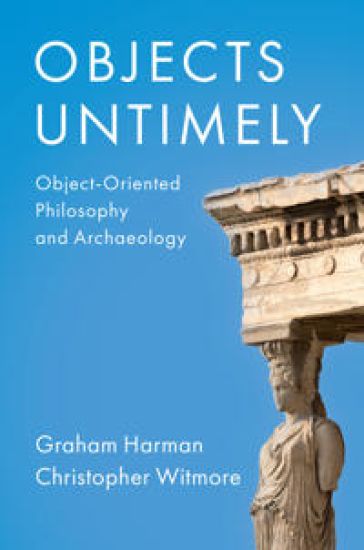
Objects Untimely

Objects Untimely

Graham Harman; Christopher Witmore

JOHN WILEY AND SONS LTD
2023
sidottu
Objects generate time; time does not generate or change objects. That is the central thesis of this book by the philosopher Graham Harman and the archaeologist Christopher Witmore, who defend radical positions in their respective fields. Against a current and pervasive conviction that reality consists of an unceasing flux – a view associated in philosophy with New Materialism – object-oriented ontology asserts that objects of all varieties are the bedrock of reality from which time emerges. And against the narrative convictions of time as the course of historical events, the objects and encounters associated with archaeology push back against the very temporal delimitations which defined the field and its objects ever since its professionalization in the nineteenth century. In a study ranging from the ruins of ancient Corinth, Mycenae, and Troy to debates over time from Aristotle and al-Ash‘ari through Henri Bergson and Alfred North Whitehead, the authors draw on alternative conceptions of time as retroactive, percolating, topological, cyclical, and generational, as consisting of countercurrents or of a surface tension between objects and their own qualities. Objects Untimely invites us to reconsider the modern notion of objects as inert matter serving as a receptacle for human categories.
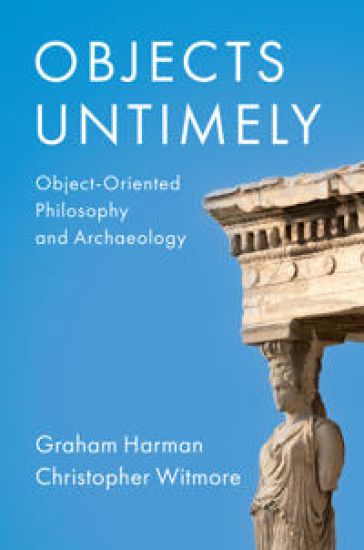
Objects Untimely

Objects Untimely

Graham Harman; Christopher Witmore

JOHN WILEY AND SONS LTD
2023
nidottu
Objects generate time; time does not generate or change objects. That is the central thesis of this book by the philosopher Graham Harman and the archaeologist Christopher Witmore, who defend radical positions in their respective fields. Against a current and pervasive conviction that reality consists of an unceasing flux – a view associated in philosophy with New Materialism – object-oriented ontology asserts that objects of all varieties are the bedrock of reality from which time emerges. And against the narrative convictions of time as the course of historical events, the objects and encounters associated with archaeology push back against the very temporal delimitations which defined the field and its objects ever since its professionalization in the nineteenth century. In a study ranging from the ruins of ancient Corinth, Mycenae, and Troy to debates over time from Aristotle and al-Ash‘ari through Henri Bergson and Alfred North Whitehead, the authors draw on alternative conceptions of time as retroactive, percolating, topological, cyclical, and generational, as consisting of countercurrents or of a surface tension between objects and their own qualities. Objects Untimely invites us to reconsider the modern notion of objects as inert matter serving as a receptacle for human categories.
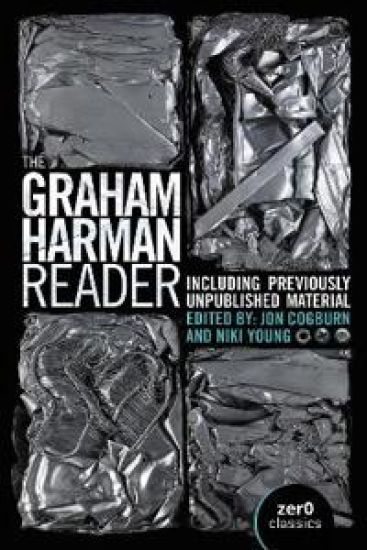
Graham Harman Reader, The - Including previously unpublished essays
The Graham Harman Reader is the essential compendium of shorter works by one of the most influential philosophers of the twenty-first century. The writings in this volume are split into seven chapters. The first concerns Harman's resistance to both downward and upward reductionism. The second chapter contains works that develop the specific fourfold structure of Object-Oriented Ontology. In the third, we find Harman's novel arguments for why causal relations between two entities can only be indirect. The fourth chapter discusses why aesthetics deserves to be called first philosophy. The fifth chapter contains Harman's underrated contributions to ethics and politics, and the sixth deals with epistemology, mind, and science. A concluding seventh chapter contains several previously unpublished writings not available anywhere else. Written in Harman's typical clear and witty style, the /Reader/ is an essential resource for veteran readers of Harman and newcomers alike.
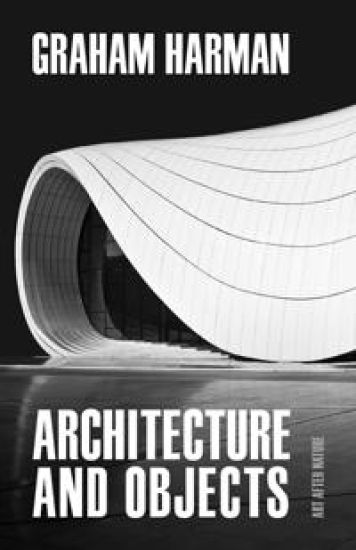
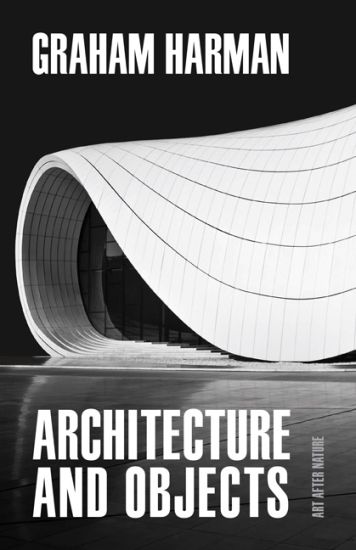
Architecture and Objects

Architecture and Objects

Graham Harman

UNIVERSITY OF MINNESOTA PRESS
2022
sidottu
Thinking through object-oriented ontology-and the work of architects such as Rem Koolhaas and Zaha Hadid-to explore new concepts of the relationship between form and function Object-oriented ontology has become increasingly popular among architectural theorists and practitioners in recent years. Architecture and Objects, the first book on architecture by the founder of object-oriented ontology (OOO), deepens the exchange between architecture and philosophy, providing a new roadmap to OOO’s influence on the language and practice of contemporary architecture and offering new conceptions of the relationship between form and function. Graham Harman opens with a critique of Heidegger, Derrida, and Deleuze, the three philosophers whose ideas have left the deepest imprint on the field, highlighting the limits of their thinking for architecture. Instead, Harman contends, architecture can employ OOO to reconsider traditional notions of form and function that emphasize their relational characteristics-form with a building’s visual style, function with its stated purpose-and constrain architecture’s possibilities through literalism. Harman challenges these understandings by proposing de-relationalized versions of both (zero-form and zero-function) that together provide a convincing rejoinder to Immanuel Kant’s dismissal of architecture as “impure.”Through critical engagement with the writings of Peter Eisenman and fresh assessments of buildings by Rem Koolhaas, Frank Gehry, and Zaha Hadid, Architecture and Objects forwards a bold vision of architecture. Overcoming the difficult task of “zeroing” function, Harman concludes, would place architecture at the forefront of a necessary revitalization of exhausted aesthetic paradigms.
Architecture and Objects

Architecture and Objects

Graham Harman

UNIVERSITY OF MINNESOTA PRESS
2022
nidottu
Thinking through object-oriented ontology-and the work of architects such as Rem Koolhaas and Zaha Hadid-to explore new concepts of the relationship between form and function Object-oriented ontology has become increasingly popular among architectural theorists and practitioners in recent years. Architecture and Objects, the first book on architecture by the founder of object-oriented ontology (OOO), deepens the exchange between architecture and philosophy, providing a new roadmap to OOO’s influence on the language and practice of contemporary architecture and offering new conceptions of the relationship between form and function. Graham Harman opens with a critique of Heidegger, Derrida, and Deleuze, the three philosophers whose ideas have left the deepest imprint on the field, highlighting the limits of their thinking for architecture. Instead, Harman contends, architecture can employ OOO to reconsider traditional notions of form and function that emphasize their relational characteristics-form with a building’s visual style, function with its stated purpose-and constrain architecture’s possibilities through literalism. Harman challenges these understandings by proposing de-relationalized versions of both (zero-form and zero-function) that together provide a convincing rejoinder to Immanuel Kant’s dismissal of architecture as “impure.”Through critical engagement with the writings of Peter Eisenman and fresh assessments of buildings by Rem Koolhaas, Frank Gehry, and Zaha Hadid, Architecture and Objects forwards a bold vision of architecture. Overcoming the difficult task of “zeroing” function, Harman concludes, would place architecture at the forefront of a necessary revitalization of exhausted aesthetic paradigms.
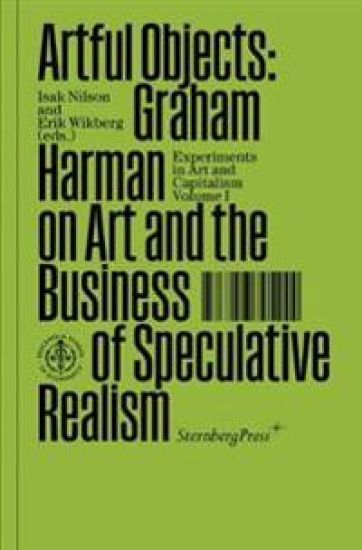
Artful Objects

Artful Objects

Graham Harman

Sternberg Press
2020
pokkari
A lecture by the originator of object-oriented philosophy, delivered on the occasion of the Sculpture after Sculpture exhibition at Moderna Museet, Stockholm.Can objects be traumatized? How does the commercial value of an art object relate to its aesthetic qualities? How do objects interact? These are some of the questions addressed by Graham Harman, the originator of object-oriented philosophy and a central figure of the Speculative Realism school of thought in contemporary philosophy. This book includes Graham Harman's lecture "What Is an Object?" delivered at Moderna Museet in Stockholm, on the occasion of the exhibition "Sculpture after Sculpture," with Jeff Koons, Charles Ray, and Katharina Fritsch--artists, who have expanded the notion of the object in art and society at large. In his lecture, Harman gives a thorough exposition of the object from an ontological standpoint and puts forward a concept of the object that goes beyond reductionist orientations. He declares a philosophical approach bringing philosophy and the arts closely together, where objects are impenetrable to direct knowledge and paraphrase and instead must be approached obliquely and indirectly. The publication also includes a symposium in which thirteen questions to Graham Harman--among and in relation to the thirteen sculptures of the show--that were posed about the implications of object oriented philosophy for art, business administration, and philosophy. ContributorsGraham Harman, Daniel Birnbaum, Lars Stranneg rd, Sven-Olov Wallenstein, Pierre Guillet de Monthoux, Marcia Cavalcante, Jo Widoff, Sigrid Sandstr m, Michael Dahl n, Emma Stenstr m, Jenny Lanz, Ebba Sj gren, Isak Nilson, Erik WikbergCopublished with the Stockholm School of Economics
Art and Objects

Art and Objects

Graham Harman

Polity Press
2019
nidottu
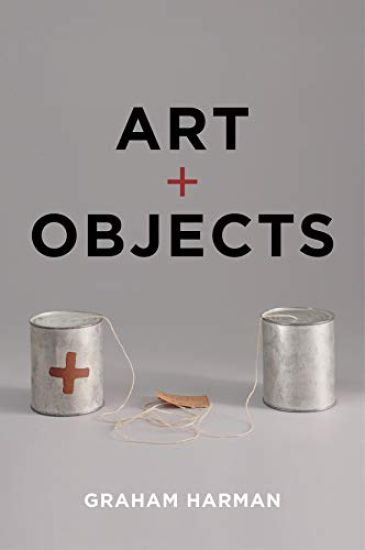
In this book, the founder of object-oriented ontology develops his view that aesthetics is the central discipline of philosophy. Whereas science must attempt to grasp an object in terms of its observable qualities, philosophy and art cannot proceed in this way because they don't have direct access to their objects. Hence philosophy shares the same fate as art in being compelled to communicate indirectly, allusively, or elliptically, rather than in the clear propositional terms that are often taken – wrongly – to be the sole stuff of genuine philosophy. Conceiving of philosophy and art in this way allows us to reread key debates in aesthetic theory and to view art history in a different way. The formalist criticism of Greenberg and Fried is rejected for its refusal to embrace the innate theatricality and deep multiplicity of every artwork. This has consequences for art criticism, making pictorial content more important than formalism thinks but less entwined with the social sphere than anti-formalism holds. It has consequences for art history too, as the surrealists, David, and Poussin, among others, gain in importance. The close link between aesthetics and ontology also invites a new periodization of modern philosophy as a whole, and the habitual turn away from Kant’s thing-in-itself towards an increase in philosophical "immanence" is shown to be a false dawn. This major work will be of great interest to students and scholars of philosophy, aesthetics, art history and cultural theory.
Art and Objects

Art and Objects

Graham Harman

Polity Press
2019
sidottu
In this book, the founder of object-oriented ontology develops his view that aesthetics is the central discipline of philosophy. Whereas science must attempt to grasp an object in terms of its observable qualities, philosophy and art cannot proceed in this way because they don't have direct access to their objects. Hence philosophy shares the same fate as art in being compelled to communicate indirectly, allusively, or elliptically, rather than in the clear propositional terms that are often taken – wrongly – to be the sole stuff of genuine philosophy. Conceiving of philosophy and art in this way allows us to reread key debates in aesthetic theory and to view art history in a different way. The formalist criticism of Greenberg and Fried is rejected for its refusal to embrace the innate theatricality and deep multiplicity of every artwork. This has consequences for art criticism, making pictorial content more important than formalism thinks but less entwined with the social sphere than anti-formalism holds. It has consequences for art history too, as the surrealists, David, and Poussin, among others, gain in importance. The close link between aesthetics and ontology also invites a new periodization of modern philosophy as a whole, and the habitual turn away from Kant’s thing-in-itself towards an increase in philosophical "immanence" is shown to be a false dawn. This major work will be of great interest to students and scholars of philosophy, aesthetics, art history and cultural theory.
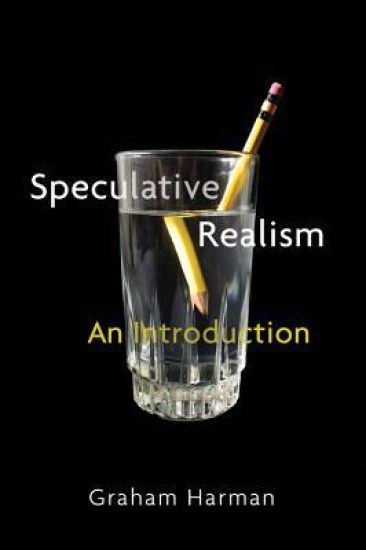
Speculative Realism

Speculative Realism

Graham Harman

Polity Press
2018
nidottu
On April 27, 2007, the first Speculative Realism (SR) workshop was held at Goldsmiths, University of London, featuring four young philosophers whose ideas were loosely allied. Over the ensuing decade, the ideas of SR spread from philosophy to the arts, architecture, and numerous disciplines in the humanities and social sciences. SR has been arguably the most influential new current in continental philosophy since the works of Gilles Deleuze and Félix Guattari found their second wind in the 1990s. But what is SR? This book is the first general overview by one of its original members, focusing on the aesthetic, ethical, ontological, and political themes of greatest importance to the movement. Graham Harman provides a balanced but critical assessment of his original SR colleagues – Ray Brassier, Iain Hamilton Grant, and Quentin Meillassoux – along with a clear summary of his own Object-Oriented Ontology (OOO). A number of central philosophical questions tie the four chapters together: What exactly is "correlationism," the chief enemy of SR? What are the stakes of philosophical realism, and is such realism better served by mathematics and the natural sciences, or by a broader model of cognitive activity that includes aesthetics? This book covers both the historical and conceptual development of the movement, providing a first-rate introduction for students, aided by helpful end-of-chapter study questions chosen by Harman himself. SR, Harman shows, is a vital and fast-developing field in contemporary philosophy.
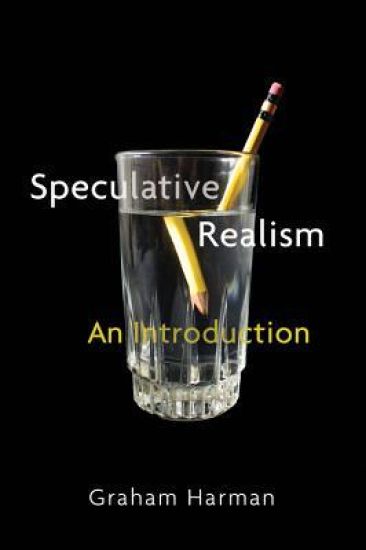
Speculative Realism

Speculative Realism

Graham Harman

Polity Press
2018
sidottu
On April 27, 2007, the first Speculative Realism (SR) workshop was held at Goldsmiths, University of London, featuring four young philosophers whose ideas were loosely allied. Over the ensuing decade, the ideas of SR spread from philosophy to the arts, architecture, and numerous disciplines in the humanities and social sciences. SR has been arguably the most influential new current in continental philosophy since the works of Gilles Deleuze and Félix Guattari found their second wind in the 1990s. But what is SR? This book is the first general overview by one of its original members, focusing on the aesthetic, ethical, ontological, and political themes of greatest importance to the movement. Graham Harman provides a balanced but critical assessment of his original SR colleagues – Ray Brassier, Iain Hamilton Grant, and Quentin Meillassoux – along with a clear summary of his own Object-Oriented Ontology (OOO). A number of central philosophical questions tie the four chapters together: What exactly is "correlationism," the chief enemy of SR? What are the stakes of philosophical realism, and is such realism better served by mathematics and the natural sciences, or by a broader model of cognitive activity that includes aesthetics? This book covers both the historical and conceptual development of the movement, providing a first-rate introduction for students, aided by helpful end-of-chapter study questions chosen by Harman himself. SR, Harman shows, is a vital and fast-developing field in contemporary philosophy.
Object-Oriented Ontology

Object-Oriented Ontology

Graham Harman

Pelican
2018
nidottu
What is reality, really?Are humans more special or important than the non-human objects we perceive?How does this change the way we understand the world?We humans tend to believe that things are only real in as much as we perceive them, an idea reinforced by modern philosophy, which privileges us as special, radically different in kind from all other objects. But as Graham Harman, one of the theory's leading exponents, shows, Object-Oriented Ontology rejects the idea of human specialness: the world, he states, is clearly not the world as manifest to humans. At the heart of this philosophy is the idea that objects - whether real, fictional, natural, artificial, human or non-human - are mutually autonomous. In this brilliant new introduction, Graham Harman lays out the history, ideas and impact of Object-Oriented Ontology, taking in everything from art and literature, politics and natural science along the way.Graham Harman is Distinguished Professor of Philosophy at SCI-Arc, Los Angeles. A key figure in the contemporary speculative realism movement in philosophy and for his development of the field of object-oriented ontology, he was named by Art Review magazine as one of the 100 most influential figures in international art.
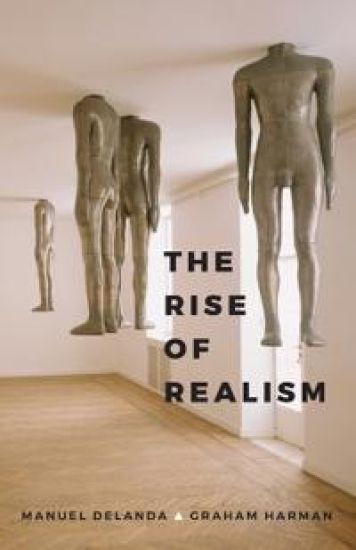
The Rise of Realism

The Rise of Realism

Manuel DeLanda; Graham Harman

Polity Press
2017
nidottu
Until quite recently, almost no philosophers trained in the continental tradition saw anything of value in realism. The situation in analytic philosophy was always different, but in continental philosophy realism was usually treated as a pseudo-problem. That is no longer the case. In this provocative new book, two leading philosophers examine the remarkable rise of realism in the continental tradition. While exploring the similarities and differences in their own positions, they also consider the work of others and assess rival trends in contemporary philosophy. They begin by discussing the relation between realism and materialism, which DeLanda links closely but which Harman tries to separate. Part Two covers the many different meanings of realism, with the two authors working together to develop an expanded definition of the term. Part Three features a spirited exchange on the respective virtues and drawbacks of DeLanda's realism of attractors and singularities and Harman's object-oriented theory. Part Four shifts to the question of the knowability of the real, as the authors discuss whether scientific knowledge does full justice to reality. In Part Five, they shift the focus to space, time, and science more generally, and here Harman offers a defence of actor-network theory despite its obvious anti-realist elements. Lively, accessible and engaging, this book is the best attempt so far to clarify the different paths for realism in continental philosophy. It will be of great value to students and scholars of continental philosophy and to anyone interested in the cutting-edge debates in philosophy and critical theory today.
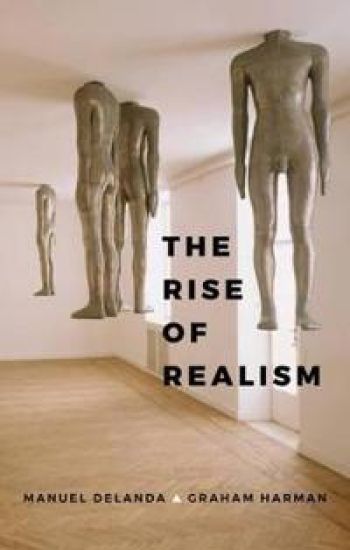
The Rise of Realism

The Rise of Realism

Manuel DeLanda; Graham Harman

Polity Press
2017
sidottu
Until quite recently, almost no philosophers trained in the continental tradition saw anything of value in realism. The situation in analytic philosophy was always different, but in continental philosophy realism was usually treated as a pseudo-problem. That is no longer the case. In this provocative new book, two leading philosophers examine the remarkable rise of realism in the continental tradition. While exploring the similarities and differences in their own positions, they also consider the work of others and assess rival trends in contemporary philosophy. They begin by discussing the relation between realism and materialism, which DeLanda links closely but which Harman tries to separate. Part Two covers the many different meanings of realism, with the two authors working together to develop an expanded definition of the term. Part Three features a spirited exchange on the respective virtues and drawbacks of DeLanda's realism of attractors and singularities and Harman's object-oriented theory. Part Four shifts to the question of the knowability of the real, as the authors discuss whether scientific knowledge does full justice to reality. In Part Five, they shift the focus to space, time, and science more generally, and here Harman offers a defence of actor-network theory despite its obvious anti-realist elements. Lively, accessible and engaging, this book is the best attempt so far to clarify the different paths for realism in continental philosophy. It will be of great value to students and scholars of continental philosophy and to anyone interested in the cutting-edge debates in philosophy and critical theory today.