Kirjojen hintavertailu. Mukana 12 595 353 kirjaa ja 12 kauppaa.

Kirjailija

Graham Haughton

Kirjat ja teokset yhdessä paikassa: 7 kirjaa, julkaisuja vuosilta 2003-2019, suosituimpien joukossa Why Plan?. Vertaile teosten hintoja ja tarkista saatavuus suomalaisista kirjakaupoista.

7 kirjaa

Kirjojen julkaisuhaarukka 2003-2019.

Why Plan?

Why Plan?

Graham Haughton; Iain White

Lund Humphries Publishers Ltd
2019
sidottu
Why do we plan? Who decides how and where we plan and what we should value? How do theories and ideologies filter down into real policies and plans which affect our lives?Written in a deliberately practitioner-friendly manner, this useful guide answers these questions and reveals planning theories to be simply new ideas that can help one see the world differently. Thinking about them enables us to take a step back to appreciate the wider context. The guide discusses the value of planning, how rationales for planning have changed, and whether we have too much, too little, or just the wrong kind of planning.It then sets out 25 key concepts central to professional practice, ranging from participation and complexity to post-politics and state theory, from risk and resilience to governmentality, from assemblage to ecosystems and sustainability.
Sustainable Cities

Sustainable Cities

Graham Haughton; Colin Hunter

Routledge
2016
sidottu
Sustainable Cities simultaneously tackles two issues of immediate public concern which also find themselves high on the policy agenda: sustainable environmental development and urban development. The themes of the book - the bringing together of the insights of environmental science, the social sciences and management; the combination of problem analysis with practical application; and a critique of urban environmental problems concentrating on air and water pollution - are illustrated throughout with in-depth material and case studies taken from around the world and are approached from a variety of perspectives: economic, ecological and managerial. Each chapter has a concluding section pointing to key concepts, key reading and a range of discussion points.
The New Spatial Planning

The New Spatial Planning

Graham Haughton; Philip Allmendinger; David Counsell; Geoff Vigar

Routledge
2009
nidottu
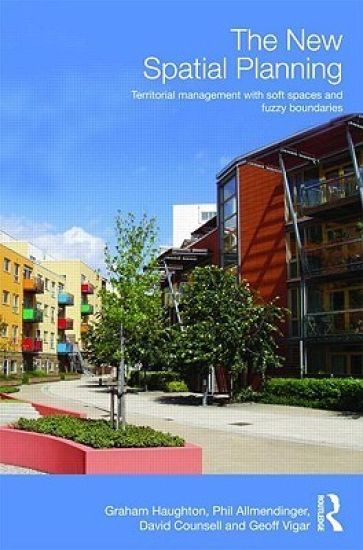
Spatial planning, strongly advocated by government and the profession, is intended to be more holistic, more strategic, more inclusive, more integrative and more attuned to sustainable development than previous approaches. In what the authors refer to as the New Spatial Planning, there is a fairly rapidly evolving maturity and sophistication in how strategies are developed and produced. Crucially, the authors argue that the reworked boundaries of spatial planning means that to understand it we need to look as much outside the formal system of practices of ‘planning’ as within it. Using a rich empirical resource base, this book takes a critical look at recent practices to see whether the new spatial planning is having the kinds of impacts its advocates would wish. Contributing to theoretical debates in planning, state restructuring and governance, it also outlines and critiques the contemporary practice of spatial planning. This book will have a place on the shelves of researchers and students interested in urban/regional studies, politics and planning studies.
The New Spatial Planning

The New Spatial Planning

Graham Haughton; Philip Allmendinger; David Counsell; Geoff Vigar

Routledge
2009
sidottu
Spatial planning, strongly advocated by government and the profession, is intended to be more holistic, more strategic, more inclusive, more integrative and more attuned to sustainable development than previous approaches. In what the authors refer to as the New Spatial Planning, there is a fairly rapidly evolving maturity and sophistication in how strategies are developed and produced. Crucially, the authors argue that the reworked boundaries of spatial planning means that to understand it we need to look as much outside the formal system of practices of ‘planning’ as within it. Using a rich empirical resource base, this book takes a critical look at recent practices to see whether the new spatial planning is having the kinds of impacts its advocates would wish. Contributing to theoretical debates in planning, state restructuring and governance, it also outlines and critiques the contemporary practice of spatial planning. This book will have a place on the shelves of researchers and students interested in urban/regional studies, politics and planning studies.
Regions, Spatial Strategies and Sustainable Development

Regions, Spatial Strategies and Sustainable Development

David Counsell; Graham Haughton

Routledge
2003
sidottu
Focusing on recent regional policy and important planning debates across the English regions, this book analyzes the issues, disputes and tensions that have arisen in regional planning in the new millennium. With a range of local case studies to ground the argument in local as well as regional planning, the authors here build on a range of theoretical insights including state theory and governance, political ecology, governmentality and collaborative planning. Drawing particularly on a discourse approach, the empirical sections examine a range of major controversies from the past five years of regional planning, including:the socio-political resistance to new housing on Greenfield sitesalternative approaches to promoting sustainable urban development and policies for urban renaissance policies on redirecting or constraining economic expansion in high-pressure growth areasthe social and political bases of new planning technologies for protecting the environment, including sustainability appraisals.
Regions, Spatial Strategies and Sustainable Development

Regions, Spatial Strategies and Sustainable Development

David Counsell; Graham Haughton

Routledge
2003
nidottu
Focusing on recent regional policy and important planning debates across the English regions, this book analyzes the issues, disputes and tensions that have arisen in regional planning in the new millennium. With a range of local case studies to ground the argument in local as well as regional planning, the authors here build on a range of theoretical insights including state theory and governance, political ecology, governmentality and collaborative planning. Drawing particularly on a discourse approach, the empirical sections examine a range of major controversies from the past five years of regional planning, including:the socio-political resistance to new housing on Greenfield sitesalternative approaches to promoting sustainable urban development and policies for urban renaissance policies on redirecting or constraining economic expansion in high-pressure growth areasthe social and political bases of new planning technologies for protecting the environment, including sustainability appraisals.
Sustainable Cities

Sustainable Cities

Graham Haughton; Colin Hunter

Routledge
2003
nidottu
Sustainable Cities simultaneously tackles two issues of immediate public concern which also find themselves high on the policy agenda: sustainable environmental development and urban development. The themes of the book - the bringing together of the insights of environmental science, the social sciences and management; the combination of problem analysis with practical application; and a critique of urban environmental problems concentrating on air and water pollution - are illustrated throughout with in-depth material and case studies taken from around the world and are approached from a variety of perspectives: economic, ecological and managerial. Each chapter has a concluding section pointing to key concepts, key reading and a range of discussion points.