Kirjojen hintavertailu. Mukana 12 390 323 kirjaa ja 12 kauppaa.

Kirjailija

Graham M Simons

Kirjat ja teokset yhdessä paikassa: 20 kirjaa, julkaisuja vuosilta 2012-2026, suosituimpien joukossa Hawker Siddeley Trident. Vertaile teosten hintoja ja tarkista saatavuus suomalaisista kirjakaupoista.

Mukana myös kirjoitusasut: Graham M. Simons

20 kirjaa

Kirjojen julkaisuhaarukka 2012-2026.

Hawker Siddeley Trident

Hawker Siddeley Trident

Graham M Simons

PEN SWORD BOOKS LTD
2026
sidottu
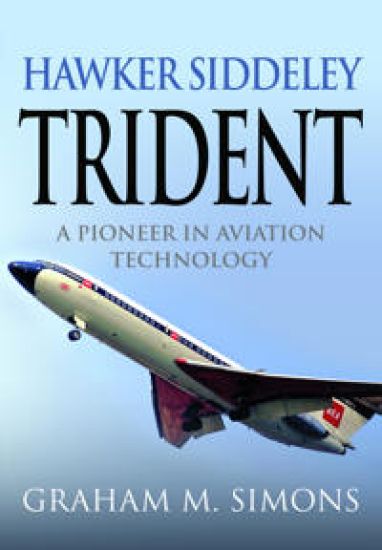
In 1957, de Havilland Aircraft started design studies to meet a British European Airways’ (BEA) requirement for a jet airliner capable of ?ying 1,000-mile stage lengths and achieving 600 mph. Then, in 1958, BEA demanded a smaller aircraft, resulting in a major re-design from which the aircraft emerged around three 10,100-pound thrust Rolls-Royce RB.163 Spey engines and seating up to 101 passengers. The construction of the first twenty-four aircraft began at Hat?eld in July 1959. In 1960 de Havilland joined the Hawker Siddeley Group, and in September that year the future airliner's name, Trident, was announced, this having been chosen as a reflection of its then-unique three-jet, triple-hydraulic configuration. Trident took its first flight at Hat?eld on 9 January 1962. The ?rst revenue earning ?ight followed on 11 March, and full scheduled services on 1 April. A pioneer in aviation technology, Trident was built from the outset for automatic landing in bad weather, a feature way ahead of its time. Trident 1C G-ARPB, retained by Hawker Siddeley for ‘Auto?are’ and ‘Autoland’ development, made the world’s first fully automatic landing at the Royal Aircraft Establishment, Bedford, on 5 March 1964, a significant milestone in aviation history. The world’s first automatic touchdown on a commercial service was made by Trident 1C G-ARPR when it arrived at Heathrow from Paris on 10 June 1965, further demonstrating the Trident’s technological prowess and leaving the aviation world in awe. The DH.121 was an engineering marvel, boasting several unique features that set it apart from its contemporaries. These included an all-?ying tailplane, a sideways retracting nose leg offset twenty-four inches to port, and a Bristol Siddeley Artouste auxiliary power unit ?tted under the ?oor of the rear cabin. These innovative design elements made the Trident a standout in the aviation industry, sparking the curiosity of aviation enthusiasts and historians alike.

Operation Backfire

Operation Backfire

Graham M Simons

PEN SWORD BOOKS LTD
2026
sidottu
The ballistic missile age dawned in September 1944, when Germany began its V-2 campaign against Great Britain and Western Europe. As the war in Europe drew to a close, and during its immediate aftermath, the Allied powers scrambled to acquire highly valued German technology. This included examples of the V-2 rockets themselves. While the United States was foremost in this, General Eisenhower permitted Britain to gather enough parts to assemble eight rockets. Under the codename Operation Backfire, the British launched three of these rockets near Cuxhaven, which was within the British occupation zone in Germany. The tests, undertaken by experienced German staff, were well ahead of the Americans at their much-vaunted Army Launch Area No.1 at the White Sands Missile Range in southern New Mexico. These tests, and the work around them, also ensured that, in a little over twelve months, Britain had gone from being a victim of long-range guided missiles, to a wielder of this impressive new military technology. This marked the start of Britain’s programme to develop guided missiles. Operation Backfire reveals how swiftly the Cold War arms race emerged from the ashes of the previous conflict, how technology and international relations were intimately entwined, and how Great Britain was an active and enthusiastic participant in the very earliest days of the missile age. As Operation Backfire also shows that the USSR was not Britain’s only foreign adversary in its drive to build up a missile capacity after the Second World War, especially in the first year or so after that conflict. Instead, it found itself entangled in a fierce rivalry with its closest wartime ally, the US. Both countries sought to make use of German expertise to build up a domestic missile arsenal but the greater resources and newly minted superpower status of the US allowed them to essentially steamroll over their transatlantic allies.
Boeing 727

Boeing 727

Graham M Simons

PEN SWORD BOOKS LTD
2026
sidottu
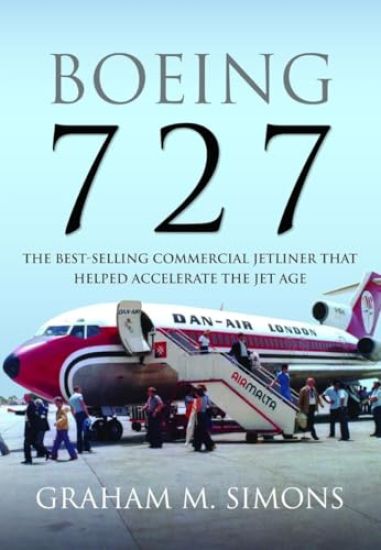
The Boeing 727 is an American narrow-body airliner developed and produced by Boeing Commercial Airplanes. After the heavier 707 quad-jet was introduced in 1958, Boeing addressed a growing demand for an aircraft to be used on shorter routes from smaller airports. The only trijet to be produced by Boeing, the 727 was designed for operations from smaller airports, so independence from ground facilities was essential. It led to one of the 727’s most distinctive features: the built-in airstair that opens from the rear underbelly of the fuselage, which initially could be opened in flight. This allowed passengers to be embarked and disembarked without needing jetways or stairs. The 727 proved to be such a reliable and versatile airliner that it came to form the core of many airlines’ fleets. One of the features that gave the 727 its ability to land on shorter runways was its clean wing design – the trijet configuration involving one engine mounted on each side of the rear fuselage, with the third in the tail. It was also helped by the use of advanced high-lift devices, including leading-edge slats and triple-slotted flaps. For over a decade, more 727s were built per year than any other jet airliner. Such was the design’s ruggedness, dependability, and performance, that even as late as July 2013, a total of 109 Boeing 727s were still in commercial service with thirty-four airlines worldwide. An industry workhorse for many years, the 727 is often fondly referred to as ‘the DC-3 of the Jet Age’. A pioneering and highly influential aircraft, the type’s last scheduled commercial passenger flight took place in January 2019. The 727’s popularity undoubtedly helped accelerate the jet age, by bringing jet service to many cities previously limited to propeller aircraft, and brought jet travel to the masses.
North American XB-70 Valkyrie in Pictures

North American XB-70 Valkyrie in Pictures

Graham M Simons

PEN SWORD BOOKS LTD
2026
sidottu
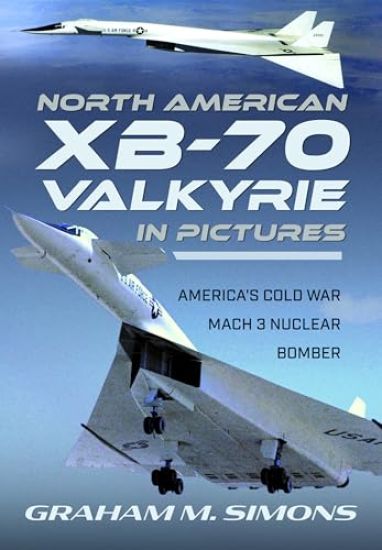
Flying at 70,000 feet, carrying nuclear weapons at Mach 3+ for thousands of miles, the North American Aviation XB-70 Valkyrie was not merely going to redefine military aviation, but the very nature of warfare itself. The XB-70 flew so fast and so high it would only appear on radar screens for a fleeting moment, making it impossible for enemy controllers to direct their interceptors to the target before it flew out of range. When it was first designed in the 1950s, the enemy, meaning at the time the Soviet Union, had no aircraft that could match the XB-70’s capabilities, rendering it almost invulnerable. But, just as the US was developing its technologies, so too were the Soviets. The introduction of their first surface-to-air missiles led to the US adopting low-level missions to sneak under radar. This effectively neutralised the XB-70’s main characteristics and, ultimately, the programme, which had cost the United States a staggering $800 million, the equivalent to $8.4 billion in modern terms, was cancelled. In this book, the renowned aviation historian and author Graham M. Simons explores the full story of the development of this remarkable supersonic bomber through a unique collection of images. He reveals the many challenges that the North American engineers faced, particularly with regards to engines and fuel, all of which are fully explained. As well as the technical and operational characteristics of the XB-70, Mr Simons includes first-hand testimony and analyses the accidents and incidents the aircraft were involved in. A detailed timetable allows the reader to comprehend the XB-70’s protracted history. A beautifully elegant machine, just two of the ground-breaking XB-70s were produced, the first flight taking place on 21 September 1964. In this magnificent, full colour book this unique supersonic aircraft can be seen in all its glory.
Convair B-36 Peacemaker

Convair B-36 Peacemaker

Graham M Simons

PEN SWORD BOOKS LTD
2024
sidottu
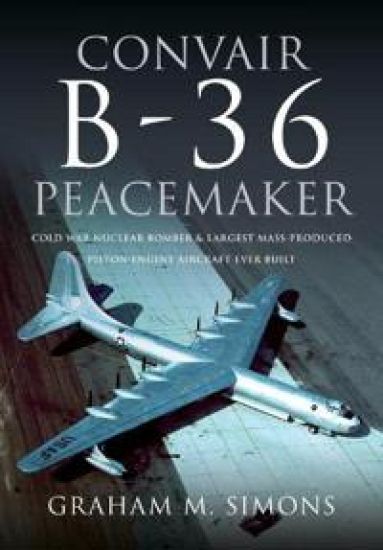
The story of the Consolidated B-36 is unique in American aviation history. The aircraft was an interesting blend of concepts proven during the Second World War combined with budding 1950s high-tech systems. The program survived near-cancellation on six separate occasions during an extremely protracted development process. It was also the symbol of a bitter inter-service rivalry between the newly-formed US Air Force and the well-established US Navy over which of which of the two organizations would control the delivery of atomic weapons during the early years of the Cold War. Entering service in 1948, the B-36 was a remarkable design. It was the largest mass-produced piston-engine aircraft ever built, having the longest wingspan of any combat aircraft in history. Importantly, in terms of the developing Cold War at least, the B-36 was the first bomber capable of delivering any of the weapons in America's nuclear arsenal without modification. To achieve this part of its role, the Peacemaker had an operational range of 10,000 miles, being capable of intercontinental flight without refuelling. It is difficult to imagine a modern aircraft remaining airborne for two days without refuelling - but such missions were relatively routine for the B-36 crews. Whilst there were, at the time of its service, questions around its flight speed, the Peacemaker flew so high that this was considered of little concern - few fighters of its era could reach the same altitudes, and operational surface-to-air missiles were still in the future. The B-36, despite its seemingly conventional appearance, pushed the state-of-the-art technology further than any other aircraft of its era. Its sheer size brought with it structural challenges, while its high-altitude capabilities led to engine cooling and associated problems. However, all of these were finally overcome, and the B-36 served well as the first Big Stick' of the Cold War.
B-29: Superfortress

B-29: Superfortress

Graham M Simons

PEN SWORD BOOKS LTD
2024
nidottu
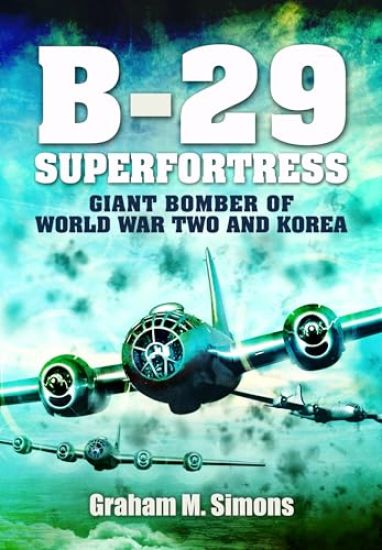
The Boeing B-29 Superfortress was a four-engined heavy bomber flown primarily by the United States in World War Two and the Korean War. The B-29 remained in service in various roles throughout the 1950s. The British Royal Air Force flew the B-29 and used the name Washington for the type, and the Soviet Union produced an unlicensed copy as the Tupolev Tu-4. The name "Superfortress" was derived from that of its well-known predecessor, the B-17 Flying Fortress. The B-29 was the progenitor of a series of Boeing-built bombers, reconnaissance aircraft, trainers and tankers including the variant, B-50 Superfortress. The B-29 was one of the largest aircraft to see service during World War Two. A very advanced bomber for its time, it included features such as pressurized cabins, an electronic fire-control system and remote-controlled machine-gun turrets. Though it was designed as a high-altitude daytime bomber, in practice it actually flew more low-altitude nighttime incendiary bombing missions. It was the primary aircraft in the American firebombing campaign against Japan in the final months of World War Two, and carried the atomic bombs that destroyed Hiroshima and Nagasaki. Unlike many other World War Two-era bombers, the B-29 remained in service long after the war ended, with a few even being employed as flying television transmitters. The type was finally retired in the early 1960s, with 3,960 aircraft in all built. Without doubt there is a clear, strong requirement to put the record straight using primary source documentation to record the undoubted achievements alongside and in context with the shortcomings to the types design and operation that have otherwise received scant attention. The book will cover all variants and is profusely illustrated.
Consolidated B-24 Liberator

Consolidated B-24 Liberator

Graham M Simons

PEN SWORD BOOKS LTD
2022
nidottu
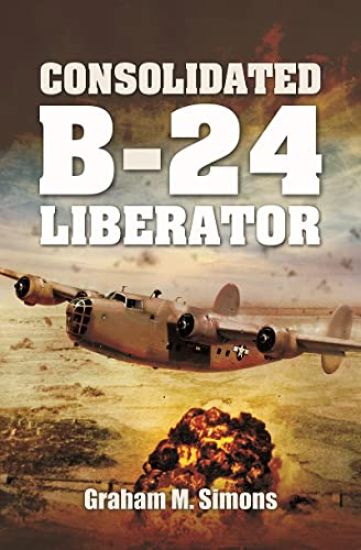
The Consolidated B-24 Liberator was almost certainly the most versatile Second World War Bomber. Apart from its bombing role in all theatres of operation, the B-24 hauled fuel to France during the push towards Germany, carried troops, fought U-boats in the Atlantic and, probably most important of all, made a vital contribution towards winning the war in the Pacific. Its most famous single exploit is possibly the raid on the Ploesti oilfields in August 1943. The B-24 ended World War Two as the most produced Allied heavy bomber in history, and the most produced American military aircraft at over 18,000 units, thanks in large measure to Henry Ford and the harnessing of American industry. It still holds the distinction as the most produced American military aircraft. The B-24 was used by several Allied air forces and navies, and by every branch of the American armed forces during the war, attaining a distinguished war record with its operations in the Western European, Pacific, Mediterranean and China-Burma-India theatres. This book focuses on the design, engineering, development and tactical use of the many variants throughout the bombers service life. The overall result is, as David Lee, the former Deputy Director of the Imperial War Museum at Duxford said upon reading the final manuscript, to be acquainted with all you never knew about the B-24! The book is enlivened by the many dramatic photographs which feature, and this coupled with the clarity of Simons' prose makes for an engaging and entertaining history of this iconic Allied bomber, a key component in several of their biggest victories and a marvel of military engineering
De Havilland Enterprises: A History

De Havilland Enterprises: A History

Graham M Simons

PEN SWORD BOOKS LTD
2022
nidottu
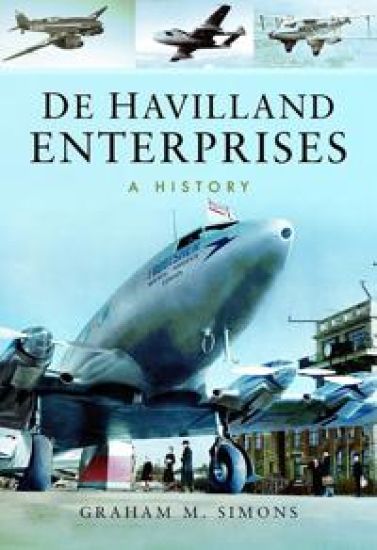
Captain Sir Geoffrey de Havilland was one of the world's true pioneers of powered flight, a man as important to Britain in aviation terms as the Wright brothers were to America. From humble beginnings, he went on to develop some of the finest aircraft to see action during the First World War, before going on to create the illustrious company that bore his name. All of this began in his youth when, without experience, plans or instructions, he embarked on the ambitious task of not only building his very first flying machine, but also constructing the engine to power it. This book explores the influences and milestones of his early years before going on to examine his company, The De Havilland Aircraft Company Limited, in detail. Amongst the momentous machines that he had a hand in creating were the Gipsy Moth and Tiger Moth - two iconic aircraft types destined to set a variety of aviation records whilst being piloted by de Havilland himself. Another highlight of the company's history saw the esteemed aviatrix Amy Johnson fly solo from England to Australia in a Gipsy Moth in 1930\. The high-performance designs and monocoque wooden construction methods passed through the supremely elegant DH.91 Albatross into the Mosquito. The company then followed up these successes with the high-performing Hornet fighter, which pioneered the use of metal-wood and metal-metal bonding techniques, eventually resulting in the world's first jet airliner, the fabulous Comet. Every one of De Havilland's products are listed and recorded in detail here, as are all the designs that never left the drawing board and the products of De Havilland's companies in Australia and Canada. Fully illustrated throughout, this volume is sure to be highly prized amongst serious collectors.
Lockheed TriStar

Lockheed TriStar

Graham M Simons

Air World
2021
sidottu
In April 1972, after six gruelling years of design and development, the then Lockheed California Company (now Lockheed Martin) delivered the most technologically advanced commercial jet of its era, the L-1011 TriStar, to its first client, Eastern Airlines. To mark the moment, Lockheed decided to make an impressive statement about the capabilities of its new medium-to-long-range, wide-body trijet airliner. It did so in spectacular fashion. Overseen by two test pilots, a total of 115 crew members, VIPs, Lockheed employees, and selected reporters boarded a TriStar at Lockheed's Palmdale plant in California. The subsequent 4-hour, 13-minute flight to Washington Dulles Airport was achieved with virtually no input from the two pilots in the cockpit, the TriStar's Automatic Flight Control System being 'engaged from takeoff roll to landing'. It was, Lockheed proudly claimed, 'the first cross-country flight without the need for human hands on the controls'. As Lockheed themselves note, in a similar fashion to other iconic passenger airliners before it, the L-1011 had faced daunting challenges on the way to its inaugural flight. Divergent needs from competing airlines led to design challenges. Financial difficulties ravaged its engine's manufacturer, Rolls-Royce, whilst a recession, fuelled by the world's first oil crisis, lessened the demand for commercial airliners. Lockheed, though, battled through these challenges, which even included international allegations of bribery, with the result that the TriStar, famed for its large, curved nose, low-set wings, and graceful swept tail, remained in production until 1984, by when 250 examples had been built. The toll on Lockheed, however, was too great and after the TriStar it withdrew from the commercial aircraft business. In this revealing insight into the L-1011, the renowned aviation historian Graham M. Simons reveals the full story of this airliner's design, development and service over the decades since 1970.
Lockheed Constellation

Lockheed Constellation

Graham M Simons

Air World
2021
sidottu
Clarence 'Kelly' Johnson's design for the Lockheed Constellation, known affectionately as the 'Connie', produced one of the world's most iconic airliners. Lockheed had been working on the L-044 Excalibur, a four-engine, pressurised airliner, since 1937\. In 1939, Trans World Airlines, at the instigation of major stockholder Howard Hughes, requested a 40-passenger transcontinental aircraft with a range of 3,500 miles, well beyond the capabilities of the Excalibur design. TWA's requirements led to the L-049 Constellation, designed by Lockheed engineers including Kelly Johnson and Hall Hibbard. Between 1943 and 1958, Lockheed built 856 Constellations in numerous models at its Burbank, California, factory - all with the same distinctive and immediately recognisable triple-tail design and dolphin-shaped fuselage. The Constellation was used as a civil airliner and as a military and civilian air transport, seeing service in the Berlin and the Biafran airlifts. Three of them served as the presidential aircraft for Dwight D. Eisenhower. After the Second World War, TWA's trans-Atlantic service began on 6 February 1946 with a New York-Paris flight in a Constellation. Then, on 17 June 1947, Pan Am opened the first-ever scheduled round-the-world service with their L-749 Clipper America. In this revealing insight into the Lockheed Constellation, the renowned aviation historian Graham M. Simons examines its design, development and service, both military and civil. In doing so, he reveals the story of a design which, as the first pressurised airliner in widespread use, helped to usher in affordable and comfortable air travel around the world.
Boeing 737

Boeing 737

Graham M Simons

Air World
2021
sidottu
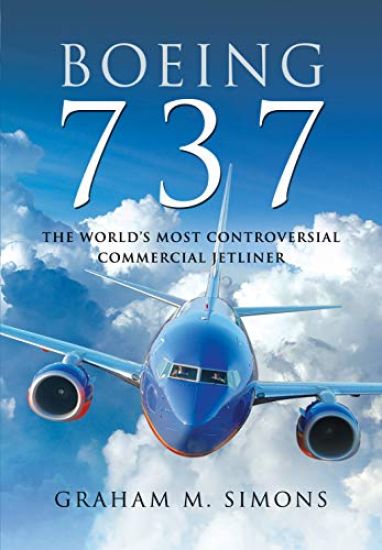
The Boeing 737 is an American short- to medium-range twinjet narrow-body airliner developed and manufactured by Boeing Commercial Airplanes, a division of the Boeing Company. Originally designed as a shorter, lower-cost twin-engine airliner derived from the 707 and 727, the 737 has grown into a family of passenger models with capacities from 85 to 215 passengers, the most recent version of which, the 737 MAX, has become embroiled in a worldwide controversy. Initially envisioned in 1964, the first 737-100 made its first flight in April 1967 and entered airline service in February 1968 with Lufthansa. The 737 series went on to become one of the highest-selling commercial jetliners in history and has been in production in its core form since 1967; the 10,000th example was rolled out on 13 March 2018. There is, however, a very different side to the convoluted story of the 737's development, one that demonstrates a transition of power from a primarily engineering structure to one of accountancy, number-driven powerbase that saw corners cut, and the previous extremely high safety methodology compromised. The result was the 737 MAX. Having entered service in 2017, this model was grounded worldwide in March 2019 following two devastating crashes.? In this revealing insight into the Boeing 737, the renowned aviation historian Graham M. Simons examines its design, development and service over the decades since 1967\. He also explores the darker side of the 737's history, laying bare the politics, power-struggles, changes of management ideology and battles with Airbus that culminated in the 737 MAX debacle that has threatened Boeing's very survival.
Britannia Airways

Britannia Airways

Graham M Simons

Air World
2020
sidottu
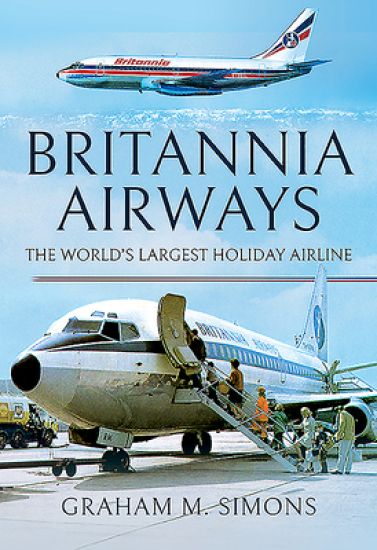
Founded in 1961 as Euravia by British businessman Ted Langton and aviation consultant J.E.D. Walker, at a time of considerable turmoil for the independent sector of the British air operators' industry, Britannia Airways went on to become the world's largest holiday airline. Just as Court Line evolved from Autair, so Britannia Airways evolved from Euravia. Both UK airlines had strong links with the travel industry; Court Line with Clarksons Holidays, and Britannia with the Thomson Group, in particular the Sky Tours' brand. Both were innovative in their own ways, and both grabbed the UK travel industry by the scruff of the neck and shook it into the jet age - Court line travelling down the brasher cheap-and-cheerful road, while Britannia took the more staid, upmarket route. By 1972, Britannia had developed to such a degree that it was the biggest of the British independent charter airlines. It was also a ground-breaking operation - during the late 1960s, it became the first charter airline to offer assigned seating, as well as hot in-flight meals. Prior to the mid-1970s, Britannia, much like other British carter airlines of the era, had concentrated upon low-cost flights to Spain and the use of provincial airports to provide its services. The company's management, however, harboured ambitions to grow beyond this. As a result, for example, Britannia's 767s began regular charter flights between Britain and Australia in 1988, a route to New Zealand being added the following year. Between 1968 and 1984, Britannia carried nearly forty-two million passengers, while the company's fleet grew to include twenty-nine Boeing 737s and a pair of 767s. Drawing on the author's in-depth research and knowledge, as well as first-hand interviews with individuals such as Ted Langton, the original tour operator who wanted his own airline, and Jed Williams, who created Britannia, this the full story of one of the most important airlines in the history of civil aviation.
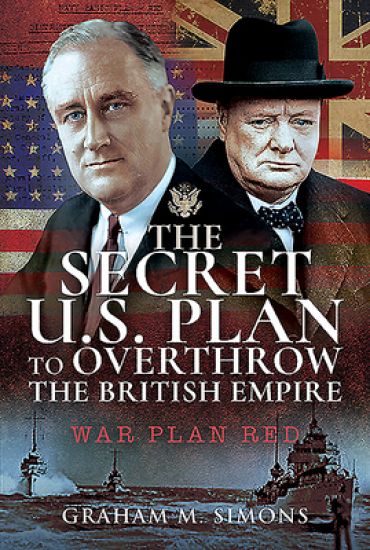
The Secret US Plan to Overthrow the British Empire
After the Great War, there was much debate in the USA whether the country should isolate itself from old world' conflicts or follow an imperialist path and become the world's only super-power. If the USA was to become a super-power, then conflict with Great Britain might result. Consequently, the US drew up War Plan Red. This was a scheme for the USA to invade Canada and the Caribbean which would draw the Royal Navy into North American waters where it would be destroyed. Without the Royal Navy, the rest of the British Empire would be vulnerable to American attacks. It became clear, however, as the decade wore on, that the Imperialists were not going to gain a clear-cut victory, so other means of achieving their aims would be needed. In 1939 the American military establishment created an intelligence-gathering machine within their Embassy in London under the Ambassadorship of Joseph Patrick Kennedy. Then in spring 1941, a small group of US Army officers travelled to Britain to plan for Anglo-American cooperation should the United States became involved in the Second World War. This was the US Army Special Observer Group, or SPOBS as it was commonly known. It is questionable whether the Military Attach s and SPOBS activities were spying', for they were operating - at least in the early days - with the full permission and knowledge of the British Government. Their intelligence-gathering activities spread out as far as the Middle East, Africa, South America, Russia and Asia - far beyond the terms of the original brief. It did not cease with the outbreak of peace - the advent of the Cold War between East and West brought forth a whole new range of subterfuge and behind-the-scenes activities by the CIA. So, were the Americans allies or spies? Certainly, the SPOBS bled Great Britain white of data and information, sending it all back to the War Department in Washington under the guise of helping. It was also a blueprint that America used in one form or another to encourage' regime change around the world through the seventy years or so after the Second World War and which continues to this day.
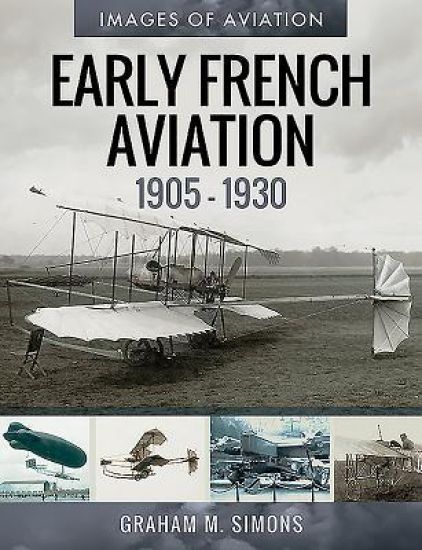
Early French Aviation, 1905-1930

Early French Aviation, 1905-1930

Graham M. Simons

Air World
2019
nidottu
France has been called the cradle of aviation by many - a fact that cannot be disputed, although some have tried. By the end of the 19th century, she led the world in lighter-than-air flight. Any concern about heavier-than-air flight was dismissed as inevitable, and France would achieve it in due course. By the time Bl riot bravely enquired Which way is England?' the country was ready to redress any perceived shortfall. Besides leading European aviation, France was the nation that named all the parts of an aeroplane with words many of which we still use everywhere today. France was also the first nation to stage air exhibitions. Unlike their counterparts in Britain, Germany and America, French designers were thoroughly entrepreneurial and tried a wide variety of adventurous styles from pusher to canard and monoplane to multiplane. In 1909 the first Air Show was held at the Grand Palais. The Exposition Internationale de locomotion a rienne' ushered in what was to become an enduring tradition. Every year, the aircraft exhibitions were a massive success. The interior design by Andr Granet, who since his youth had been fascinated by flying, was such a success that the Automobile-Club subsequently commissioned Granet to do the same for the car shows. It is not surprising that all this derring-do, all these technological achievements and all this innovation drew reporters and photographers like moths to a flame. The men, the machines, the places and the events all were recorded, reported, reproduced and then were filed away. Hundreds of images appeared in print, but thousands were printed up only as contact prints from large-format glass negatives and then disappeared into albums to be forgotten about. In the mid-1990s the author came across one such treasure-trove; a number of dust-covered albums containing around five hundred images of aircraft, airships and expositions - it is doubtful if most have appeared in print before, so this will probably be the first time the events of these French pioneers have ever been showcased.
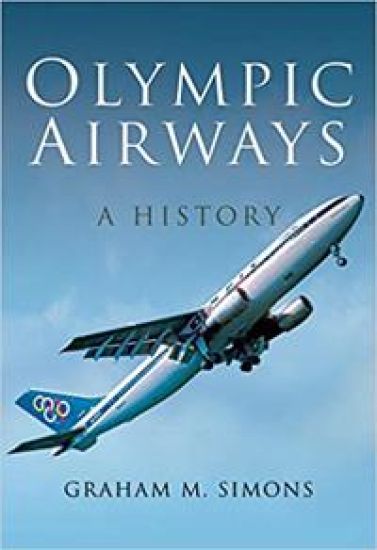
Olympic Airways

Olympic Airways

Graham M. Simons

Pen Sword Aviation
2019
sidottu
The Olympic Airways story has fascinated Graham M. Simons for many years. This new book represents the culmination of decades spent researching the history of this fascinating Greek airline. It is a story of evolution, conflict, personality and politics, all set against a backdrop of world and civil wars, coups and counter-coups. During the course of his research, it became apparent to the author that many of the fine details pertaining to the company weren't widely known, although almost everyone had heard of the towering, controversial, leading figurehead who oversaw much of the central part of the story: Aristotle Socrates Onassis. His colourful life is threaded through this history, lending it drama and multiple levels of intrigue. The airline's story cannot be told in isolation. Olympic did not spring fully formed into being in 1957\. The named company may have come into being then, but its roots were set much further back in history through a number of predecessor airlines - both national and international - who had been using the Hellenic Republic and Athina as the crossroads of the air for the Eastern Mediterranean since the dawn of aviation. This is the story of the birth and dramatic life of an airline with a chequered, controversial and complicated history. Graham M. Simons has skilfully woven all the various threads to create a powerful and important historic record.
Boeing 707 Group: A History

Boeing 707 Group: A History

Graham M. Simons

Pen Sword Aviation
2018
sidottu
The Boeing 707 family - that includes the forerunner Model 367-80, the KC-135 series of military transports and the slightly smaller Model 720 - was the pioneer of the sweptback wing, incorporating podded engines borrowed from the B-47 military bomber. It was the aircraft that many regard as the design that really ushered in the Jet-Age. This new book from the established aviation historian Graham Simons examines the entire course of the Boeing 707 s history, charting an impressive design evolution and illustrating the many ways in which the 707 s legacy continues to be felt to this day. In laying the foundation for Boeing's preeminence on the word s jetliner market during the 1980s and 90s, the 707 paved the way for future innovations in both civilian and military fields and Graham Simons has put together an image-packed history that records the historic and landmark milestones of this iconic aircraft type.
Mosquito: The Original Multi-Role Combat Aircraft

Mosquito: The Original Multi-Role Combat Aircraft

Graham M. Simons

Pen Sword Aviation
2015
nidottu
During the course of aviation history, there have been very few aircraft that have achieved immediate success when entering front-line service. The arrival of the de Havilland Mosquito brought with it a degree of instant success that set it apart from a host of other aircraft. It was not designed to an RAF requirement, but was the result of an initiative of the designers and builders to utilize the skills of woodworkers and the relative abundance of wood in the crisis years of World War II. The result was an aircraft that could be built quickly, was extremely fast and immensely versatile. Pilots loved it and the opportunities opened up to them as a result of the capabilities of this new and exciting aircraft. Here, Graham Simons describes in detail how the de Havilland Mosquito was built, utilizing many rare photographs from the design studio and production lines. It illustrates and explains the many different roles that the aircraft took as the war progressed. Fighter, bomber, reconnaissance, night fighter - there were few tasks that this brilliant design could not adopt.
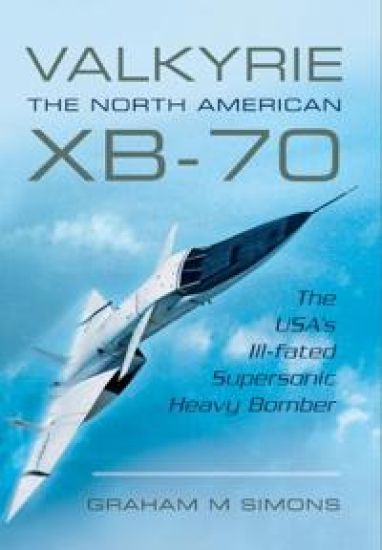
Valkyrie: The North American XB-70

Valkyrie: The North American XB-70

Graham M. Simons

Pen Sword Aviation
2014
nidottu
During the 1950s, at the time Elvis Presley was rocking the world with Hound Dog and the USA was aiming to become the world's only superpower, plans were being drawn at North American Aviation in Southern California for an incredible Mach-3 strategic bomber. The concept was born as a result of General Curtis LeMay's desire for a heavy bomber with the weapon load and range of the subsonic B-52 and a top speed in excess of the supersonic medium bomber, the B-58 Hustler. If LeMay's plans came to fruition there would be 250 Valkyries in the air; it would be the pinnacle of his quest for the ultimate strategic bomber operated by America's Strategic Air Command. The design was a leap into the future that pushed the envelope in terms of exotic materials, avionics and power plants. However, in April 1961, Defense Secretary McNamara stopped the production go-ahead for the B-70 on grounds of rapid cost escalation and the USSR's new-found ability of destroying aircraft at extremely high altitude by either missiles or the new Mig-25 fighter. Nevertheless, in1963 plans for the production of three high-speed research aircraft were approved and construction proceeded. In September 1964 the first Valkyrie, now re-coded A/V-1 took to the air for the first time and in October went supersonic. This book is the most detailed description of the design, engineering and research that went into this astounding aircraft. It is full of unpublished details, photographs and first-hand accounts from those closely associated with the project. Although never put into full production, this giant six-engined aircraft became famous for its breakthrough technology, and the spectacular images captured on a fatal air-to-air photo shoot when an observing Starfighter collided with Valkyrie A/V-2 which crashed into the Mojave Desert. The loss of the $750 million aircraft and two lives stopped future development, although there were several attempts to redesign it as an airliner to compete against the European Concorde.
Bristol Brabazon

Bristol Brabazon

Graham M Simons

The History Press Ltd
2012
nidottu
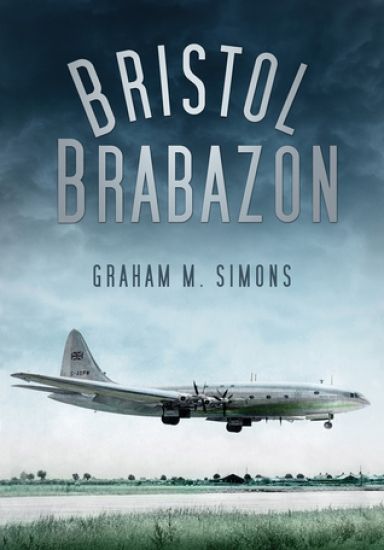
The Brabazon – the name evokes the immediate post-war optimism of civil aviation. The giant airliner was built by Bristol Aircraft in 1949 to cross the Atlantic and serve the empire. However, the plane proved to be a commercial failure when airlines felt that it was too large and expensive to be useful. Large and luxurious, it carried only 60-80 passengers, and with a range of 5,000 miles, a 225ft wing span and eight engines buried in the wings with enough fuel to reach New York, the ‘100-ton bomber’ was more impressive and capable than the B-29: the ultimate passenger airliner was born. Now, with previously unpublished material and illustrations from the original Bristol Brabazon sales brochure, among other sources, the Brabazon’s 1930s-style elegance is displayed once again, celebrating its design, construction and sheer luxury. A fitting outcome for such a paragon of post-war optimism and an aircraft still considered by many to be the foremost in propeller-driven civil aviation.
Concorde Conspiracy

Concorde Conspiracy

Graham M Simons

The History Press Ltd
2012
nidottu
An innovation in aviation development, Concorde was the subject of political rivalry, deceit and treachery from its very inception. After their failure to be the first nation to develop a jet airliner for transatlantic flight or to send spacecraft into space, the US Government was adamant that they would beat other nations to the goal of supersonic flight and so development of the SST began. However, with McNamara and Shurcliff’s negative attitudes to the project, it was soon killed off. Thus began the ‘if we cannot do it, neither can you’ attitude towards other countries’ efforts for supersonic flight. This is the story of ten years of behind-the-scenes political intrigue, making use of inside information from two American presidents and the Federal Aviation Authority, as well as recently declassified papers from the CIA and President Kennedy on how the Americans planned to destroy Concorde and their own American SST. Lavishly illustrated with black and white and colour images throughout, Concorde Conspiracy is a must read for any enthusiast on supersonic flight and anyone who enjoys a real-life conspiracy.