

Kirjailija
Graham Philip
Kirjat ja teokset yhdessä paikassa: 6 kirjaa, julkaisuja vuosilta 1989-2019, suosituimpien joukossa Tell El-Dab'a XV: Metalwork and Metalworking Evidence of the Late Middle Kingdom and the Second Intermediate Period. Vertaile teosten hintoja ja tarkista saatavuus suomalaisista kirjakaupoista.
6 kirjaa
Kirjojen julkaisuhaarukka 1989-2019.

Where There Is No Child Psychiatrist
Eapen Valsamma; Graham Philip; Srinath Shoba
RCPsych Publications
2012
pokkari
Mental health problems and worries are common among infants, children and adolescents in every part of the world. This book is a practical manual for primary healthcare professionals, teachers and anyone who works with children - especially in places where specialist psychiatric care is not available. After giving the reader an overview of child mental health problems, the manual goes on to deal with the various developmental, behavioural and emotional problems that arise in as many as 10% of the youth population. For each problem it first provides a case study and then describes how to find out more about a child with this problem. It suggests what can be done to help the child and their family. It also examines the mental health aspects of childhood maltreatment and exposure to natural or man-made disasters. Covers problems that health workers and teachers in low- and middle-income countries often have to deal with. Written in simple language with many case examples and pictures. The only comprehensive book on mental healthcare in young people for those with no access to specialist medical advice. This book is intended for anyone who works with children or young people, but who does not have specialist training in mental health problems. This includes: primary care doctors and nurses, community health workers and teachers.
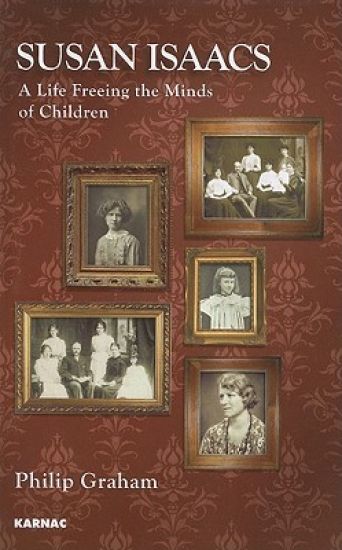
This biography provides a critical account of the life and work of Susan Isaacs (1885-1948). This educationist, a pioneer of child-centred education in Britain was also an early and historically important child psychoanalyst. She is described in the Oxford Dictionary of National Biography as the greatest influence on British education in the twentieth century. Yet she is virtually unknown in both educational and psychoanalytic circles. When Melanie Klein was threatened with expulsion from the British Psychoanalytic Society she was by far her most powerful advocate and thus played a major role in determining the direction of British psychoanalysis from the 1940s onwards. This book provides an account of her life and contains much intimate material about her childhood, her marriage and her work that was previously unknown. It gives a fascinating insight into many facets of her life and concludes with an appraisal of her impact on the worlds of education and psychoanalysis.
Tell El-Dab'a XV: Metalwork and Metalworking Evidence of the Late Middle Kingdom and the Second Intermediate Period
Graham Philip
Austrian Academy of Sciences Press
2006
nidottu
The collection of metal artefacts from Tell el-Dab'a of the eastern Nile Delta, dating to the first half of the 2nd millennium BC, is probably the richest, best-documented find of the eastern Mediterranean that has been published to date. The material will provide new insights into various dimensions of past societies of this region. A brief introduction to the site begins the volume, followed by a fully illustrated catalogue of the findings - an extensive range of copper-alloy artefacts and smaller numbers of silver and gold objects. Next, the various artefact classes are discussed in terms of their wider typological parallels, chronology and distribution, thus permitting the material from the Delta to be viewed in terms of the wider Egyptian and Levantine equivalents. From this comparison it is clear that the bulk of the material is of west Asian inspiration, derived from styles first seen in north-west Syria in the last centuries of the 3rd millennium BC. The extensive range of metalworking debris from the site, including limestone and steatite moulds, crucibles, copper ingots and tuyeres, is treated in detail, and the relationship between the artefacts for which there is evidence of on-site production and the finds in general is discussed. The volume also reports on the chemical analysis of a wide range of copper and silver artefacts from the site, and considers the correlation, in some cases surprising, between composition and typology. Contextual analysis of grave findings clarifies links between artefact types and the age and sex of the buried individuals, sets of artefacts, and patterns in the positioning of artefacts within graves; changes through time can also be seen. Thus it is possible to investigate the similarities and contrasts between burial practices in Tell el-Dab'a and contemporary practices in the Levant and the Nile Valley. Despite the hybrid material culture of the Delta society, it is argued that mortuary practices, at least for the elite, drew heavily on aspects of west Asian ideology. This leads to a discussion of the connection between the symbolic role of metalwork and the expression of status, and a consideration of the possible social and political implications of changing stylistic zones within the east Mediterranean basin during the earlier 2nd millennium BC. Also reviewed is the manner in which specific elements of material culture were influenced by the development and flourishing of a distinctive Nile Delta elite identity.
Metal Weapons of the Early and Middle Bronze Ages in Syria-Palestine, Part I
Graham Philip
British Archaeological Reports Oxford Ltd
1989
pokkari
Metal Weapons of the Early and Middle Bronze Ages in Syria-Palestine, Part II
Graham Philip
British Archaeological Reports Oxford Ltd
1989
pokkari