Kirjojen hintavertailu. Mukana 12 390 323 kirjaa ja 12 kauppaa.

Kirjailija

Graham Rawlinson

Kirjat ja teokset yhdessä paikassa: 6 kirjaa, julkaisuja vuodelta 2018, suosituimpien joukossa Sam the Problem Solver. Vertaile teosten hintoja ja tarkista saatavuus suomalaisista kirjakaupoista.

6 kirjaa

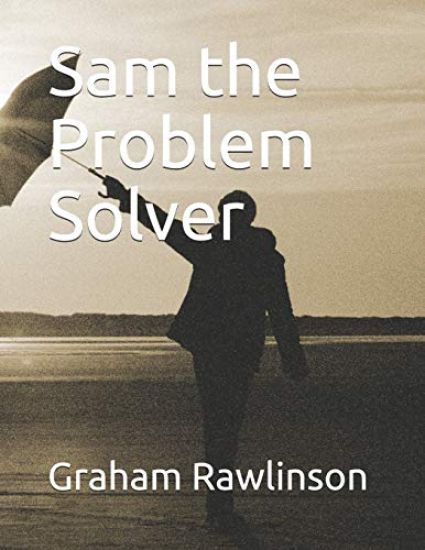
Sam the Problem Solver

Sam the Problem Solver

Graham Rawlinson

Independently Published
2018
nidottu
Sam is a young girl who gets things sorted. At school she learns in her own way, often helping her teachers out of a fix. Out of school she has adventures. Sam is good at thinking. She is not very good at reading or school work, and what she does create is always, well, INTERESTING. This is the first story about Sam, how she finds her way out of the forest, how she gets locked in with snakes and spiders, and how she fixes the phone to call for help.
How to Invent Almost Anything: Creative and Analytical Decision Making

How to Invent Almost Anything: Creative and Analytical Decision Making

Graham Rawlinson; David Straker; Straker G. Rawlinson

Independently Published
2018
nidottu
'How to Invent (Almost) Anything' is comprehensive guide to innovation and inventing of all kinds. Written in simple language, it demystifies how to be creative, how to evaluate, select and develop ideas right through to implementation.Whether you are working alone or in teams, the book introduces a wide range of tools for thinking about ideas as well as the knowledge of the best solution routes, which have been researched with care by world experts in science and engineering.The book has been produced by two good friends who have been involved in innovation and creativity for many years. Graham is a psychologist who became an innovation consultant and David is an engineer who became a psychologist. Both are successful authors who have written across a range of subjects, from mathematics to management. There experiences include innovating, facilitating and managing idea creation and development for blue-chip companies like Coca-Cola and Hewlett Packard, as well as being judges at UK and other International Invention and Innovation Shows.Years in the making, the book was initially printed privately and successfully sold for a high price, but the economies of the internet are now being passed on to you in this great value Kindle edition.Quotes: "I found the book both light-hearted and profound. It deals with complex subjects with clarity and converts the complex into understandable fundamentals I can readily use as tools to see a problem in a different light."-- George Prince (Founder of Synectics Inc., a USA and World Creativity and Innovation Consultancy, for which Graham used to work): "An exciting integration of the art of scientific analysis and the science of creativity."-- Vincent Nolan, former Chairman, Synectics Ltd., author of Open to Change (1981), The Innovators Handbook (1989) and, with Martin Brooks, The Changemakers Toolkit (1996): "This is a very important book. It sums up the essence of inventiveness in a way that all others have failed to thus far."-- Jeffrey Hyman, Director, The Innovation Exchange, Rank Hovis McDougall: "If you really want to invent something, whatever it is, then read this book "-- Paul Birch, Innovation Consultant and former Corporate Jester for British Airways: ContentsToolbox 1: Logical1Analytical InventionPart A: Simple Science2Simple Science3A Simple Science Lens4Applied Simple ScienceToolbox 2: Scientific5Basic TRIZ6The TRIZ 7-step processPart B: Psychobabble7How the Brain Works8The Motivating Fire9Managing in a Complex WorldToolbox 3: Psychological10Getting Past the Blocks11Stimulating IdeasPart C: Putting it all togetherToolbox 4: Holistic12The TAO Pr
The No Recipe Cookbook: How Not to Be Intimidated by Recipes
This book is about how to avoid being intimidated by recipes, how to understand + have fun cooking + everything that goes with it. With chapters on why we cook, how to shop for good food without hassle, how to experiment, + put it all together, + a few tips on health and safety.ContentsWhy bother? 1 Health and SafetySome basic points about working in the kitchen 2 The purpose of cooking Why do we cook at all?- Cooking Veggies, meat, fish and fruit3 Hassle free shoppingHow to shop the easy way4 ExperimentingSome ways of experimenting without too many disasters. 5 Putting it all togetherHow to cook a delicious meal from whatever you have in the cupboard.6 Having fun with partiesNow you can invent using the resources of all the people you know and things from their cupboards.Epilogue and bits and piecesNot-a-bibliography -Why bother ?Why bother writing yet another cookbook? There are plenty of cookbooks aren't there? This book started out from the idea that most cookbooks don't satisfy most people. At least they don't satisfy me. I get given more than I buy, because people know I like cooking; but I hardly ever use them. So I asked myself, "why?" I asked other people, and they gave a number of reasons: 1. You don't like being told what to do (me too.) If you want a book which will tell you precisely what to do this is not the book for you. This is a book for people who like to choose. 2. There are always some parts of the recipe which leave you still wondering 'how', or 'why', things that are not explained, so it might go wrong anyway (me too.) 3. You don't have the stuff in the recipes, at least, not all of it, and when you try to go shopping for the things you need the shops don't have them, and you are not sure what to do, so you just go home and make something up (me too.) 4. You start following the recipe and miss an important bit out or get the timing wrong or the sequence wrong so it goes wrong anyway (me too.) 5. You might get it wrong and poison themselves (not my worry, but read the book to find out why.) So even with all these cookbooks out there, people aren't cooking for themselves and therefore not eating as healthily as they could. And not having much fun with food.I think I'm quite good at making recipes up, so I started some thinking about how to do this in a systematic but creative way. I decided that if I was going to do this for myself, why not make it a book? When I told my sons that I was going to write a cookbook they immediately said: "For cooking whatever you have left over in the cupboard." They know me well. So here is my rationale for this book: 1. I like to buy and eat fresh food, so that rules out most cans and frozen and dried foods. Fresh food tastes better and is better for you. 2. I don't want to shop everyday so I have to store some food but I can't store too much or it won't be fresh. 3. If I don't know how to make something from what I have in my fridge/cupboard then it gets older and older, so this book is about how to use what you want to use when you want to use it.4. I don't like planning what I want to eat the next day. It kind of spoils the fun and excitement and how do I know what I want the next day? It's hard enough when you are shopping for the next meal you are planning. 5. I don't like having to remember what I bought and when, so I want to keep it turning it around naturally, creating almost empty cupboards before I shop.That way I can go into the shop and buy whatever I want and it feels great. 'All the cookery books I've seen (even Delia's How to Cook) are very specific - here you'll pick up the fundamentals of cookery and of designing a recipe, something everyone from a reluctant amateur like me to a budding chef would find irresistible.'Brian Clegg, Author of Ecologic, The truth and lies of green economics.
Judgement Day: A book of choices

Judgement Day: A book of choices

Graham Rawlinson

Independently Published
2018
nidottu
Judgement Day is a novel about thinking, and about how we think about thinking, and how we make decisions. Our characters try to explore how minds work, how decisions are made, how they are made badly and how they might be made better. They explore, in a set of radio plays, what the experts are saying about how we think, and how we make decisions. The book is another step on a long journey, which perhaps began with Robert Pirsig's Zen and the Art of Motorcycle Maintenance. A journey which took in a little bit of Plato, some Shakespeare, some Dickens, perhaps also Milan Kundera, and in the Arts, some Kandinsky and Monet and Rushka. It was a journey which stopped for a while to explore some thinking about thinking processes, called Synectics and TRIZ. The journey went wild after reading Robert Kegan's powerful book In Over our Heads, matched by the challenging ideas of the nature of Reality in David Deutsch's book, The Fabric of Reality, and Ian Stewart and David Cohen's book Figments of Reality.Major challenges on how we think we thing come from the work of V.S. Ramachandran, in his book Phantoms in the Brain, and from Jonah Lehrer's book, How we decide, and Dan Ariely's book The Upside of Irrationality, and Gerd Gigerenzer's Gut Feelings. Then there is Robert Kurzban's Why everyone else is a hypocrite, and Rita Carter's challenging ideas about our multiplicity, in her book, Multiplicity, which seems worth repeating.The essence of the book contains the idea that we make big mistakes or miss big opportunities because we fail to understand how we think, and how we think about our thinking, and how we make decisions. It is a novel because it is not easy, and maybe not possible, to approach an understanding of how we think by thinking, only by listening to others think about their thinking about how we think.To explore thinking about thinking the characters look at many different and important aspects of our lives, such as how we think about our free will, our consciousness, our creativity, our morality, the ideas of quality and wisdom, as well as society, love, jealousy and depression.All journeys begin, have a middle, and end, and the end is then another beginning. This book is the end of one journey and the beginning of another.It is a book for young and older, a book for those who wonder about where they have been and for those who wonder where they are going, or should go. It is a book for those who journey alone, and for those who walk alongside others, it is a book for those who on occasions carry others, and on occasions are carried by others, knowingly and not.It is a book which is easy to read but challenging to understand, it is a mirror to mirrors, a way of seeing ourselves see ourselves.The challenge in life is not to know ourselves, but to know how to think about how others see us, seeing them. The most intimate relationships develop an infinity of reflections in this way, a quantum entanglement of past and future, of measurement by action and reaction, no beginning and no ending, Judgement is not what you do but what you are. Every day, every moment, is a living judgement, to be enjoyed, cherished, for it is the Apple that makes us Human.Contents: Chapter 1 The PlanChapter 2 The TeamChapter 3 Cambio de SentidoChapter 4 Brain Chat 1Chapter 5 Free WillChapter 6 Self ControlChapter 7 MultiplicityChapter 8 AttentionChapter 9 TimeChapter 10 QualityChapter 11 CreativityChapter 12 MoralityChapter 13 A Short InterludeChapter 14 WisdomChapter 15 ConsciousnessChapter 16 Getting Things DoneChapter 17 SocietyChapter 18 LoveChapter 19 Problem CornerChapter 20 JealousyChapter 21 Fear and AnxietyChapter 22 Depression and LonelinessChapter 23 AngerChapter 24 Judgement Da
How to Advise The President: 21st Century Decision Making

How to Advise The President: 21st Century Decision Making

Graham Rawlinson

Independently Published
2018
nidottu
So how would you advise the President, of a country or a company? Do you give yourself good advice? This book provides a challenge to the old paradigms of consciousness, free will, reason and intuition, and decision making. 21st Century Research requires fundamentally different ways of thinking about how we think.The book provides a checklist of ways to help you make the right decisions, and how to advise others to make the right decisions. Including the President.Chapters cover Consciousness and Free Will, Judgement and Decision Making, Reason and Intuition, Ego and Eco MIndedness, and Multiplicity.It shows the importance of Context in Judgement and Decision Making, and provides a Checklist to suggest what kind of thinking works best in what kind of context.For Context, it covers Complexity, Collaboration and Competition, Short Term/Long Term Goals and Types of Risk, Catalytic and Progressive.Finally, some good tips on How to Advise The President. These include an analysis of climate change, education, riots, health, war, crime, and employment.