
Kirjailija
Grant Foreman
Kirjat ja teokset yhdessä paikassa: 13 kirjaa, julkaisuja vuosilta 1935-2026, suosituimpien joukossa Indians and Pioneers. Vertaile teosten hintoja ja tarkista saatavuus suomalaisista kirjakaupoista.
13 kirjaa
Kirjojen julkaisuhaarukka 1935-2026.


This work has been selected by scholars as being culturally important, and is part of the knowledge base of civilization as we know it. This work was reproduced from the original artifact, and remains as true to the original work as possible. Therefore, you will see the original copyright references, library stamps (as most of these works have been housed in our most important libraries around the world), and other notations in the work. This work is in the public domain in the United States of America, and possibly other nations. Within the United States, you may freely copy and distribute this work, as no entity (individual or corporate) has a copyright on the body of the work. As a reproduction of a historical artifact, this work may contain missing or blurred pages, poor pictures, errant marks, etc. Scholars believe, and we concur, that this work is important enough to be preserved, reproduced, and made generally available to the public. We appreciate your support of the preservation process, and thank you for being an important part of keeping this knowledge alive and relevant.
The Chronicles of Oklahoma, V17, No. 4, December, 1939
Grant Foreman; George H. Evans; John B. Meserve
Literary Licensing, LLC
2012
nidottu
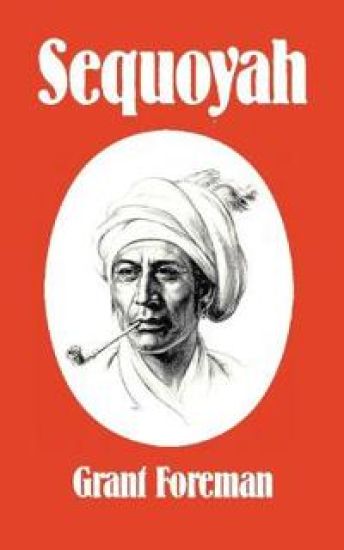
Sequoyah is widely celebrated as an unlettered Cherokee Indian who, entirely from the resources of his own brilliant mind, endowed his whole tribe with learning-the only man in history to conceive and perfect in its entirety an alphabet or syllabary. Soon after 1800, Sequoyah began to realize the magic of writing. He and other Indians of the time, who occasionally saw samples of writing, called these mysterious pages the white man's ""talking leaf."" He experimented aimlessly at first, but gradually his conception took practical shape. It was slow and laborious work for an untutored Cherokee. Finally, after twelve years of labor and discouragement, he completed his syllabary, composed of eighty-five symbols, each representing a sound in the Cherokee language. The simplicity of the syllabary and its easy adaptability to the speech and thought of his people enabled them to master it in a few days. The Cherokee nation was made practically literate within a few months.
The Chronicles of Oklahoma, V18, No. 3, September, 1940
James W. Moffitt; Grant Foreman; George Evans
Literary Licensing, LLC
2011
nidottu


Indians & Pioneers - The Story Of The American Southwest Before 1830
Grant Foreman
Read Books
2007
pokkari
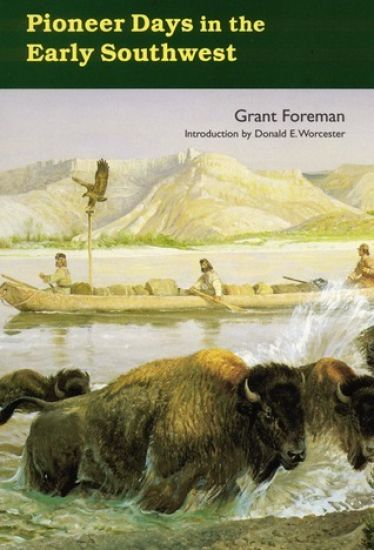
This pioneering work is about the traders, trappers, and explorers in the vast area that would become Oklahoma, Texas, Missouri, Arkansas, New Mexico, Kansas, and Colorado. Foreman describes the early explorations of the French and Spanish in the Louisiana Territory and often focuses on the junction of the Verdigris, Grand, and Arkansas rivers, known as the Three Forks, a trading and military center from which the conquest of a large part of the American Southwest was achieved. Viewed in historical perspective are the business enterprises of A. P. Chouteau and others; treaties with the Indians and warfare between the Cherokees and Osage; massacres and disease epidemics; garrison life at Fort Gibson and the visits of writer Washington Irving and painter George Catlin; expeditions into the Southwest led by Colonel Henry Dodge, Captain Benjamin de Bonneville, and others; Sam Houston's sojourn in Indian country; and warfare on the Texas border.
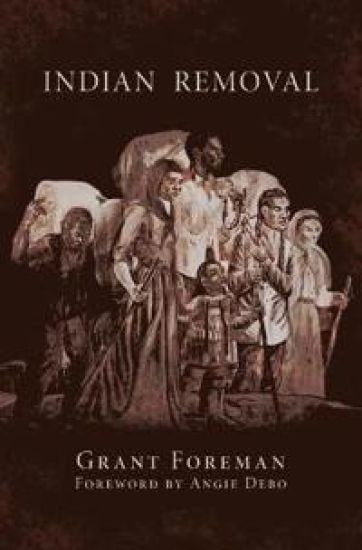
It is unlikely that any single book or document will ever earn a more firmly-fixed position of respect and authority than this distinguished volume by Grant Foreman. Originally published in 1932, on the date of the hundredth anniversary of the arrival in Oklahoma of the first Indians as a result of the United States government's relocation of the Five Civilized Tribes, Indian Removal remains today the definitive book in its field.The forcible uprooting and expulsion of the 60,000 Indians comprising the Five Civilized Tribes, including the Choctaw, Chickasaw, Creek, Cherokee, and Seminole, unfolded a story without parallel in the history of the United States. For more than a decade thousands of tragedies and experiences of absorbing interest marked the removal over the ""Trail of Tears,"" but there were no chroniclers at hand to record them. Only occasionally did the tragedy and pathos of some phase of this history-making undertaking beguile a sympathetic officer to turn from routine and write a line or a paragraph of comment.From fragments in thousands of manuscripts and in official and unofficial reports Grant Foreman gleaned the materials for this book to provide readers with an unbiased day-by-day recital of events.
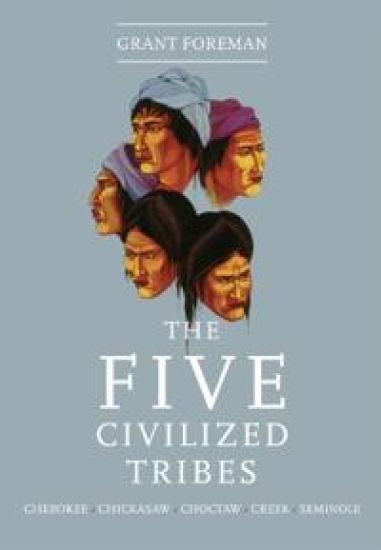
Side by side with the westward drift of white Americans in the 1830's was the forced migration of the Five Civilized Tribes from Mississippi, Alabama, Georgia, and Florida. Both groups were deployed against the tribes of the prairies, both breaking the soil of the undeveloped hinterland. Both were striving in the years before the Civil War to found schools, churches, and towns, as well as to preserve orderly development through government and laws.In this book Grant Foreman brings to light the singular effect the westward movement of Indians had in the cultivation and settlement of the Trans-Mississippi region. It shows the Indian genius at its best and conveys the importance of the Cherokees, Chickasaws, Choctaws, Creeks, and Seminoles to the nascent culture of the plains. Their achievements between 1830 and 1860 were of vast importance in the making of America.
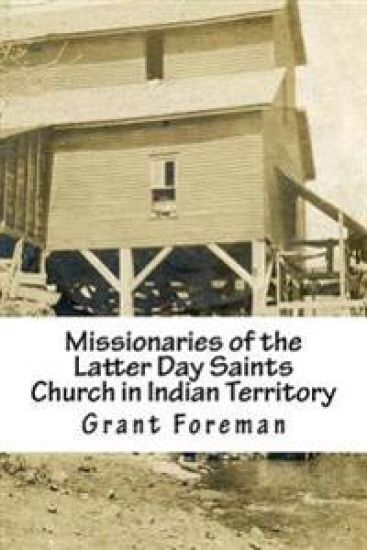
Missionaries of the Latter Day Saints Church in Indian Territory
Grant Foreman
Createspace Independent Publishing Platform
1935
nidottu