Kirjojen hintavertailu. Mukana 12 595 353 kirjaa ja 12 kauppaa.

Kirjailija

Grant Hildebrand

Kirjat ja teokset yhdessä paikassa: 6 kirjaa, julkaisuja vuosilta 1999-2019, suosituimpien joukossa Elegant Explorations. Vertaile teosten hintoja ja tarkista saatavuus suomalaisista kirjakaupoista.

6 kirjaa

Kirjojen julkaisuhaarukka 1999-2019.

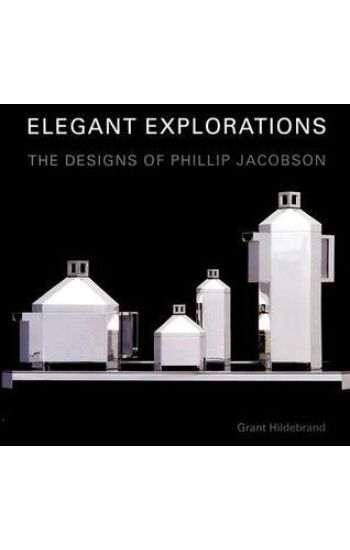
Elegant Explorations

Elegant Explorations

Grant Hildebrand; Juhani Pallasmaa

University of Washington Press
2007
pokkari
Throughout his career as an architect and educator, Phillip Jacobson has also continually engaged in another realm of design: furniture, lighting fixtures, jewelry, and home accessories. He has designed in this applied arena for commercial production and for friends and family. This “other” realm of design, evidenced by Jacobson’s use of timeless structural and formal concepts, has been an exciting exploration for the artist and is the subject of this book.Phillip Jacobson has practiced architecture in Seattle for forty years. He was a partner in and for twenty years design director of TRA, a large multidisciplinary firm renowned for deft and effective design of large architectural and urban projects, both domestic and international. He is professor emeritus at the University of Washington, where he taught for nearly four decades in the Departments of Architecture and Urban Design and Planning. He has held visiting appointments at the Tokyo Institute of Technology, the Royal Academy of Fine Arts in Copenhagen, the Royal Institute of Technology in Stockholm, and the University of Sydney in Australia. He is a Fellow of the American Institute of Architects and a recipient of the AIA Seattle Chapter medal for distinguished lifetime achievement.
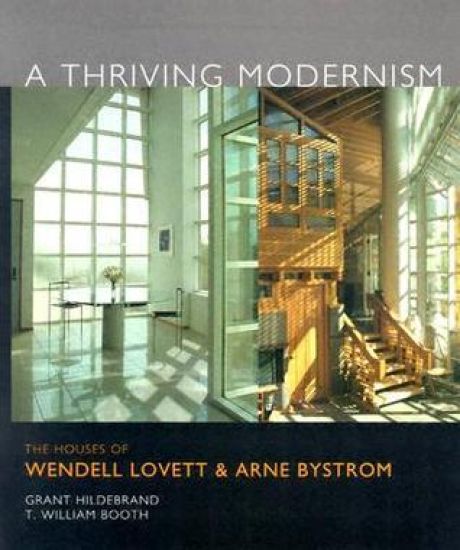
A Thriving Modernism

A Thriving Modernism

Grant Hildebrand; T. William Booth

University of Washington Press
2004
sidottu
A Thriving Modernism celebrates the remarkable careers of architects Wendell Lovett and Arne Bystrom and their contributions to modernism and to the architectural legacy of the Pacific Northwest.Wendell Lovett joined the University of Washington faculty in 1948; Arne Bystrom was one of his first students. Their work, now encompassing half a century, has been published in Germany, Spain, Italy, Japan, Denmark, England, Brazil, Switzerland, and France, and their reputations in these places are established. Yet in the United States, despite their being elected Fellows of the American Institute of Architects in 1978 and 1985, respectively, they remain little known outside the Northwest.Both men believe deeply in the emotional dimension of architecture; both are dedicated to expressive detail, executed through exquisite craftsmanship; both have been offered remarkable sites on which to build. In a series of domestic projects, each has found, in his own way, a much enriched modernism. Lovett draws influences from modern Scandinavia and Italy, from Alvar Aalto and Santiago Calatrava. Bystrom acknowledges debts to medieval Scandinavia and the ancient Far East, Frank Lloyd Wright, and Greene and Greene. Lovett's dedication to industrialized materials and methods is informed by gesture and anthropomorphic metaphor. Bystrom, devoted to the natural and the handcrafted, develops an abstract discipline of geometry and physics into a crisp structural concept. Lovett's manipulation of space, light, and mechanistic detail yields a richness undreamed of in early modernism, while Bystrom's delight in wood as inspiration is comparable to that of ancient Asian crafts.This lavishly illustrated book sets forth the extraordinary work of these two architects. It will appeal to practicing architects, as it will to any reader interested in a vital tale of architects and architecture helping to define the cultural history of the American Northwest.
Gordon Walker

Gordon Walker

Grant Hildebrand

Arcade Publishing
2019
sidottu
Gordon Walker's (b. 1939) highly unusual design process has yielded an extensive architecture of extraordinary quality; he is a unique figure in the American architectural movement and in the history of the Pacific Northwest. This personal and professional biography contributes both to our understanding of the breadth of viable design processes and, in a broader sense, to regional and architectural history.Gordon Walker is a 1962 graduate of the University of Idaho. He was co-founder of Olson Walker Architects (now Olson Kundig), worked with NBBJ in Seattle and San Francisco, and practiced in his own name for twelve years before joining Mithun Architects as a consulting principal. His work embraces the American west coast from Davis, California, to the Canadian border. He has designed over thirty residences (and built several with his own hands); a host of buildings and plans for universities throughout the Northwest and California; three buildings for the Pacific Northwest Ballet; and myriad commercial buildings, remodels, restaurants, and parks. He has been an educator and mentor, teaching at the Universities of Idaho and Washington. In addressing all of its determinants simultaneously in plan, section, and elevation, Gordon Walker has, for half a century, created an architecture of exceptional merit.
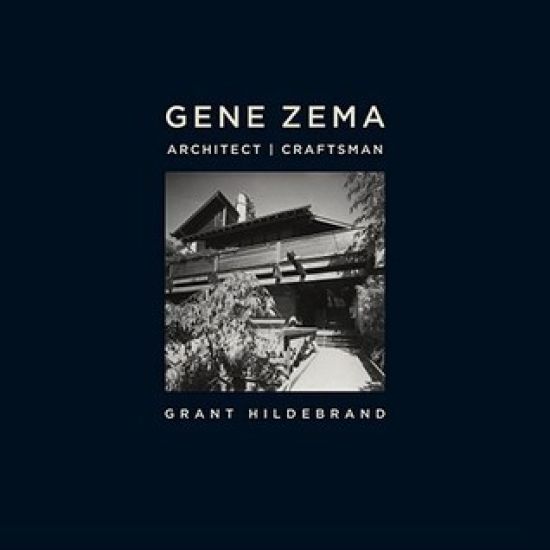
Gene Zema, Architect, Craftsman

Gene Zema, Architect, Craftsman

Grant Hildebrand

University of Washington Press
2011
sidottu
In the three decades following World War II, a group of architects centered in the Puget Sound region were designing buildings of extraordinary quality, whose most evident commonality was the use of wood in profusion, as exposed, meticulously detailed structure and as interior and exterior surface. Gene Zema, a 1950 graduate of the University of Washington and a student of the legendary Lionel Pries, was one of this group. In a career that spanned twenty years, Zema designed forty-six houses, seven clinics, two architectural offices, a nursery, and a golf clubhouse, and he participated in the design of two University buildings. He built several buildings with his own hands, developing a consummate sense of appropriate design in wood. The luxuriantly crafted details and uniquely dramatic spatial compositions of his work place it at the forefront of that remarkable movement.Zema was also a distinguished collector and retailer of Native American and Japanese antiquities. In 1983, relying on the sale of antiquities for income and limiting his architectural practice, he and his wife, Jane, bought a 70-acre meadow on Whidbey Island. On their property Zema built a workshop, a windmill and pump house, a chicken house, a home, a peacock house, and a kiln, all of which are as remarkable as his earlier masterpieces.Gene Zema is an iconic figure among those who know his work, but the region to which his work is intimately bound is far from the centers of architectural journalism and his story is little known. It is the story of a unique figure in an extraordinary American architectural movement and an exceptional figure in the history of the Pacific Northwest.
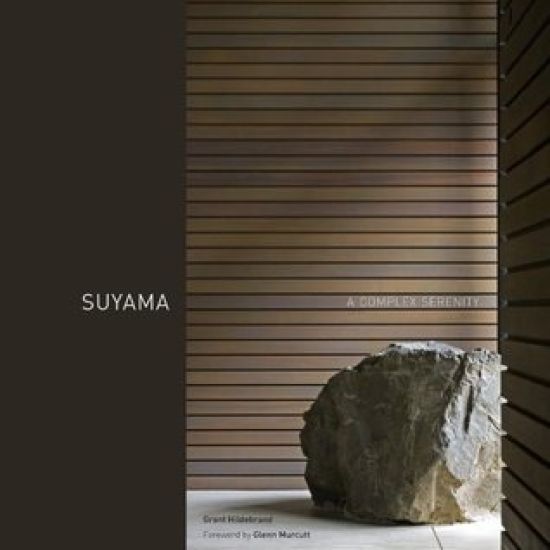
Suyama

Suyama

Grant Hildebrand

University of Washington Press
2011
sidottu
George Suyama began his architectural practice in Seattle in 1971. His early career is marked by a number of notable designs in the contemporaneous wood idiom of the region. Over time, however, Suyama developed an architecture characterized by a search for minimalist simplicity, a paradoxical architecture of intense, even exciting, tranquility. In 2002, he and partners Ric Peterson and Jay Deguchi established Suyama Peterson Deguchi. Their firm has built a distinguished reputation by means of designs influenced by the immediate region and by Suyama's ancestral Japan, which are intimately related to site and executed with an astonishing finesse of detail. Above all, their architecture reflects Suyama's quest to eliminate what he calls "visual noise," a quest that has yielded not visual silence but a kind of visual music. Architectural elements are distilled to a purity analogous to that of a musical tone, and relationships between those elements are as pure and artistically rich as the mathematics of music. In Suyama: A Complex Serenity, Grant Hildebrand introduces the man and his work, discussing relevant aspects of Suyama's life, the influences that have shaped his beliefs, and twenty of his built and unbuilt projects that illuminate the development of his remarkable art and craft. Included also are appendices that illustrate Suyama's deep and long-standing involvement with the arts and product design.
Origins of Architectural Pleasure

Origins of Architectural Pleasure

Grant Hildebrand

University of California Press
1999
sidottu
Do survival instincts have anything to do with our architectural choices - our liking for a certain room, a special stairway, a plaza in a particular city? In this engaging study Grant Hildebrand discusses ways in which architectural forms emulate some archetypal settings that humans have found appealing - and useful to survival - from ancient times to the present. Speculating that nature has 'designed' us to prefer certain conditions and experiences, Hildebrand is interested in how the characteristics of our most satisfying built environments mesh with Darwinian selection. In examining the appeal of such survival-based characteristics he cites architectural examples spanning five continents and five millennia. Among those included are the Palace of Minos, the Alhambra, Wells cathedral, the Shinto shrine at Ise, the Piazza San Marco, Brunelleschi's Pazzi Chapel, Frank Lloyd Wright's Fallingwater, a Seattle condominium, and recent houses by Eric Owen Moss and Arne Bystrom. Just what characteristics bestow evolutionary benefits? "Refuge and prospect" offer a protective place of concealment close to a foraging and hunting ground. "Enticement" invites the safe exploration of an information-rich setting where worthwhile discoveries await. "Peril" elicits an emotion of pleasurable fear and so tests and increases our competence in the face of danger: thus the attraction of a skyscraper or a house poised over a vertiginous ravine. "Order and complexity" tease our intuitions for sorting complex information into survival-useful categories. Gracefully written, with excellent illustrations that complement the text, "Origins of Architectural Pleasure" will open the reader's eyes to new ways of seeing a home, a workplace, a vacation setting, even a particular table in a restaurant. It also suggests important design considerations for buildings with a more pressing mandate for human appeal, such as hospitals, retirement homes, and hospices.