Kirjojen hintavertailu. Mukana 12 595 353 kirjaa ja 12 kauppaa.

Kirjailija

Greg Clark

Kirjat ja teokset yhdessä paikassa: 7 kirjaa, julkaisuja vuosilta 1996-2026, suosituimpien joukossa Oslo : Learning to Fly. Vertaile teosten hintoja ja tarkista saatavuus suomalaisista kirjakaupoista.

7 kirjaa

Kirjojen julkaisuhaarukka 1996-2026.

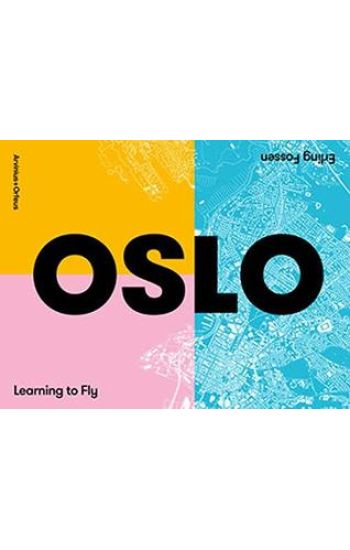
Oslo : Learning to Fly

Oslo : Learning to Fly

Erling Fossen; Elin Børrud; Ellen de Vibe; Halvor Weider Ellefsen; Påhl H. Eng; Anne Beate Hovind; Dana Jdid; Bjørnar Johnsen; Erling Lae; Asbjørg Næss; Kathrine Nyhus; Emil Paaske; Liv Sæteren; Knut Schreiner; Lin Skaufel; Marianne Skjulhaug; Aga Skorupka; Henning Sunde; Aslaug Tveit; Silje Barkesten; Greg Clark; Kamzy Gunaratnam; Kristin Jarmund; David Leonard; Maiuran Loganathan; Tin Phan; Aat Vos; Janne Wilberg; Ivar Winther

Arvinius+Orfeus Publishing
2018
nidottu
Oslo Learning to Fly offers the first comprehensive presentation of the radical transformation of this former sleepy village into an emerging world city. Oslo has been among the fastest growing cities in Europe for decades and this book spans from the conversion of a major shipyard into the multi-use borough Aker Brygge in the late 1980s, and into 2030 when the transformation to a post-industrial city will be complete.Inside, the philosophy and principles behind Oslos urban development are revealed and the book may be used both as a tool-kit for urban practitioners in post-industrial cities, and as a gift book for people all over the world who want to familiarise themselves with the Oslopolitan way of life and with how to do the noblest art of them al: the art of city making. Oslo Learning to Fly is divided into four chapters. Chapter 1 is dedicated to the harbour landscape of the Fjord City, Chapter 2 to the managing of growth through hub densification, Chapter 3 is about transformation and refinement of the already existing urban fabric, and Chapter 4 covers the relevance of so-called third places and their importance in enabling the concept of community. And please, dont leave me on the coffee table. Im made for walking. Bring me with you when you walk the streets of Oslo, and use me as a treasure map to discover the secrets of the city.Erling Fossen is a human geographer and self-proclaimed urban doctor. He is currently the project leader of Oslo Metropolitan Area a non-profit organisation devoted to urban development in the Greater Oslo.
The New Management Reader

The New Management Reader

Geoff Jones; Rob Paton; Greg Clark; Jenny Lewis; Paul Quintas

Cengage Learning EMEA
1996
nidottu
The New Management Reader examines the circumstances and ideas that are currently shaping management. The book is divided into two sections. Part I looks at the ways in which change will have a lasting impact on management. Key areas covered include gender issues, ethical and green awareness, information technology and the Ôshrinking world’. Part II focuses on the emerging issues and concepts that will shape management thinking and practice in the future, looking at information management, networking and collaboration, new models of management, and high involvement organizations.
The Business of Cities

The Business of Cities

Greg Clark; TIm Moonen; Emily Moir

Routledge
2026
sidottu
Globalisation requires cities to become competitive, and to do so cities must behave more like businesses. In the face of a major new phenomenon – the re-urbanisation of business – business engagement with cities has, since 2008, become more pronounced than at any point in the preceding 100 years.The Business of Cities explores these trends, discussing cities as emerging markets for firms, the re-urbanisation of business locations, the growth of "city building" as a newly globalising industry, the urbanisation of capital, cities as "test markets" for larger geographies and businesses adopting city brands and city marketing approaches. Using empirical evidence and case studies from 50 companies and cities around the world, this book offers critical insight into this new and rapidly evolving area of business and urban studies.With an experienced author team of Greg Clark, CBE, Tim Moonen and Emily Moir, this book uncovers new relationships between businesses and cities, which have much to learn from one another.
The Business of Cities

The Business of Cities

Greg Clark; TIm Moonen; Emily Moir

Routledge
2026
nidottu
Globalisation requires cities to become competitive, and to do so cities must behave more like businesses. In the face of a major new phenomenon – the re-urbanisation of business – business engagement with cities has, since 2008, become more pronounced than at any point in the preceding 100 years.The Business of Cities explores these trends, discussing cities as emerging markets for firms, the re-urbanisation of business locations, the growth of "city building" as a newly globalising industry, the urbanisation of capital, cities as "test markets" for larger geographies and businesses adopting city brands and city marketing approaches. Using empirical evidence and case studies from 50 companies and cities around the world, this book offers critical insight into this new and rapidly evolving area of business and urban studies.With an experienced author team of Greg Clark, CBE, Tim Moonen and Emily Moir, this book uncovers new relationships between businesses and cities, which have much to learn from one another.
World Cities and Nation States

World Cities and Nation States

Greg Clark; Tim Moonen

Wiley-Blackwell
2016
nidottu
World Cities and Nation States takes a global perspective to show how national governments and states/provinces/regions continue to play a decisive, and often positive, partnership role with world cities. The 16 chapter book ? comprised of two introductory chapters, 12 central chapters that draw on case studies, and two summary chapters - draws on over 40 interviews with national ministers, city government officials, business leaders and expert academics.
Global Cities

Global Cities

Greg Clark

Brookings Institution
2016
nidottu
"Why have some cities become great global urban centers, and what cities will be future leaders?From Athens and Rome in ancient times to New York and Singapore today, a handful of cities have stood out as centers of global economic, military, or political power. In the twenty-first century, the number of truly global cities is greater than ever before, reflecting the globalization of both economic and political power.In Global Cities: A Short History, Greg Clark, an internationally renowned British urbanist, examines the enduring forces—such as trade, migration, war and technology—that have enabled some cities to emerge from the pack into global leadership. Much more than an historical review, Clark's book looks to the future, examining the trends that are transforming cities around the world as well as the new challenges all global cities increasingly will face.Which cities will be the global leaders of tomorrow? What are the common issues and opportunities they will face? What kinds of leadership can make these cities competitive and resilient? Clark offers answers to these and similar questions in a book that will be of interest to anyone who lives in or is affected by the world's great urban areas."
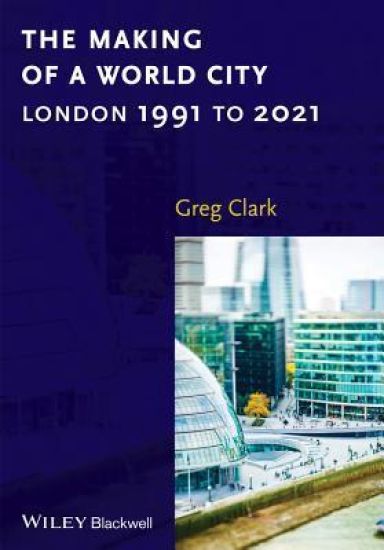
The Making of a World City

The Making of a World City

Greg Clark

John Wiley Sons Inc
2014
nidottu
After two decades of evolution and transformation, London had become one of the most open and cosmopolitan cities in the world. The success of the 2012 Olympics set a high water-mark in the visible success of the city, while its influence and soft power increased in the global systems of trade, capital, culture, knowledge, and communications. The Making of a World City: London 1991 - 2021 sets out in clear detail both the catalysts that have enabled London to succeed and also the qualities and underlying values that are at play: London's openness and self-confidence, its inventiveness, influence, and its entrepreneurial zeal. London’s organic, unplanned, incremental character, without a ruling design code or guiding master plan, proves to be more flexible than any planned city can be. Cities are high on national and regional agendas as we all try to understand the impact of global urbanisation and the re-urbanisation of the developed world. If we can explain London's successes and her remaining challenges, we can unlock a better understanding of how cities succeed.