Kirjojen hintavertailu. Mukana 12 516 399 kirjaa ja 12 kauppaa.

Kirjailija

Greg Clydesdale

Kirjat ja teokset yhdessä paikassa: 10 kirjaa, julkaisuja vuosilta 2009-2023, suosituimpien joukossa Reducing Inter-generational Ethnic Poverty. Vertaile teosten hintoja ja tarkista saatavuus suomalaisista kirjakaupoista.

10 kirjaa

Kirjojen julkaisuhaarukka 2009-2023.

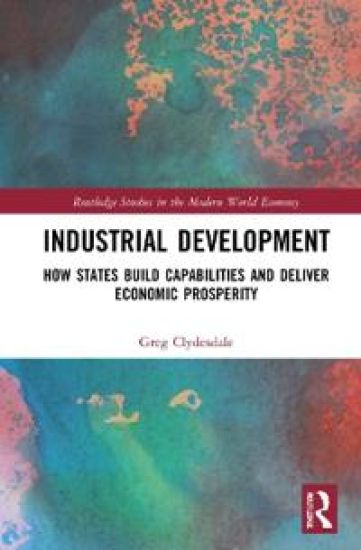
Industrial Development

Industrial Development

Greg Clydesdale

TAYLOR FRANCIS LTD
2023
nidottu
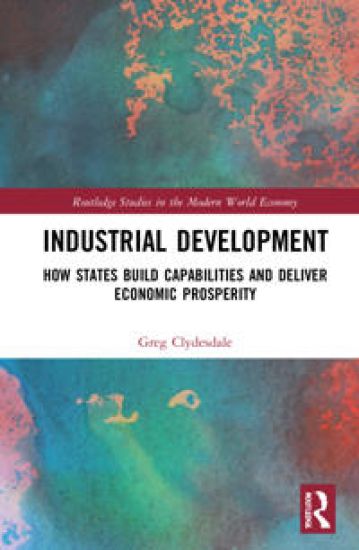
Governments are regularly judged by their ability to deliver economic prosperity, however many policies fail to deliver their desired outcomes. Industrial Development examines historical examples of how governments have attempted to build productive capabilities and promote industrial learning. Each chapter shows a different way in which this is done whether it is imitating existing production technologies, building new advanced technologies, tapping into existing global chains or building their own value chains. The book looks at a wide spectrum of countries and industries from Silicon Valley to the early Asian model of building domestic industries. The book also reveals that academics and policy makers can be a major source of policy failure. This book makes an important contribution to our understanding of capability building, industrial development and economic growth and will be an essential reading for economists, policy makers and government officials making policy in a global economy.
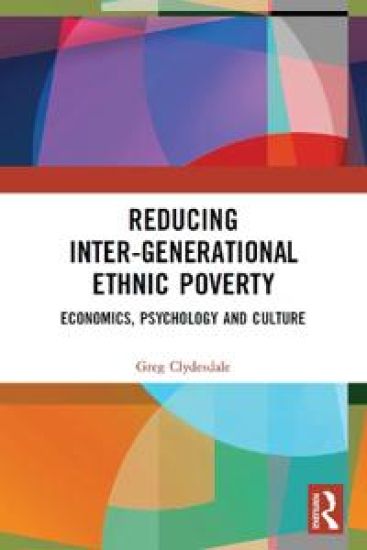
Reducing Inter-generational Ethnic Poverty

Reducing Inter-generational Ethnic Poverty

Greg Clydesdale

TAYLOR FRANCIS LTD
2022
nidottu
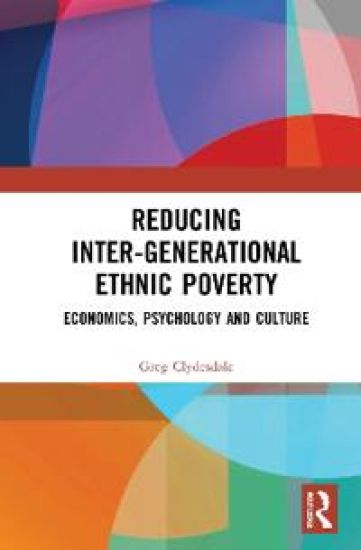
This book looks at human capital development and provides an explanation for why cognitive development varies among ethnic groups. The book uses an interdisciplinary approach to examine inter-generational ethnic poverty. It puts forth an argument that the ethnic poverty gap can be reduced, and to do so we need a broader view of human capital which considers the match between the nature of the economy and the specific capabilities needed. The book focuses on the interrelationship between developmental psychology and socio-economic status and argues that the most important relationship in a knowledge economy is actually the one between a parent and a child.The book begins by looking at cultures and assimilation and investigates the link between education, culture and socio-economic status. It also attempts to answer the question of what the link between culture, parents and children’s ability is and why ethnic groups vary in their nurturing. It delves into how parenting and cognitive development are interrelated.This thought-provoking book concludes with an emphasis on nurture and how it may alleviate ethnic poverty and shape social policies. The book provides a strong thesis to counter explanations based on racial and genetic superiority.
Industrial Development

Industrial Development

Greg Clydesdale

Taylor Francis Ltd
2021
sidottu
Governments are regularly judged by their ability to deliver economic prosperity, however many policies fail to deliver their desired outcomes. Industrial Development examines historical examples of how governments have attempted to build productive capabilities and promote industrial learning. Each chapter shows a different way in which this is done whether it is imitating existing production technologies, building new advanced technologies, tapping into existing global chains or building their own value chains. The book looks at a wide spectrum of countries and industries from Silicon Valley to the early Asian model of building domestic industries. The book also reveals that academics and policy makers can be a major source of policy failure. This book makes an important contribution to our understanding of capability building, industrial development and economic growth and will be an essential reading for economists, policy makers and government officials making policy in a global economy.
Reducing Inter-generational Ethnic Poverty
This book looks at human capital development and provides an explanation for why cognitive development varies among ethnic groups. The book uses an interdisciplinary approach to examine inter-generational ethnic poverty. It puts forth an argument that the ethnic poverty gap can be reduced, and to do so we need a broader view of human capital which considers the match between the nature of the economy and the specific capabilities needed. The book focuses on the interrelationship between developmental psychology and socio-economic status and argues that the most important relationship in a knowledge economy is actually the one between a parent and a child.The book begins by looking at cultures and assimilation and investigates the link between education, culture and socio-economic status. It also attempts to answer the question of what the link between culture, parents and children’s ability is and why ethnic groups vary in their nurturing. It delves into how parenting and cognitive development are interrelated.This thought-provoking book concludes with an emphasis on nurture and how it may alleviate ethnic poverty and shape social policies. The book provides a strong thesis to counter explanations based on racial and genetic superiority.
The Art of Business

The Art of Business

Greg Clydesdale

Robinson
2017
pokkari
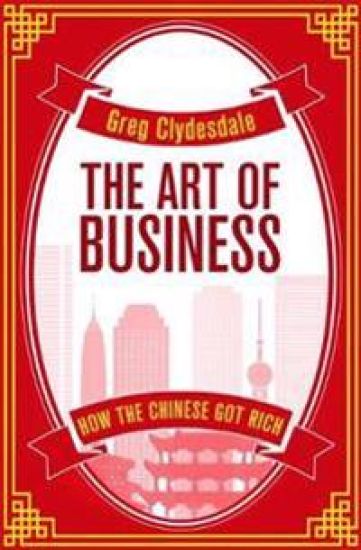
When we look at Chinese history for a guide to business, we commonly reach for Sun Tzu's The Art of War, but that is a military text. It focuses on an enemy, not a trading partner, and it certainly doesn't mention customers and their role in strategy.To come to terms with Chinese commerce, we don't need to know the Art of War. We need to know the art of business. This book explains Chinese business in history: its practices, values and achievements. As we explore business through time, we discover the strategies which enabled Chinese merchants to become rich and gain insights into how Chinese business evolved, and continues to evolve. The Art of Business goes beyond the Silk Road, Marco Polo and the opium trade to examine how the many different Chinese businesses made money. It asks how merchants mastered the spatial and temporal dimensions of the market and built substantial wealth in doing so. It explores the commercial revolutions that occurred in the Tang and Song dynasties and the late Ming, and reveals business practices carried into the Ching dynasty. It explores salt merchants, the porcelain industry, Huizhou and Shanxi merchant groups, and Howqua, who became the world's richest man. The evolving nature of world commerce will place new demands on tomorrow's businesses. By examining the past, we can better understand the future in which China will once again stand like a giant.
Human Nature

Human Nature

Greg Clydesdale

Routledge
2016
nidottu
Humans are weird! They can be emotional, irrational and often unpredictable, yet as their manager, it is your job to get the best out of them. In fact they are often the key to your success. Sadly, humans do not come with an instruction manual which lists their technical specifications. Human Nature by Greg Clydesdale is based on the premise that the key to good management is understanding human nature and interpersonal relations. But what is human nature? Greg argues that even where human nature is addressed at a conceptual level; the link between theory and what actually happens in the workplace is usually weak and often fails to recognize that social ability is probably the defining aspect. It is his intense focus on human nature and the link between a theoretical understanding of it and what actually happens in the workplace that makes this book so valuable. Throughout the book, you see how managers must constantly make balancing acts between conflicting forces that exist at any given time. But the essential message is: ’If you want to make the World a better place, focus on being a better manager to your staff’. To help with this you will find an elaboration theory-based approach, in which a basic model is provided, and then elaborated on with examples from the work-place. The model consists of twenty human characteristics placed in three categories - emotion, motivation and cognition. These characteristics are then linked to what managers have to do in the workplace.
Waves of Prosperity

Waves of Prosperity

Greg Clydesdale

Robinson
2016
pokkari
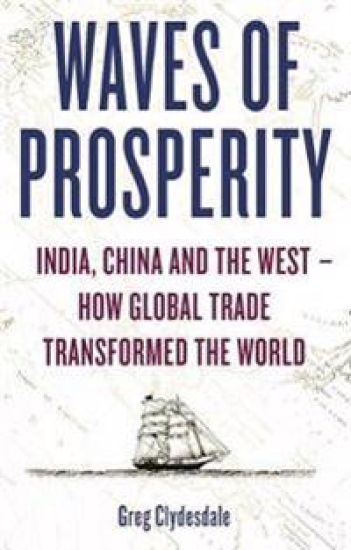
When the Genoese merchant, Marco Polo, first arrived in Dynastic China he was faced with a society far advanced of anything he had encountered in Europe. The ports were filled with commodities from all over the eastern world, while new technology was driving the economy forward. It would take another 400 years before European trade in the Atlantic eclipsed the Pacific markets.From China's phenomenally successful Sung dynasty (c. AD 960-1279), Cargoes reveals the power of the Mughals merchants of Gujarat, who built an empire so powerful that, even in the 17th century, the richest man in the world was a Gujarat trader. It was not until the opening up of the spice routes and the discovery of South American gold that medieval Iberia came to the fore. It was only then that the Atlantic Empire of the west came to dominate world trade, first the Dutch Republic in the seventeenth century, then the British Empire in the age of the Industrial Revolution, American supremacy in the twentieth century, and the development of post-war Japan. Along the way Greg Clydesdale looks at the parallel lives and ideas of merchants and explorers, missionaries, kings, bankers and emperors. He shows how great trading nations rise on a wave of technological and financial innovation and how in that success lies the cause of their inevitable decline.
Human Nature

Human Nature

Greg Clydesdale

Routledge
2013
sidottu
Humans are weird! They can be emotional, irrational and often unpredictable, yet as their manager, it is your job to get the best out of them. In fact they are often the key to your success. Sadly, humans do not come with an instruction manual which lists their technical specifications. Human Nature by Greg Clydesdale is based on the premise that the key to good management is understanding human nature and interpersonal relations. But what is human nature? Greg argues that even where human nature is addressed at a conceptual level; the link between theory and what actually happens in the workplace is usually weak and often fails to recognize that social ability is probably the defining aspect. It is his intense focus on human nature and the link between a theoretical understanding of it and what actually happens in the workplace that makes this book so valuable. Throughout the book, you see how managers must constantly make balancing acts between conflicting forces that exist at any given time. But the essential message is: ’If you want to make the World a better place, focus on being a better manager to your staff’. To help with this you will find an elaboration theory-based approach, in which a basic model is provided, and then elaborated on with examples from the work-place. The model consists of twenty human characteristics placed in three categories - emotion, motivation and cognition. These characteristics are then linked to what managers have to do in the workplace.
Entrepreneurial Opportunity

Entrepreneurial Opportunity

Greg Clydesdale

Routledge
2009
nidottu
Successfully starting a new business venture depends upon more than having a brilliant idea, getting funding, and getting the product or service to market. Entrepreneurs must also learn to read the market and understand the environments in which they must operate. Entrepreneurial Opportunity places the emphasis on reading and making the most of things that may be beyond the entrepreneur’s control, from defaulting contractors to the opening and closing of business niches. It also considers previously under-considered options, such as "the political entrepreneur." This long over-due text provides a far more realistic view of entrepreneurial opportunity and the importance of the business environment. Yet despite its realist stance, the book is decidedly optimistic, showing readers how markets evolve over time and present opportunities through that evolution. As Clydesdale states, "it’s not always fair out there," but this book captures the excitement of the market and its role in delivering opportunities.Drawing on a broad range of academic research, Entrepreneurial Opportunity is written in a manner that is accessible for students and practitioners, with examples and mini-cases from a variety of industries, including high technology, hospitality, and motion pictures.
Entrepreneurial Opportunity

Entrepreneurial Opportunity

Greg Clydesdale

Routledge
2009
sidottu
Successfully starting a new business venture depends upon more than having a brilliant idea, getting funding, and getting the product or service to market. Entrepreneurs must also learn to read the market and understand the environments in which they must operate. Entrepreneurial Opportunity places the emphasis on reading and making the most of things that may be beyond the entrepreneur’s control, from defaulting contractors to the opening and closing of business niches. It also considers previously under-considered options, such as "the political entrepreneur." This long over-due text provides a far more realistic view of entrepreneurial opportunity and the importance of the business environment. Yet despite its realist stance, the book is decidedly optimistic, showing readers how markets evolve over time and present opportunities through that evolution. As Clydesdale states, "it’s not always fair out there," but this book captures the excitement of the market and its role in delivering opportunities.Drawing on a broad range of academic research, Entrepreneurial Opportunity is written in a manner that is accessible for students and practitioners, with examples and mini-cases from a variety of industries, including high technology, hospitality, and motion pictures.