Kirjojen hintavertailu. Mukana 12 390 323 kirjaa ja 12 kauppaa.

Kirjailija

Greg Delanty

Kirjat ja teokset yhdessä paikassa: 16 kirjaa, julkaisuja vuosilta 1992-2026, suosituimpien joukossa Greek Anthology. Vertaile teosten hintoja ja tarkista saatavuus suomalaisista kirjakaupoista.

16 kirjaa

Kirjojen julkaisuhaarukka 1992-2026.

Sweeney Now

Sweeney Now

Greg Delanty

LOUISIANA STATE UNIVERSITY PRESS
2026
pokkari
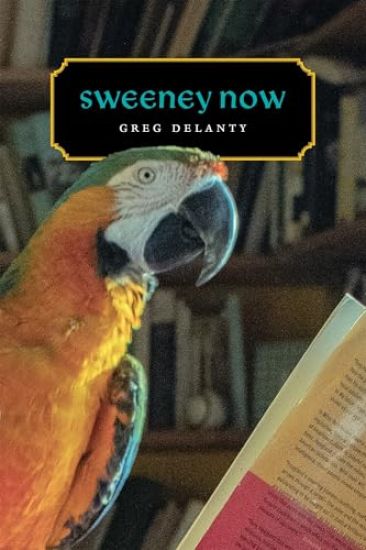
Sweeney Now, a new book from the celebrated Irish poet Greg Delanty, is based on the twelfth-century texts of the middle Irish poem Buile Shuibhne (The Frenzy of Sweeney), a sequence in both verse and prose, which Delanty uses as a blueprint, a mythic foundation to tell and review what it is like to be a deracinated person and poet today, spending much of his time away from his native Ireland in the U.S. In the original, Sweeney, the archetypal poet of Irish myth, is driven mad as a consequence of a curse imposed on him. He sprouts wings and takes flight, exiles himself to the wilderness, where he spends many years alone, naked or sparsely clothed, ostracized by the outside world, living in trees, bemoaning his fate, celebrating nature, intermittently recovering his sanity, conversing with a fellow madman, and grieving this kindred spirit in moving elegies on the latter's death. Sweeney is also portrayed as somewhat of an amateur seer and converses with various visitors to whom he relates his plight and thoughts. Throughout the story he thinks of himself as a bird. Delanty's Sweeney riffs on these situations and predicaments in settings drawn from the modern literary and political world. The Sweeney of these often humorous poems should not be literally mistaken for Delanty himself—not entirely, that is. The poems are more like carnival mirrors, with the concomitant exaggerations, distortions, and partial truths of most any reflective autobiography.
The Professor of Forgetting

The Professor of Forgetting

Greg Delanty

LOUISIANA STATE UNIVERSITY PRESS
2023
pokkari
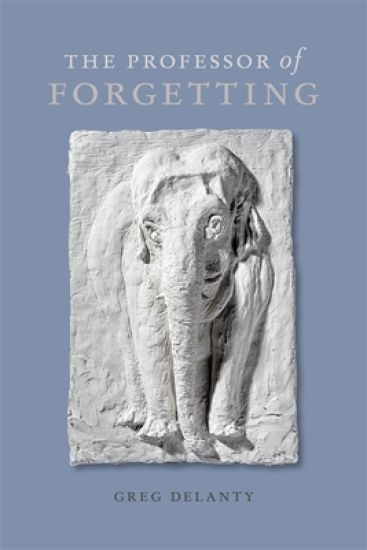
The Professor of Forgetting, a new collection from the acclaimed Irish poet Greg Delanty, swings back and forth on the fulcrum of what we call "now" and confronts our notion of how time passes. From the very first poem, "Going Nowhere Fast," which ponders whether we are now here or going nowhere, to the final selection, from which the book takes its self-reflective title, these exuberant poems chronicle what it means to be human with joy, pathos, honesty, despair, sorrow, celebration, and wit. Structurally diverse in form, the poems also explore a range of poignant topics, including childhood, family, love, racism, the natural world, immigration, and the unavoidability of death. Often humorous, Delanty's poetry finds ways of coping with the challenges of life, as it makes lasting art out of heartbreaking difficulty and experience.
No More Time

No More Time

Greg Delanty

Louisiana State University Press
2020
nidottu
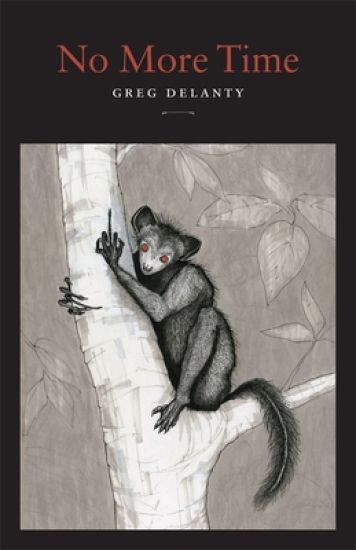
In No More Time, Greg Delanty offers a celebration of the natural environment that also bemoans its mistreatment at the hands of humans. The collection's long sequence, "A Field Guide to People," is an alpha-bestiary of twenty-six sonnets, each a meditation on a species of flora or fauna that is thriving, endangered, or extinct. Evoking an earthly heaven, purgatory, and hell for plants and animals, these poems function also as love letters to the biosphere as they connect the past with the present in both form and content. In the middle of this sonnet sequence, a section labeled "Breaking News" gives voice in poetry to the political state of our planet with a balance of pathos, wit, and hope. Delanty stresses the deep underlying connections within and between the natural world and humankind, rather than the fragmented world stressed at the beginning of the twentieth century. No More Time witnesses the effects of climate change and presents a vital view of what remains at stake for engaged global citizens in the twenty-first century.
Selected Delanty

Selected Delanty

Greg Delanty

Un-Gyve Press
2017
nidottu
Poetry. 2018 Vermont Book Award Finalist. Poems and translations by Greg Delanty chosen and introduced by Archie Burnett. "A sense of vital, actual experience is in fact wonderfully sustained in Delanty's verse in its notable linguistic energy, product of a distinctive fusion of a literary lexicon (even Latinate at times) with contemporary demotic, Cork argot, Irish language phrases, place names, craft cant and North American slang (baseball lingo in one poem, 'Tagging the Stealer'). The language of his verse functions indeed as the verbal equivalent of the printer's hellbox (subject of one of the finest of Delanty's poems), which the poet tells us 'was a container in which worn or broken type was thrown to be melted down and recast into new type.' For in Delanty's work a world in constant transition (the 'simultaneous going and comings of life') is realized in a vocabulary and variegated tonal register that displays language itself in the process of being re-made."--Terence Brown
Book Seventeen

Book Seventeen

Greg Delanty

Louisiana State University Press
2015
nidottu
Purporting to be a ""lost"" seventeenth book of the 16-volume Anthologia Graeca, Book Seventeen uses the themes and images of ancient mythology to conjure a new way of looking at our modern world. Gods of all types line the pages of this collection, from those deities that only operate in our personal spaces-the poet's companion, the demigod Solitude, as well as the elusive god of Complicity-to more familiar divinities in unfamiliar roles, such as Helios shopping in an outdoor market in Paris, or an aging Aphrodite in a short skirt chatting with visitors to an unfamiliar city. Pithy and humorous, reverential and impudent, Greg Delanty's poems showcase the author's keen eye for the mythologies on which we depend to make sense of our messy, bewildering lives.
So Little Time

So Little Time

Greg Delanty; John Elder

Green Writers Press
2014
pokkari
So Little Time is a revolving door of political activism, spirituality, nature, and humanity. It is a call to action, where urgency meets poetry in no uncertain terms, and asks, What hour are we in? Edited by poet, Irish and U. S. citizen, and Vermont activist, Greg Delanty, it takes its cue from the grassroots sensibility of Vermont, stripping down decades of unwavering ideals to arrive at an interpretive look at what it means to be 'Green' in an evolving world. A work of education and art as invigorating as the poets, teachers, and activists who inspired it, So Little Time addresses what it means to take up action for something as simple as good, healthy, and clean living. It stands on a fundamental set of questions: What are we looking at? What are we seeing? What's really there? Then asks, What's actually there? So Little Time is more than a coffee table book; rather it is a visual platform, a reflection of a state of mind-clear and focused at the center-that becomes something else around the edges. With a Foreword from John Elder, and poems that feature the work of Greg Delanty and a range of poetry selections, along with quotes from such environmentalists, as BIll McKibben, So Little Time is an interactive and interpretive book that will inspire, enrich, and a call to action in an urgent plea to stop global warming. The book merges poetry and quotes with stunning black and white photography by such artists as Mariana Cook, the last surviving disciple of Ansel Adams.
Greek Anthology

Greek Anthology

Greg Delanty

OxfordPoets
2012
nidottu
Adding to the original "Greek Anthology," which comprises 16 books of short poems attributed to many different authors--ranging from the seventh century BC to the 10th century AD--this compilation adds a modern fictional book similar in range, tone, and variety of subject matter. The poems are amatory, religious, dedicatory, humorous, sepulchral, hortatory, declamatory, and satirical. Adopting the voices of several fictional yet familiar characters, including Heanius and Gregory of Corkus, this volume offers old and new ways of looking at the contemporary world.
The Ship of Birth

The Ship of Birth

Greg Delanty

Louisiana State University Press
2007
nidottu
The Ship of Birth records a father's responses in the time immediately be­fore and after the birth of his child. Just as material significant to the dead is placed in a ship of death, so this ship of birth contains what is signifi­cant to the child: the wonder and trepidation of the parents, reflections on the nature of the soul, thoughts on the future growth of the child. Greg Delanty's poems draw on his experiences in American and Irish cultures, using the traditional verse structures of seventeenth-century religious poets along with open modern colloquial forms to evoke the subtle inter­connections of the past and future. Delanty acknowledges the dark and difficult reality that the child faces, while affirming the sustaining conti­nuity of life.
Collected Poems 1986-2006

Collected Poems 1986-2006

Greg Delanty

Carcanet Press Ltd
2006
sidottu
This volume brings together twenty years of the acclaimed Irish poet's work. Each of Greg Delanty's six books so far published is an entity in itself, a single-seeming movement. Bringing the books together in a single volume, juxtaposing them as it were, reveals the enormous resourcefulness and wit of this unusual poet who keenly interweaves material and themes drawn from his reading, writing and living (there is no real line between them). Marriage, childbirth, friendship, landscapes Irish and Indian and American, real and imagined, politics, the personal and private and the public...we are organised as a word and a line and a stanza are made from a tray of type, as in a tapestry the unseen sewing happens and holds, as in growth a foetus evolves into a child. Things fall apart, too, and there is pattern and method in that process as well. The poems draw on a rich inheritance from the different worlds that Delanty moves in: Ireland and America, Gaelic and English, traditional verse forms and modern colloquial. Past and future, their people and places, inform and interpret one another.
The Blind Stitch

The Blind Stitch

Greg Delanty

Louisiana State University Press
2002
nidottu
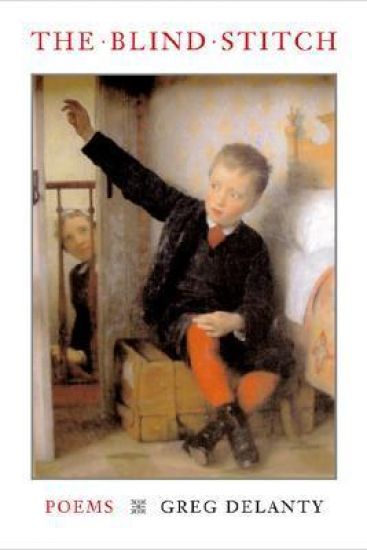
The poems in The Blind Stitch interweave family, marriage, love, and friendship into a larger world of public life. Set in Greg Delanty's native Ireland, in America, and in India, the book is sewn together with two main conceits and arranged thematically in the form of a palindrome. One of the conceits is that of the leper, which concerns personal and public suffering and complicity; the other is that of needlework, the threads that run through our public and private lives, seen and unseen, stitching us all together.
The Blind Stitch

The Blind Stitch

Greg Delanty

Louisiana State University Press
2002
sidottu
The poems in The Blind Stitch interweave family, marriage, love, and friendship into a larger world of public life. Set in Greg Delanty's native Ireland, in America, and in India, the book is sewn together with two main conceits and arranged thematically in the form of a palindrome. One of the conceits is that of the leper, which concerns personal and public suffering and complicity; the other is that of needlework, the threads that run through our public and private lives, seen and unseen, stitching us all together.
Southward

Southward

Greg Delanty

Louisiana State University Press
1992
nidottu
In ""Home from Home,"" Greg Delanty encapsulates an immigrant's lament: ""I'm in a place, but it is not in me."" A native of Ireland who now spends much of his time in the United States, Delanty has assembled in Southward a collection of poems whose settings are predominantly Cork City and County Kerry, in the southernmost part of the Irish Republic, a region warmed by the Gulf Stream and by a people whose language is as vivid as the area's abundant wild fuchsia. In ""The Fuchsia Blaze,"" Delanty writes: The purple petticoated & crimson frocks of the open flowers are known as Dancers, blown by the fast & slow airs of the wind; one minute sean-nós melancholy, the next jigging & reeling like Irish character itself & like these, my fuchsia verse, struggling to escape the English garden & flourish in a wilder landscapeIn many of the poems Delanty evokes the Ireland that was and is, while in others he mourns the loss of a lover, the death of his father, separation from his mother. In ""The Emigrant's Apology,"" through a haunting image of a black-scarfed woman worshiping alone, he describes his mother, who, with the loss of her husband and the scattering of her family, is a symbol of the grief of separation from his mother. In ""The Emigrant's Apology,"" through a haunting image of a black-scarfed woman worshiping alone, he describes his mother, who, with the loss of her husband and the scattering of her family, is a symbol of the grief of separation. Always home in the natural world, even in his adopted landscape, Delanty closes the book with a handful of poems set in the United States. The imagery of these latter poems ranges from a quiet pond in southern Florida to a military base on the border of Canada, and their concerns range from the personal to the political.