Kirjojen hintavertailu. Mukana 12 595 353 kirjaa ja 12 kauppaa.

Kirjailija

Greg Dickinson

Kirjat ja teokset yhdessä paikassa: 7 kirjaa, julkaisuja vuosilta 2015-2024, suosituimpien joukossa Cookery. Vertaile teosten hintoja ja tarkista saatavuus suomalaisista kirjakaupoista.

7 kirjaa

Kirjojen julkaisuhaarukka 2015-2024.

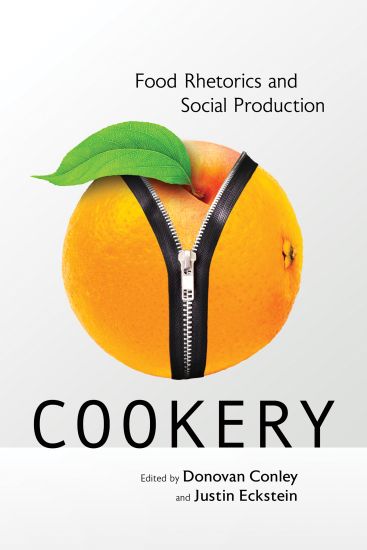
Cookery

Cookery

Greg Dickinson

The University of Alabama Press
2020
nidottu
The rhetoric of contemporary food production and consumption with a focus on social boundaries. The rhetoric of food is more than just words about food, and food is more than just edible matter. Cookery:Food Rhetorics and Social Production explores how food mediates both rhetorical influence and material life through the overlapping concepts of invention and production. The classical canon of rhetorical invention entails the process of discovering one's persuasive appeals, whereas the contemporary landscape of agricultural production touches virtually everyone on the planet. Together, rhetoric and food shape the boundaries of shared living. The essays in this volume probe the many ways that food informs contemporary social life through its mediation of bodies - human and extra-human alike - in the forms of intoxication, addiction, estrangement, identification, repulsion, and eroticism. Our bodies, in turn, shape the boundaries of food through research, technology, cultural trends, and, of course, by talking about it. Each chapter explores food's persuasive nature through a unique prism that includes intoxication, dirt, "food porn," strange foods, and political "invisibility." In each case readers gain new insights about the relations between rhetorical influence and embodied practice through food. As a whole Cookery articulates new ways of viewing food's powers of persuasion, as well as the inherent role of persuasion in agricultural production. The purpose of Cookery, then, is to demonstrate the deep rhetoricity of our modern industrial food system through critical examinations of concepts, practices, and tendencies endemic to this system. Food has become an essential topic for discussions concerned with the larger social dynamics of production, distribution, access, reception, consumption, influence, and the fraught question of choice. These questions about food and rhetoric are equally questions about the assumptions, values, and practices of contemporary public life.
The Haunted West

The Haunted West

Greg Dickinson; Eric Aoki; Brian L. Ott

THE UNIVERSITY OF ALABAMA PRESS
2024
sidottu
Offers a rich interpretation of the region’s vexed history through a detailed study of the commemorative practices enacted—and withheld—at a landmark American museum.
The Haunted West

The Haunted West

Greg Dickinson; Eric Aoki; Brian L. Ott

THE UNIVERSITY OF ALABAMA PRESS
2024
nidottu
Offers a rich interpretation of the region’s vexed history through a detailed study of the commemorative practices enacted—and withheld—at a landmark American museum.
Suburban Dreams

Suburban Dreams

Greg Dickinson

THE UNIVERSITY OF ALABAMA PRESS
2021
nidottu
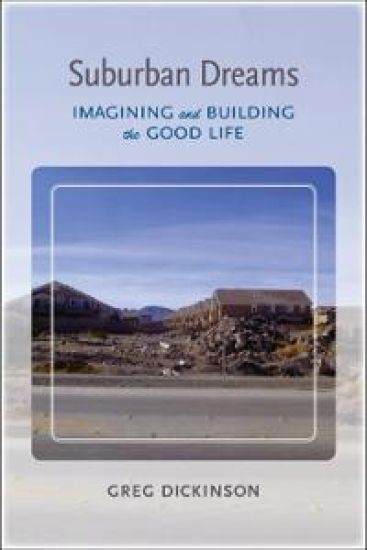
2016 Choice Outstanding Academic Title and Jane Jacobs Urban Communication Book Award finalist Starting with the premise that suburban films, residential neighborhoods, chain restaurants, malls, and megachurches are compelling forms (topos) that shape and materialize the everyday lives of residents and visitors, Greg Dickinson’s Suburban Dreams offers a rhetorically attuned critical analysis of contemporary American suburbs and the “good life” their residents pursue. Dickinson’s analysis suggests that the good life is rooted in memory and locality, both of which are foundations for creating a sense of safety central to the success of suburbs. His argument is situated first in a discussion of the intersections among buildings, cities, and the good life and the challenges to these relationships wrought by the twentieth and twenty-first centuries. The argument then turns to rich, fully-embodied analyses of suburban films and a series of archetypal suburban landscapes to explore how memory, locality, and safety interact in constructing the suburban imaginary. Moving from the pastoralism of residential neighborhoods and chain restaurants like Olive Garden and Macaroni Grill, through the megachurch’s veneration of suburban malls to the mixed-use lifestyle center’s nostalgic invocation of urban downtowns, Dickinson complicates traditional understandings of the ways suburbs situate residents and visitors in time and place. The analysis suggests that the suburban good life is devoted to family. Framed by the discourses of consumer culture, the suburbs often privilege walls and roots to an expansive vision of worldliness. At the same time, developments such as farmers markets suggest a continued striving by suburbanites to form relationships in a richer, more organic fashion. Dickinson’s work eschews casually dismissive attitudes toward the suburbs and the pursuit of the good life. Rather, he succeeds in showing how by identifying the positive rhetorical resources the suburbs supply, it is in fact possible to engage with the suburbs intentionally, thoughtfully, and rigorously. Beyond an analysis of the suburban imaginary, Suburban Dreams demonstrates how a critical engagement with everyday places can enrich daily life. The book provides much of interest to students and scholars of rhetoric, communication studies, public memory, American studies, architecture, and urban planning.
The Twitter Presidency

The Twitter Presidency

Brian L. Ott; Greg Dickinson

Routledge
2020
nidottu
The Twitter Presidency explores the rhetorical style of President Donald J. Trump, attending to both his general manner of speaking as well as to his preferred modality. Trump’s manner, the authors argue, reflects an aesthetics of white rage, and it is rooted in authoritarianism, narcissism, and demagoguery. His preferred modality of speaking, namely through Twitter, effectively channels and transmits the affective dimensions of white rage by taking advantage of the platform’s defining characteristics, which include simplicity, impulsivity, and incivility. There is, then, a structural homology between Trump’s general communication practices and the specific platform (Twitter) he uses to communicate with his base. This commonality between communication practices and communication platform (manner and modality) struck a powerful emotive chord with his followers, who feel aggrieved at the decentering of white masculinity. In addition to charting the defining characteristics of Trump’s discourse, The Twitter Presidency exposes how Trump’s rhetorical style threatens democratic norms, principles, and institutions.
The Twitter Presidency

The Twitter Presidency

Brian L. Ott; Greg Dickinson

Routledge
2019
sidottu
The Twitter Presidency explores the rhetorical style of President Donald J. Trump, attending to both his general manner of speaking as well as to his preferred modality. Trump’s manner, the authors argue, reflects an aesthetics of white rage, and it is rooted in authoritarianism, narcissism, and demagoguery. His preferred modality of speaking, namely through Twitter, effectively channels and transmits the affective dimensions of white rage by taking advantage of the platform’s defining characteristics, which include simplicity, impulsivity, and incivility. There is, then, a structural homology between Trump’s general communication practices and the specific platform (Twitter) he uses to communicate with his base. This commonality between communication practices and communication platform (manner and modality) struck a powerful emotive chord with his followers, who feel aggrieved at the decentering of white masculinity. In addition to charting the defining characteristics of Trump’s discourse, The Twitter Presidency exposes how Trump’s rhetorical style threatens democratic norms, principles, and institutions.
Suburban Dreams

Suburban Dreams

Greg Dickinson

The University of Alabama Press
2015
sidottu
Suburban Dreams: Imagining and Building the Good Life explores how the suburban imaginary, composed of the built environment and imaginative texts, functions as a resource for living out the “good life.”Starting with the premise that suburban films, residential neighbourhoods, chain restaurants, malls, and megachurches are compelling forms (topos) that shape and materialize the everyday lives of residents and visitors, Greg Dickinson’s Suburban Dreams offers a rhetorically attuned critical analysis of contemporary American suburbs and the “good life” their residents pursue.Dickinson’s analysis suggests that the good life is rooted in memory and locality, both of which are foundations for creating a sense of safety central to the success of suburbs. His argument is situated first in a discussion of the intersections among buildings, cities, and the good life and the challenges to these relationships wrought by the twentieth- and twenty-first centuries. The argument then turns to rich, fully-embodied analyses of suburban films and a series of archetypal suburban landscapes to explore how memory, locality, and safety interact in constructing the suburban imaginary. Moving from the pastoralism of residential neighbourhoods and chain restaurants like Olive Garden and Macaroni Grill, through the megachurch’s veneration of suburban malls to the lifestyle center’s nostalgic invocation of urban downtowns, Dickinson complicates traditional understandings of the ways suburbs situate residents and visitors in time and place.The analysis suggests that the suburban good life is devoted to family. Framed by the discourses of consumer culture, the suburbs often privi­lege walls and roots to an expansive vision of worldliness. At the same time, developments such as farmers markets suggest a continued striving by suburbanites to form relationships in a richer, more organic fashion.Dickinson’s work eschews casually dismissive attitudes toward the suburbs and the pursuit of the good life. Rather, he succeeds in show­ing how by identifying the positive rhetorical resources the suburbs supply, it is in fact possible to engage with the suburbs intentionally, thoughtfully, and rigorously. Beyond an analysis of the suburban imagi­nary, Suburban Dreams demonstrates how a critical engagement with everyday places can enrich daily life. The book provides much of inter­est to students and scholars of rhetoric, communication studies, public memory, American studies, architecture, and urban planning.