Kirjojen hintavertailu. Mukana 12 595 353 kirjaa ja 12 kauppaa.

Kirjailija

Greg Dimitriadis

Kirjat ja teokset yhdessä paikassa: 8 kirjaa, julkaisuja vuosilta 2001-2013, suosituimpien joukossa Theory for Education. Vertaile teosten hintoja ja tarkista saatavuus suomalaisista kirjakaupoista.

8 kirjaa

Kirjojen julkaisuhaarukka 2001-2013.

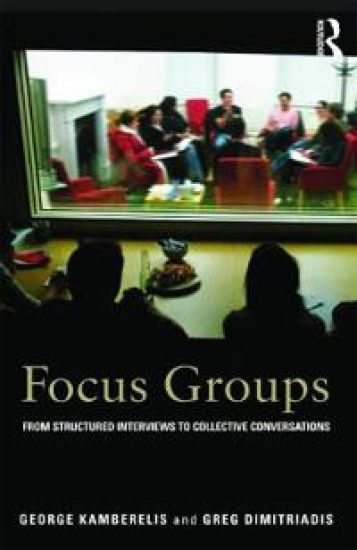
Focus Groups

Focus Groups

George Kamberelis; Greg Dimitriadis

Routledge
2013
nidottu
Focus Groups: From Structured Interviews to Collective Conversations is a conceptual and practical introduction to focus group. As the title indicates, focus groups traditionally encompass a wide range of discursive practices. These span from formal structured interviews with particular people assembled around clearly delimited topics to less formal, open-ended conversations with large and small groups that can unfold in myriad and unpredictable ways. Additionally, focus groups can and have served many overlapping purposes—from the pedagogical, to the political, to the traditionally empirical. In this book, focus groups are systematically explored; not as an extension or elaboration of interview work alone, but as its own specific research method with its own particular affordances. This book comprehensively explores: The nature of focus groups Politic and activist uses of focus groups Practical ways to run a successful focus group Effective analysis of focus group data Contemporary threats to focus groupsFocus Groups: From Structured Interviews to Collective Conversations is essential reading for qualitative researchers at every level, particularly those involved in education, nursing, social work, anthropology, and sociology disciplines.
Focus Groups

Focus Groups

George Kamberelis; Greg Dimitriadis

Routledge
2013
sidottu
Focus Groups: From Structured Interviews to Collective Conversations is a conceptual and practical introduction to focus group. As the title indicates, focus groups traditionally encompass a wide range of discursive practices. These span from formal structured interviews with particular people assembled around clearly delimited topics to less formal, open-ended conversations with large and small groups that can unfold in myriad and unpredictable ways. Additionally, focus groups can and have served many overlapping purposes—from the pedagogical, to the political, to the traditionally empirical. In this book, focus groups are systematically explored; not as an extension or elaboration of interview work alone, but as its own specific research method with its own particular affordances. This book comprehensively explores: The nature of focus groups Politic and activist uses of focus groups Practical ways to run a successful focus group Effective analysis of focus group data Contemporary threats to focus groupsFocus Groups: From Structured Interviews to Collective Conversations is essential reading for qualitative researchers at every level, particularly those involved in education, nursing, social work, anthropology, and sociology disciplines.
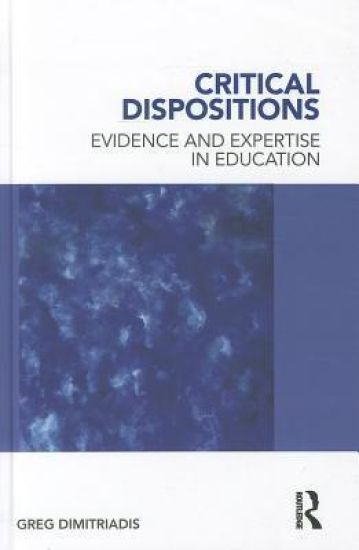
Critical Dispositions

Critical Dispositions

Greg Dimitriadis

Routledge
2012
nidottu
Set against the current proliferation of global "difference" and economic realignment, Critical Dispositions explores the notions of "evidence" and "expertise" in times of material scarcity. Both have come to the forefront of national and international debate in education as "evidence" and "evidence-based" research and pedagogical practices continue as major trends in educational policy. Author Greg Dimitriadis maintains this debate is best understood as part of a broader rise in professional and managerial discourses in various aspects of educational research and practice. Each aims to control and contain some aspect of research and practice in ways that are increasingly specific and targeted. As demonstrated through examples from critical intellectuals and artists outside the field of education, this current proliferation of specific, autonomous fields of inquiry and practice marks a much deeper ambivalence about our contemporary moment and how we understand it. Following Bourdieu and other theorists, Dimitriadis argues that educational researchers and practitioners today must be increasingly self-reflexive about the positions they take up in various fields of inquiry, what they allow us to see and to understand, what they blind us to. This kind of self-reflexivity, however, is becoming increasingly difficult today as material demands and dislocations are forcing educators to occupy particular fields in more specific ways. Unpacking this tension and offering alternative "thinking tools" is at the core of this volume.
Critical Dispositions

Critical Dispositions

Greg Dimitriadis

Routledge
2011
sidottu
Set against the current proliferation of global "difference" and economic realignment, Critical Dispositions explores the notions of "evidence" and "expertise" in times of material scarcity. Both have come to the forefront of national and international debate in education as "evidence" and "evidence-based" research and pedagogical practices continue as major trends in educational policy. Greg Dimitriadis maintains this debate is best understood as part of a broader rise in professional and managerial discourses in various aspects of educational research and practice. Each aims to control and contain some aspect of research and practice in ways that are increasingly specific and targeted. As demonstrated through examples from critical intellectuals and artists outside the field of education, this current proliferation of specific, autonomous fields of inquiry and practice marks a much deeper ambivalence about our contemporary moment and how we understand it. Following Bourdieu and other theorists, Dimitriadis argues that educational researchers and practitioners today must be increasingly self-reflexive about the positions they take up in various fields of inquiry, what they allow us to see and to understand, what they blind us to. This kind of self-reflexivity, however, is becoming increasingly difficult today as material demands and dislocations are forcing educators to occupy particular fields in more specific ways. Unpacking this tension and offering alternative "thinking tools" is at the core of this volume.
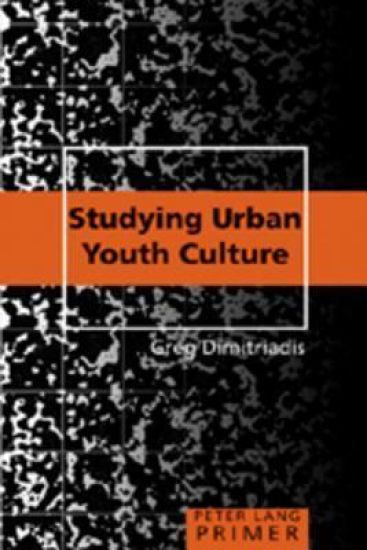
Studying Urban Youth Culture Primer

Studying Urban Youth Culture Primer

Greg Dimitriadis

Peter Lang Publishing Inc
2007
nidottu
This book provides a concise introduction to the practical and theoretical complexities of studying urban youth culture today. Looking across disciplines such as anthropology, sociology, and education, Dimitriadis explores the ways urban youth have been framed - in often limiting and problematic ways - in the popular and academic imagination. Moving beyond critique alone, this highly accessible primer opens a discussion about what a truly powerful, emergent field of critical youth studies might look like. Looking toward the future of this field, this book discusses the most important methodological and substantive trends and issues scholars will be addressing now and in the years to come. The Studying Urban Youth Culture Primer is an indispensable text for students in a range of qualitative methods and urban education courses.
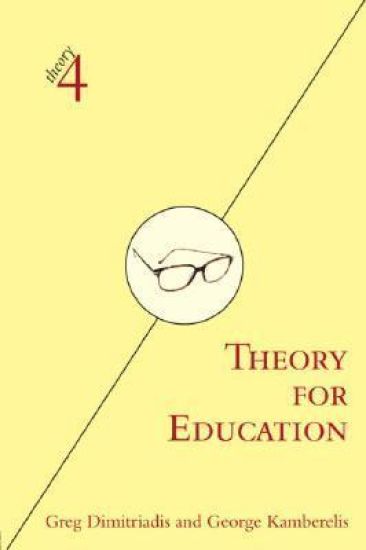
Theory for Education

Theory for Education

Greg Dimitriadis; George Kamberelis

Routledge
2006
sidottu
Theory for Education provides a concise and clear introduction to key contemporary theorists, including their lives, major works and ideas. Written for the student in need of a quick introduction or for the scholar brushing up on details, this new volume in the theory4 series presents major thinkers whose work and ideas have shaped critical thinking in our time. Greg Dimitriadis and George Kamberelis underscore the particular relevance of these thinkers for the field of education - their work on education, how others in education have used them and possible future directions for teachers and researchers. Theory for Education's ease of use, clarity and comprehensive scope will be invaluable for those entering the field.Adapted from Theory for Religious Studies, by William E. Deal and Timothy K. Beal.
Theory for Education

Theory for Education

Greg Dimitriadis; George Kamberelis

Routledge
2006
nidottu
A digest of twenty three of the most important and influential figures in educational theory, covering a brief overview of their lives and careers together with an introduction to their main ideas and contributions to current educational thinking.
Reading and Teaching the Postcolonial

Reading and Teaching the Postcolonial

Greg Dimitriadis; Cameron McCarthy; Greg Dimitriades

Teachers' College Press
2001
sidottu
In addition to providing an accessible introduction to postcolonial theory, the authors explore the enormous potential which postcolonial art offers educators - a wealth of material to draw upon for any rethinking of the school curriculum. Some of the artists discussed in this groundbreaking volume include: African-American critic and writer James Baldwin; Trinidadian intellectual and activist C. L. R. James; Novelist Wilson Harris of Guyana; African-American novelist and Nobel laureate Toni Morrison; The painter Arnaldo Roche-Rabell of Puerto Rico; The Australian artist Gordon Bennett; The Haitian-Puerto Rican-American artist Jean-Michel Basquiat; Plus a look at popular ""world musics"" from around the globe.