Kirjojen hintavertailu. Mukana 12 390 323 kirjaa ja 12 kauppaa.

Kirjailija

Greg Fisher

Kirjat ja teokset yhdessä paikassa: 15 kirjaa, julkaisuja vuosilta 2011-2025, suosituimpien joukossa The Principles of Entrepreneurial Progress. Vertaile teosten hintoja ja tarkista saatavuus suomalaisista kirjakaupoista.

15 kirjaa

Kirjojen julkaisuhaarukka 2011-2025.

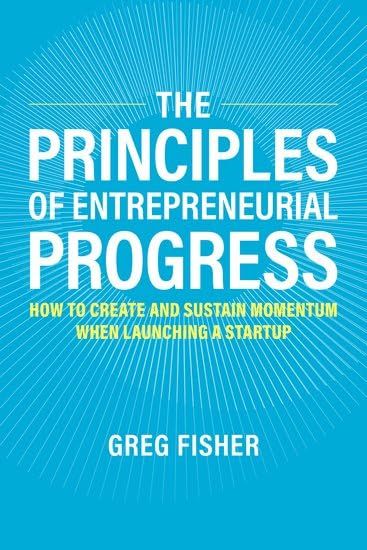
The Principles of Entrepreneurial Progress

The Principles of Entrepreneurial Progress

Greg Fisher

OXFORD UNIVERSITY PRESS INC
2025
sidottu
Entrepreneurship is messy, uncertain, complex, and risky. It's virtually impossible to devise a recipe for success when developing a new venture. But it need not be. In The Principles of Entrepreneurial Progress, business school professor and entrepreneur Greg Fisher breaks entrepreneurship down into twelve concrete, actionable, easy to understand principles. These principles can be applied across a diverse range of entrepreneurial endeavors, ranging from high-growth, venture capital funded, technology ventures to self-funded, slower growth, more lifestyle oriented new business enterprises. For each of the principles, Fisher shares intriguing stories and examples that illustrate the principle, distills research that validates the principle in easy-to-understand terms, and describes how the principle can be implemented in practice. Conveying decades of expertise and practical wisdom, this engaging book provides entrepreneurs with a practical, evidence-based guide for making meaningful progress on their entrepreneurial journey.
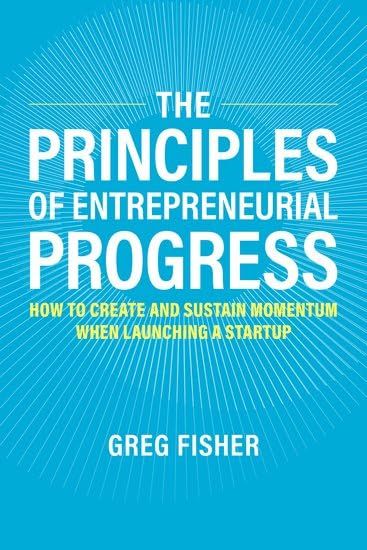
The Principles of Entrepreneurial Progress

The Principles of Entrepreneurial Progress

Greg Fisher

OXFORD UNIVERSITY PRESS INC
2025
nidottu
Entrepreneurship is messy, uncertain, complex, and risky. It's virtually impossible to devise a recipe for success when developing a new venture. But it need not be. In The Principles of Entrepreneurial Progress, business school professor and entrepreneur Greg Fisher breaks entrepreneurship down into twelve concrete, actionable, easy to understand principles. These principles can be applied across a diverse range of entrepreneurial endeavors, ranging from high-growth, venture capital funded, technology ventures to self-funded, slower growth, more lifestyle oriented new business enterprises. For each of the principles, Fisher shares intriguing stories and examples that illustrate the principle, distills research that validates the principle in easy-to-understand terms, and describes how the principle can be implemented in practice. Conveying decades of expertise and practical wisdom, this engaging book provides entrepreneurs with a practical, evidence-based guide for making meaningful progress on their entrepreneurial journey.
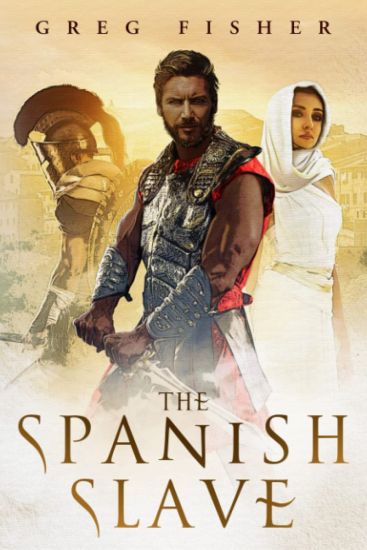
The Spanish Slave

The Spanish Slave

Greg Fisher

Belmont Books
2022
pokkari
209 BC: As Hannibal faces defeat in Italy, the struggle between Rome and Carthage has spread to Spain. Mattias commands the Carthaginian army. As new threats emerge, he must battle more than just the hated Roman enemy to protect what he holds most dear. Ilde, a Spanish noblewoman, preserves the fragile loyalty of the indigenous communities through her marriage to Mattias. The war delivers an unexpected opportunity to change her destiny-and that of her beloved nation. Marcus, a Roman officer, is sent in disgrace to the war in Spain. Finding redemption amongst the fighting, he is forced to question his own loyalties and the morality of the war itself. As the war sets Spain ablaze, each must make impossible choices that will decide their own future, the fate of Spain-and the destiny of empires.
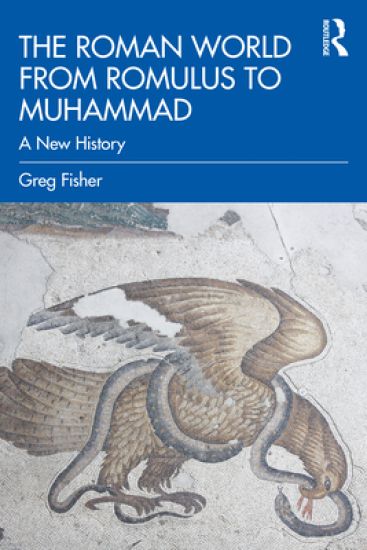
The Roman World from Romulus to Muhammad
This volume provides a detailed examination of nearly 1,400 years of Roman history, from the foundation of the city in the eighth century BC until the evacuation of Roman troops from Alexandria in AD 642 in the face of the Arab conquests. Drawing on a vast array of ancient texts written in Latin, Greek, Syriac, Armenian, and Arabic, and relying on a host of inscriptions, archaeological data, and the evidence from ancient art, architecture, and coinage, The Roman World from Romulus to Muhammad brings to the fore the men and women who chronicled the story of the city and its empire. Richly illustrated with 71 maps and 228 illustrations—including 20 in colour—and featuring a detailed glossary and suggestions for further reading, this volume examines a broad range of topics, including ancient climate change, literature, historiography, slavery, war and conquest, the development of Christianity, the Jewish revolts, and the role of powerful imperial women. The author also considers the development of Islam within a Roman historical context, examines the events that led to the formation of the post-Roman states in Western Europe, and contemplates aff airs on the imperial periphery in the Caucasus, Ethiopia, and the Arabian Peninsula. Emphasising the voices of antiquity throughout, The Roman World from Romulus to Muhammad is an invaluable resource for students and scholars interested in the beguiling history of the world’s most famous empire.
The Roman World from Romulus to Muhammad
This volume provides a detailed examination of nearly 1,400 years of Roman history, from the foundation of the city in the eighth century BC until the evacuation of Roman troops from Alexandria in AD 642 in the face of the Arab conquests. Drawing on a vast array of ancient texts written in Latin, Greek, Syriac, Armenian, and Arabic, and relying on a host of inscriptions, archaeological data, and the evidence from ancient art, architecture, and coinage, The Roman World from Romulus to Muhammad brings to the fore the men and women who chronicled the story of the city and its empire. Richly illustrated with 71 maps and 228 illustrations—including 20 in colour—and featuring a detailed glossary and suggestions for further reading, this volume examines a broad range of topics, including ancient climate change, literature, historiography, slavery, war and conquest, the development of Christianity, the Jewish revolts, and the role of powerful imperial women. The author also considers the development of Islam within a Roman historical context, examines the events that led to the formation of the post-Roman states in Western Europe, and contemplates aff airs on the imperial periphery in the Caucasus, Ethiopia, and the Arabian Peninsula. Emphasising the voices of antiquity throughout, The Roman World from Romulus to Muhammad is an invaluable resource for students and scholars interested in the beguiling history of the world’s most famous empire.
Strategy in 3D

Strategy in 3D

Greg Fisher; John E. Wisneski; Rene M. Bakker

Oxford University Press Inc
2020
nidottu
Strategy decision making and action used to be off limits to all but the select few at the very top of an organization. It was a largely cerebral activity focused on grand long-terms plans made at annual off-site retreats away from the daily challenges of the business. That is no longer the case. The current business environment does not wait for companies to slowly adjust in an annual meeting. The relentless pace of change renders today's long-term future tomorrow's history. Rapid innovations and ever-increasing complexities limit executives' ability to make decisions with perfect information. Does this mean strategy is no longer useful, or even feasible? No. Good strategists are needed now more than ever. But today's high-performing organizations think of strategy differently than in the past. These companies make strategy part of every manager's role; they strategize continuously and tackle strategic problems through individuals from all parts of the organization. Strategy in this new, fast-paced world is about diagnosing the diverse array of complex challenges confronting organizations, deciding on novel solutions to address those challenges, and delivering by taking action on those solutions. Including a novel organizational framework and never-before-published application examples, Strategy in 3D helps build these foundational skills and prepares the reader for success as a strategist in the 21st century.
Strategy in 3D

Strategy in 3D

Greg Fisher; John E. Wisneski; Rene M. Bakker

Oxford University Press Inc
2020
sidottu
Strategy decision making and action used to be off limits to all but the select few at the very top of an organization. It was a largely cerebral activity focused on grand long-terms plans made at annual off-site retreats away from the daily challenges of the business. That is no longer the case. The current business environment does not wait for companies to slowly adjust in an annual meeting. The relentless pace of change renders today's long-term future tomorrow's history. Rapid innovations and ever-increasing complexities limit executives' ability to make decisions with perfect information. Does this mean strategy is no longer useful, or even feasible? No. Good strategists are needed now more than ever. But today's high-performing organizations think of strategy differently than in the past. These companies make strategy part of every manager's role; they strategize continuously and tackle strategic problems through individuals from all parts of the organization. Strategy in this new, fast-paced world is about diagnosing the diverse array of complex challenges confronting organizations, deciding on novel solutions to address those challenges, and delivering by taking action on those solutions. Including a novel organizational framework and never-before-published application examples, Strategy in 3D helps build these foundational skills and prepares the reader for success as a strategist in the 21st century.
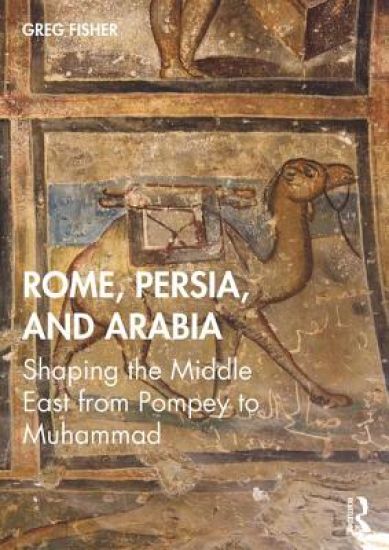
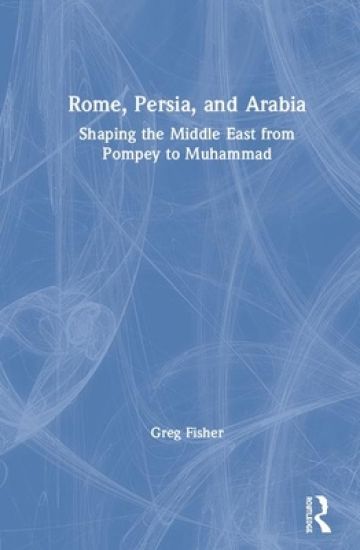
Rome, Persia, and Arabia

Rome, Persia, and Arabia

Greg Fisher

Routledge
2019
nidottu
Rome, Persia, and Arabia traces the enormous impact that the Great Powers of antiquity exerted on Arabia and the Arabs, between the arrival of Roman forces in the Middle East in 63 BC and the death of the Prophet Muhammad in AD 632.Richly illustrated and covering a vast area from the fertile lands of South Arabia to the bleak deserts of Iraq and Syria, this book provides a detailed and captivating narrative of the way that the empires of antiquity affected the politics, culture, and religion of the Arabs. It examines Rome’s first tentative contacts in the Syrian steppe and the controversial mission of Aelius Gallus to Yemen, and takes in the city states, kingdoms, and tribes caught up in the struggle for supremacy between Rome and Persia, including the city state of Hatra, one of the many archaeological sites in the Middle East that have suffered deliberate vandalism at the hands of the ‘Islamic State’. The development of an Arab Christianity spanning the Middle East, the emergence of Arab fiefdoms at the edges of imperial power, and the crucial appearance of strong Arab leadership in the century before Islam provide a clear picture of the importance of pre-Islamic Arabia and the Arabs to understanding world and regional history.Rome, Persia, and Arabia includes discussions of heritage destruction in the Middle East, the emergence of Islam, and modern research into the anthropology of ancient tribal societies and their relationship with the states around them. This comprehensive and wide-ranging book delivers an authoritative chronicle of a crucial but little known era in world history, and is for any reader with an interest in the ancient Middle East, Arabia, and the Roman and Persian empires.
Rome, Persia, and Arabia

Rome, Persia, and Arabia

Greg Fisher

Routledge
2019
sidottu
Rome, Persia, and Arabia traces the enormous impact that the Great Powers of antiquity exerted on Arabia and the Arabs, between the arrival of Roman forces in the Middle East in 63 BC and the death of the Prophet Muhammad in AD 632.Richly illustrated and covering a vast area from the fertile lands of South Arabia to the bleak deserts of Iraq and Syria, this book provides a detailed and captivating narrative of the way that the empires of antiquity affected the politics, culture, and religion of the Arabs. It examines Rome’s first tentative contacts in the Syrian steppe and the controversial mission of Aelius Gallus to Yemen, and takes in the city states, kingdoms, and tribes caught up in the struggle for supremacy between Rome and Persia, including the city state of Hatra, one of the many archaeological sites in the Middle East that have suffered deliberate vandalism at the hands of the ‘Islamic State’. The development of an Arab Christianity spanning the Middle East, the emergence of Arab fiefdoms at the edges of imperial power, and the crucial appearance of strong Arab leadership in the century before Islam provide a clear picture of the importance of pre-Islamic Arabia and the Arabs to understanding world and regional history.Rome, Persia, and Arabia includes discussions of heritage destruction in the Middle East, the emergence of Islam, and modern research into the anthropology of ancient tribal societies and their relationship with the states around them. This comprehensive and wide-ranging book delivers an authoritative chronicle of a crucial but little known era in world history, and is for any reader with an interest in the ancient Middle East, Arabia, and the Roman and Persian empires.
Hannibal and Scipio: pocket GIANTS

Hannibal and Scipio: pocket GIANTS

Greg Fisher

The History Press Ltd
2016
nidottu
In 218, Hannibal Barca, desperate to avenge the defeat of Carthage in the First Punic War, launched an ambitious ground invasion of Italy. With just a small force, he crossed the Alps – a feat reckoned to be impossible – and pitted his polyglot army against Rome’s elite citizen infantry. At Cannae, in 216, Hannibal destroyed an 80,000-strong Roman force in one afternoon, delivering a blow unequalled in Roman history for half a millennium to come. The Romans had no answer to Hannibal until the young Scipio volunteered to take over Rome’s armies in Spain, which were close to defeat, and left leaderless by the death of Scipio’s own father and uncle. In the decade which followed, Scipio turned Rome’s desperate fortunes into a stunning victory over Carthage. The portrait of Hannibal and Scipio takes the reader through one of the greatest military campaigns in history, driven by two remarkable and fascinating men.
Inside Out

Inside Out

Greg Fisher

NewSouth Publishing
2015
nidottu
When Greg Fisher was a child his mother said he’d either be very successful or end up in jail.After a comfortable upbringing in Sydney’s eastern suburbs, Greg Fisher did what he thought a good Jewish boy should do. He married, had a child and started making his way up the corporate ladder. But after coming out and leaving his wife, Greg’s life veered into the fast lane.A-list parties and a growing business empire proved a heady mix, and by the early 2000s his high-stakes lifestyle began to spiral dangerously out of control. Eventually jailed for corporate fraud and drug dealing, Greg spent almost eight years in prison, sharing a cell with some of Australia’s most notorious criminals – and began the slow process of rebuilding his life.With his parole over in mid 2015, Greg is now general manager of Our Big Kitchen, a successful community kitchen. Written with brutal honesty, Inside Out is an extraordinary story of ambition, addiction and redemption.
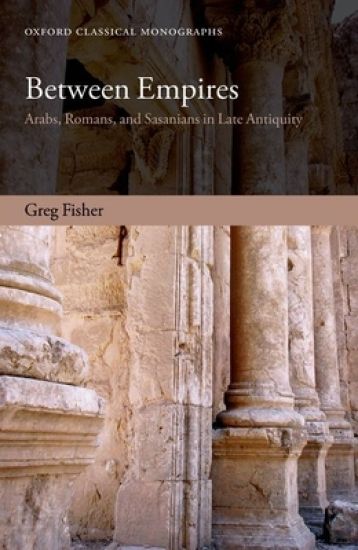
Between Empires

Between Empires

Greg Fisher

Oxford University Press
2013
nidottu
In Between Empires Greg Fisher tackles the problem of pre-Islamic Arab identity by examining the relationship between the Roman Empire and the Empire of Sasanian Iran, and a selection of their Arab allies and neighbours, the Jafnids, Nasrids, and Hujrids. Fisher focuses on the last century before the emergence of Islam and stresses the importance of a Near East dominated by Rome and Iran for the formation of early concepts of Arab identity. In particular, he examines cultural and religious integration, political activities, and the role played by Arabic as factors in this process. He concludes that interface with the Roman Empire, in particular, played a key role in helping to lay the foundation for later concepts of Arab identity, and that the world of Late Antiquity is, as a result, of enduring interest in our understanding of what we now call the Middle East.
Between Empires

Between Empires

Greg Fisher

Oxford University Press
2011
sidottu
In Between Empires Greg Fisher tackles the problem of pre-Islamic Arab identity by examining the relationship between the Roman Empire and the Empire of Sasanian Iran, and a selection of their Arab allies and neighbours, the Jafnids, Nasrids, and Hujrids. Fisher focuses on the last century before the emergence of Islam and stresses the importance of a Near East dominated by Rome and Iran for the formation of early concepts of Arab identity. In particular, he examines cultural and religious integration, political activities, and the role played by Arabic as factors in this process. He concludes that interface with the Roman Empire, in particular, played a key role in helping to lay the foundation for later concepts of Arab identity, and that the world of Late Antiquity is, as a result, of enduring interest in our understanding of what we now call the Middle East.