Kirjojen hintavertailu. Mukana 12 595 353 kirjaa ja 12 kauppaa.

Kirjailija

Greg Halseth

Kirjat ja teokset yhdessä paikassa: 7 kirjaa, julkaisuja vuosilta 1998-2019, suosituimpien joukossa Towards a Political Economy of Resource-dependent Regions. Vertaile teosten hintoja ja tarkista saatavuus suomalaisista kirjakaupoista.

7 kirjaa

Kirjojen julkaisuhaarukka 1998-2019.

Towards a Political Economy of Resource-dependent Regions
This book advances our understanding of resource-dependent regions in developed economies in the 21st Century. It explores how rural and small town places are working to find success in a new economy marked by demographic, economic, social, cultural, political, and environmental change. How are we to understand the changes and transformations working through communities and economies? Where are the trajectories of change leading these resource-dependent places and regions? Drawing upon examples from Canada, USA, UK, Australia, New Zealand, and the Nordic countries, these and other questions are explored and addressed by constructing a critical political economy framework of resource hinterland transition. Towards a Political Economy of Resource Dependent Regions is a key resource for students and researchers in geography, rural and industrial sociology, economics, environmental studies, political science, regional studies, and planning, as well as policy-makers, those in industry and the private sector, and local and regional development practitioners.
Towards a Political Economy of Resource-dependent Regions
This book advances our understanding of resource-dependent regions in developed economies in the 21st Century. It explores how rural and small town places are working to find success in a new economy marked by demographic, economic, social, cultural, political, and environmental change. How are we to understand the changes and transformations working through communities and economies? Where are the trajectories of change leading these resource-dependent places and regions? Drawing upon examples from Canada, USA, UK, Australia, New Zealand, and the Nordic countries, these and other questions are explored and addressed by constructing a critical political economy framework of resource hinterland transition. Towards a Political Economy of Resource Dependent Regions is a key resource for students and researchers in geography, rural and industrial sociology, economics, environmental studies, political science, regional studies, and planning, as well as policy-makers, those in industry and the private sector, and local and regional development practitioners.
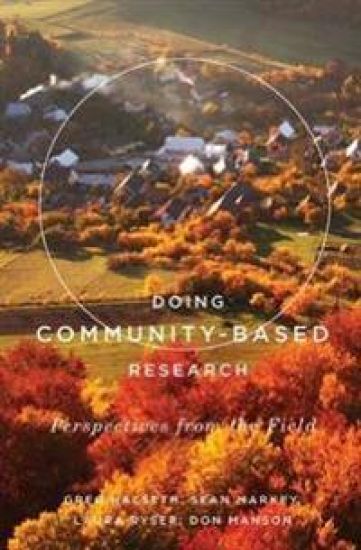
Doing Community-Based Research

Doing Community-Based Research

Greg Halseth; Sean Markey; Laura Ryser; Don Manson

McGill-Queen's University Press
2016
sidottu
Community-based research (CBR) offers useful insights into the challenges associated with conducting research and ensuring that it generates both excellent scholarship and positive impacts in the communities where the research takes place. This depends on two important variables: the capacity of CBR to generate good information, and the extent to which CBR is understood and constructed as a two-way relationship that includes a set of responsibilities for both researchers and communities. Offering expert advice on the crucial relationship between communities and researchers, the authors outline the main stages of the CBR process to guide researchers and practitioners. They discuss the reasons for conducting CBR, provide tips on how to design research, and detail how researchers and communities should get to know one another, as well as how best to work in the field and how to turn fieldwork into research that counts. By focusing on the lessons learned from the use of CBR, the authors make the messages, lessons, and practices applicable to a variety of research settings. Drawing collectively from decades of community-based research experience and including vignettes from researchers from around the world who share their CBR experiences, Doing Community-Based Research is an essential book for scholars, students, practitioners, and the educated public.
Doing Community-Based Research

Doing Community-Based Research

Greg Halseth; Sean Markey; Laura Ryser; Don Manson

McGill-Queen's University Press
2016
nidottu
Community-based research (CBR) offers useful insights into the challenges associated with conducting research and ensuring that it generates both excellent scholarship and positive impacts in the communities where the research takes place. This depends on two important variables: the capacity of CBR to generate good information, and the extent to which CBR is understood and constructed as a two-way relationship that includes a set of responsibilities for both researchers and communities. Offering expert advice on the crucial relationship between communities and researchers, the authors outline the main stages of the CBR process to guide researchers and practitioners. They discuss the reasons for conducting CBR, provide tips on how to design research, and detail how researchers and communities should get to know one another, as well as how best to work in the field and how to turn fieldwork into research that counts. By focusing on the lessons learned from the use of CBR, the authors make the messages, lessons, and practices applicable to a variety of research settings. Drawing collectively from decades of community-based research experience and including vignettes from researchers from around the world who share their CBR experiences, Doing Community-Based Research is an essential book for scholars, students, practitioners, and the educated public.
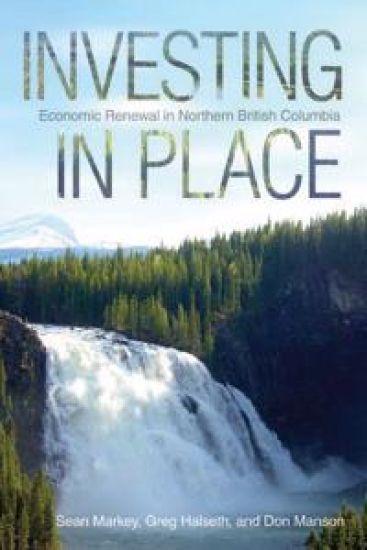
Investing in Place

Investing in Place

Sean Markey; Greg Halseth; Don Manson

University of British Columbia Press
2013
pokkari
The future of northern British Columbia, a vast, resource-rich region of vibrant cultures and diverse communities, could be either driven by a narrow economic agenda or guided by innovative, place-based solutions that seek to build viable communities and resilient local and regional economies.Investing in Place is about creating the foundations for renewing northern British Columbia's rural and small-town economies. Markey, Halseth, and Manson argue that renewal is not about nostalgic reliance on the policies and economic strategies of the past – rather, it is about building a pragmatic and innovative vision for development, one that acknowledges both the opportunities and the challenges posed by resource development and global and technological change.For policy-makers and residents alike the path to renewal lies in place-based development, which consists of people working together at all levels of the community and region to take advantage of local opportunities in a sustainable, responsible way.
Investing in Place

Investing in Place

Sean Markey; Greg Halseth; Don Manson

University of British Columbia Press
2012
sidottu
The future of northern British Columbia, a vast, resource-rich region of vibrant cultures and diverse communities, could be either driven by a narrow economic agenda or guided by innovative, place-based solutions that seek to build viable communities and resilient local and regional economies.Investing in Place is about creating the foundations for renewing northern British Columbia's rural and small-town economies. Markey, Halseth, and Manson argue that renewal is not about nostalgic reliance on the policies and economic strategies of the past – rather, it is about building a pragmatic and innovative vision for development, one that acknowledges both the opportunities and the challenges posed by resource development and global and technological change.For policy-makers and residents alike the path to renewal lies in place-based development, which consists of people working together at all levels of the community and region to take advantage of local opportunities in a sustainable, responsible way.
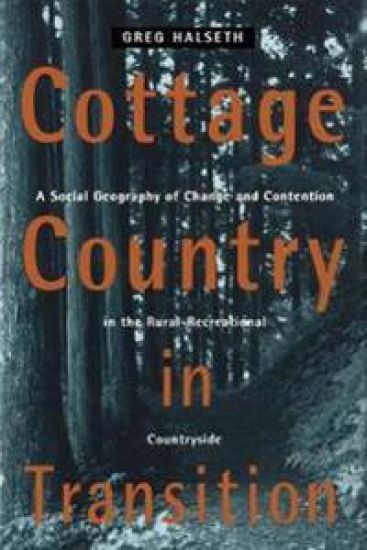
Cottage Country in Transition

Cottage Country in Transition

Greg Halseth

McGill-Queen's University Press
1998
sidottu
Using the Rideau Lakes region of eastern Ontario and the Cultus Lake area of southwestern British Columbia as case studies, Greg Halseth examines the ways in which economic, political, and social power affect community change. He focuses on specific issues, such as residential change, land use planning, property taxation, and social organization. Moving beyond empirical research, Halseth sets the changes occurring in these communities within a broader intellectual context of "community power" and "commodification of the rural idyll." He pays particular attention to how general processes and pressures work themselves out in particular places. Written in an accessible style, Cottage Country in Transition will be of great interest to rural geographers, planners, sociologists, and community researchers as well as to rural residents and cottage owners.