Kirjojen hintavertailu. Mukana 12 595 353 kirjaa ja 12 kauppaa.
Kirjailija
Greg N. Frederickson
Kirjat ja teokset yhdessä paikassa: 6 kirjaa, julkaisuja vuosilta 2002-2020, suosituimpien joukossa Piano-Hinged Dissections. Vertaile teosten hintoja ja tarkista saatavuus suomalaisista kirjakaupoista.
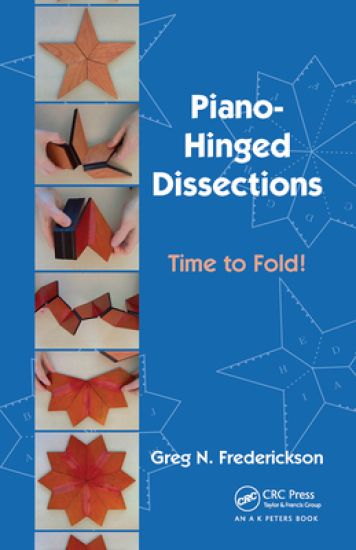
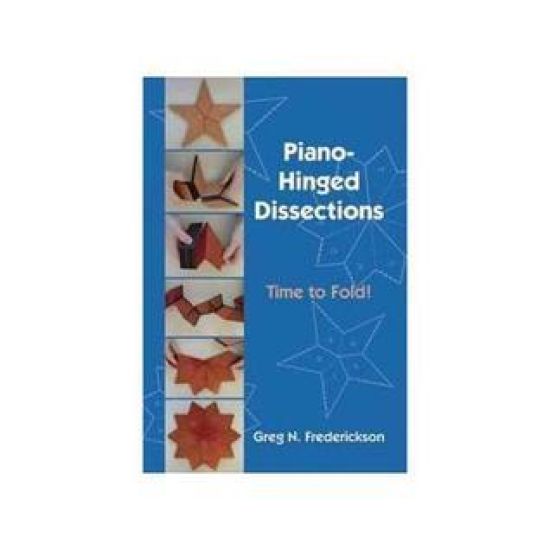
A dissection involves cutting a polygon into pieces in such a way that those pieces form another polygon; for a hinged dissection, the pieces must be attached by hinges. A piano hinge is "a long narrow hinge with a pin running the entire length of its joint." So, unlike regular hinged dissections, which swing or twist (around single point of hinge), piano-hinged dissections fold along an edge. This book discusses the history, methods, and variations of these dissections and is rich with illustrations that clearly depict the cuts of the dissections and three-dimensional simulations of the dissections in the process of being folded. The downloadable resources include video recordings of select dissections being transformed accompanies the book.
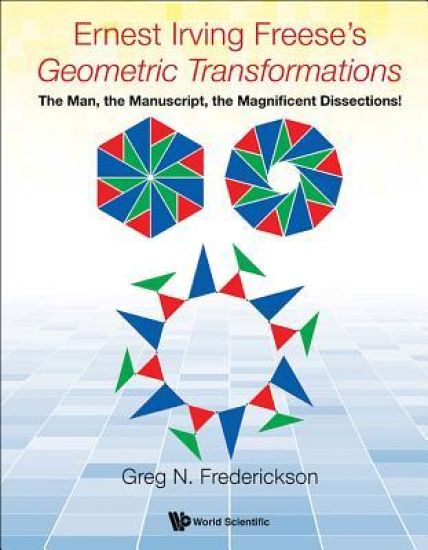
'Everyone interested in geometric dissections, and this kind of puzzles, either mathematically or recreationally will embrace this publication. But also the readers interested in the history and certainly those who became curious about this mystery man and his manuscript, after reading Frederickson’s 2006 book, will be fully satisfied with this respectful reproduction eventually made available for a general public.'European Mathematical Society'Ernest Irving Freese's Geometric Transformations does not just uncover a mathematical gem. It is also a piece of art and a mind-puzzling set of ingenious dissections done by a master of architectural drawings and amateur mathematician. It is a practical book that shows the beauty of dissection and how we can get from a polygon to another by cutting it to pieces and recollect them in some special way. The book is written in a very elegant style, and nicely presented. Freese’s manuscript was photographed and wasn’t altered in any way — this preserved its beauty. Freese’s drawing shows ingenuity and it shows how meticulous he was. For those people who are interested in geometry or in geometric dissections and for those who admire puzzles and recreational mathematics this book is a must.' (See Full Review)MAA ReviewsA geometric dissection is a cutting of a geometric figure (such as a regular polygon, or a star, or a cross) into pieces that we can rearrange to form another geometric figure. The best dissections are beautiful and possess economy (few pieces), symmetry, or hingeability. They are often challenging to discover.Ernest Irving Freese was an architect who lived and worked in Los Angeles until his death in 1957. Shortly before he passed away, he completed a 200-page manuscript on geometric dissection, the first book-length treatment on that subject. Freese included elegant drawings of dissections that were both original and clever. After his death the manuscript lay forgotten in his former house until Greg Frederickson set in motion its recovery in 2003. What a treat that it was rescued!Frederickson's book sketches a history of geometric dissections and a biography of Freese, followed by a refurbished copy of Freese's manuscript interleaved with a commentary that highlights Freese's major contributions as well as singular improvements made by Frederickson and others after Freese.This book introduces Freese and his creations to math puzzle enthusiasts, by way of his engaging manuscript, his wild adventures, and his lovely dissections. Frederickson also includes remarkable designs that improve on Freese's work, and packs this book with nifty illustrations and tidbits that may well leave you speechless!
'Everyone interested in geometric dissections, and this kind of puzzles, either mathematically or recreationally will embrace this publication. But also the readers interested in the history and certainly those who became curious about this mystery man and his manuscript, after reading Frederickson’s 2006 book, will be fully satisfied with this respectful reproduction eventually made available for a general public.'European Mathematical Society'Ernest Irving Freese's Geometric Transformations does not just uncover a mathematical gem. It is also a piece of art and a mind-puzzling set of ingenious dissections done by a master of architectural drawings and amateur mathematician. It is a practical book that shows the beauty of dissection and how we can get from a polygon to another by cutting it to pieces and recollect them in some special way. The book is written in a very elegant style, and nicely presented. Freese’s manuscript was photographed and wasn’t altered in any way — this preserved its beauty. Freese’s drawing shows ingenuity and it shows how meticulous he was. For those people who are interested in geometry or in geometric dissections and for those who admire puzzles and recreational mathematics this book is a must.' (See Full Review)MAA ReviewsA geometric dissection is a cutting of a geometric figure (such as a regular polygon, or a star, or a cross) into pieces that we can rearrange to form another geometric figure. The best dissections are beautiful and possess economy (few pieces), symmetry, or hingeability. They are often challenging to discover.Ernest Irving Freese was an architect who lived and worked in Los Angeles until his death in 1957. Shortly before he passed away, he completed a 200-page manuscript on geometric dissection, the first book-length treatment on that subject. Freese included elegant drawings of dissections that were both original and clever. After his death the manuscript lay forgotten in his former house until Greg Frederickson set in motion its recovery in 2003. What a treat that it was rescued!Frederickson's book sketches a history of geometric dissections and a biography of Freese, followed by a refurbished copy of Freese's manuscript interleaved with a commentary that highlights Freese's major contributions as well as singular improvements made by Frederickson and others after Freese.This book introduces Freese and his creations to math puzzle enthusiasts, by way of his engaging manuscript, his wild adventures, and his lovely dissections. Frederickson also includes remarkable designs that improve on Freese's work, and packs this book with nifty illustrations and tidbits that may well leave you speechless!
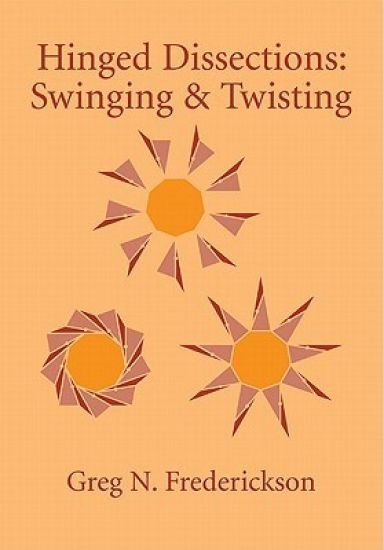
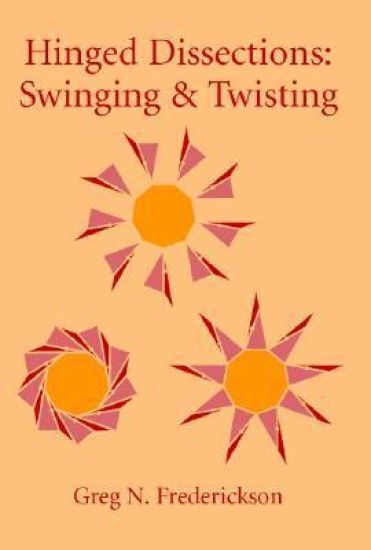
Using this book, you can explore ways to create hinged collections of pieces that swing together to form a figure. Swing them another way and they form another figure! The profuse illustrations and lively text will show you how to find a wealth of hinged dissections for all kinds of polygons, stars and crosses, curved and even three-dimensional figures. For an added challenge, you can try using different kinds of hinges for twisting and flipping pieces. The author includes careful explanation of ingenious techniques, as well as puzzles and solutions for readers of all mathematical levels. If you remember any secondary school geometry, you are already on your way. These novel and original dissections will be a gold mine for math puzzle enthusiasts, for math educators in search of enrichment topics, and for anyone who loves to see beautiful objects in motion.
A dissection involves cutting a polygon into pieces in such a way that those pieces form another polygon; for a hinged dissection, the pieces must be attached by hinges. A piano hinge is "a long narrow hinge with a pin running the entire length of its joint." So, unlike regular hinged dissections, which swing or twist (around single point of hinge), piano-hinged dissections fold along an edge. This book discusses the history, methods, and variations of these dissections and is rich with illustrations that clearly depict the cuts of the dissections and three-dimensional simulations of the dissections in the process of being folded. The downloadable resources include video recordings of select dissections being transformed accompanies the book.