Kirjojen hintavertailu. Mukana 12 595 353 kirjaa ja 12 kauppaa.
Kirjailija
Greg Smith
Kirjat ja teokset yhdessä paikassa: 44 kirjaa, julkaisuja vuosilta 2003-2026, suosituimpien joukossa Stop Wishing, Start Living: Stop Wishing for the Life You Don't Have and Start Living the Life You Do. Vertaile teosten hintoja ja tarkista saatavuus suomalaisista kirjakaupoista.
"This series opener is a solid alternative for young readers who may be intrigued by popular zombie comics written for adults and might not be ready for Walking Dead or Jonathan Maberry's "Rot & Ruin" books." - School Library Journal"For teens who like to watch zombie movies and The Walking Dead." - VOYA
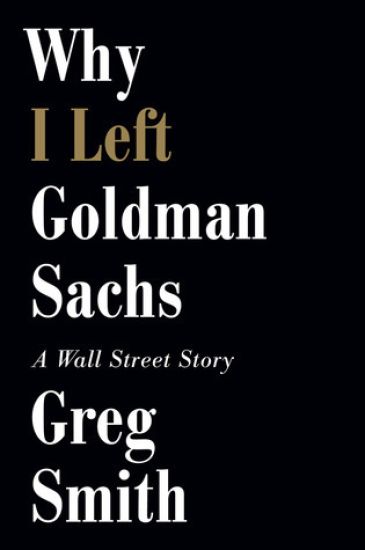
An insightful and devastating account of how Wall Street lost its way from an insider who experienced the culture of Goldman Sachs first-hand. On March 14, 2012, more than three million people read Greg Smith's bombshell Op-Ed in the New York Times titled "Why I Am Leaving Goldman Sachs." The column immediately went viral, became a worldwide trending topic on Twitter, and drew passionate responses from former Fed chairman Paul Volcker, legendary General Electric CEO Jack Welch, and New York City mayor Mike Bloomberg. Mostly, though, it hit a nerve among the general public who question the role of Wall Street in society -- and the callous "take-the-money-and-run" mentality that brought the world economy to its knees a few short years ago. Smith now picks up where his Op-Ed left off. His story begins in the summer of 2000, when an idealistic 21-year-old arrives as an intern at Goldman Sachs and learns about the firm's Business Principle #1: Our clients' interests always come first. This remains Smith's mantra as he rises from intern to analyst to sales trader, with clients controlling assets of more than a trillion dollars. From the shenanigans of his summer internship during the technology bubble to Las Vegas hot tubs and the excesses of the real estate boom; from the career lifeline he received from an NFL Hall of Famer during the bear market to the day Warren Buffett came to save Goldman Sachs from extinction-Smith will take the reader on his personal journey through the firm, and bring us inside the world's most powerful bank. Smith describes in page-turning detail how the most storied investment bank on Wall Street went from taking iconic companies like Ford, Sears, and Microsoft public to becoming a "vampire squid" that referred to its clients as "muppets" and paid the government a record half-billion dollars to settle SEC charges. He shows the evolution of Wall Street into an industry riddled with conflicts of interest and a profit-at-all-costs mentality: a perfectly rigged game at the expense of the economy and the society at large. After conversations with nine Goldman Sachs partners over a twelve-month period proved fruitless, Smith came to believe that the only way the system would ever change was for an insider to finally speak out publicly. He walked away from his career and took matters into his own hands. This is his story.
An exciting epic action-adventure awaits fans of international crime stories that starch into a contemporary semi-military thriller fraught with wild car chases, gun battles, drug lords, and murder.A new adventure inviting you to join an U.S Marine as he discovers an insidious criminal industry of pandemic proportions that exists worldwide, even right here in his own backyard - activity that needs to be tackled by no less than the best fighters. THE FIGHT IS REAL THE TASK OF TAKING IT ON STAGGERINGWhen those involved come from every walk of life-from average suburban couples, cops, doctors, judges, even politicians of the highest level-can they ever be stopped?If you love fast-moving adventures with unexpected twists & turns in forms of page-turning thrillers like the Bourne series, the Bosch series, by the likes of Patterson and Connelly-then this new epic series is for you.Let the fight begin.
Social interaction lies at the heart of our everyday experience. We make our way down the street and avoid crashing into others, take our place in the supermarket queue, take care in the way we talk about others in conversation, acknowledge the social status of people we meet, and enjoy leisurely pursuits in the company of friends and like-minded others. All these things are fundamental parts of human sociality that can be discovered and understood through ‘sociologies of interaction’. This book provides an invaluable introduction to the theoretical foundations and practical applications of interactionist approaches to everyday life. Beginning with an overview of three core traditions - symbolic interactionism, ethnomethodology and conversation analysis, along with Goffman’s work on the interaction order - the text moves on to examine in detail topics such as leisure, work, health and illness, deviance, class, status and power, education, ethnic relations and gender. Highlighting a range of empirical studies, the book shows how sociologies of interaction have the capacity to reframe and make us rethink conventional social science topics. This illuminating book will be of interest to undergraduates across the social sciences, particularly in sociology, social psychology and communication studies, as well as those who have an interest in understanding the interactional underpinnings of everyday life.
Social interaction lies at the heart of our everyday experience. We make our way down the street and avoid crashing into others, take our place in the supermarket queue, take care in the way we talk about others in conversation, acknowledge the social status of people we meet, and enjoy leisurely pursuits in the company of friends and like-minded others. All these things are fundamental parts of human sociality that can be discovered and understood through ‘sociologies of interaction’. This book provides an invaluable introduction to the theoretical foundations and practical applications of interactionist approaches to everyday life. Beginning with an overview of three core traditions - symbolic interactionism, ethnomethodology and conversation analysis, along with Goffman’s work on the interaction order - the text moves on to examine in detail topics such as leisure, work, health and illness, deviance, class, status and power, education, ethnic relations and gender. Highlighting a range of empirical studies, the book shows how sociologies of interaction have the capacity to reframe and make us rethink conventional social science topics. This illuminating book will be of interest to undergraduates across the social sciences, particularly in sociology, social psychology and communication studies, as well as those who have an interest in understanding the interactional underpinnings of everyday life.
An insightful and devastating account of how Wall Street lost its way from an insider who experienced the culture of Goldman Sachs first-hand. On March 14, 2012, more than three million people read Greg Smith's bombshell Op-Ed in the New York Times titled "Why I Am Leaving Goldman Sachs." The column immediately went viral, became a worldwide trending topic on Twitter, and drew passionate responses from former Fed chairman Paul Volcker, legendary General Electric CEO Jack Welch, and New York City mayor Mike Bloomberg. Mostly, though, it hit a nerve among the general public who question the role of Wall Street in society -- and the callous "take-the-money-and-run" mentality that brought the world economy to its knees a few short years ago. Smith now picks up where his Op-Ed left off. His story begins in the summer of 2000, when an idealistic 21-year-old arrives as an intern at Goldman Sachs and learns about the firm's Business Principle #1: Our clients' interests always come first. This remains Smith's mantra as he rises from intern to analyst to sales trader, with clients controlling assets of more than a trillion dollars. From the shenanigans of his summer internship during the technology bubble to Las Vegas hot tubs and the excesses of the real estate boom; from the career lifeline he received from an NFL Hall of Famer during the bear market to the day Warren Buffett came to save Goldman Sachs from extinction-Smith will take the reader on his personal journey through the firm, and bring us inside the world's most powerful bank. Smith describes in page-turning detail how the most storied investment bank on Wall Street went from taking iconic companies like Ford, Sears, and Microsoft public to becoming a "vampire squid" that referred to its clients as "muppets" and paid the government a record half-billion dollars to settle SEC charges. He shows the evolution of Wall Street into an industry riddled with conflicts of interest and a profit-at-all-costs mentality: a perfectly rigged game at the expense of the economy and the society at large. After conversations with nine Goldman Sachs partners over a twelve-month period proved fruitless, Smith came to believe that the only way the system would ever change was for an insider to finally speak out publicly. He walked away from his career and took matters into his own hands. This is his story.
On March 14, 2012, more than three million people read Greg Smith's bombshell Op-Ed in the New York Times titled "Why I Am Leaving Goldman Sachs." The column immediately went viral, became a worldwide trending topic on Twitter, and drew passionate responses from former Fed chairman Paul Volcker, legendary General Electric CEO Jack Welch, and New York City mayor Mike Bloomberg. Mostly, though, it hit a nerve among the general public who question the role of Wall Street in society -- and the callous "take-the-money-and-run" mentality that brought the world economy to its knees a few short years ago. Smith now picks up where his Op-Ed left off. His story begins in the summer of 2000, when an idealistic 21-year-old arrives as an intern at Goldman Sachs and learns about the firm's Business Principle #1: Our clients' interests always come first. This remains Smith's mantra as he rises from intern to analyst to sales trader, with clients controlling assets of more than a trillion dollars. From the shenanigans of his summer internship during the technology bubble to Las Vegas hot tubs and the excesses of the real estate boom; from the career lifeline he received from an NFL Hall of Famer during the bear market to the day Warren Buffett came to save Goldman Sachs from extinction-Smith will take the reader on his personal journey through the firm, and bring us inside the world's most powerful bank. Smith describes in page-turning detail how the most storied investment bank on Wall Street went from taking iconic companies like Ford, Sears, and Microsoft public to becoming a "vampire squid" that referred to its clients as "muppets" and paid the government a record half-billion dollars to settle SEC charges. He shows the evolution of Wall Street into an industry riddled with conflicts of interest and a profit-at-all-costs mentality: a perfectly rigged game at the expense of the economy and the society at large. After conversations with nine Goldman Sachs partners over a twelve-month period proved fruitless, Smith came to believe that the only way the system would ever change was for an insider to finally speak out publicly. He walked away from his career and took matters into his own hands. This is his story.
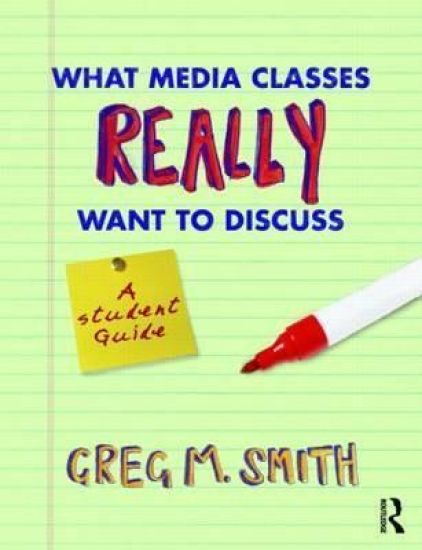
You probably already have a clear idea of what a "discussion guide for students" is: a series of not-very-interesting questions at the end of a textbook chapter. Instead of triggering thought-provoking class discussion, all too often these guides are time-consuming and ineffective.This is not that kind of discussion guide.What Media Classes Really Want To Discuss focuses on topics that introductory textbooks generally ignore, although they are prominent in students’ minds. Using approachable prose, this book will give students a more precise critical language to discuss “common sense” phenomena about media.The book acknowledges that students begin introductory film and television courses thinking they already know a great deal about the subject. What Media Classes Really Want To Discuss provides students with a solid starting point for discussing their assumptions critically and encourages the reader to argue with the book, furthering the 'discussion' on media in everyday life and in the classroom.
You probably already have a clear idea of what a "discussion guide for students" is: a series of not-very-interesting questions at the end of a textbook chapter. Instead of triggering thought-provoking class discussion, all too often these guides are time-consuming and ineffective.This is not that kind of discussion guide.What Media Classes Really Want To Discuss focuses on topics that introductory textbooks generally ignore, although they are prominent in students’ minds. Using approachable prose, this book will give students a more precise critical language to discuss “common sense” phenomena about media.The book acknowledges that students begin introductory film and television courses thinking they already know a great deal about the subject. What Media Classes Really Want To Discuss provides students with a solid starting point for discussing their assumptions critically and encourages the reader to argue with the book, furthering the 'discussion' on media in everyday life and in the classroom.