Kirjojen hintavertailu. Mukana 12 308 444 kirjaa ja 12 kauppaa.

Kirjailija

Gregg D. Caruso

Kirjat ja teokset yhdessä paikassa: 10 kirjaa, julkaisuja vuosilta 2013-2026, suosituimpien joukossa How to Live Well without Free Will. Vertaile teosten hintoja ja tarkista saatavuus suomalaisista kirjakaupoista.

10 kirjaa

Kirjojen julkaisuhaarukka 2013-2026.

How to Live Well without Free Will

How to Live Well without Free Will

Gregg D. Caruso

Cambridge University Press
2026
sidottu
Most people not only believe in free will but assume that if we didn't have it society would fall apart. Gregg Caruso challenges this assumption and argues that belief in free will, rather than being a good thing, actually has a dark side and we would be better off without it. His book develops an ethically defensible and practically workable account of how we can live well—indeed, live better—without belief in free will. The book discusses the moral psychology of blame and anger, the intricacies of our moral responsibility practices, and how we can preserve love, morality, creativity, friendship, and criminal and social justice without free will. He also develops an account of virtue ethics and argues not only that it is consistent with free will skepticism, but that adopting the skeptical perspective can better help us achieve the virtues most important to human flourishing and wellbeing.
How to Live Well without Free Will

How to Live Well without Free Will

Gregg D. Caruso

Cambridge University Press
2026
nidottu
Most people not only believe in free will but assume that if we didn't have it society would fall apart. Gregg Caruso challenges this assumption and argues that belief in free will, rather than being a good thing, actually has a dark side and we would be better off without it. His book develops an ethically defensible and practically workable account of how we can live well—indeed, live better—without belief in free will. The book discusses the moral psychology of blame and anger, the intricacies of our moral responsibility practices, and how we can preserve love, morality, creativity, friendship, and criminal and social justice without free will. He also develops an account of virtue ethics and argues not only that it is consistent with free will skepticism, but that adopting the skeptical perspective can better help us achieve the virtues most important to human flourishing and wellbeing.
Neurolaw

Neurolaw

Gregg D. Caruso

Cambridge University Press
2024
sidottu
Neurolaw is an area of interdisciplinary research on the meaning and implications of neuroscience for the law and legal practices. This Element addresses the potential contributions of neuroscience, and the brain sciences more generally, to criminal justice decision-making and policy. It distinguishes between three different areas and domains of investigation in neurolaw: assessment, intervention, and revision. The first concerns brain-based assessments, which may be used for predicting future violence, lie detection, judging legal insanity, and the like. The second concerns potential treatments and other interventions that aim at rehabilitating criminals and/or preventing crime before it occurs. The third investigates the ways that neuroscience may impact the law by changing or revising commonsense views about human nature and the causes of human action.
Neurolaw

Neurolaw

Gregg D. Caruso

Cambridge University Press
2024
pokkari
Neurolaw is an area of interdisciplinary research on the meaning and implications of neuroscience for the law and legal practices. This Element addresses the potential contributions of neuroscience, and the brain sciences more generally, to criminal justice decision-making and policy. It distinguishes between three different areas and domains of investigation in neurolaw: assessment, intervention, and revision. The first concerns brain-based assessments, which may be used for predicting future violence, lie detection, judging legal insanity, and the like. The second concerns potential treatments and other interventions that aim at rehabilitating criminals and/or preventing crime before it occurs. The third investigates the ways that neuroscience may impact the law by changing or revising commonsense views about human nature and the causes of human action.
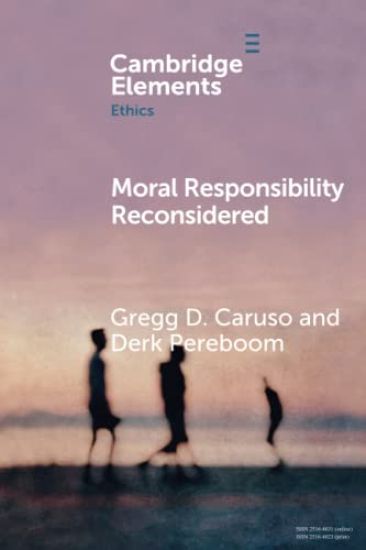
Moral Responsibility Reconsidered

Moral Responsibility Reconsidered

Gregg D. Caruso; Derk Pereboom

Cambridge University Press
2022
pokkari
This Element examines the concept of moral responsibility as it is used in contemporary philosophical debates and explores the justifiability of the moral practices associated with it, including moral praise/blame, retributive punishment, and the reactive attitudes of resentment and indignation. After identifying and discussing several different varieties of responsibility-including causal responsibility, take-charge responsibility, role responsibility, liability responsibility, and the kinds of responsibility associated with attributability, answerability, and accountability-it distinguishes between basic and non-basic desert conceptions of moral responsibility and considers a number of skeptical arguments against each. It then outlines an alternative forward-looking account of moral responsibility grounded in non-desert-invoking desiderata such as protection, reconciliation, and moral formation. It concludes by addressing concerns about the practical implications of skepticism about desert-based moral responsibility and explains how optimistic skeptics can preserve most of what we care about when it comes to our interpersonal relationships, morality, and meaning in life.
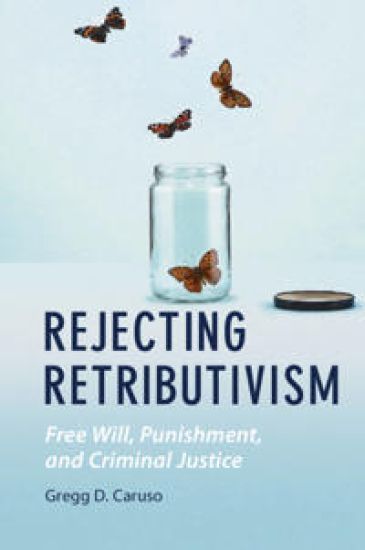
Rejecting Retributivism

Rejecting Retributivism

Gregg D. Caruso

Cambridge University Press
2021
pokkari
Within the criminal justice system, one of the most prominent justifications for legal punishment is retributivism. The retributive justification of legal punishment maintains that wrongdoers are morally responsible for their actions and deserve to be punished in proportion to their wrongdoing. This book argues against retributivism and develops a viable alternative that is both ethically defensible and practical. Introducing six distinct reasons for rejecting retributivism, Gregg D. Caruso contends that it is unclear that agents possess the kind of free will and moral responsibility needed to justify this view of punishment. While a number of alternatives to retributivism exist - including consequentialist deterrence, educational, and communicative theories - they have ethical problems of their own. Moving beyond existing theories, Caruso presents a new non-retributive approach called the public health-quarantine model. In stark contrast to retributivism, the public health-quarantine model provides a more human, holistic, and effective approach to dealing with criminal behavior.
Rejecting Retributivism

Rejecting Retributivism

Gregg D. Caruso

Cambridge University Press
2021
sidottu
Within the criminal justice system, one of the most prominent justifications for legal punishment is retributivism. The retributive justification of legal punishment maintains that wrongdoers are morally responsible for their actions and deserve to be punished in proportion to their wrongdoing. This book argues against retributivism and develops a viable alternative that is both ethically defensible and practical. Introducing six distinct reasons for rejecting retributivism, Gregg D. Caruso contends that it is unclear that agents possess the kind of free will and moral responsibility needed to justify this view of punishment. While a number of alternatives to retributivism exist - including consequentialist deterrence, educational, and communicative theories - they have ethical problems of their own. Moving beyond existing theories, Caruso presents a new non-retributive approach called the public health-quarantine model. In stark contrast to retributivism, the public health-quarantine model provides a more human, holistic, and effective approach to dealing with criminal behavior.
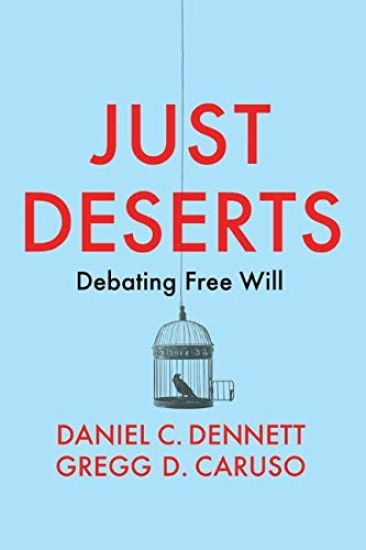
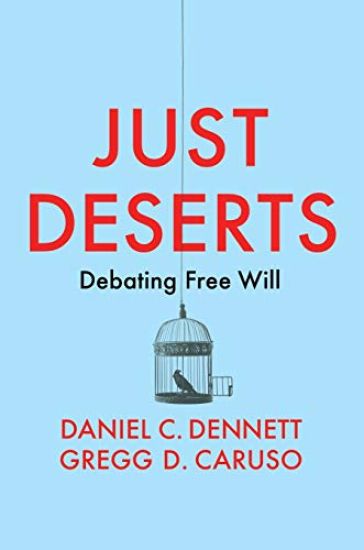
Just Deserts

Just Deserts

Daniel C. Dennett; Gregg D. Caruso

Polity Press
2021
nidottu
The concept of free will is profoundly important to our self-understanding, our interpersonal relationships, and our moral and legal practices. If it turns out that no one is ever free and morally responsible, what would that mean for society, morality, meaning, and the law? Just Deserts brings together two philosophers – Daniel C. Dennett and Gregg D. Caruso – to debate their respective views on free will, moral responsibility, and legal punishment. In three extended conversations, Dennett and Caruso present their arguments for and against the existence of free will and debate their implications. Dennett argues that the kind of free will required for moral responsibility is compatible with determinism – for him, self-control is key; we are not responsible for becoming responsible, but are responsible for staying responsible, for keeping would-be puppeteers at bay. Caruso takes the opposite view, arguing that who we are and what we do is ultimately the result of factors beyond our control, and because of this we are never morally responsible for our actions in the sense that would make us truly deserving of blame and praise, punishment and reward. Just Deserts introduces the concepts central to the debate about free will and moral responsibility by way of an entertaining, rigorous, and sometimes heated philosophical dialogue between two leading thinkers.
Just Deserts

Just Deserts

Daniel C. Dennett; Gregg D. Caruso

Polity Press
2021
sidottu
The concept of free will is profoundly important to our self-understanding, our interpersonal relationships, and our moral and legal practices. If it turns out that no one is ever free and morally responsible, what would that mean for society, morality, meaning, and the law? Just Deserts brings together two philosophers – Daniel C. Dennett and Gregg D. Caruso – to debate their respective views on free will, moral responsibility, and legal punishment. In three extended conversations, Dennett and Caruso present their arguments for and against the existence of free will and debate their implications. Dennett argues that the kind of free will required for moral responsibility is compatible with determinism – for him, self-control is key; we are not responsible for becoming responsible, but are responsible for staying responsible, for keeping would-be puppeteers at bay. Caruso takes the opposite view, arguing that who we are and what we do is ultimately the result of factors beyond our control, and because of this we are never morally responsible for our actions in the sense that would make us truly deserving of blame and praise, punishment and reward. Just Deserts introduces the concepts central to the debate about free will and moral responsibility by way of an entertaining, rigorous, and sometimes heated philosophical dialogue between two leading thinkers.
Free Will and Consciousness

Free Will and Consciousness

Gregg D. Caruso

Lexington Books
2013
nidottu
In recent decades, with advances in the behavioral, cognitive, and neurosciences, the idea that patterns of human behavior may ultimately be due to factors beyond our conscious control has increasingly gained traction and renewed interest in the age-old problem of free will. In this book, Gregg D. Caruso examines both the traditional philosophical problems long associated with the question of free will, such as the relationship between determinism and free will, as well as recent experimental and theoretical work directly related to consciousness and human agency. He argues that our best scientific theories indeed have the consequence that factors beyond our control produce all of the actions we perform and that because of this we do not possess the kind of free will required for genuine or ultimate responsibility. It is further argued that the strong and pervasive belief in free will, which the author considers an illusion, can be accounted for through a careful analysis of our phenomenology and a proper theoretical understanding of consciousness. Indeed, the primary goal of this book is to argue that our subjective feeling of freedom, as reflected in the first-person phenomenology of agentive experience, is an illusion created by certain aspects of our consciousness.