Kirjojen hintavertailu. Mukana 12 390 323 kirjaa ja 12 kauppaa.

Kirjailija

Gregory Bateson

Kirjat ja teokset yhdessä paikassa: 12 kirjaa, julkaisuja vuosilta 1951-2023, suosituimpien joukossa Naven. Vertaile teosten hintoja ja tarkista saatavuus suomalaisista kirjakaupoista.

12 kirjaa

Kirjojen julkaisuhaarukka 1951-2023.

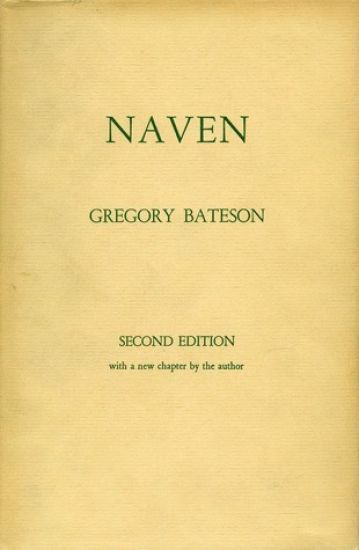
Naven

Naven

Gregory Bateson

Stanford University Press
1958
sidottu
"Naven" is the name of a peculiar ritual practiced by Iatmul, a head-hunting tribe of New Guinea.Th e ceremony is performed to congratulate members of the tribe upon the completion of notable accomplishments, among which homicide ranks highest. Ordinarily this tribe insists upon an extreme contrast between the sexes, but in the "naven" ceremony, tranvestitism and ritual homosexuality are represented. The "naven" serves in this book as a motive around which the author has constructed one of the most influential works of field anthropology ever written.
Naven

Naven

Gregory Bateson

Stanford University Press
1958
pokkari
"Naven" is the name of a peculiar ritual practiced by Iatmul, a head-hunting tribe of New Guinea.Th e ceremony is performed to congratulate members of the tribe upon the completion of notable accomplishments, among which homicide ranks highest. Ordinarily this tribe insists upon an extreme contrast between the sexes, but in the "naven" ceremony, tranvestitism and ritual homosexuality are represented. The "naven" serves in this book as a motive around which the author has constructed one of the most influential works of field anthropology ever written.
A Sacred Unity

A Sacred Unity

Gregory Bateson

TRIARCHY PRESS
2023
nidottu
Gregory Bateson died in 1980, but his work grows more and more relevant each year. In his wide-ranging, penetrating thought he illuminated many dimensions of human interaction and of our connection to the wider biological world. One of the questions that runs through this book is “how to describe a living system without killing it?” This starts early with Bateson’s anthropological work on culture, and runs through into ecology, identity, change, evolution and learning. How to talk about these things – and organisms that are experiencing them – without resorting to typologies? The sacred and its relationship to a description of ecology is foremost. As are the puzzles of being an individual in culture in a whole vast collection of biological relationships and cultural idea-relationships – and how to bring all of those into the field of ecology. The answer to the question “what is the world?” is “it’s what I perceive it to be.” And the question of what I perceive is only going to begin to have some looseness in it, when the question is asked: “Are you perceiving the world, or are you perceiving your perception?” Perhaps this question is the beginning of the possibility of loosening the matrix. When Bateson talks about coevolution – the way that the grass changes when the horse changes, and the horse changes as the grass changes, along with multiple other organisms – there is change taking place so that they can stay in relationship. But in order to continue the relationships all the organisms have to change. In order to change, they have to be able to have a perception shift. And yet, it should be impossible. It should be that the organisms can only do what the organisms do. And a horse is a horse, and the grass is the grass. But life shows us again and again, things change. In fact, that is the basis of continuing to be alive in an ecology; to change. Continuing requires discontinuing. Many of the articles in this book are about ‘wiping your glosses’ – the glosses that accumulate in psychiatry, anthropology, ecology, education, and getting to see a little bit more clearly, which always means seeing relationship and always means seeing parts and wholes encompassed within bigger wholes. As he develops his theory of evolution he says it’s not the individual organism or species that evolves. It’s the organism-plus-the-environment that evolves. This book is a forest of ideas explored though many careful visits. Order, change, learning, health, harm, perception … what is it to be alive? Each chapter is full of the rigor of someone who does not want to underestimate the lifeforms in view and knows that many more life-processes are present, but not (yet) perceivable. There is room in these pages to allow the overlaps and the understories to tangle and seep between the chapters and let them describe each other. There is not an agreed upon way to understand this work, each reader will find their own way through within their own experiences. And the next time you read it, you will find that either the chapters or you have changed again…
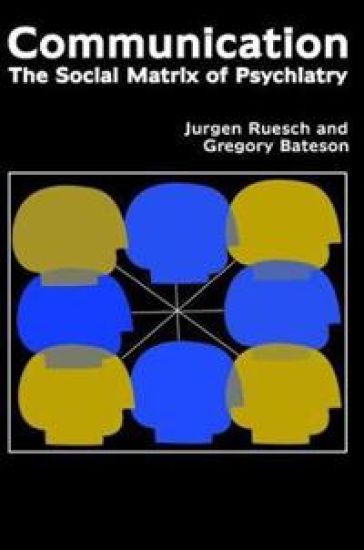
Communication

Communication

Jurgen Ruesch; Gregory Bateson; Eve C. Pinsker; Gene Combs

Routledge
2017
sidottu
The integration of psychiatry into the mainstream of American society following World War II involved rethinking and revision of psychiatric theories. While in the past, theories of personality had been concerned with the single individual, this pioneering volume argues that such theories are of little use. Instead, the individual must be seen in the context of social situations in which rapid advances in communication technology have brought people closer together, changing their behavior and self-expression. Ruesch and Bateson show that following World War II mass communication and culture have become so pervasive that no individual or group can escape their influences for long. Therefore, they argue that processes of psychoanalysis must now consider the individual within the framework of a social situation. Focusing upon the larger societal systems, of which both psychiatrist and patient are an integral part, they develop concepts that encompass large-scale events as well as happenings of an individual nature. They have outlined this relationship in a unified theory of communication, which encompasses events linking individual to individual, individual to the group, and ultimately, to events of worldwide concern. The term "social matrix," then, refers to a larger scientific system, of which both the psychiatrist and the patient are integral parts. Jurgen Ruesch was professor of psychiatry at the University of California School of Medicine and director of the section of Social Psychiatry at the Langley Porter Neuropsychatric Institute in San Francisco. Gregory Bateson taught at Columbia University, the New School for Social Research, Harvard University, Stanford University, and the University of California, Santa Cruz. Among his books are "Naven", "Steps to an Ecology of Mind, Mind and Nature: A Necessary Unity", "Angels Fear: Towards an Epistemology of the Sacred", and "A Sacred Unity: Further Steps to an Ecology of Mind".
Communication

Communication

Jurgen Ruesch; Gregory Bateson; Eve C. Pinsker; Gene Combs

AldineTransaction
2006
nidottu
The integration of psychiatry into the mainstream of American society following World War II involved rethinking and revision of psychiatric theories. While in the past, theories of personality had been concerned with the single individual, this pioneering volume argues that such theories are of little use. Instead, the individual must be seen in the context of social situations in which rapid advances in communication technology have brought people closer together, changing their behavior and self-expression. Ruesch and Bateson show that following World War II mass communication and culture have become so pervasive that no individual or group can escape their influences for long. Therefore, they argue that processes of psychoanalysis must now consider the individual within the framework of a social situation. Focusing upon the larger societal systems, of which both psychiatrist and patient are an integral part, they develop concepts that encompass large-scale events as well as happenings of an individual nature. They have outlined this relationship in a unified theory of communication, which encompasses events linking individual to individual, individual to the group, and ultimately, to events of worldwide concern. The term "social matrix," then, refers to a larger scientific system, of which both the psychiatrist and the patient are integral parts. Jurgen Ruesch was professor of psychiatry at the University of California School of Medicine and director of the section of Social Psychiatry at the Langley Porter Neuropsychatric Institute in San Francisco. Gregory Bateson taught at Columbia University, the New School for Social Research, Harvard University, Stanford University, and the University of California, Santa Cruz. Among his books are "Naven", "Steps to an Ecology of Mind, Mind and Nature: A Necessary Unity", "Angels Fear: Towards an Epistemology of the Sacred", and "A Sacred Unity: Further Steps to an Ecology of Mind".
Sacred Unity

Sacred Unity

Gregory Bateson; Rodney E. Donaldson

Hampton Pr
2004
sidottu
This collection of Bateson's writings, being re-issued by Hampton Press, further the body of work that appeared in his previous publications. From mind/body relations to family relations, from the nature of art and poetry to the role of metaphor in the biological world, the the nature of change and stability to the nature of the sacred, Bateson explores the natural history of the relationship between explicit, implicit and embodied ideas in the world of living things.
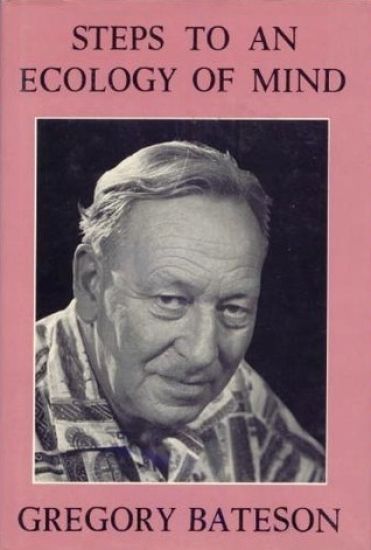
Steps to an Ecology of Mind

Steps to an Ecology of Mind

Gregory Bateson

University of Chicago Press
2000
nidottu
Gregory Bateson was a philosopher, anthropologist, photographer, naturalist, and poet, as well as the husband and collaborator of Margaret Mead. With a new foreword by his daughter Mary Katherine Bateson, this classic anthology of his major work will continue to delight and inform generations of readers. "This collection amounts to a retrospective exhibition of a working life. . . . Bateson has come to this position during a career that carried him not only into anthropology, for which he was first trained, but into psychiatry, genetics, and communication theory. . . . He . . . examines the nature of the mind, seeing it not as a nebulous something, somehow lodged somewhere in the body of each man, but as a network of interactions relating the individual with his society and his species and with the universe at large."—D. W. Harding, New York Review of Books "[Bateson's] view of the world, of science, of culture, and of man is vast and challenging. His efforts at synthesis are tantalizingly and cryptically suggestive. . . .This is a book we should all read and ponder."—Roger Keesing, American Anthropologist
Communication, the Social Matrix of Psychiatry: Human Psychology, Behavior and Culture in the Modern Society
Understanding how communication works in society is a crucial part of social psychology; this groundbreaking work by Ruesch and Bateson explains themes vital to understanding the subject.Each chapter discusses a new facet of communication; the contexts of promoting harmony and cultural mores between humans, how faults in communication act to announce mental illness, how beliefs and comprehension are solidified. The recurring theme - that communication is a complex interplay of factors, a matrix by which the psychologist can know society - leads on to theoretical discussions of cybernetics: how humans, and the regulated systems and structures they have created, may be understood.Where later studies of communication focus solely on messages and their behavioral ramifications, Ruesch and Bateson's 1951 study delved farther; into the very edifices of modern society. Though their methodology fell out of favor in communicology, this text stands as a proponent of concepts that remain both interesting and relevant. Philosophical concepts of cause-and-effect, of feedback between elements of a communicative system, are posited as crucial to understanding intricacies of modern life. For readers seeking a fresh, embracing introduction to the study of communication, this work brings both essential knowledge and a fascinating history of the discipline.