
Kirjailija
Gregory Conti
Kirjat ja teokset yhdessä paikassa: 12 kirjaa, julkaisuja vuosilta 2017-2026, suosituimpien joukossa When the World Sleeps. Vertaile teosten hintoja ja tarkista saatavuus suomalaisista kirjakaupoista.
12 kirjaa
Kirjojen julkaisuhaarukka 2017-2026.

The first woman to serve as United Nations Special Rapporteur on the occupied Palestinian territories conveys the soul of a people through ten unforgettable stories of resilience and humanity. The spirit of a place lies in the people who inhabit it, in the stories that intertwine through its streets. And this is especially true of a land like Palestine, the witness to defining historical transitions and stage to one of the most painful chapters in contemporary history. With a voice both authoritative and deeply human, Francesca Albanese, who had been living in Palestine for many years while following the legal battles of numerous Palestinian families, takes on the role of narrator of the ongoing conflict, starting from the stories of the people she met. Albanese elegantly composes a gallery of stories, characters, and places that allow us to understand what Palestine was like until a year and a half ago, and what it has become today. "Is it possible that after 42,000 people have been killed, you still cannot empathize with the Palestinians? Those among you who have not uttered a word about what is happening in Gaza demonstrate that empathy has evaporated from this room. Empathy is the glue that makes us stand united as humanity." --Albanese at the United Nations General Assembly, October 2024
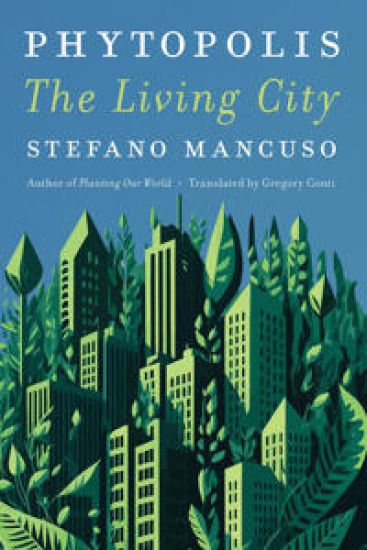
A renowned plant expert explains how we can make urgent, positive changes to our cities that protect against and reduce global warming. The conquest of new lands has been the greatest occupation of our species: for hundreds of thousands of years, humans have searched for new territories to inhabit, finding in the city the best place to live in the last hundred years. Looking at the parabola of our geographical expansion, it sounds like humans have gone from being a generalist species, capable of colonizing any environment, to very quickly becoming a specialized species, capable of thriving only within a particular habitat. The city seems to have become the only place where we can expect to thrive and reproduce, because it is the only place where our specialization gives us the best chance of survival, and quality of life. However, "species specialization" is only effective in a stable environment: in changing environmental conditions, it becomes dangerous. And if the resources the city needs to thrive are not unlimited, global warming can permanently change the environment of our cities--an event that would be fatal. But it is the city itself, as it is today, that is the main driver of environmental destruction. Mankind is confronted with a paradox: we must rethink our cities and make them a lasting ecological niche. In this clear, accessible, and fascinating work, Stefano Mancuso proposes a green solution: how would our cities be transformed if their framework was modeled on plants?

With fun, fascinating vignettes, a renowned neurobiologist illuminates the interconnectedness of plant life and how we can learn from it to better plan our communities. We animals account for a paltry 0.3% of the planet's biomass while plants add up to 85%. And when, with just a little training, we are able to look at the world without seeing it solely as humanity's playground, we cannot help but notice the ubiquity of plants. They are everywhere, and their stories are inevitably bound up with ours. As every tree in a forest is linked to all the others by an underground network of roots, uniting them to form a super organism, so plants constitute the nervous system, the plan that is the "greenprint" of our world. To ignore the existence of this plan is one of the most serious threats to the survival of our species. In this latest book, the brilliant Stefano Mancuso is back to illuminate the greenprint of our world. He does it through unforgettable stories starring plants that combine an inimitable narrative style with remarkable scientific rigor, from the story of the red spruce that gave Stradivarius the wood for his fourteen violins, to the Kauri tree stump, kept alive for decades by the interconnected root system of nearby trees. From the mystery of the slipperiness of the banana skin to the plant that solved the "crime of the century," the Lindbergh kidnapping, by way of wooden ladder rungs.
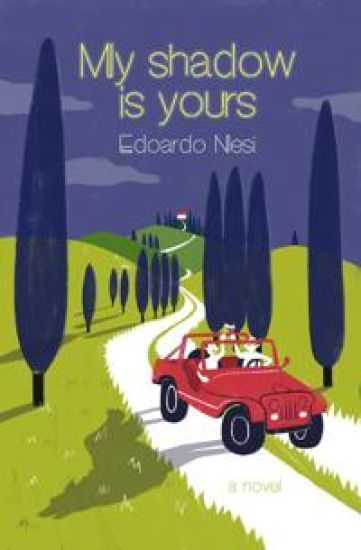
A recent college graduate accompanies a reclusive middle-aged writer on a chaotic road trip to Milan in this hilarious, heartwarming novel about love, friendship, and the pitfalls of nostalgia In 1995 Vittorio Vezzosi rose to worldwide acclaim with his debut novel, The Wolves Inside. Unfortunately for his adoring fans--and his publisher--he wouldn't write another word. Instead, the great author shut himself away in a farmhouse overlooking Florence. After twenty-five years of silence, however, a corporate takeover lights the fire under Vittorio to produce a new novel, and bright young classics graduate Emiliano De Vito is hired to assist him. Off to a rocky start, the odd couple embark on a madcap journey in a 1979 Jeep--without a roof or windshield or doors--to Milan, where Vittorio will speak to a crowd of thousands. As they travel across Italy, bonding over wine and women, and butting heads over the struggles Emiliano's generation inherited from Vittorio's, the two begin to see the world, and writing, in a different way.

With fun, fascinating vignettes, a renowned neurobiologist illuminates the interconnectedness of plant life and how we can learn from it to better plan our communities. We animals account for a paltry 0.3% of the planet's biomass while plants add up to 85%. And when, with just a little training, we are able to look at the world without seeing it solely as humanity's playground, we cannot help but notice the ubiquity of plants. They are everywhere, and their stories are inevitably bound up with ours. As every tree in a forest is linked to all the others by an underground network of roots, uniting them to form a super organism, so plants constitute the nervous system, the plan that is the "greenprint" of our world. To ignore the existence of this plan is one of the most serious threats to the survival of our species. In this latest book, the brilliant Stefano Mancuso is back to illuminate the greenprint of our world. He does it through unforgettable stories starring plants that combine an inimitable narrative style with remarkable scientific rigor, from the story of the red spruce that gave Stradivarius the wood for his fourteen violins, to the Kauri tree stump, kept alive for decades by the interconnected root system of nearby trees. From the mystery of the slipperiness of the banana skin to the plant that solved the "crime of the century," the Lindbergh kidnapping, by way of wooden ladder rungs.

In this playful yet informative manifesto, a leading plant neurobiologist presents the eight fundamental pillars on which the life of plants--and by extension, humans--rests. Even if they behave as though they were, humans are not the masters of the Earth, but only one of its most irksome residents. From the moment of their arrival, about three hundred thousand years ago--nothing when compared to the history of life on our planet--humans have succeeded in changing the conditions of the planet so drastically as to make it a dangerous place for their own survival. The causes of this reckless behavior are in part inherent in their predatory nature, but they also depend on our total incomprehension of the rules that govern a community of living beings. We behave like children who wreak havoc, unaware of the significance of the things they are playing with. In The Nation of Plants, the most important, widespread, and powerful nation on Earth finally gets to speak. Like attentive parents, plants, after making it possible for us to live, have come to our aid once again, giving us their rules: the first Universal Declaration of Rights of Living Beings written by the plants. A short charter based on the general principles that regulate the common life of plants, it establishes norms applicable to all living beings. Compared to our constitutions, which place humans at the center of the entire juridical reality, in conformity with an anthropocentricism that reduces to things all that is not human, plants offer us a revolution.
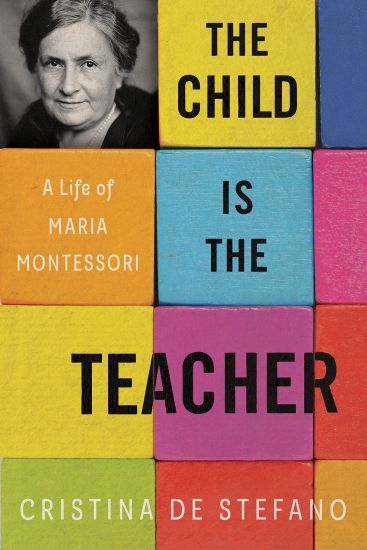
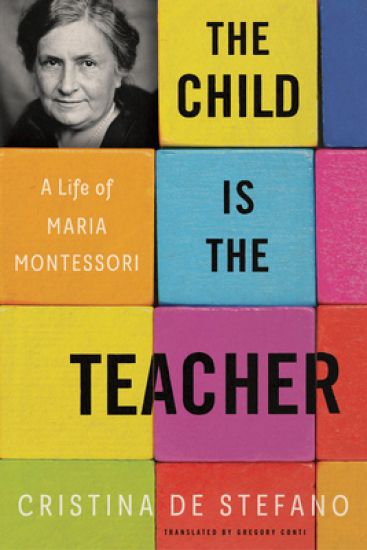
A fresh, comprehensive biography of the pioneering educator and activist who changed the way we look at children's minds, from the author of Oriana Fallaci. Born in 1870 in Chiaravalle, Italy, Maria Montessori would grow up to embody almost every trait men of her era detested in the fairer sex. She was self-confident, strong-willed, and had a fiery temper at a time when women were supposed to be soft and pliable. She studied until she became a doctor at a time when female graduates in Italy provoked outright scandal. She never wanted to marry or have children--the accepted destiny for all women in her milieu of late nineteenth-century bourgeois Rome--and when she became pregnant by a colleague of hers, she gave up her son to continue pursuing her career. At around age thirty, Montessori was struck by the work being done with children from the slums of the San Lorenzo neighborhood, and realized what she wanted to do with her life: change the school, and therefore the world, through a new approach to the child's mind. In spite of the resistance she faced from all sides--scientists accused her of being too mystical, and the clergy of being too scientific--she would garner acclaim and establish the influential Montessori Method, which is now practiced throughout the world. A thorough, nuanced portrait of this often controversial woman, The Child Is the Teacher is the first biographical work on Maria Montessori written by an author who is not a member of the Montessori movement, but who has been granted access to original letters, diaries, notes, and texts written by Montessori herself, including an array of previously unpublished material.

The notion of 'representative democracy' seems unquestionably familiar today, but how did the Victorian era - the epoch when the modern democratic state was made - understand democracy, parliamentary representation, and diversity? In the famous nineteenth-century debates about representation and parliamentary reform, two interlocked ideals were of the greatest importance: descriptive representation, that the House of Commons 'mirror' the diversity that marked society, and deliberation within the legislative assembly. These ideals presented a major obstacle to the acceptance of a democratic suffrage, which it was widely feared would produce an unrepresentative and un-deliberative House of Commons. Here, Gregory Conti examines how the Victorians conceived the representative and deliberative functions of the House of Commons and what it meant for parliament to be the 'mirror of the nation'. Combining historical analysis and political theory, he analyses the fascinating nineteenth-century debates among contending schools of thought over the norms and institutions of deliberative representative government, and explores the consequences of recovering this debate.
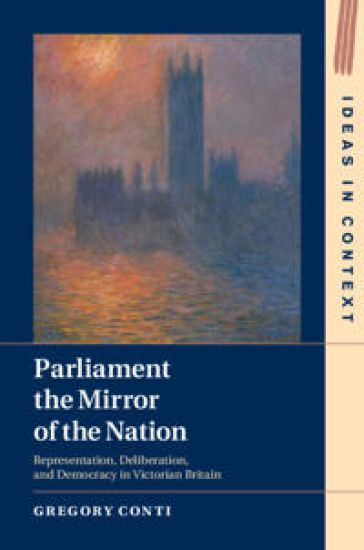
The notion of 'representative democracy' seems unquestionably familiar today, but how did the Victorian era - the epoch when the modern democratic state was made - understand democracy, parliamentary representation, and diversity? In the famous nineteenth-century debates about representation and parliamentary reform, two interlocked ideals were of the greatest importance: descriptive representation, that the House of Commons 'mirror' the diversity that marked society, and deliberation within the legislative assembly. These ideals presented a major obstacle to the acceptance of a democratic suffrage, which it was widely feared would produce an unrepresentative and un-deliberative House of Commons. Here, Gregory Conti examines how the Victorians conceived the representative and deliberative functions of the House of Commons and what it meant for parliament to be the 'mirror of the nation'. Combining historical analysis and political theory, he analyses the fascinating nineteenth-century debates among contending schools of thought over the norms and institutions of deliberative representative government, and explores the consequences of recovering this debate.
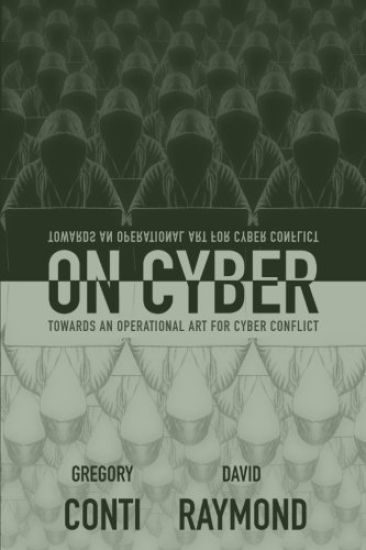
On Cyber: Towards an Operational Art for Cyber Conflict
David Raymond; Gregory Conti
Kopidion Press
2017
nidottu