Kirjojen hintavertailu. Mukana 12 595 353 kirjaa ja 12 kauppaa.

Kirjailija

Gregory K. Beale

Kirjat ja teokset yhdessä paikassa: 11 kirjaa, julkaisuja vuosilta 2004-2023, suosituimpien joukossa John's Use of the Old Testament in Revelation. Vertaile teosten hintoja ja tarkista saatavuus suomalaisista kirjakaupoista.

Mukana myös kirjoitusasut: Gregory K Beale

11 kirjaa

Kirjojen julkaisuhaarukka 2004-2023.

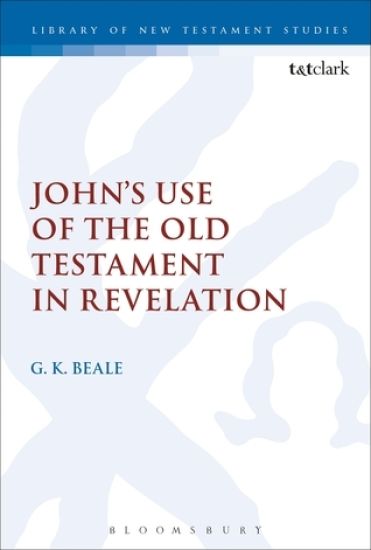
John's Use of the Old Testament in Revelation

John's Use of the Old Testament in Revelation

Gregory K. Beale

T. T.Clark Ltd
2015
nidottu
This book explores the variety of ways John contextually uses the Old Testament in the Apocalypse. The introduction surveys and evaluates recent studies, which have been divided over the issue of whether or not John uses the Old Testament with sensitivity to its original literary context (Beale, Fekkes and Bauckham argue in the affirmative, while Ruiz and Moyise contend that this was not John's focus and see implications for 'reader-response criticism'). The remainder of the book looks at various ways in which John uses the Old Testament and argues that there is a reciprocal interpretative relationship between the Old Testament and the Apocalypse. Studies of special interest concern the bearing of the Old Testament on Revelation's eschatology, on the issue of the millennium, and on the thorny problem of the grammatical solecisms.
Redemptive Reversals and the Ironic Overturning of Human Wisdom
“But many who are first will be last, and the last first.” —Matthew 19:30 The Bible is full of ironic situations in which God overturns the world’s wisdom by doing the opposite of what is expected—people are punished by their own sin, the persecution of the church is the catalyst for its growth, Paul claims to have strength through weakness, and more. In this book, biblical scholar G. K. Beale explores God’s pattern of divine irony in both judgment and salvation, finding its greatest expression in Jesus’s triumph over death through death on a cross. Unpacking this pattern throughout redemptive history, Beale shows us how God often uses what is seemingly weak and foolish to underscore his own strength and power in the lives of his people today.
God Dwells Among Us

God Dwells Among Us

Gregory K Beale

Inter-Varsity Press
2015
nidottu
The writers and chief actors of the Old Testament expressed a deep longing for the presence of God. This longing is symbolized through history in the Garden of Eden, the ark of the covenant and the tabernacle that housed it, the temple, and the ruins of the temple. In response to this longing, God shares his ultimate mission, in which his people play a part: the expansion of Eden - the temple of God's presence - to all peoples throughout the earth. The temple has always been a source of rich scholarship and theological reflection - but what does it mean for the church's ongoing mission in the world? Beale and Kim build a bridge from the world of biblical theology to our modern-day life. They help us to see clearly that the themes of Eden, the temple, God's glorious presence, new creation, and the mission of the church are ultimately facets of the same reality. Hence, from Eden to the New Jerusalem, God's people are his temple on the earth, the first-fruits of the new creation. God has always desired to dwell among us; now the church needs to follow its calling to extend the borders of God's kingdom and take his presence to the ends of the earth.
Hidden But Now Revealed

Hidden But Now Revealed

Gregory K Beale

Apollos
2014
nidottu
This book explores the biblical conception of mystery as an initial, partially hidden revelation that is subsequently more fully revealed, shedding light not only on the richness of the concept itself, but also on the broader relationship between the Old and New Testaments. As such, it is a model for attentive and faithful biblical theology.
An Interpretive Lexicon of New Testament Greek

An Interpretive Lexicon of New Testament Greek

Gregory K. Beale; Daniel Joseph Brendsel; William A. Ross

Zondervan
2014
nidottu
Save considerable time in translating and exegesis of the Greek New Testament text. This Lexicon has a very specific and important purpose: to make the process of New Testament interpretation easier and more accurate by providing a comprehensive yet concise interpretation of Greek words that determine logical relationships between statements or clauses.These words (prepositions, adverbs, particles, relative pronouns, conjunctions and other connectors) are essential to revealing and supporting the main ideas in the text and are especially useful for interpreting logical arguments, such as those found in the epistles.While not exhaustive, this Interpretive Lexicon lists the vast majority of Greek connecting words, especially those that are notorious for being some of the most difficult words to translate.Features include:Concise definitions for quick analysis.Examples of where the word is found in Scripture.Page references to several major lexical resources for further translation options and nuances.Interpretation of the broader categories of each word (for example: locative (in, among, on), means-end (with, by), grounds (because, on account of), temporal (while, at), and so on.The interpretive feature of the book--evaluating the word's function in discourse--is tremendously helpful for the exegetical process, allowing the translator to closely follow the logical flow of the text with greater efficiency. This Interpretive Lexicon is a valuable handbook for student, pastor, and scholar alike.
1&2 Thessalonians

1&2 Thessalonians

Gregory K Beale

Inter-Varsity Press
2010
pokkari
Fascination with the end times is not just a recent phenomenon. The young church at Thessalonica, having taken root during Paul's brief stay there, pondered when the end might come as well. Paul, in order to instruct them more fully, wrote them two letters, which taken together expound the "already-and-not-yet" character of the end times. His instruction and counsel can serve us well today. Throughout this commentary, G. K. Beale explains what each letter meant to its original hearers and its application for us today.
We Become What We Worship

We Become What We Worship

Gregory K Beale

Apollos
2008
pokkari
The heart of the biblical understanding of idolatry, argues Gregory Beale, is that we take on the characteristics of what we worship. Employing Isaiah 6 as his interpretive lens, Beale demonstrates that this understanding of idolatry permeates the whole canon, from Genesis to Revelation. Beale concludes with an application of the biblical notion of idolatry to the challenges of contemporary life.
The Erosion of Inerrancy in Evangelicalism

The Erosion of Inerrancy in Evangelicalism

Gregory K. Beale

Crossway Books
2008
pokkari
Examines recent postmodern efforts to redefine the traditional evangelical view of scriptural authority and counters with sound logic that supports inerrancy. Due to recent popular challenges to evangelical doctrine, biblical inerrancy is a topic receiving an increasing amount of attention among theologians and other scholars. Here G. K. Beale attempts vigorously and even-handedly to examine the writings of one leading postmodernist, Peter Enns, whose writings challenge biblical authority. In support of inerrancy, Beale presents his own set of challenges to the postmodern suppositions of Enns and others. How can the Bible be historically inaccurate while still serving as the authoritative word on morality and salvation? Beale concludes that it cannot, and his work will aid all who support biblical inerrancy in defending their position against postmodern attacks. This is an issue that affects the entire body of Christ.
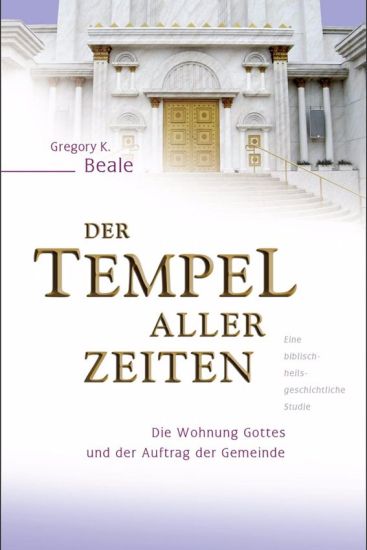
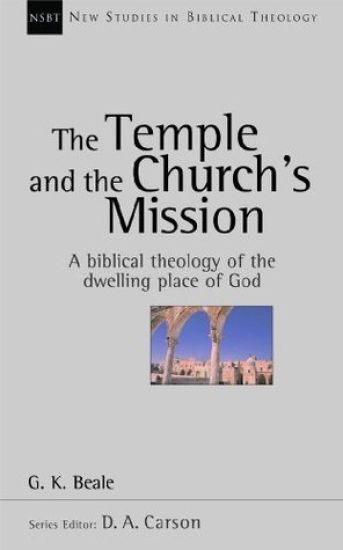
The Temple and the church's mission
Then I saw a new heaven and a new earth ... And I saw the holy city, new Jerusalem ... And I heard a loud voice from the throne saying, "Behold, the dwelling place of God is with man."' (Revelation 21:1-3, ESV). In this comprehensive study, Gregory Beale argues that the Old Testament tabernacle and temples were symbolically designed to point to the end-time reality that God's presence, formerly limited to the Holy of Holies, was to be extended throughout the whole cosmos. Hence, John's vision in Revelation 21 is best understood as picturing the new heavens and earth as the eschatological temple. Professor Beale's stimulating exposition traces the theme of the tabernacle and temple along the Bible's story-line, also illuminating many texts and closely related themes. He shows how the significance and symbolism of the temple can be better understood in the light of contrasts to and similarities with Ancient Near Eastern assumptions, and offers new insights into the meaning of the temple in both Old and New Testaments.