Kirjojen hintavertailu. Mukana 12 595 353 kirjaa ja 12 kauppaa.

Kirjailija

Gregory Radick

Kirjat ja teokset yhdessä paikassa: 6 kirjaa, julkaisuja vuosilta 2008-2023, suosituimpien joukossa Darwin's Argument by Analogy. Vertaile teosten hintoja ja tarkista saatavuus suomalaisista kirjakaupoista.

6 kirjaa

Kirjojen julkaisuhaarukka 2008-2023.

Darwin's Argument by Analogy

Darwin's Argument by Analogy

Roger M. White; M. J. S. Hodge; Gregory Radick

Cambridge University Press
2023
pokkari
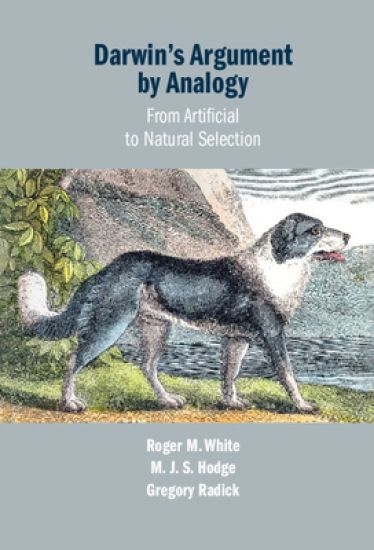
In On the Origin of Species (1859), Charles Darwin put forward his theory of natural selection. Conventionally, Darwin's argument for this theory has been understood as based on an analogy with artificial selection. But there has been no consensus on how, exactly, this analogical argument is supposed to work – and some suspicion too that analogical arguments on the whole are embarrassingly weak. Drawing on new insights into the history of analogical argumentation from the ancient Greeks onward, as well as on in-depth studies of Darwin's public and private writings, this book offers an original perspective on Darwin's argument, restoring to view the intellectual traditions which Darwin took for granted in arguing as he did. From this perspective come new appreciations not only of Darwin's argument but of the metaphors based on it, the range of wider traditions the argument touched upon, and its legacies for science after the Origin.
Darwin's Argument by Analogy

Darwin's Argument by Analogy

Roger M. White; M. J. S. Hodge; Gregory Radick

Cambridge University Press
2021
sidottu
In On the Origin of Species (1859), Charles Darwin put forward his theory of natural selection. Conventionally, Darwin's argument for this theory has been understood as based on an analogy with artificial selection. But there has been no consensus on how, exactly, this analogical argument is supposed to work – and some suspicion too that analogical arguments on the whole are embarrassingly weak. Drawing on new insights into the history of analogical argumentation from the ancient Greeks onward, as well as on in-depth studies of Darwin's public and private writings, this book offers an original perspective on Darwin's argument, restoring to view the intellectual traditions which Darwin took for granted in arguing as he did. From this perspective come new appreciations not only of Darwin's argument but of the metaphors based on it, the range of wider traditions the argument touched upon, and its legacies for science after the Origin.
Disputed Inheritance

Disputed Inheritance

Gregory Radick

THE UNIVERSITY OF CHICAGO PRESS
2023
nidottu
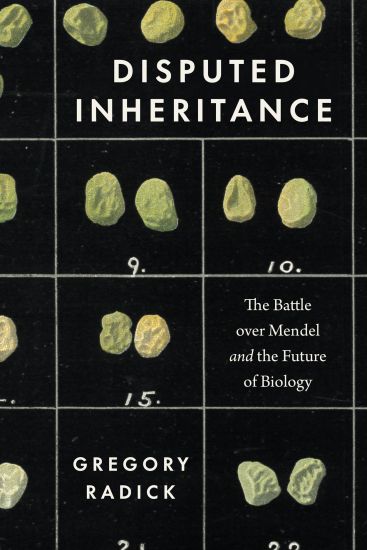
A root-and-branch rethinking of how history has shaped the science of genetics. In 1900, almost no one had heard of Gregor Mendel. Ten years later, he was famous as the father of a new science of heredity—genetics. Even today, Mendelian ideas serve as a standard point of entry for learning about genes. The message students receive is plain: the twenty-first century owes an enlightened understanding of how biological inheritance really works to the persistence of an intellectual inheritance that traces back to Mendel’s garden. Disputed Inheritance turns that message on its head. As Gregory Radick shows, Mendelian ideas became foundational not because they match reality—little in nature behaves like Mendel’s peas—but because, in England in the early years of the twentieth century, a ferocious debate ended as it did. On one side was the Cambridge biologist William Bateson, who, in Mendel’s name, wanted biology and society reorganized around the recognition that heredity is destiny. On the other side was the Oxford biologist W. F. R. Weldon, who, admiring Mendel's discoveries in a limited way, thought Bateson's "Mendelism" represented a backward step, since it pushed growing knowledge of the modifying role of environments, internal and external, to the margins. Weldon's untimely death in 1906, before he could finish a book setting out his alternative vision, is, Radick suggests, what sealed the Mendelian victory. Bringing together extensive archival research with searching analyses of the nature of science and history, Disputed Inheritance challenges the way we think about genetics and its possibilities, past, present, and future.
Disputed Inheritance

Disputed Inheritance

Gregory Radick

THE UNIVERSITY OF CHICAGO PRESS
2023
sidottu
A root-and-branch rethinking of how history has shaped the science of genetics. In 1900, almost no one had heard of Gregor Mendel. Ten years later, he was famous as the father of a new science of heredity—genetics. Even today, Mendelian ideas serve as a standard point of entry for learning about genes. The message students receive is plain: the twenty-first century owes an enlightened understanding of how biological inheritance really works to the persistence of an intellectual inheritance that traces back to Mendel’s garden. Disputed Inheritance turns that message on its head. As Gregory Radick shows, Mendelian ideas became foundational not because they match reality—little in nature behaves like Mendel’s peas—but because, in England in the early years of the twentieth century, a ferocious debate ended as it did. On one side was the Cambridge biologist William Bateson, who, in Mendel’s name, wanted biology and society reorganized around the recognition that heredity is destiny. On the other side was the Oxford biologist W. F. R. Weldon, who, admiring Mendel's discoveries in a limited way, thought Bateson's "Mendelism" represented a backward step, since it pushed growing knowledge of the modifying role of environments, internal and external, to the margins. Weldon's untimely death in 1906, before he could finish a book setting out his alternative vision, is, Radick suggests, what sealed the Mendelian victory. Bringing together extensive archival research with searching analyses of the nature of science and history, Disputed Inheritance challenges the way we think about genetics and its possibilities, past, present, and future.
Darwin in Ilkley

Darwin in Ilkley

Mike Dixon; Gregory Radick

The History Press Ltd
2009
nidottu
When the Origins of Species was published on 24 November 1859, its author, Charles Darwin, was near the end of a nine-week stay in the remote Yorkshire village of Ilkley. He had come for the 'water cure'- a regime of cold baths and wet sheets - and for relaxation. But he used his time in Ilkley to shore up support, through extensive correspondence, for the extraordinary theory that the Origin would put before the world: evolution by natural selection. In Darwin in Ilkley, Mike Dixon and Gregory Radick bring to life Victorian Ilkley and the dramas of body and mind that marked Darwin's visit.
The Simian Tongue

The Simian Tongue

Gregory Radick

University of Chicago Press
2008
sidottu
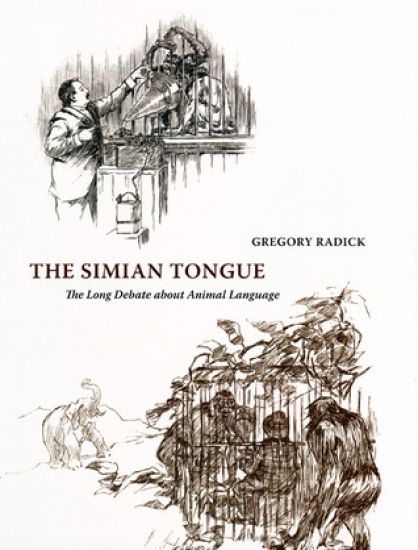
In the early 1890s, the theory of evolution gained an unexpected ally: the Edison phonograph. An amateur scientist used the new machine - one of the technological wonders of the age - to record monkey calls, play them back to the monkeys, and watch their reactions. From these soon-famous experiments he judged that he had discovered "the simian tongue," made up of words he was beginning to translate, and containing the rudiments from which human language evolved. Yet for most of the next century, the simian tongue and the means for its study existed at the scientific periphery. Both returned to great acclaim only in the early 1980s, after a team of ethologists announced that experimental playback showed certain African monkeys to have rudimentarily meaningful calls. Drawing on newly discovered archival sources and interviews with key scientists, Gregory Radick here reconstructs the remarkable trajectory of a technique invented and reinvented to listen in on primate communication. Richly documented and powerfully argued, "The Simian Tongue" charts the scientific controversies over the evolution of language from Darwin's day to our own, resurrecting the forgotten debts of psychology, anthropology, and other behavioral sciences to the Victorian debate about the animal roots of human language.