Kirjojen hintavertailu. Mukana 12 595 353 kirjaa ja 12 kauppaa.

Kirjailija

Gregory Ulmer

Kirjat ja teokset yhdessä paikassa: 3 kirjaa, julkaisuja vuosilta 2005-2022, suosituimpien joukossa Miami Virtue. Vertaile teosten hintoja ja tarkista saatavuus suomalaisista kirjakaupoista.

3 kirjaa

Kirjojen julkaisuhaarukka 2005-2022.

Miami Virtue

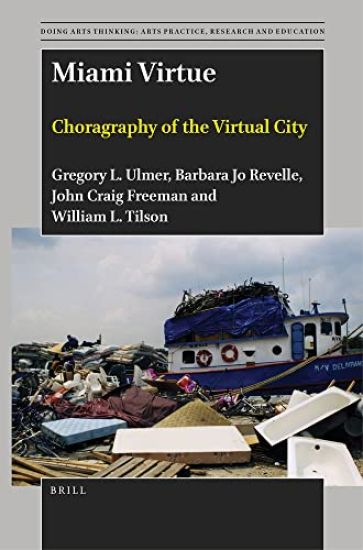
Miami Virtue

Gregory Ulmer; Barbara Revelle; John Freeman; William Tilson

BRILL
2022
sidottu
The Florida Research Ensemble (Ulmer, Revelle, Freeman and Tilson) is an interdisciplinary collaborative arts and research group developing choragraphy, a method of inquiry which applies modernist arts practices and poststructural theory to the design and testing of image as category. The authors argue that image categories functions for networked digital media the way Aristotle's word categories functioned for literate concepts. “Chora” was retrieved for contemporary philosophy by Jacques Derrida, in the context of his deconstruction of Western metaphysics. Grounded in grammatology (the history and theory of writing), Derrida’s critique of Being and Becoming as primary concepts of reality is that the category or classification system invented within literacy is not adequate for the apparatus of electracy that has developed since the industrial revolution. The FRE project in Miami designed and tested a prototype for a choral category, capable of coordinating real places, cultural collective information, digital technologies, and personal experience. Miami Virtue tested choragraphy as a method for adopting a particular region (the Miami River), including primary discourses organizing its lifeworld, and articulating it as a category of thought. The designed and recorded virtual site functions for electracy the way concepts function for literacy: as a navigable set supporting holistic intelligence and public discourse.
Miami Virtue

Miami Virtue

Gregory Ulmer; Barbara Revelle; John Freeman; William Tilson

BRILL
2022
nidottu
The Florida Research Ensemble (Ulmer, Revelle, Freeman and Tilson) is an interdisciplinary collaborative arts and research group developing choragraphy, a method of inquiry which applies modernist arts practices and poststructural theory to the design and testing of image as category. The authors argue that image categories functions for networked digital media the way Aristotle's word categories functioned for literate concepts. “Chora” was retrieved for contemporary philosophy by Jacques Derrida, in the context of his deconstruction of Western metaphysics. Grounded in grammatology (the history and theory of writing), Derrida’s critique of Being and Becoming as primary concepts of reality is that the category or classification system invented within literacy is not adequate for the apparatus of electracy that has developed since the industrial revolution. The FRE project in Miami designed and tested a prototype for a choral category, capable of coordinating real places, cultural collective information, digital technologies, and personal experience. Miami Virtue tested choragraphy as a method for adopting a particular region (the Miami River), including primary discourses organizing its lifeworld, and articulating it as a category of thought. The designed and recorded virtual site functions for electracy the way concepts function for literacy: as a navigable set supporting holistic intelligence and public discourse.

Electronic Monuments

Electronic Monuments

Gregory Ulmer

University of Minnesota Press
2005
nidottu
While corporations, governmental groups, and public relations firms debated the best way to memorialize the event of 9/11, sites of commemoration could be seen across the country and especially on the Internet. Greg Ulmer suggests that this reality points us to a new sense of monumentality, one that is collaborative in nature rather than iconic. From a do-it-yourself Mount Rushmore to an automated tribute to the devastating annual toll of traffic deaths in the United States, Electronic Monuments describes commemoration as a fundamental experience, joining individual and collective identity, and adapting both to the emerging apparatus of "electracy," or digital literacy. Concerns about the destruction of civic life caused by the society of the spectacle are refocused on the question of how a collectivity remembers who or what it is. Ulmer proposes that the Internet makes it possible for monumentality to become a primary site of self-knowledge, one that supports a new politics, ethics, and dimension of education. The Internet thus holds the promise of bringing citizens back into the political equation as witnesses and monitors. Gregory L. Ulmer is professor of English and media studies at the University of Florida, Gainesville.