
Kirjailija
Gregory W. Dawes
Kirjat ja teokset yhdessä paikassa: 9 kirjaa, julkaisuja vuosilta 2001-2026, suosituimpien joukossa Is Science Western?. Vertaile teosten hintoja ja tarkista saatavuus suomalaisista kirjakaupoista.
Mukana myös kirjoitusasut: Gregory W Dawes
9 kirjaa
Kirjojen julkaisuhaarukka 2001-2026.
For more than 30 years, historians have rejected what they call the ‘warfare thesis’ – the idea that there is an inevitable conflict between religion and science – insisting that scientists and believers can live in harmony. This book disagrees. Taking as its starting point the most famous of all such conflicts, the Galileo affair, it argues that religious and scientific communities exhibit very different attitudes to knowledge. Scripturally based religions not only claim a source of knowledge distinct from human reason. They are also bound by tradition, insist upon the certainty of their beliefs, and are resistant to radical criticism in ways in which the sciences are not. If traditionally minded believers perceive a clash between what their faith tells them and the findings of modern science, they may well do what the Church authorities did in Galileo’s time. They may attempt to close down the science, insisting that the authority of God’s word trumps that of any ‘merely human’ knowledge. Those of us who value science must take care to ensure this does not happen.
Religion, Philosophy and Knowledge
Gregory W. Dawes
Springer International Publishing AG
2018
nidottu
This book offers a philosophical approach to religion that acknowledges both the diversity of religions and the many and varied dimensions of the religious life. Rather than restricting itself to Christian theism, it covers a wide range of religious traditions, examining their beliefs in the context of the actual practice of the religious life. After outlining the aims of religion, the book focuses on claims to knowledge. What kinds of knowledge do religions purport to offer? In what idiom is it couched? From what sources do devotees draw their claims to knowledge? Are these sources reliable? Rather than trying to settle age-old questions about religious belief, the book offers its readers a set of criteria with which they can make informed decisions in matters of faith.
Religion, Philosophy and Knowledge
Gregory W. Dawes
Springer International Publishing AG
2016
sidottu
This book offers a philosophical approach to religion that acknowledges both the diversity of religions and the many and varied dimensions of the religious life. Rather than restricting itself to Christian theism, it covers a wide range of religious traditions, examining their beliefs in the context of the actual practice of the religious life. After outlining the aims of religion, the book focuses on claims to knowledge. What kinds of knowledge do religions purport to offer? In what idiom is it couched? From what sources do devotees draw their claims to knowledge? Are these sources reliable? Rather than trying to settle age-old questions about religious belief, the book offers its readers a set of criteria with which they can make informed decisions in matters of faith.
For more than 30 years, historians have rejected what they call the ‘warfare thesis’ – the idea that there is an inevitable conflict between religion and science – insisting that scientists and believers can live in harmony. This book disagrees. Taking as its starting point the most famous of all such conflicts, the Galileo affair, it argues that religious and scientific communities exhibit very different attitudes to knowledge. Scripturally based religions not only claim a source of knowledge distinct from human reason. They are also bound by tradition, insist upon the certainty of their beliefs, and are resistant to radical criticism in ways in which the sciences are not. If traditionally minded believers perceive a clash between what their faith tells them and the findings of modern science, they may well do what the Church authorities did in Galileo’s time. They may attempt to close down the science, insisting that the authority of God’s word trumps that of any ‘merely human’ knowledge. Those of us who value science must take care to ensure this does not happen.
In this timely study, Dawes defends the methodological naturalism of the sciences. Though religions offer what appear to be explanations of various facts about the world, the scientist, as scientist, will not take such proposed explanations seriously. Even if no natural explanation were available, she will assume that one exists. Is this merely a sign of atheistic prejudice, as some critics suggest? Or are there good reasons to exclude from science explanations that invoke a supernatural agent? On the one hand, Dawes concedes the bare possibility that talk of divine action could constitute a potential explanation of some state of affairs, while noting that the conditions under which this would be true are unlikely ever to be fulfilled. On the other hand, he argues that a proposed explanation of this kind would rate poorly, when measured against our usual standards of explanatory virtue.
In this timely study, Dawes defends the methodological naturalism of the sciences. Though religions offer what appear to be explanations of various facts about the world, the scientist, as scientist, will not take such proposed explanations seriously. Even if no natural explanation were available, she will assume that one exists. Is this merely a sign of atheistic prejudice, as some critics suggest? Or are there good reasons to exclude from science explanations that invoke a supernatural agent? On the one hand, Dawes concedes the bare possibility that talk of divine action could constitute a potential explanation of some state of affairs, while noting that the conditions under which this would be true are unlikely ever to be fulfilled. On the other hand, he argues that a proposed explanation of this kind would rate poorly, when measured against our usual standards of explanatory virtue.
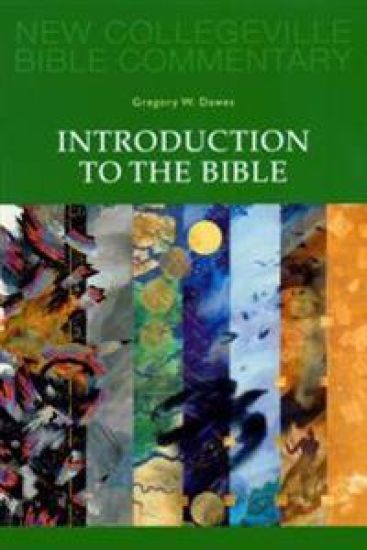
When we first pick it up and open it, the Bible can seem confusing and perhaps even frightening. Here is this bulky book, made up of seventy-three sections with unfamiliar titles such as Deuteronomy, Ecclesiastes, Colossians, and Corinthians, with numbers in front of almost every sentence, rarely any pictures, and perhaps a few maps of ancient areas such as Mesopotamia, Assyria, and Judah. Since the Bible looks like a book, we may start to read it as we would any other book, hoping to move from cover to cover. Then we begin to wonder, Who wrote this? When was it written? What kind of writing is this: History? Science? Biography? Fiction? What am I supposed to get out of it? As (or if) we keep reading the Bible page by page, section by section, we soon realize that this is no ordinary run-of-the-bookshelf volume. Without a guide the Bible is likely to remain the book most often purchased but not very often read and even less often understood.To rescue Bible readers and students from turning their initial enthusiasm into boredom, Gregory Dawes gives us this Introduction to the Bible, the indispensable prologue to the entire series of the New Collegeville Bible Commentary. Dividing the contents into two parts, the author first describes how the Old and New Testaments came to be put together, and then explores how their stories have been interpreted over the centuries. In the words of Dawes, this very broad overview of a very complex history offers the general reader a helpful framework within which to begin to understand the Bible. The author writes clearly, frequently seasoning his explanations with crisp examples. This book anchors individual and group Bible study on the solid foundation of basic biblical vocabulary and concepts. Gregory W. Dawes is senior lecturer in both religious studies and philosophy at the University of Otago (New Zealand). He undertook graduate study at the Pontifical Biblical Institute in Rome, where he completed the Licentiate degree, before receiving a PhD from the University of Otago in 1995. He has written several books, the most recent being The Historical Jesus Question: The Challenge of History to Religious Authority (Westminster John Knox, 2001). He is currently researching Christian responses to the work of Charles Darwin.
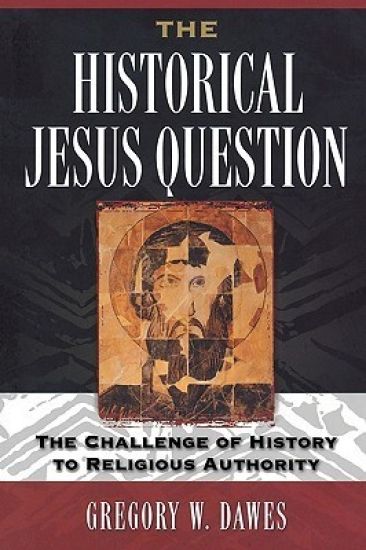
A natural sequel to The Historical Jesus Quest, The Historical Jesus Question offers commentary on the work and significance of the classic writers presented in the earlier volume--Spinoza, Strauss, Schweitzer, Troeltsch, Bultmann, Kasemann--and some additional comment on the work of Pannenberg. Not merely a summary discussion of these important writers, this book goes beyond to follow the implications for theology of the ongoing challenge history presents to biblical authority.