Kirjojen hintavertailu. Mukana 12 253 749 kirjaa ja 12 kauppaa.

Kirjailija

Greil Marcus

Kirjat ja teokset yhdessä paikassa: 34 kirjaa, julkaisuja vuosilta 1997-2025, suosituimpien joukossa Mystery Train (3.ª edición). Vertaile teosten hintoja ja tarkista saatavuus suomalaisista kirjakaupoista.

34 kirjaa

Kirjojen julkaisuhaarukka 1997-2025.

The Doors

The Doors

Greil Marcus

PublicAffairs,U.S.
2013
pokkari
A fan from the moment the Doors' first album took over KMPX, the revolutionary FM rock & roll station in San Francisco, Greil Marcus saw the band many times at the legendary Fillmore Auditorium and the Avalon Ballroom in 1967. Five years later it was all over. Forty years after the singer Jim Morrison was found dead in Paris and the group disbanded, one could drive from here to there, changing from one FM pop station to another, and be all but guaranteed to hear two, three, four Doors songs in an hour,every hour. Whatever the demands in the music, they remained unsatisfied, in the largest sense unfinished, and absolutely alive. There have been many books on the Doors. This is the first to bypass their myth, their mystique, and the death cult of both Jim Morrison and the era he was made to personify, and focus solely on the music. It is a story untold all these years later, it is a new story.
Bob Dylan by Greil Marcus

Bob Dylan by Greil Marcus

Greil Marcus

PublicAffairs,U.S.
2013
pokkari
Nobel Prize winner Bob Dylan's life in music is revisted by his foremost interpreter,weaving individual moods and moments into a brilliant history of their changing timesThe book begins in Berkeley in 1968, and ends with a piece on Dylan's show at the University of Minnesota,his very first appearance at his alma mater,on election night 2008. In between are moments of euphoric discovery: From Marcus's liner notes for the 1967 Basement Tapes (pop music's most famous bootlegged archives) to his exploration of Dylan's reimagining of the American experience in the 1997 Time Out of Mind . And rejection Marcus's Rolling Stone piece on Dylan's album Self Portrait ,often called the most famous record review ever written,began with What is this shit?" and led to his departure from the magazine for five years. Marcus follows not only recordings but performances, books, movies, and all manner of highways and byways in which Bob Dylan has made himself felt in our culture. Together the dozens of pieces collected here comprise a portrait of how, throughout his career, Bob Dylan has drawn upon and reinvented the landscape of traditional American song, its myths and choruses, heroes and villains. They are the result of a more than forty-year engagement between an unparalleled singer and a uniquely acute listener.
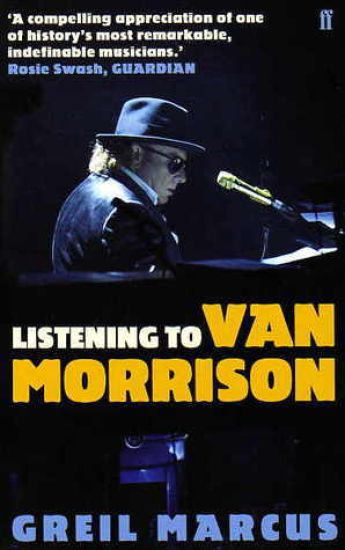
Listening to Van Morrison

Listening to Van Morrison

Greil Marcus

Faber Faber
2012
pokkari
Listening to Van Morrison represents Greil Marcus's quest to trace Morrison's particular genius through seminal moments in his long career, beginning in 1965, breaking open in 1968 with the incomparable Astral Weeks, and continuing in full force to this day. This is a portrait of a perplexing, mysterious and terrifyingly gifted artist and vocalist at the height of his powers, written by one of our most thoughtful cultural critics.
Bob Dylan

Bob Dylan

Greil Marcus

Faber Faber
2011
pokkari
Greil Marcus weaves individual moods and moments into a brilliant history of their changing times. The book begins in Berkeley in 1968, and ends with a piece on Dylan's show at the University of Minnesota on election night 2008. In between are moments of euphoric discovery: from Marcus' sleeve notes for the 1967 Basement Tapes to his exploration of Dylan's reimagining of the American experience in 1997's Time Out of Mind. And rejection; Marcus's Rolling Stone piece on Dylan's album Self Portrait - often referred to as the most famous record review ever written - began with 'What is this shit?' and led to his departure from the magazine for five years. Marcus follows not only recordings but performances. books, movies, and all manner of highways and byways in which Bob Dylan has made himself felt in our culture. Together, the dozens of pieces collected here comprise a portrait of how, throughout his career, Bob Dylan has drawn upon and reinvented the landscape of American song, its myths and choruses, heroes and villains. They are the result of more than forty years' engagement between an unparalleled artist and a uniquely acute listener.
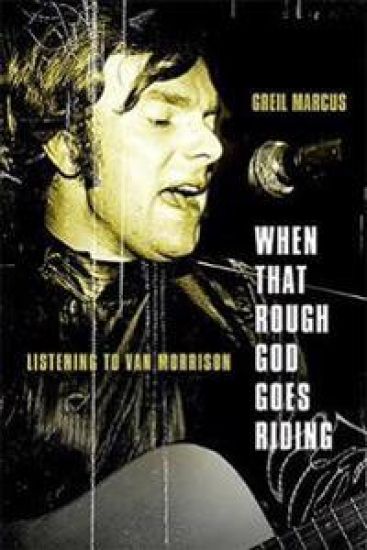
When That Rough God Goes Riding

When That Rough God Goes Riding

Greil Marcus

PublicAffairs,U.S.
2011
pokkari
This book is a quest to understand Van Morrison's particular genius through a close look at the most extraordinary and unclassifiable moments in his long career, beginning in 1965 and continuing in full force to this day: sometimes entire songs, sometimes single words or even the guttural spaces between words that become musical events in themselves.
The Old, Weird America: The World of Bob Dylan's Basement Tapes
Previously published as Invisible Republic and already considered a classic of modern American cultural criticism, this is an updated edition of Greil Marcus's acclaimed book on the secret music made by Bob Dylan and the Band in 1967, which introduced a phrase that has become part of the culture: "the old, weird America." Marcus's widely acclaimed book is about the secret music (the so-called "Basement Tapes") made by Bob Dylan and the Band while in seclusion in Woodstock, New York, in 1967 a folksy yet funky, furious yet hilarious music that remains as seductive and baffling today as it was more than half a century ago. As Mark Sinker observed in The Wire: "Marcus's contention is that there can be found in American folk a community as deep, as electric, as perverse, and as conflicted as all America, and that the songs Dylan recorded out of the public eye, in a basement in Woodstock, are where that community as a whole gets to speak." But the country mapped out in this book, as Bruce Shapiro wrote in The Nation, "is not Woody Guthrie's land for made for you and me . . . It's what Marcus calls 'the old, weird America.'" This odd terrain, this strange yet familiar backdrop to our common cultural history--which Luc Sante (in New York magazine) termed the "playground of God, Satan, tricksters, Puritans, confidence men, illuminati, braggarts, preachers, anonymous poets of all stripes"--is the territory that Marcus has discovered in Dylan's most mysterious music. And his analysis of that territory "reads like a thriller" (Ken Tucker, Entertainment Weekly) and exhibits "a mad, sparkling brilliance" (David Remnick, The New Yorker) throughout. This special edition includes a new introduction, an updated discography, and never-before-seen photographs of the legendary recording sessions. "This book is terminal, goes deeply into the subconscious and plows through that period of time like a rake. Greil Marcus has done it again." -- Bob Dylan
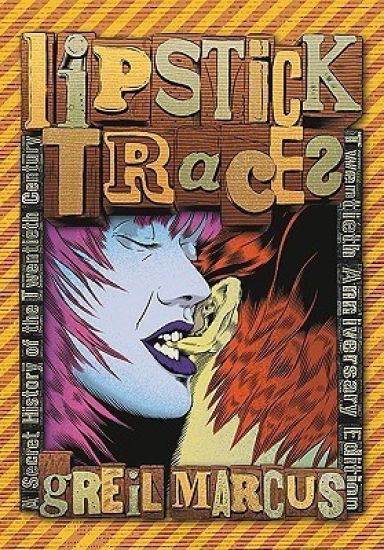
Lipstick Traces: A Secret History of the Twentieth Century
Greil Marcus, author of Mystery Train, widely acclaimed as the best book ever written about America as seen through its music, began work on this new book out of a fascination with the Sex Pistols: that scandalous antimusical group, invented in London in 1975 and dead within two years, which sparked the emergence of the culture called punk. "I am an antichrist " shouted singer Johnny Rotten--where in the world of pop music did that come from? Looking for an answer, with a high sense of the drama of the journey, Marcus takes us down the dark paths of counterhistory, a route of blasphemy, adventure, and surprise. This is no mere search for cultural antecedents. Instead, what Marcus so brilliantly shows is that various kinds of angry, absolute demands--demands on society, art, and all the governing structures of everyday life--seem to be coded in phrases, images, and actions passed on invisibly, but inevitably, by people quite unaware of each other. Marcus lets us hear strange yet familiar voices: of such heretics as the Brethren of the Free Spirit in medieval Europe and the Ranters in seventeenth-century England; the dadaists in Zurich in 1916 and Berlin in 1918, wearing death masks, chanting glossolalia; one Michel Mourre, who in 1950 took over Easter Mass at Notre-Dame to proclaim the death of God; the Lettrist International and the Situationist International, small groups of Paris--based artists and writers surrounding Guy Debord, who produced blank-screen films, prophetic graffiti, and perhaps the most provocative social criticism of the 1950s and '60s; the rioting students and workers of May '68, scrawling cryptic slogans on city walls and bringing France to a halt; the Sex Pistols in London, recording the savage "Anarchy in the U.K." and "God Save the Queen." Although the Sex Pistols shape the beginning and the end of the story, Lipstick Traces is not a book about music; it is about a common voice, discovered and transmitted in many forms. Working from scores of previously unexamined and untranslated essays, manifestos, and filmscripts, from old photographs, dada sound poetry, punk songs, collages, and classic texts from Marx to Henri Lefebvre, Marcus takes us deep behind the acknowledged events of our era, into a hidden tradition of moments that would seem imaginary except for the fact that they are real: a tradition of shared utopias, solitary refusals, impossible demands, and unexplained disappearances. Written with grace and force, humor and an insistent sense of tragedy and danger, Lipstick Traces tells a story as disruptive and compelling as the century itself.
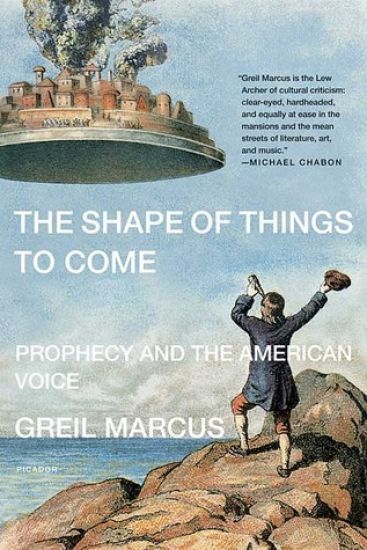
The Shape of Things to Come: Prophecy and the American Voice
A New York Times Book Review Editors' Choice A San Francisco Chronicle Best Book of the Year A London Times Literary Supplement Best Book of the Year In this exhilarating and kaleidoscopic investigation of American identity, Greil Marcus traces the nation's fable of self invention from its earliest Puritan beginnings to its successive retellings in the work of diverse contemporary artists. Marcus considers the birth of America as a New Jerusalem, a place of promises so vast that they could only be betrayed--and how from that betrayal emerged the nation's prophetic voice, the voice that calls America's citizens to self-judgment. Over the course of our history, Marcus finds that the prophetic voice has sounded less and less in the political realm--where it can be heard in the words of John Winthrop, Abraham Lincoln, and Martin Luther King, Jr.--and more in the work of individual artists, including Philip Roth, David Lynch, Sinclair Lewis, John Dos Passos, David Thomas of Pere Ubu, Allen Ginsberg, the band Heavens to Betsy, Bill Pullman, and Sheryl Lee. In The Shape of Things to Come, the past and the present merge in the most extraordinary and surprising ways. Greil Marcus presents a stirring, and frightening, portrait of our country, our ideals, and ourselves.
Stranded

Stranded

Greil Marcus

Da Capo Press Inc
2007
pokkari
In 1978, Greil Marcus asked twenty writers on rock-including Dave Marsh, Lester Bangs, Nick Tosches, Ellen Willis, and Robert Christgau-a question: What one rock-and-roll album would you take to a desert island? The resulting essays were collected in Stranded , twenty passionate declarations to such albums as The Rolling Stones' Beggars Banquet , the Ramones' Rocket to Russia , Something Else by the Kinks, and more. Universally revered as the ur-text of rock journalism, Stranded is an indispensable classic.
Like a Rolling Stone

Like a Rolling Stone

Greil Marcus

Faber Faber
2006
pokkari
Sardonic, bitter, threatening, compassionate, gleeful, and most of all loud, 'Like a Rolling Stone' is much more than a song. Six minutes and six seconds in length, it was released by Dylan despite the received wisdom of the day as to what constituted a single. Originally published on the 40th anniversary of its release and recording, Greil Marcus' extraordinary book reconstructs the context in which the song first appeared, in terms of Dylan's own career (his controversial transformation from folk singer into rock n roll singer) and the world at large (Vietnam, the Watts Riots, the burgeoning counter-culture of the time). This is itself the stage for Marcus' recreation of the song on the page - its emergence from fragments, its words, its sound, its discovery of itself. An analysis and critique of an artist at the height of his creative powers, it affords a unique insight into the mistakes, inspirations and bloody mindedness that come together only in the very highest cultural moments.
Double Trouble: Bill Clinton and Elvis Presley in a Land of No Alternatives
In June of 1992, when all the polls showed that Bill Clinton didn't have a chance, he took his saxophone onto the Arsenio Hall show, put on dark glasses, and blew "Heartbreak Hotel." Greil Marcus, one of America's most imaginative and insightful popular culture critics, was the first to name this as the moment that turned Clinton's campaign around--and to make sense of why. Double Trouble draws on articles Marcus published from 1992 to 2000 to explore the remarkable and illuminating kinship between Bill Clinton and Elvis Presley--and, moreover, to explore how culture is made and shared in today's America and how, through culture, people remake themselves. Double Trouble is a unique and essential book about the final years of the twentieth century. This edition also includes a new essay Marcus wrote just before the 2000 presidential election: an eerily prescient piece that looks forward to two very different futures for ex-President Bill Clinton.
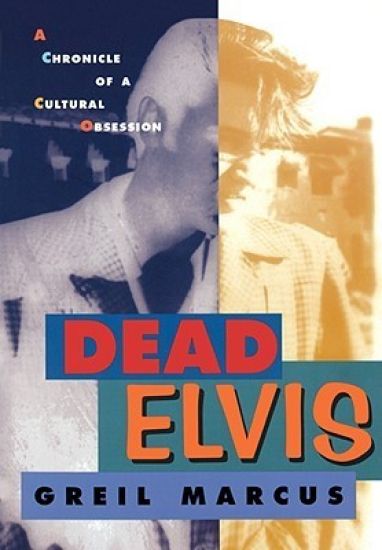
Dead Elvis

Dead Elvis

Greil Marcus

Harvard University Press
1999
nidottu
In life, Elvis Presley went from childhood poverty to stardom, from world fame to dissipation and early death. As Greil Marcus shows in this remarkable book, Presley's journey after death takes him even further, pushing him beyond his own frontiers to merge with the American public consciousness—and the American subconscious. As he listens in on the public conversation that recreates Elvis after death, Marcus tracks the path of Presley's resurrection. He grafts together scattered fragments of the eclectic dialogue—snatches of movies and music, books and newspapers, photographs, posters, cartoons—and amazes us with not only what America has been saying as it raises its late king, but also what this strange obsession with a dead Elvis can tell us about America itself.
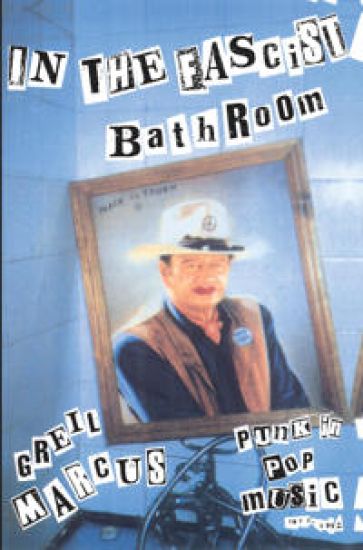
In the Fascist Bathroom

In the Fascist Bathroom

Greil Marcus

Harvard University Press
1999
nidottu
Was punk just another moment in music history, a flash in time when a group of young rebels exploded in a fury of raw sound, outrageous styles, and in-your-face attitude? Greil Marcus, author of the renowned Lipstick Traces, delves into the after-life of punk as a much richer phenomenon—a form of artistic and social rebellion that continually erupts into popular culture. In more than seventy short pieces written over fifteen years, he traces the uncompromising strands of punk from Johnny Rotten to Elvis Costello, Sonic Youth, even Bruce Springsteen. Marcus's unparalleled insight into present-day culture and brilliant ear for music bring punk's searing half-life into deep focus. Originally published in the U.S. as Ranters and Crowd Pleasers.
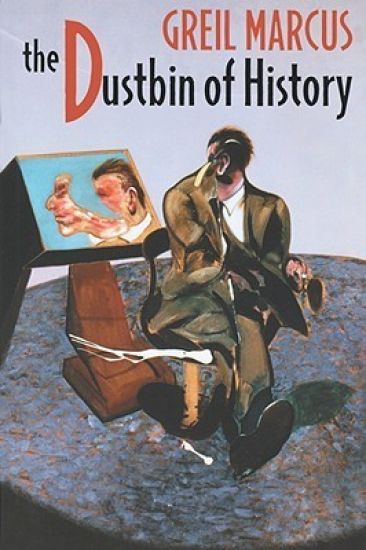
The Dustbin of History

The Dustbin of History

Greil Marcus

Harvard University Press
1997
nidottu
"How much history can be communicated by pressure on a guitar string?" Robert Palmer wondered in Deep Blues. Greil Marcus answers here: more than we will ever know. It is the history in the riff, in the movie or novel or photograph, in the actor's pose or critic's posturing--in short, the history in cultural happenstance--that Marcus reveals here, exposing along the way the distortions and denials that keep us oblivious if not immune to its lessons.Whether writing about the Beat Generation or Umberto Eco, Picasso's Guernica or the massacre in Tiananmen Square, The Manchurian Candidate or John Wayne's acting, Eric Ambler's antifascist thrillers or Camille Paglia, Marcus uncovers the histories embedded in our cultural moments and acts, and shows how, through our reading of the truths our culture tells and those it twists and conceals, we situate ourselves in that history and in the world. Rarely has a history lesson been so exhilarating. With the startling insights and electric style that have made him our foremost writer on American music, Marcus brings back to life the cultural events that have defined us and our time, the social milieu in which they took place, and the individuals engaged in them. As he does so, we see that these cultural instances--as lofty as The Book of J, as humble as a TV movie about Jan and Dean, as fleeting as a few words spoken at the height of the Berkeley Free Speech Movement, as enduring as a Paleolithic painting--often have more to tell us than the master-narratives so often passed off as faultless representations of the past.Again and again Marcus skewers the widespread assumption that history exists only in the past, that it is behind us, relegated to the dustbin. Here we see instead that history is very much with us, being made and unmade every day, and unless we recognize it our future will be as cramped and impoverished as our present sense of the past.