Kirjojen hintavertailu. Mukana 12 657 676 kirjaa ja 12 kauppaa.

Kirjailija

Griselda Pollock

Kirjat ja teokset yhdessä paikassa: 19 kirjaa, julkaisuja vuosilta 1999-2024, suosituimpien joukossa Sofonisba - History's Forgotten Miracle. Vertaile teosten hintoja ja tarkista saatavuus suomalaisista kirjakaupoista.

19 kirjaa

Kirjojen julkaisuhaarukka 1999-2024.

Sofonisba - History's Forgotten Miracle

Sofonisba - History's Forgotten Miracle

Andrea Rygg Karberg; Giorgio Vasari; Leticia Ruiz Gómez; Griselda Pollock; Søren Thorlak Madsen; Michael W. Cole; Antoon Van Dyck; Fie Ellen Jannerup

-
2023
nidottu
Hun var kendt som sin tids største kvindelige kunstmaler, et mirakel. Siden blev hun skrevet ud af kunsthistorien og glemt. Fortællingen om Sofonisba Anguissolas lange, virksomme liv under italiensk renæssance og ind i barokken er helt usædvanlig. I 2022 blev hun atter skrevet frem i historien med en ambitiøs særudstilling på Nivaagaards Malerisamling.Sofonisbas historie og mesterlige kunst er stadig til stor inspiration. Trods mere end 400 års afstand træder den eventyrlige kvindeskikkelse levende frem for os i sine selvportrætter, skriftlige kilder og gennem hendes gengivelser af mennesker, der betød noget for hende. Hun skildrede som ingen andre tidens kostbare tekstiler og smykker, oprigtige barneansigter, menneskeblikke og drømmende landskaber i baggrunden af sine tindrende smukke malerier.Sofonisba Anguissola var en kvindelig mønsterbryder og en sjælden rollemodel for sin tid. Siden gik hun i glemmebogen i takt med, at kvinder særligt i 1800-tallet blev skrevet ud af kunsthistorien.
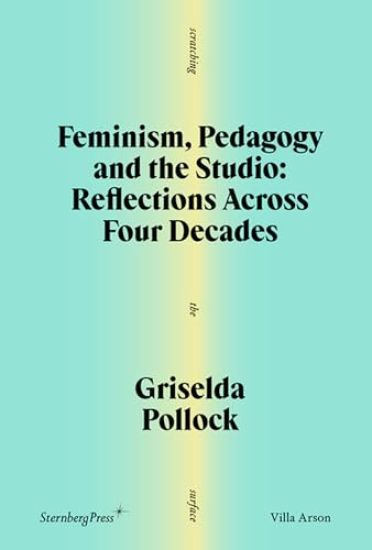
Feminism, Pedagogy and the Studio

Feminism, Pedagogy and the Studio

Griselda Pollock; Sophie Orlando

STERNBERG PRESS
2024
pokkari
Two lectures that address feminist questions and art education in the 1980s and today. Feminism, Pedagogy, and the Studio: Reflections Across Four Decades brings together two lectures delivered by feminist art historian and curator Griselda Pollock in 1985 and 2022. In 1985, Griselda Pollock critically examined the gender politics of twentieth-century art education that, she argued, reinforced masculinist and individualist ideologies within capitalist conditions of artistic production. She linked the cult of authorship to the nonrecognition of women as artists, even in the face of the evidence of women's consider-able participation in modern art. She explored the impact of a critical post-modern and feminist artistic engagement with theories of meaning, subjectivity, and the image drawn from outside the "studio" model. She ultimately proposed "feminist interventions in art's histories," where expanded histories--including race, class, gender, and sexuality--challenge both the monographic-all-male model of the hero artist and the hegemony of formalist art theory. Almost forty years later, in 2022, she revisited the impact of "1968" and its theoretical revolution. She historically situates the major geopolitical an ideological shifts since 1989 (The Fall of the Berlin Wall) and 2001 (9/11), and notably since 2007 the touch-screen phone (linking to the internet and social media). She identifies a troubling cultural tendency post-2010 that, with thanks to Derrida, she terms "insta-grammatology." Finally, she calls for a critical analysis of how the "grammar" of social media reduces the spectrum of nuanced thinking and performs a political surveillance of ideas. Copublished by Villa Arson
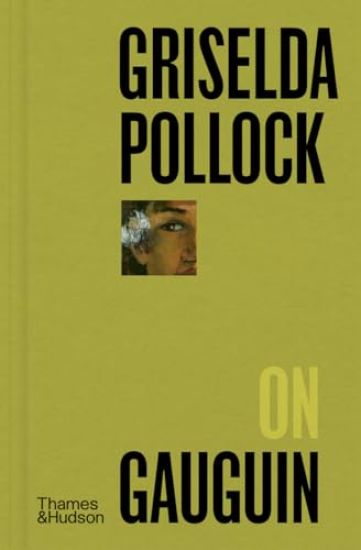
Griselda Pollock on Gauguin

Griselda Pollock on Gauguin

Griselda Pollock

THAMES HUDSON LTD
2024
sidottu
Griselda Pollock, feminist art historian and longstanding advocate of gender and racial inclusivity, unpacks the racist, sexist and imperialist underpinnings of works by Gauguin and others as they competed for pre-eminence in the European avant-garde of the 1880s and 90s. Surprising, questioning, challenging, enriching: the Pocket Perspectives series celebrates writers and thinkers who have helped shape the conversation across the arts. Mixing classic and contemporary texts, reissues and abridgements, these are bite-sized, fully illustrated reads in an attractive, affordable and highly collectable package.
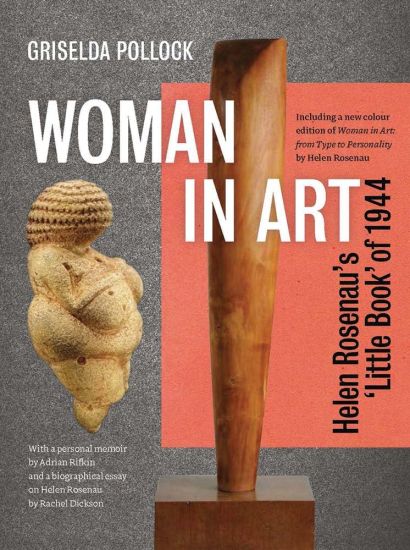
Woman in Art

Woman in Art

Griselda Pollock

Paul Mellon Centre for Studies in British Art
2023
sidottu
Griselda Pollock reintroduces an important feminist forerunner in this new, full-colour setting of Helen Rosenau’s 1944 book Woman in Art Helen Rosenau (1900–1984) was part of the influential migration of European Jewish intellectuals who fled to Britain and the United States during the 1930s, bringing with them exciting innovations in art history’s methods. Only Rosenau, however, centred gender in her analysis. The result—her book Woman in Art: From Type to Personality—is a feminist art-historical project, as relevant today as when it was first published in 1944, in which Rosenau drew on contemporary discussions of gender in anthropology, philosophy, sociology, law, theology, history, and literature. In this new volume, ahead of the eightieth anniversary of its original publication, Rosenau’s erudite and accessible text is prefaced with a personal memoir by Adrian Rifkin, who was once her student, new research into the refugee experience by Rachel Dickson, and a portrait of Rosenau as feminist intellectual by Griselda Pollock. In conversation with this new setting of the original text, richly illustrated with colour images, Pollock offers eye-opening new readings of key aspects of Rosenau’s methods, concepts, arguments, and interpretations of famous artworks, establishing the place of Rosenau’s “little book of 1944” in the historiographies of both feminist thought and cutting-edge art history across two centuries. ?Distributed for the Paul Mellon Centre for Studies in British Art A digital facsimile of Woman in Art (1944) can be found on the Internet Archive (archive.org)
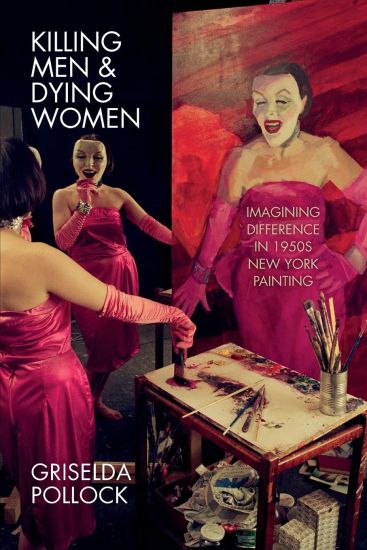
Killing Men & Dying Women

Killing Men & Dying Women

Griselda Pollock

MANCHESTER UNIVERSITY PRESS
2022
nidottu
What did it mean for painter Lee Krasner to be an artist and a woman if, in the culture of 1950s New York, to be an artist was to be Jackson Pollock and to be a woman was to be Marilyn Monroe? With this question, Griselda Pollock begins a transdisciplinary journey across the gendered aesthetics and the politics of difference in New York abstract, gestural painting. Revisiting recent exhibitions of Abstract Expressionism that either marginalised the artist-women in the movement or focused solely on the excluded women, as well as exhibitions of women in abstraction, Pollock reveals how theories of embodiment, the gesture, hysteria and subjectivity can deepen our understanding of this moment in the history of painting co-created by women and men. Providing close readings of key paintings by Lee Krasner and re-thinking her own historic examination of images of Jackson Pollock and Helen Frankenthaler at work, Pollock builds a cultural bridge between the New York artist-women and their other, Marilyn Monroe, a creative actor whose physically anguished but sexually appropriated star body is presented as pathos formula of life energy.Monroe emerges as a haunting presence within this moment of New York modernism, eroding the policed boundaries between high and popular culture and explaining what we gain by re-thinking art with the richness of feminist thought.
Killing Men & Dying Women

Killing Men & Dying Women

Griselda Pollock

MANCHESTER UNIVERSITY PRESS
2022
sidottu
What did it mean for painter Lee Krasner to be an artist and a woman if, in the culture of 1950s New York, to be an artist was to be Jackson Pollock and to be a woman was to be Marilyn Monroe? With this question, Griselda Pollock begins a transdisciplinary journey across the gendered aesthetics and the politics of difference in New York abstract, gestural painting. Revisiting recent exhibitions of Abstract Expressionism that either marginalised the artist-women in the movement or focused solely on the excluded women, as well as exhibitions of women in abstraction, Pollock reveals how theories of embodiment, the gesture, hysteria and subjectivity can deepen our understanding of this moment in the history of painting co-created by women and men. Providing close readings of key paintings by Lee Krasner and re-thinking her own historic examination of images of Jackson Pollock and Helen Frankenthaler at work, Pollock builds a cultural bridge between the New York artist-women and their other, Marilyn Monroe, a creative actor whose physically anguished but sexually appropriated star body is presented as pathos formula of life energy.Monroe emerges as a haunting presence within this moment of New York modernism, eroding the policed boundaries between high and popular culture and explaining what we gain by re-thinking art with the richness of feminist thought.
Mary Cassatt

Mary Cassatt

Griselda Pollock

THAMES HUDSON LTD
2022
nidottu
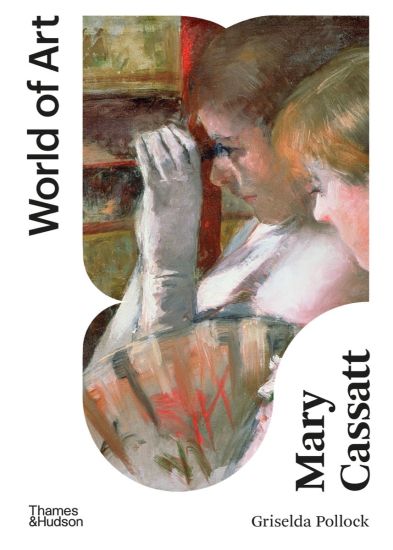
The definitive introduction to the artist Mary Cassatt, placing her work in the wider context of 19th-century feminism and art theory. A close ally of Camille Pissarro, Berthe Morisot and Edgar Degas, Mary Cassatt was the only American painter at the heart of the Impressionist group in Paris. Highly respected on both sides of the Atlantic, Cassatt was a forthright advocate for women’s intellectual, creative and political emancipation. She brought her discerning gaze and compositional inventiveness across many media to the subtle social interactions of women in public and private spaces, such as at the theatre, and in moments of intimacy with children, where she was one of the most attentive and unsentimental analysts of the infant body and the child’s emerging personality. Tracing key moments in Cassatt’s long career, art historian Griselda Pollock highlights Cassatt’s extensive artistic training across Europe, analysing her profound study of Old Masters while revealing her intelligent understanding of both Manet and Courbet. Pollock also provides close readings of Cassatt’s paintings and her singular vision of women in modernity. Now revised with a new preface, updates to the bibliography and colour illustrations throughout, this book offers a rich perspective on the core concerns of a major Impressionist artist through the frames of class, gender, space and difference.
Old Mistresses

Old Mistresses

Rozsika Parker; Griselda Pollock

Bloomsbury Academic
2020
nidottu
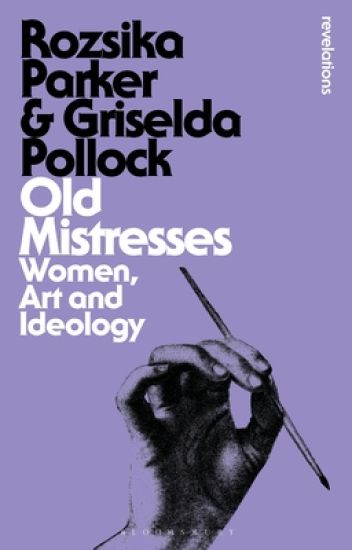
Why is everything that compromises greatness in art coded as 'feminine'? Has the feminist critique of Art History yet effected real change? With a new preface by Griselda Pollock, this edition of a truly groundbreaking book offers a radical challenge to a women-free Art History. Parker and Pollock's critique of Art History's sexism leads to expanded, inclusive readings of the art of the past. They demonstrate how the changing historical social realities of gender relations and women artists' translation of gendered conditions into their works provide keys to novel understandings of why we might study the art of the past. They go further to show how such knowledge enables us to understand art by contemporary artists who are women and can contribute to the changing self-perception and creative work of artists today.In March 2020 Griselda Pollock was awarded the Holberg Prize in recognition of her outstanding contribution to research and her influence on thinking on gender, ideology, art and visual culture worldwide for over 40 years. Old Mistresses was her first major scholarly publication which has become a classic work of feminist art history.
Charlotte Salomon and the Theatre of Memory

Charlotte Salomon and the Theatre of Memory

Griselda Pollock

Yale University Press
2018
sidottu
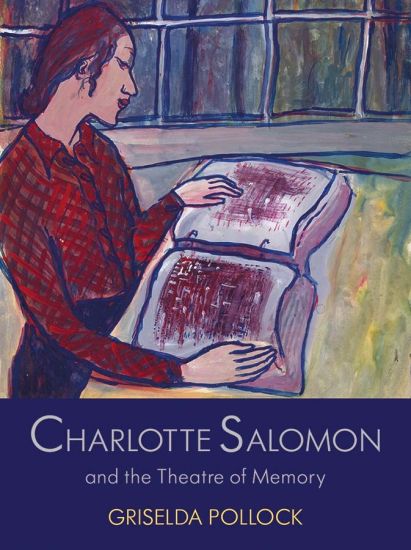
A long-awaited, new interpretation of Charlotte Salomon’s singular and complex modern artwork, Life? or Theatre? Charlotte Salomon (1917–1943) is renowned for a single, monumental, modernist artwork, Life? or Theatre? (Leben? oder Theater?), comprising 784 paintings and created between 1941 and 1942. This major art-historical study sheds new light on the remarkable combination of image, text, and music, revealing Salomon’s wealth of references to cinema, opera, Berlin cabaret, and the painter’s self-consciously deployed modernist engagements with artists such as Van Gogh, Munch, and Kollwitz. Additionally, Griselda Pollock draws attention to affinities in Salomon’s work with that of others who shared her experience of statelessness and menaced exile in Nazi-dominated Europe, including Hannah Arendt, Sigmund Freud, and Walter Benjamin. Confronting new evidence for the extremity of the young artist’s last months, Pollock examines this significant work for its equally profound testimony to the crimes of the everyday: the sexual abuse of women in their own families. Seeking to reconcile the grandeur of this project’s sweep of a violent history with its unique testimony to the anguish of women, Pollock challenges the prevailing interpretations of Salomon’s paintings as a kind of visual autobiography by threading into her detailed and illuminating visual analyses of the painter’s philosophical art-making a dynamic range of insights from feminist and Jewish studies of modern subjectivity, story-telling, memory work, and historical trauma.
Vision and Difference

Vision and Difference

Griselda Pollock

Routledge
2015
sidottu
Griselda Pollock provides concrete historical analyses of key moments in the formation of modern culture to reveal the sexual politics at the heart of modernist art. Crucially, she not only explores a feminist re-reading of the works of canonical male Impressionist and Pre-Raphaelite artists including Edgar Degas and Dante Gabriel Rossetti, but also re-inserts into art history their female contemporaries - women artists such as Berthe Morisot and Mary Cassatt. Pollock discusses the work of women artists such as Mary Kelly and Yve Lomax, highlighting the problems of working in a culture where the feminine is still defined as the object of the male gaze. Now published with a new introduction, Vision and Difference is as powerful as ever for all those seeking not only to understand the history of the feminine in art, but also to develop new strategies for representation for the future.
After-Affects | After-Images

After-Affects | After-Images

Griselda Pollock

Manchester University Press
2013
nidottu
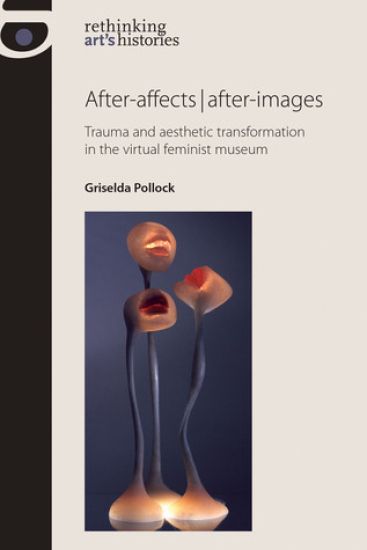
Do artists travel away from or towards trauma? Is trauma encrypted or inscribed in art? Or can aesthetic practices (after-images) bring about transformation of trauma, personal trauma or historical traumas? Can they do this in a way that does not imply cure or resolution of the traces (after-affects) of trauma? How do artists themselves process these traces as participants in and sensors for our life-worlds and histories, and how does the viewer, coming belatedly or from elsewhere, encounter works bearing such traces or seeking forms through which to touch and transform them?These are some of the questions posed by major feminist art historian and cultural analyst, Griselda Pollock, in her latest installation of the virtual feminist museum. In closely-read case studies, we encounter artworks by Gian Lorenzo Bernini, Ana Mendieta, Louise Bourgeois, Alina Szapocznikow, Anna Maria Maiolino, Vera Frenkel, Sarah Kofman and Chantal Akerman to explore trauma and bereavement, fatal illness, first- and second-generation Holocaust experience, migration, exile and the encounter with political horror and atrocity. Offering a specifically-feminist contribution to trauma studies, and a feminist psychoanalytical contribution to the study of contemporary art, this volume continues the conceptual innovations that have been the hall-mark of Pollock’s dedicated exploration of feminist interventions in art’s histories.
The Sacred and the Feminine

The Sacred and the Feminine

Griselda Pollock; Victoria Turvey-Sauron

I.B. Tauris
2008
nidottu
The notion of a special intimacy between 'the feminine and the sacred' has received significant attention since the publication of Julia Kristeva and Catherine Clement's famous ecumenical "Conversation" of the same name which focused on the relationship between meaning and the body at whose interface the feminine is positioned. Brought to the wider public as the 'sacred feminine', it has also made its mark on popular culture. Taking up the debate and moving beyond anthropology or theology, writers from varied ethnic, geo-cultural and religious perspectives here join with secular cultural analysts to explore the sacred and the feminine in art, architecture, literature, art history, music, philosophy, theology, critical theory and cultural studies. The book addresses key issues in feminist questions of creativity, the imaginary and the sacred as 'otherness', exploring the ways in which visual practices have explored this rich, contested and highly charged territory.
Encounters in the Virtual Feminist Museum
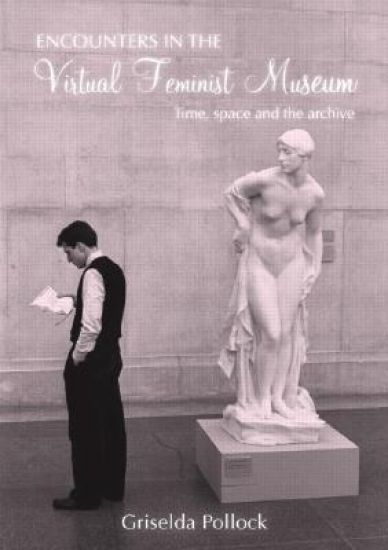
Continuing her feminist reconceptualisation of the ways we can experience and study the visual arts, world renowned art historian and cultural analyst, Griselda Pollock proposes a series of new encounters through virtual exhibitions with art made by women over the twentieth century. Challenging the dominant museum models of art and history that have been so exclusive of women's artistic contributions to the twentieth century, the virtual feminist museum stages some of the complex relations between femininity, modernity and representation.Griselda Pollock draws on the models of both Aby Warburg's Mnemosyne Atlas and Freud's private museum of antiquities as well as Ettinger's concept of subjectivity as encounter to propose a differencing journey through time, space and archive. Featuring studies of Canova 's Three Graces and women artist's modernist reclamations of the female body, the book traverses the rupture of fascism and the Holocaust and ponders the significance of painting and drawing in their aftermath. Artists featured include: Georgia O'Keeffe, Josephine Baker, Gluck, Charlotte Salomon, Bracha Ettinger and Christine Taylor Patten.
Encounters in the Virtual Feminist Museum
Continuing her feminist reconceptualisation of the ways we can experience and study the visual arts, world renowned art historian and cultural analyst, Griselda Pollock proposes a series of new encounters through virtual exhibitions with art made by women over the twentieth century. Challenging the dominant museum models of art and history that have been so exclusive of women's artistic contributions to the twentieth century, the virtual feminist museum stages some of the complex relations between femininity, modernity and representation.Griselda Pollock draws on the models of both Aby Warburg's Mnemosyne Atlas and Freud's private museum of antiquities as well as Ettinger's concept of subjectivity as encounter to propose a differencing journey through time, space and archive. Featuring studies of Canova 's Three Graces and women artist's modernist reclamations of the female body, the book traverses the rupture of fascism and the Holocaust and ponders the significance of painting and drawing in their aftermath. Artists featured include: Georgia O'Keeffe, Josephine Baker, Gluck, Charlotte Salomon, Bracha Ettinger and Christine Taylor Patten.
Vision and Difference

Vision and Difference

Griselda Pollock

Routledge
2003
nidottu
Griselda Pollock provides concrete historical analyses of key moments in the formation of modern culture to reveal the sexual politics at the heart of modernist art. Crucially, she not only explores a feminist re-reading of the works of canonical male Impressionist and Pre-Raphaelite artists including Edgar Degas and Dante Gabriel Rossetti, but also re-inserts into art history their female contemporaries - women artists such as Berthe Morisot and Mary Cassatt. Pollock discusses the work of women artists such as Mary Kelly and Yve Lomax, highlighting the problems of working in a culture where the feminine is still defined as the object of the male gaze. Now published with a new introduction, Vision and Difference is as powerful as ever for all those seeking not only to understand the history of the feminine in art, but also to develop new strategies for representation for the future.
Looking Back to the Future

Looking Back to the Future

Griselda Pollock

Routledge
2001
sidottu
In this selection of recent essays, Pollock insightfully engages all major areas of contemporary theory, especially focusing on sexed subjectivities, post-colonialism and Marxist-informed history. In her commentary, Penny Florence places Pollock's critique of modernism, art history, and criticism within the context of the social, political, and ideological developments that have taken place since the 1970s. Florence recognizes in Pollock's work a critical model that moves beyond the contradictions that take place within the history of art. Pollock's own essays and Florence's commentary elaborate the complexities in evaluating this prominent theorist and feminist, whose work demands a capacity to sustain contradiction.
Looking Back to the Future

Looking Back to the Future

Griselda Pollock

Routledge
2001
nidottu
In this selection of recent essays, Pollock insightfully engages all major areas of contemporary theory, especially focusing on sexed subjectivities, post-colonialism and Marxist-informed history. In her commentary, Penny Florence places Pollock's critique of modernism, art history, and criticism within the context of the social, political, and ideological developments that have taken place since the 1970s. Florence recognizes in Pollock's work a critical model that moves beyond the contradictions that take place within the history of art. Pollock's own essays and Florence's commentary elaborate the complexities in evaluating this prominent theorist and feminist, whose work demands a capacity to sustain contradiction.
Differencing the Canon

Differencing the Canon

Griselda Pollock

Routledge
1999
sidottu
In this major book, Griselda Pollock engages boldly in the culture wars over `what is the canon?` and `what difference can feminism make?` Do we simply reject the all-male line-up and satisfy our need for ideal egos with an all women litany of artistic heroines? Or is the question a chance to resist the phallocentric binary and allow the ambiguities and complexities of desire - subjectivity and sexuality - to shape the readings of art that constantly displace the present gender demarcations?
Differencing the Canon

Differencing the Canon

Griselda Pollock

Routledge
1999
nidottu
In this major book, Griselda Pollock engages boldly in the culture wars over `what is the canon?` and `what difference can feminism make?` Do we simply reject the all-male line-up and satisfy our need for ideal egos with an all women litany of artistic heroines? Or is the question a chance to resist the phallocentric binary and allow the ambiguities and complexities of desire - subjectivity and sexuality - to shape the readings of art that constantly displace the present gender demarcations?