Kirjailija
Gunter Bischof
Kirjat ja teokset yhdessä paikassa: 11 kirjaa, julkaisuja vuosilta 1995-2020, suosituimpien joukossa Auftrag Zukunft: 3000 Zeichen für Gedenken, Toleranz und Demokratie. Vertaile teosten hintoja ja tarkista saatavuus suomalaisista kirjakaupoista.
Mukana myös kirjoitusasut: Günter Bischof
11 kirjaa
Kirjojen julkaisuhaarukka 1995-2020.
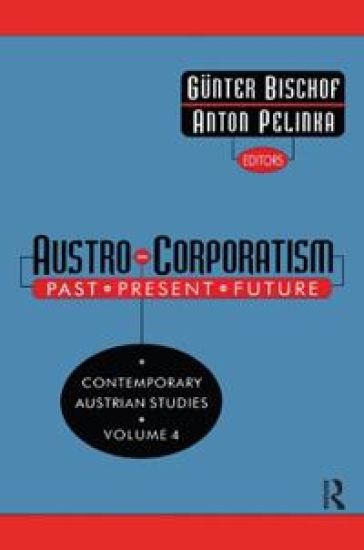
Corporatism was unpopular in the Europe of the past decade. During a time of neo-conservative resurgence in both the United States and the United Kingdom, macroeconomic steering and statist centralism and regulation were in disfavor. However, Austria's unique Sozialpartnerschaft, its famed system of tripartite informal and formal labor, business, and state cooperation, continued to prosper in spite of such powerful Anglo-American trends. Austro-Corporatism is the fourth volume in the interdisciplinary Contemporary Austrian Studies series. This effort in particular reflects the uniqueness of Austrian corporatism, and looks at its deep historical roots from a comparative continental European perspective.The contributors include specialists on Austria from all parts of the world, making this a truly international effort. Andrei Markovits provides the larger European context for this analysis of Austrian corporatism. Emmerich Talos and Bernhard Kittel review the historical development of Austrian corporatism, going back to its nineteenth-century roots. Randall Kindley studies the institutional framework of Austrian corporatism, particularly its post-World War II reincarnation. Hans Seidel looks at the subject from a neo-Keynesian economic perspective, and Ferdinand Karlhofer at the chances of its survival in a changing international environment.Jonathan Petropoulos presents a fascinating biographical study of Nazi art plunderer Kajetan Muhlmann, and David McIntosh compares Eisenhower's policy vis-a-vis the small friendly countries of Lebanon, Costa Rica, and Austria. A special forum looks at the model character and appeal of tripartite Austrian cooperation among its new eastern democratic neighbors: the Czech Republic, Slovakia, Hungary, and Slovenia. A number of reviews of Austrian politics in 1994 complete the volume. Austro-Corporatism will be of intense interest to foreign policy analysts, historians, and scholars concerned with the unique elements in Central European politics.
Auftrag Zukunft: 3000 Zeichen für Gedenken, Toleranz und Demokratie
Günter Bischof; Barbara Stelzl-Marx; Katharina Bergmann-Pfleger
Bohlau Verlag
2020
isokokoinen pokkari
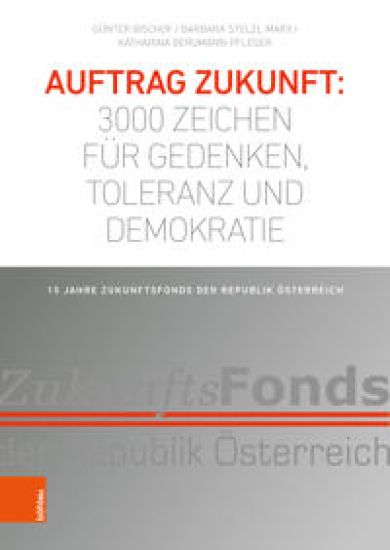
Seit 15 Jahren ist der Zukunftsfonds der Republik Osterreich im Auftrag des "Niemals wieder " zum Gedenken an die Opfer des NS-Regimes, zur Bekampfung jeder Form von Antisemitismus und Rassismus sowie vor allem zur Wahrung von Demokratie und Menschenrechten und zur Forderung von Toleranz und internationaler Verstandigung tatig. Im Dezember 2005 per Bundesgesetz errichtet, leistet der OZF seitdem einen unverzichtbaren Beitrag zur Forderung einer nachhaltigen und zukunftsorientierten Erinnerungskultur. Nicht nur das Engagement der Zukunftsfonds-Gremien, sondern gerade auch die geforderten Projekte haben zu einem mittlerweile offeneren Umgang mit belasteten Themen in der osterreichischen Offentlichkeit gefuhrt: Von wissenschaftlicher Forschung bis hin zu zivilgesellschaftlichen Initiativen auch auf dem Kunst- und Kultursektor werden diese Projekte bis Ende des Jahres 2020 rund 3000 Mal zur Bewusstseinsbildung beigetragen haben. Das Buch prasentiert die wichtigsten Etappen der Entstehung und Tatigkeit des Zukunftsfonds. Neben einer Dokumentation seiner Wirkungsweisen analysiert es die Bedeutung des Fonds fur Forschung und Gesellschaft. Exemplarisch dargestellte Projekte geben zudem einen Einblick in die Vielfalt seiner Fordertatigkeit.
Austrian Foreign Policy in Historical Context
Anton Pelinka; Gunter Bischof; Michael Gehler
Routledge
2018
sidottu
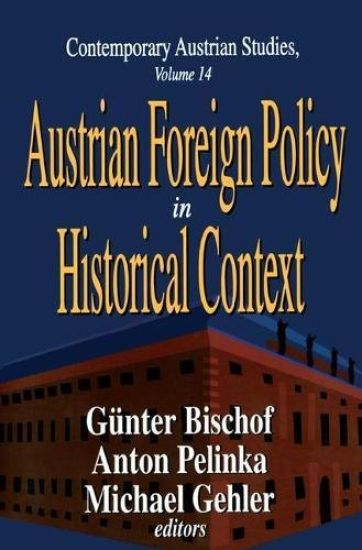
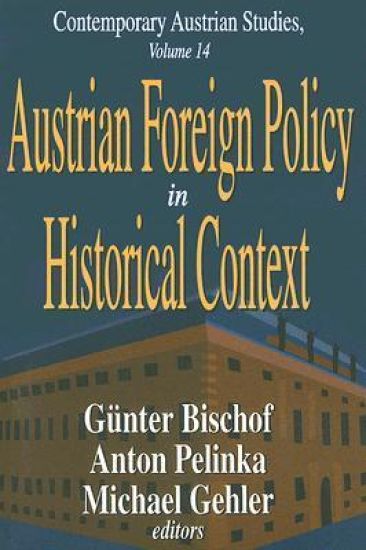
In 2005, Austria celebrated the sixtieth anniversary of its liberation from the Nazi regime and the fiftieth anniversary of the State Treaty that ended the occupation and returned full sovereignty to the country. This volume of Contemporary Austrian Studies covers foreign policy in the twentieth century. It offers an up-to-date status report of Austria's foreign policy trajectories and diplomatic options.Eva Nowotny, the current Austrian ambassador to the United States, introduces the volume with an analysis of the art and practice of Austrian diplomacy in historical perspective. Ambassador Wolfgang Petritsch analyzes recent Balkans diplomacy as an EU emissary in the Bosnian and Kosovo crises. Historians Günther Kronenbitter, Alexander Lassner, Günter Bischof, Joanna Granville, and Martin Kofler provide historical case studies of pre-and post-World War I and World War II Austrian diplomacy, Austria's dealings with the Hungarian crisis of 1956, and its mediation between Kennedy and Khrushchev in the early 1960s. Political scientists Romain Kirt, Stefan Mayer, and Gunther Hauser analyze small states' foreign policymaking in a globalizing world, Austrian federal states' separate regional policy initiatives abroad and Austria's role vis-à-vis current European security initiatives. Michael Gehler periodizes post-World War II Austrian foreign policy regimes and provides a valuable summary of both the available archival and printed diplomatic source collections. A "Historiography Roundtable" is dedicated to the Austrian Occupation decade. Günter Bischof reports on the state of occupation historiography; Oliver Rathkolb on the historical memory of the occupation; Michael Gehler on the context of the German question; and Wolfgang Mueller and Norman Naimark on Stalin's Cold War and Soviet policies towards Austria during those years. Review essays and book reviews on art theft, anti-Semitism, the Hungarian crisis of 1956, among other topics, complete the volume.
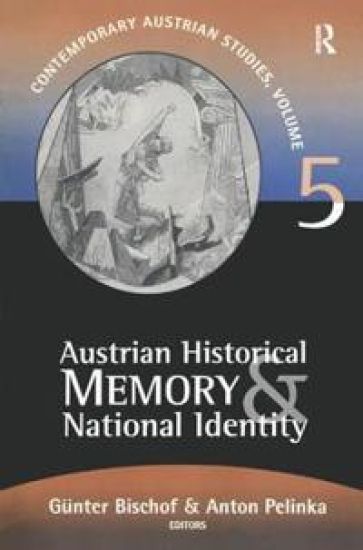
When the Hapsburg monarchy disintegrated after World War I, Austria was not considered to be a viable entity. In a vacuum of national identity the hapless country drifted toward a larger Germany. After World War II, Austrian elites constructed a new identity based on being a "victim" of Nazi Germany. Cold war Austria, however, envisioned herself as a neutral "island of the blessed" between and separate from both superpower blocs. Now, with her membership in the European Union secured, Austria is reconstructing her painful historical memory and national identity. In 1996 she celebrates her 1000-year anniversary.In this volume of Contemporary Austrian Studies, Franz Mathis and Brigitte Mazohl-Wallnig argue that regional identities in Austria have deeper historical roots than the many artificial and ineffective attempts to construct a national identity. Heidemarie Uhl, Anton Pelinka, and Brigitte Bailer discuss the post-World War II construction of the victim mythology. Robert Herzstein analyses the crucial impact of the 1986 Waldheim election imploding Austria's comforting historical memory as a "nation of victims." Wolfram Kaiser shows Austria's difficult adjustments to the European Union and the larger challenges of constructing a new "European identity." Chad Berry's analysis of American World War II memory establishes a useful counterpoint to construction of historical memory in a different national context.A special forum on Austrian intelligence studies presents a fascinating reconstruction by Timothy Naftali of the investigation by Anglo-American counterintelligence into the retreat of Hitler's troops into the Alps during World War II. Rudiger Overmans' "research note" presents statistics on lower death rates of Austrian soldiers in the German army. Review essays by Gunther Kronenbitter and Gunter Bischof, book reviews, and a 1995 survey of Austrian politics round out the volume. Austrian Historical Memory and National Identity will be of intense interest to foreign policy analysts, historians, and scholars concerned with the unique elements of identity and nationality in Central European politics.
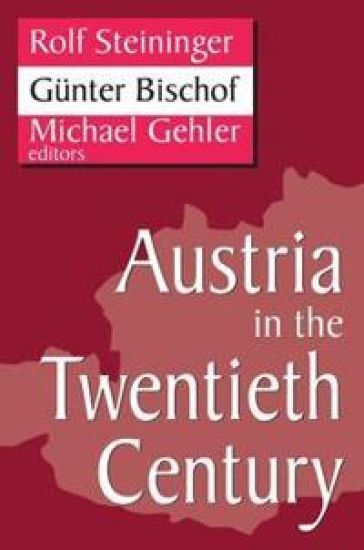
These fourteen essays by leading Austrian historians and political scientists serve as a basic introduction to a small but sometimes trend-setting European country. They provide a basic up-to-date outline of Austria's political history, shedding light on economic and social trends as well. No European country has experienced more dramatic turning points in its twentieth-century history than Austria. This volume divides the century into three periods. The five essays of Section I deal with the years 1900-1938. Under the relative tranquility of the late Habsburg monarchy seethed a witch's brew of social and political trends, signaling the advent of modernity and leading to the outbreak of World War I and eventually to the collapse of the Habsburg Empire. The First Austrian Republic was one of the succession states that tried to build a nation against the backdrop of political and economic crisis and simmering civil war between the various political camps. Democracy collapsed in 1933 and an authoritarian regime attempted to prevail against pressures from Nazi Germany and Nazis at home. The two essays in Section II cover World War II (1938-1945). In 1938, Hitler's "Third Reich" annexed Austria and the population was pulled into the cauldron of World War II, fighting and collaborating with the Nazis, and also resisting and fleeing them. The seven essays of Section III concentrate on the Second Republic (1945 to the present). After ten years of four-power Allied occupation, Austria regained her sovereignty with the Austrian State Treaty of 1955. The price paid was neutrality. Unlike the turmoil of the prewar years, Austria became a "normal" nation with a functioning democracy, one building toward economic prosperity. After the collapse of the "iron curtain" in 1989, Austria turned westward, joining the European Union in 1995. Most recently, with the advent of populist politics, Austria's political system has experienced a sea of change departing from its political economy of a huge state-owned sector and social partnership as well as Proporz.This informed and insightful volume will serve as a textbook in courses on Austrian, German and European history, as well as in comparative European politics.
After the breakup of the Habsburg Monarchy, the Austrian-American relationship was one of a dwarf confronting a giant. America continued to offer a better life for many Austrian emigrants, while for America the small Austrian Republic was insignificant. However, there were times when Austria mattered geopolitically. During the post-World War II occupation of Austria, the US helped reconstruct Austria economically and was the biggest champion of its independence. During the Cold War, the US frequently used Austria as a mediator site for summit meetings. Austria adopted American mass-production models and consumerism, while its youth adopted American popular culture. Americanization and American preponderance also produced anti-American feelings. With Austria's accession to the European Union at the end of the Cold War, it once again lost significance within Washington's geopolitics.
From Empire to Republic: Post-World War I Austria
Günter Bischof; Fritz Plasser; Peter Berger
BoD - Books on Demand
2010
nidottu
These fourteen essays by leading Austrian historians and political scientists serve as a basic introduction to a small but sometimes trend-setting European country. They provide a basic up-to-date outline of Austria's political history, shedding light on economic and social trends as well. No European country has experienced more dramatic turning points in its twentieth-century history than Austria. This volume divides the century into three periods. The five essays of Section I deal with the years 1900-1938. Under the relative tranquility of the late Habsburg monarchy seethed a witch's brew of social and political trends, signaling the advent of modernity and leading to the outbreak of World War I and eventually to the collapse of the Habsburg Empire. The First Austrian Republic was one of the succession states that tried to build a nation against the backdrop of political and economic crisis and simmering civil war between the various political camps. Democracy collapsed in 1933 and an authoritarian regime attempted to prevail against pressures from Nazi Germany and Nazis at home. The two essays in Section II cover World War II (1938-1945). In 1938, Hitler's "Third Reich" annexed Austria and the population was pulled into the cauldron of World War II, fighting and collaborating with the Nazis, and also resisting and fleeing them. The seven essays of Section III concentrate on the Second Republic (1945 to the present). After ten years of four-power Allied occupation, Austria regained her sovereignty with the Austrian State Treaty of 1955. The price paid was neutrality. Unlike the turmoil of the prewar years, Austria became a "normal" nation with a functioning democracy, one building toward economic prosperity. After the collapse of the "iron curtain" in 1989, Austria turned westward, joining the European Union in 1995. Most recently, with the advent of populist politics, Austria's political system has experienced a sea of change departing from its political economy of a huge state-owned sector and social partnership as well as Proporz.This informed and insightful volume will serve as a textbook in courses on Austrian, German and European history, as well as in comparative European politics.
Austrian Foreign Policy in Historical Context
Anton Pelinka; Gunter Bischof; Michael Gehler
AldineTransaction
2005
nidottu
In 2005, Austria celebrated the sixtieth anniversary of its liberation from the Nazi regime and the fiftieth anniversary of the State Treaty that ended the occupation and returned full sovereignty to the country. This volume of Contemporary Austrian Studies covers foreign policy in the twentieth century. It offers an up-to-date status report of Austria's foreign policy trajectories and diplomatic options.Eva Nowotny, the current Austrian ambassador to the United States, introduces the volume with an analysis of the art and practice of Austrian diplomacy in historical perspective. Ambassador Wolfgang Petritsch analyzes recent Balkans diplomacy as an EU emissary in the Bosnian and Kosovo crises. Historians Günther Kronenbitter, Alexander Lassner, Günter Bischof, Joanna Granville, and Martin Kofler provide historical case studies of pre-and post-World War I and World War II Austrian diplomacy, Austria's dealings with the Hungarian crisis of 1956, and its mediation between Kennedy and Khrushchev in the early 1960s. Political scientists Romain Kirt, Stefan Mayer, and Gunther Hauser analyze small states' foreign policymaking in a globalizing world, Austrian federal states' separate regional policy initiatives abroad and Austria's role vis-à-vis current European security initiatives. Michael Gehler periodizes post-World War II Austrian foreign policy regimes and provides a valuable summary of both the available archival and printed diplomatic source collections. A "Historiography Roundtable" is dedicated to the Austrian Occupation decade. Günter Bischof reports on the state of occupation historiography; Oliver Rathkolb on the historical memory of the occupation; Michael Gehler on the context of the German question; and Wolfgang Mueller and Norman Naimark on Stalin's Cold War and Soviet policies towards Austria during those years. Review essays and book reviews on art theft, anti-Semitism, the Hungarian crisis of 1956, among other topics, complete the volume.
When the Hapsburg monarchy disintegrated after World War I, Austria was not considered to be a viable entity. In a vacuum of national identity the hapless country drifted toward a larger Germany. After World War II, Austrian elites constructed a new identity based on being a "victim" of Nazi Germany. Cold war Austria, however, envisioned herself as a neutral "island of the blessed" between and separate from both superpower blocs. Now, with her membership in the European Union secured, Austria is reconstructing her painful historical memory and national identity. In 1996 she celebrates her 1000-year anniversary.In this volume of Contemporary Austrian Studies, Franz Mathis and Brigitte Mazohl-Wallnig argue that regional identities in Austria have deeper historical roots than the many artificial and ineffective attempts to construct a national identity. Heidemarie Uhl, Anton Pelinka, and Brigitte Bailer discuss the post-World War II construction of the victim mythology. Robert Herzstein analyses the crucial impact of the 1986 Waldheim election imploding Austria's comforting historical memory as a "nation of victims." Wolfram Kaiser shows Austria's difficult adjustments to the European Union and the larger challenges of constructing a new "European identity." Chad Berry's analysis of American World War II memory establishes a useful counterpoint to construction of historical memory in a different national context.A special forum on Austrian intelligence studies presents a fascinating reconstruction by Timothy Naftali of the investigation by Anglo-American counterintelligence into the retreat of Hitler's troops into the Alps during World War II. Rudiger Overmans' "research note" presents statistics on lower death rates of Austrian soldiers in the German army. Review essays by Gunther Kronenbitter and Gunter Bischof, book reviews, and a 1995 survey of Austrian politics round out the volume. Austrian Historical Memory and National Identity will be of intense interest to foreign policy analysts, historians, and scholars concerned with the unique elements of identity and nationality in Central European politics.
Corporatism was unpopular in the Europe of the past decade. During a time of neo-conservative resurgence in both the United States and the United Kingdom, macroeconomic steering and statist centralism and regulation were in disfavor. However, Austria's unique Sozialpartnerschaft, its famed system of tripartite informal and formal labor, business, and state cooperation, continued to prosper in spite of such powerful Anglo-American trends. Austro-Corporatism is the fourth volume in the interdisciplinary Contemporary Austrian Studies series. This effort in particular reflects the uniqueness of Austrian corporatism, and looks at its deep historical roots from a comparative continental European perspective.The contributors include specialists on Austria from all parts of the world, making this a truly international effort. Andrei Markovits provides the larger European context for this analysis of Austrian corporatism. Emmerich Talos and Bernhard Kittel review the historical development of Austrian corporatism, going back to its nineteenth-century roots. Randall Kindley studies the institutional framework of Austrian corporatism, particularly its post-World War II reincarnation. Hans Seidel looks at the subject from a neo-Keynesian economic perspective, and Ferdinand Karlhofer at the chances of its survival in a changing international environment.Jonathan Petropoulos presents a fascinating biographical study of Nazi art plunderer Kajetan Muhlmann, and David McIntosh compares Eisenhower's policy vis-a-vis the small friendly countries of Lebanon, Costa Rica, and Austria. A special forum looks at the model character and appeal of tripartite Austrian cooperation among its new eastern democratic neighbors: the Czech Republic, Slovakia, Hungary, and Slovenia. A number of reviews of Austrian politics in 1994 complete the volume. Austro-Corporatism will be of intense interest to foreign policy analysts, historians, and scholars concerned with the unique elements in Central European politics.