Kirjailija
Guy Claxton
Kirjat ja teokset yhdessä paikassa: 19 kirjaa, julkaisuja vuosilta 1998-2026, suosituimpien joukossa Wholly Human. Vertaile teosten hintoja ja tarkista saatavuus suomalaisista kirjakaupoista.
19 kirjaa
Kirjojen julkaisuhaarukka 1998-2026.
Bodies of Learning is a bold reimagining of education through the lens of embodiment science. Claxton and Poel challenge outdated assumptions that separate mind and body, revealing the interconnectedness of the ‘bodymind’. Drawing on cutting-edge research in embodied cognition, this book offers a transformative vision for education that integrates heart, gut, brain, feeling and action into the learning process, reshaping how we think about intelligence, learning, and teaching. For decades, educational reform has stalled due to fixed beliefs that prioritise intellectual understanding over physical and emotional intelligence. Bodies of Learning dismantles these barriers, showing how learning is deeply intuitive, emotional, and physical. The authors present practical strategies to create classrooms that work with, rather than against, human nature, while advocating for structural changes to reimagine schools as spaces for mastering the crafts of thinking, problem-solving, and real-world learning. This accessible and inspiring book goes beyond advocating for better nutrition and exercise in schools. It calls for a fundamental shift in how we teach, recognising intelligence as a dynamic blend of memory, bodily awareness, intuition, and emotion. Packed with actionable ideas and reflective exercises, Bodies of Learning is essential reading for educators, as well as anyone passionate about creating a truly holistic and effective education system for the future.
Originally published in 1981, the subject matter of Wholly Human is integrated Man, the man whose functions and faculties work together in harmony, the man who is wholly human – aware and accepting of the disparities between who he thinks he is and who he really is. In the first part of this book the author looks at the different ways in which we lose sight of our wholeness, as well as therapies and techniques for reintegration available at the time. In the second part he looks at the ways in which integrated man perceives and acts once he has seen through the fallacious ideas he has been given about himself. In order to explain the nature of integrity the author develops an integrated approach to psychology. He combines the practical and psychological wisdom of the East with contemporary Western theories of the Self. Written in a lively and engaging style, the book will be of interest not only to psychologists but to all those who have asked themselves that most slippery of questions: Who am I? The author is uniquely equipped to guide the reader on this voyage of self-discovery. Having immersed himself both in theoretical psychology and in the first-hand experience of many therapeutic and meditative techniques, he writes with an authority that is at once intellectual and existential.
Originally published in 1981, the subject matter of Wholly Human is integrated Man, the man whose functions and faculties work together in harmony, the man who is wholly human – aware and accepting of the disparities between who he thinks he is and who he really is.In the first part of this book the author looks at the different ways in which we lose sight of our wholeness, as well as therapies and techniques for reintegration available at the time. In the second part he looks at the ways in which integrated man perceives and acts once he has seen through the fallacious ideas he has been given about himself. In order to explain the nature of integrity the author develops an integrated approach to psychology. He combines the practical and psychological wisdom of the East with contemporary Western theories of the Self.Written in a lively and engaging style, the book will be of interest not only to psychologists but to all those who have asked themselves that most slippery of questions: Who am I? The author is uniquely equipped to guide the reader on this voyage of self-discovery. Having immersed himself both in theoretical psychology and in the first-hand experience of many therapeutic and meditative techniques, he writes with an authority that is at once intellectual and existential.
It’s time for the educational slugfest to stop. ‘Traditional’ and ‘progressive’ education are both caricatures, and bashing cartoon images of each other is unprofitable and unedifying. The search for a new model of education – one that is genuinely empowering for all young people – is serious and necessary. Some good progress has already been made, but teachers and school leaders are being held back by specious beliefs, false oppositions and the limited thinking of orthodoxy. Drawing on recent experience in England, North America and Australasia, but applicable round the world, The Future of Teaching clears away this logjam of bad science and slack thinking and frees up the stream of much-needed innovation. This timely book aims to banish arguments based on false claims about the brain and poor understanding of cognitive science, reclaim the nuanced middle ground of teaching that develops both rigorous knowledge and ‘character’, and lay the foundations for a 21st-century education worthy of the name.
Powering Up Your School
Guy Claxton; Jann Robinson; Rachel Macfarlane; Graham Powell; Gemma Goldenberg; Robert Cleary
Crown House Publishing
2020
nidottu
Guy Claxton and Graham Powell's Powering Up Students details the small tweaks to daily practice that will help secondary school teachers attend more closely to the ways in which they can boost their students' learning dispositions and attitudes. The Learning Power Approach (LPA) is a pedagogical formula which aims to develop all students as confident and capable learners - ready, willing and able to choose, design, research, pursue, troubleshoot and evaluate learning for themselves, alone and with others, in school and out. This approach therefore empowers teachers to complement their delivery of content, knowledge and skills with the nurturing of positive habits of mind that will better prepare students to flourish in later life. Building upon the foundations carefully laid by Guy's first book in the Learning Power series, The Learning Power Approach, this new instalment embeds the ideas of his influential method in the context of the secondary school. Guy and Graham provide a thorough explanation of how the LPA's core components apply to this level of education and, by presenting a wide range of classroom examples, illustrate how they can be put into practice in different curricular areas - focusing especially on embedding the learning dispositions into learners' tackling of more demanding content, while emphasising the need to `get the grades' as well. Suitable for both newly qualified and experienced secondary school teachers.
In Powering Up Children Guy Claxton and Becky Carlzon harness the design principles of the Learning Power Approach to provide a rich resource of effective teaching strategies for use in the primary school classroom. The Learning Power Approach (LPA) is a pedagogical formula which aims to develop all pupils as confident and capable learners – ready, willing and able to choose, design, research, pursue, troubleshoot and evaluate learning for themselves, alone and with others, in school and out. This approach therefore empowers teachers to complement their delivery of content, knowledge and skills with the nurturing of positive habits of mind that will better prepare students to flourish in later life. Building upon the foundations carefully laid by Guy’s first book in the Learning Power series, The Learning Power Approach, this new instalment embeds the ideas of his influential method in the context of the primary school. Guy and Becky offer a thorough explanation of how the LPA’s core components apply to this level of education and, by presenting a wide range of classroom examples, illustrate how they can be put into practice with different age groups (from the early years through to age 11) and in different curricular areas – especially relating to literacy and numeracy, but also in specific subjects such as science, history, art and PE. Suitable for both newly qualified and experienced primary school teachers.
Education Forward: Moving Schools into the Future
Guy Claxton; Mark Stevenson; Valerie Hanson
Crux Publishing
2017
nidottu
Too often, we think of school as a fixed-rail path we all have to follow: teachers teach, students learn, exams are taken, futures set. That's how it's been since the introduction of compulsory schooling in the 19th century.But parents, teachers and corporations around the world are now voicing their dissatisfaction with education systems that are no longer fit for purpose. Too many of our young people are not being adequately prepared for the unprecedented challenges they will face in a world that is changing as rapidly as ours is. We should be preparing them for the test of life, not a life of tests.A group of distinctive voices - working in education and beyond - has produced a collection of essays that presents a call to action, a positive way forward, and a programme of change. Education Forward challenges us all to find another story for the future of schools.
An enthralling exploration that upends the prevailing view of consciousness and demonstrates how intelligence is literally embedded in the palms of our hands If you think that intelligence emanates from the mind and that reasoning necessitates the suppression of emotion, you’d better think again—or rather not “think” at all. In his provocative new book, Guy Claxton draws on the latest findings in neuroscience and psychology to reveal how our bodies—long dismissed as mere conveyances—actually constitute the core of our intelligent life. From the endocrinal means by which our organs communicate to the instantaneous decision-making prompted by external phenomena, our bodies are able to perform intelligent computations that we either overlook or wrongly attribute to our brains. Embodied intelligence is one of the most exciting areas in contemporary philosophy and neuropsychology, and Claxton shows how the privilege given to cerebral thinking has taken a toll on modern society, resulting in too much screen time, the diminishment of skilled craftsmanship, and an overvaluing of white-collar over blue-collar labor. Discussing techniques that will help us reconnect with our bodies, Claxton shows how an appreciation of the body’s intelligence will enrich all our lives.
Writing principally for teachers-in-training and for new teachers, Guy Claxton offers a fresh approach to what is often a stuffy and polemical area. New teachers today are being bombarded from all sides with advice, prescriptions and demands about what they ought to be, and about personal and professional standards they ought to attain. The person they are gets to feel more and more ignored, unvalued and inadequate. The message of The Little Ed Book is that the answers to all the questions a teacher must confront – both practical and ideological – are already within him or her, and that, whatever they are, they are worthy of respect. Just as a map of a city is useless unless you can locate yourself, so you must find and value the teacher that you are, before you can become the teacher you can be.
Teachers from schools across the world believe that there is more to education than success in examinations. Many practitioners are becoming increasingly familiar with expansive education concepts such as learning dispositions, habits of mind, and expandable intelligence, and are striving to instill these valuable mind-sets into their pupils. In this groundbreaking and visionary book, acclaimed authors Lucas, Claxton and Spencer define, consolidate and reinforce this revolutionary shift.Expansive Education: Teaching learners for the real world showcases a growing number of schools that are developing methods of teaching and learning that deliberately cultivate powerful learners. Drawing on established theory as well as current research and practice, this essential resource encapsulates the best of these approaches, and demonstrates discernible links to achievement gains and learner engagement. Expansive Education offers:Radical thinking about the purpose of schools, underpinned by latest literature from the learning sciencesA critical exploration of what works in practice and an analysis of pioneering concepts that support dispositional approaches to learningA scaffolding framework that assists teachers in consistently choosing those methods most likely to create expansive learning environmentsA powerful manifesto for individual schools, clusters of schools, districts and national systems to articulate a different vision of education and a means of tracking real progress.
Writing principally for teachers-in-training and for new teachers, Guy Claxton offers a fresh approach to what is often a stuffy and polemical area. New teachers today are being bombarded from all sides with advice, prescriptions and demands about what they ought to be, and about personal and professional standards they ought to attain. The person they are gets to feel more and more ignored, unvalued and inadequate. The message of The Little Ed Book is that the answers to all the questions a teacher must confront – both practical and ideological – are already within him or her, and that, whatever they are, they are worthy of respect. Just as a map of a city is useless unless you can locate yourself, so you must find and value the teacher that you are, before you can become the teacher you can be.
With their emphasis on regurgitated knowledge and stressful exams, today’s schools actually do more harm than good. Guiding readers past the sterile debates about City Academies and dumbed-down exams, Claxton proves that education’s key responsibility should be to create enthusiastic learners who will go on to thrive as adults in a swiftly-changing, dynamic world. Students must be encouraged to sharpen their wits, ask questions, and think for themselves - all without chucking out Shakespeare or the Periodic Table. Blending down-to-earth examples with the latest advances in brain science, and written with passion, wit, and authority, this brilliant book will inspire teachers, parents, and readers of all backgrounds to join a practical revolution and foster in the next generation a natural curiosity and the spirit of adventure.
With practical exercises, insights and inspiring examples, Guy Claxton and Bill Lucas clearly demonstrate how to break away from old habits, free up your mind and foster a productive and innovative mind-set to liberate your creativity.
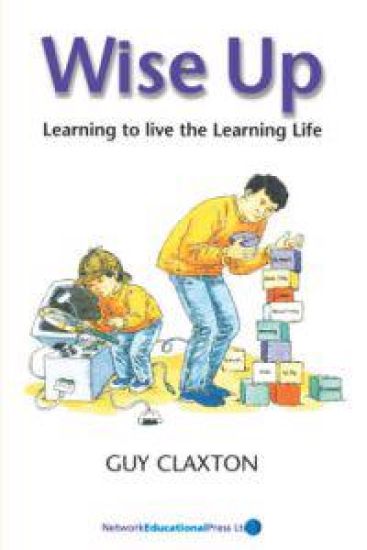
From the author of the bestselling Hare Brain, Tortoise Mind, comes a breakthrough book on the future of learning. The new sciences of brain and mind are revealing that everyone has the capacity to become a powerful, lifelong learner. We can all learn how to learn; it has little to do with conventional intelligenec or educational success. Guy Claxton teaches us how to raise children who are curious and confident explorers, and how we ourselves can learn to pair problem-solving with creativity. Wis Up is essential and compelling reading for parents, educators and managers alike. Guy Claxton is Visiting Professor in Psychology and Education, and Director of the Research Programme on Culture and Learning in Organisations (CLIO), at the University of Bristol. He is the author of thirteen published books, including Hare Brain, Tortoise Mind.
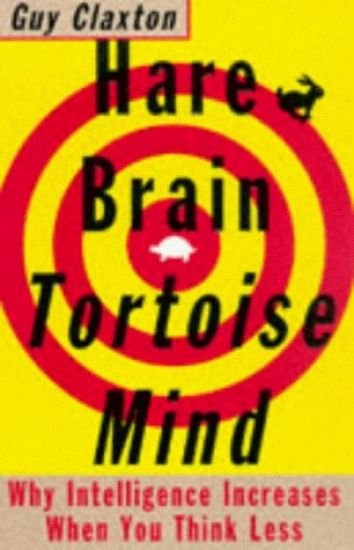
In these accelerated times, our decisive and businesslike ways of thinking are unprepared for ambiguity, paradox, and sleeping on it." We assume that the quick-thinking "hare brain" will beat out the slower Intuition of the "tortoise mind." However, now research in cognitive science is changing this understanding of the human mind. It suggests that patience and confusion--rather than rigor and certainty--are the essential precursors of wisdom.With a compelling argument that the mind works best when we trust our unconscious, or "undermind," psychologist Guy Claxton makes an appeal that we be less analytical and let our creativity have free rein. He also encourages reevaluation of society's obsession with results-oriented thinking and problem-solving under pressure. Packed with Interesting anecdotes, a dozen puzzles to test your reasoning, and the latest related research, Hare Brain, Tortoise Mind is an Illuminating, uplifting, stimulating read that focuses on a new kind of well-being and cognition.
â??Learning to loafâ?? â?? this books explores the ways of knowing that require more time, the ways we have unlearned or ignore, but that are crucial to our complete mental development.